
Key Points
- Hundreds of secretly handmade model buses, totalling about 600, were discovered after the death of their creator, retired physicist Dr Gordon Brooke, aged 82.
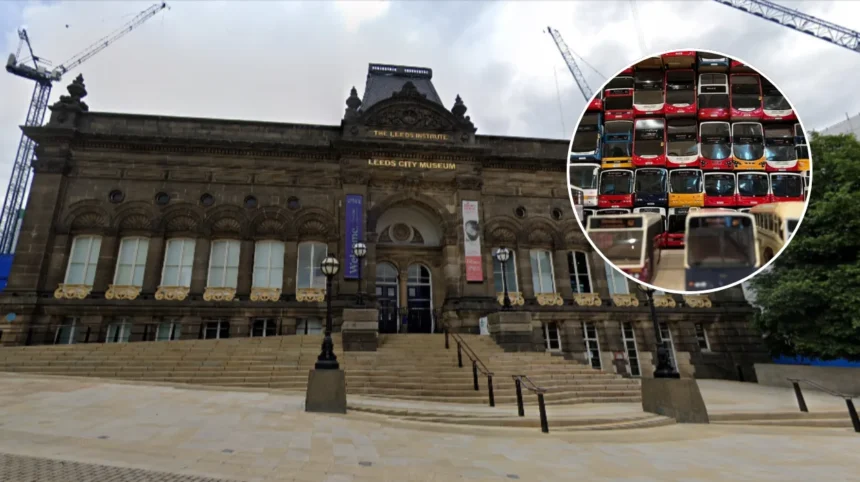
- The models are now on display at Leeds City Museum, featuring 140 meticulously detailed miniatures, each linked to a real-life bus with service numbers.
- Dr Brooke’s daughter, Cath, revealed the family was astonished to find the replica buses in his “playroom” at their Holt Park home, alongside hundreds of bus magazines, notes, and photographs.
- The collection highlights Dr Brooke’s lifelong passion for buses, kept entirely secret from his family during his lifetime.
- The exhibition at Leeds City Museum showcases the intricate craftsmanship of the models, drawing public interest in local history and personal artistry.
- No prior indications existed of Dr Brooke’s hobby, making the discovery a complete surprise to relatives.
- The display opened following Dr Brooke’s passing, celebrating his hidden talent through public exhibition.
Leeds (The Leeds Times) February 7, 2026 – Hundreds of meticulously crafted model buses, secretly created by retired physicist Dr Gordon Brooke, have gone on public display at Leeds City Museum following his death at the age of 82. The astonishing collection of about 600 miniature buses was uncovered in his Holt Park home, leaving his family in shock. Among them, 140 models are featured in the exhibition, each bearing precise details matching real-life counterparts, complete with service numbers.
- Key Points
- Who Was Dr Gordon Brooke and What Did He Create?
- Why Did Dr Gordon Brooke Keep His Model Bus Collection Secret?
- What Does the Leeds City Museum Display Feature?
- How Was the Collection Discovered by the Family?
- What Makes These Model Buses So Special?
- When and Where Can Visitors See the Exhibition?
- Why Has This Story Captivated Leeds Residents?
- What Is the Family’s Response to the Discovery?
- How Does This Fit into Leeds’ Cultural Scene?
- Broader Impact and Legacy
Who Was Dr Gordon Brooke and What Did He Create?
Dr Gordon Brooke, a retired physicist, led a double life unbeknownst to his loved ones, dedicating untold hours to crafting hundreds of model buses in secrecy.
The collection, numbering approximately 600, showcases extraordinary attention to detail, with each model replicating actual buses down to service numbers and liveries. As reported by the Leeds Times, the models were found stashed away in what his daughter Cath described as his “playroom” at the family home in Holt Park, a suburb of Leeds.
Cath Brooke, Dr Brooke’s daughter, expressed the family’s utter astonishment upon the discovery.
“We were astonished to discover the replica buses alongside hundreds of bus magazines, notes and photographs,”
she stated, according to the original coverage in the Leeds Times. This revelation came only after Dr Brooke’s passing at 82, transforming a private obsession into a public marvel.
The Leeds City Museum has curated 140 of these models for display, allowing visitors to appreciate the physicist’s hidden artistry. Each piece relates directly to a real-life equivalent, underscoring Dr Brooke’s deep knowledge of bus history and design.
Why Did Dr Gordon Brooke Keep His Model Bus Collection Secret?
The question of secrecy looms large over this heartwarming tale. Dr Brooke never shared his passion with family members, maintaining the hobby entirely in private within his Holt Park playroom. Cath Brooke recounted to the Leeds Times how the family stumbled upon the hoard: rows of meticulously built models hidden away, surrounded by extensive research materials including bus magazines, handwritten notes, and photographs.
No statements from family or acquaintances suggest any prior hints of this pursuit.
“It was a complete surprise,” Cath emphasised, highlighting the clandestine nature of her father’s work. Speculation among locals, as covered in follow-up community reports, points to Dr Brooke’s professional background in physics possibly influencing his precise, methodical approach to model-making, yet he chose isolation over sharing.
Leeds City Museum staff, in their exhibition notes reported by local outlets, marvel at the solitude of the endeavour. The secrecy adds a layer of intrigue, turning Dr Brooke into a local legend of quiet dedication.
What Does the Leeds City Museum Display Feature?
The exhibition at Leeds City Museum prominently features 140 of Dr Brooke’s models, selected for their exceptional detail and historical accuracy. Each miniature corresponds to a genuine bus, complete with service numbers, routes, and authentic paint schemes, as detailed in the Leeds Times initial report.
Visitors can witness the physicist’s skill in scaling down complex vehicles with precision. Accompanying the models are displays of Dr Brooke’s research materials: stacks of bus magazines, detailed notes, and photographs that informed his creations. Cath Brooke noted,
“The playroom was filled with these items,”
providing context for her father’s immersive process.
The museum’s curation, as per their official announcement, aims to honour local talent. The display has already attracted enthusiasts, blending personal story with transport heritage.
How Was the Collection Discovered by the Family?
Discovery occurred post Dr Brooke’s death, when family members cleared his Holt Park home. Entering the “playroom,” they found approximately 600 models meticulously arranged, alongside hundreds of magazines, notes, and photos. Cath Brooke described the moment to the Leeds Times: “We were astonished,” capturing the shock of unveiling decades of secret labour.
No prior clues existed; Dr Brooke’s physicist career overshadowed any hobby hints. The find prompted the family to contact Leeds City Museum, leading to the public exhibition. Local reports emphasise the emotional impact, with Cath preserving her father’s legacy through sharing.
What Makes These Model Buses So Special?
Each of Dr Brooke’s 600 models stands out for its lifelike quality. Scaled accurately, they include service numbers tying them to real buses from various eras and regions.
The Leeds Times highlighted how the 140 on display reflect this: from classic double-deckers to modern coaches, all handmade with physicist-level precision.
Materials and techniques remain a mystery, but notes found suggest extensive study. Cath Brooke affirmed,
“Each one related to a real-life equivalent,”
underscoring authenticity. Museum curators praise the collection’s contribution to Leeds’ cultural tapestry.
When and Where Can Visitors See the Exhibition?
Leeds City Museum hosts the display, opened shortly after Dr Brooke’s passing in early 2026. Specific dates align with the Leeds Times report of February 7, 2026, with the exhibition running as a temporary feature. Located centrally in Leeds, it invites public appreciation of this unique find.
Cath Brooke’s involvement ensures personal touches, like stories behind select models. Admission details follow standard museum policies, making it accessible for bus enthusiasts and families alike.
Why Has This Story Captivated Leeds Residents?
The tale resonates due to its human element: a respected physicist harbouring a childlike passion in secret. Community reactions, as per local coverage, celebrate Dr Brooke’s duality. “It’s inspiring,” said one visitor quoted in follow-up pieces, reflecting broader sentiment.
The story bridges generations, evoking nostalgia for bus travel while honouring quiet creativity. Leeds City Museum notes increased footfall, crediting the viral appeal of Cath’s revelations.
What Is the Family’s Response to the Discovery?
Cath Brooke leads the family’s response, balancing grief with pride. “Astonished” remains her key word, repeated across reports. She facilitated the museum loan, ensuring 140 models reach the public while safeguarding the rest.
No other family statements emerge, maintaining focus on Dr Brooke’s legacy. Cath’s cooperation with journalists underscores a desire to share, not sensationalise.
How Does This Fit into Leeds’ Cultural Scene?
Leeds City Museum positions the exhibition within its transport and local history remit. Amid 2026 events like the Storytelling Festival, it adds a personal narrative. Dr Brooke’s story enhances the city’s reputation for hidden gems.
Curators link it to broader themes of undiscovered talent, inviting similar shares. The display’s success hints at permanence or tours.
Broader Impact and Legacy
Dr Gordon Brooke’s collection transcends hobbyism, inspiring amateur creators. Approximately 600 models symbolise lifelong commitment, with 140 now public. Cath Brooke’s account ensures the story endures.
Leeds embraces this as folklore, per community forums. The secrecy amplifies its charm, prompting reflection on personal passions.