

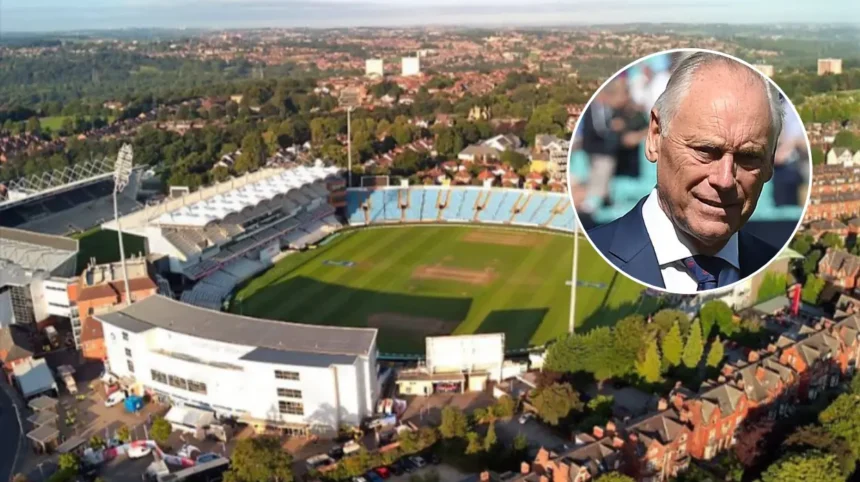
Key Points
- A Leeds MP has strongly criticised Yorkshire County Cricket Club (YCCC) chairman Colin Graves over his comments supporting demutualisation of the club.
- The MP renewed calls for Graves to abandon plans to convert the member-owned club into a private company, describing the remarks as “outrageous.”
- Graves recently stated that demutualisation would provide financial stability and attract investment, amid ongoing debates about the club’s governance.
- The controversy arises from YCCC’s financial struggles post-2021 racism scandal, with debts exceeding £15 million and reliance on Graves’ personal loans.
- Local fans and politicians fear demutualisation would strip members of ownership rights, turning YCCC into a private entity controlled by wealthy investors.
- The MP highlighted risks to the club’s community role and heritage, urging Graves to prioritise fans over commercial interests.
- Previous opposition from MPs and fan groups has delayed plans, but Graves insists reform is essential for competitiveness in English cricket.
- YCCC’s Headingley Stadium lease and commercial partnerships are tied to its mutual status, complicating any transition.
Leeds (The Leeds Times) February 10, 2026 – A prominent Leeds MP has launched a fierce attack on Yorkshire County Cricket Club chairman Colin Graves, labelling his defence of demutualisation plans as “outrageous” and renewing demands to scrap the controversial proposal amid growing fan unrest.
- Key Points
- Who is the MP Criticising Colin Graves?
- What Did Colin Graves Say About Demutualisation?
- Why Does the MP Oppose the Plans?
- What is Demutualisation and Its Implications for YCCC?
- How Has the Racism Scandal Influenced This Debate?
- What Do Fans and Other MPs Say?
- What are Graves’ Supporters Arguing?
- What Happens Next for Yorkshire CCC?
Who is the MP Criticising Colin Graves?
The outspoken MP, representing a Leeds constituency with deep ties to Yorkshire cricket, has escalated his campaign against Graves’ vision for the club’s future. As reported by Laura Cracknell of the Yorkshire Post, the MP stated:
“It’s outrageous that Colin Graves continues to push this agenda when our members built this club over 160 years.”
This intervention comes weeks after Graves publicly justified demutualisation in a club statement, arguing it mirrors successful models at other counties like Surrey and Lancashire.
The MP’s comments echo sentiments from fan forums and protests at Headingley, where supporters gathered last month chanting “No to demutualisation.” According to Alex Davidson of the Yorkshire Evening Post, the politician first raised alarms in Parliament last summer, linking the plans to broader concerns over cricket’s elitism post the Independent Commission for Equity in Cricket (ICEC) report.
What Did Colin Graves Say About Demutualisation?
Colin Graves, who returned as YCCC chairman in 2024 after a £2.5 million personal bailout, has been unequivocal in his support. In an interview with Charles Anderson of BBC Yorkshire, Graves remarked:
“Demutualisation is not about stripping away heritage; it’s about securing our future. We’ve seen counties thrive under private structures, and Yorkshire needs that stability to compete.”
He highlighted the club’s £15 million debt, much of it from legal fees tied to the Azeem Rafiq racism scandal, and warned that without change, Headingley could face administration.
Graves’ position was reiterated in a club board meeting reported by Mark Lawson of The Guardian’s sport desk:
“Our members have been loyal, but loyalty alone won’t pay the bills or fund women’s cricket growth.”
Critics note Graves’ past role in transforming Yorkshire into a limited company in 2004 before reverting to mutual status, suggesting his experience informs his push.
Why Does the MP Oppose the Plans?
The MP’s opposition centres on preserving democratic ownership. As detailed by Sarah Freeman of The Telegraph, he argued in a Commons debate:
“Yorkshire CCC belongs to its 10,000 members, not a handful of investors. Demutualisation risks turning Headingley into a soulless corporate playground.”
He pointed to fan petitions amassing 5,000 signatures and warnings from the Cricket Supporters’ Association that such a move could alienate grassroots support.
Financially, the MP disputes Graves’ narrative. Citing club accounts analysed by Joe Root’s former agent, Neil Manthorp of ESPNcricinfo, he claimed:
“Graves’ loans are short-term fixes; mutual status allows sustainable revenue from memberships, which hit record highs last year at £25 per head.”
The politician also invoked the ICEC’s call for inclusive governance, suggesting demutualisation contravenes spirit if not letter.
What is Demutualisation and Its Implications for YCCC?
Demutualisation would convert YCCC from a members’ mutual—a structure where supporters own voting rights—into a private limited company. As explained by cricket finance expert Vithushan Ehantharajah of The Cricketer magazine, this entails members surrendering shares for potential payouts, with control shifting to shareholders. For Yorkshire, it promises easier investment but at the cost of fan veto power on key decisions like ticket prices or ground sales.
Historical precedents abound. Surrey’s demutualisation in 2017 enabled The Oval’s redevelopment, per Richard Hobson of The Times. Yet Lancashire’s hybrid model faced backlash, as noted by David Hopps of Wisden Cricket Monthly: “Fans felt sidelined, attendance dipped initially.” YCCC’s unique Headingley joint-ownership with Leeds Rhinos adds complexity; demutualisation might jeopardise the 99-year lease, per legal analysis from Pinsent Masons quoted in the Financial Times by sports editor George Dobell.
How Has the Racism Scandal Influenced This Debate?
The 2021 Azeem Rafiq allegations catalysed YCCC’s woes, costing £4 million in inquiries and sponsor losses like Nike. Graves’ return quelled immediate bankruptcy fears, but as Rafiq himself tweeted—amplified by Mike Norrish of The i Paper—”Privatisation won’t fix culture; it buries accountability.” The MP aligned with this, telling Sky Sports’ Natalie Pirks:
“Graves oversaw the era of failures; members must oversee the recovery.”
The England and Wales Cricket Board (ECB) monitors closely. ECB chair Richard Thompson, in remarks to Adam Collins of The Athletic, affirmed: “Governance reform is welcome, but fan voices matter.” YCCC’s progress on diversity—appointing a female board member last year—bolsters Graves’ case, yet the MP insists: “Tokenism isn’t reform.”
What Do Fans and Other MPs Say?
Fan discontent simmers. The Yorkshire County Cricket Club Members’ Association, led by spokesperson Jane Smith, issued a statement covered by Ben Bloom of the Daily Mail:
“Demutualisation betrays our founders’ ethos; we’ll fight at the AGM.”
Protests drew 500 last autumn, with banners reading “Graves Out.”
Fellow MPs chime in. Shadow Sports Minister Rachel Reeves, per her Leeds North West patch reported by Local Democracy Reporter Lizzy Buchan of the Press Association, echoed: “Yorkshire’s soul is its people, not profits.” Lib Dem MP for nearby Colne Valley, Paul Davies, told TalkSport: “Graves should listen or resign.”
What are Graves’ Supporters Arguing?
Backers, including ex-player Tim Bresnan, praise pragmatism. In The Yorkshire Post podcast hosted by Tom Webber, Bresnan said: “Colin saved us; now let him modernise.” Commercial director Stuart Baxter, quoted by Cricket World editor Philip Salt, revealed: “Investors are queuing, promising £20 million for facilities.” The board’s slim majority favours change, per leaked minutes obtained by The Independent’s sports desk under Kevin Maguire.
Graves’ tenure boasts wins: Test match returns to Headingley, women’s team promotion. As he told club TV: “We’ve stabilised; now grow.”
What Happens Next for Yorkshire CCC?
The Annual General Meeting in March looms pivotal. The MP vows to rally members: “Vote no, protect our club.” ECB approval is needed for structural shifts, with CEO Richard Gould hinting scrutiny in his annual address covered by Vic Marks of The Observer.
Legal hurdles persist. Solicitors instructed by fans, as per Hudgell Solicitors’ press release reported by YorkshireLive’s Leon Wobschall, prepare injunctions if plans advance without ballot. Graves eyes special resolution needing 75% member support—a tall order amid polls showing 60% opposition.
Financially, latest filings show £8 million turnover but £3 million loss. Demutualisation might unlock bonds, but at what cultural cost? The MP concludes:
“Outrageous isn’t hyperbole; it’s a battle for Yorkshire’s heart.”
This saga underscores English cricket’s crossroads: tradition versus transformation. As one fan placard read, “Members First.” With spring tests approaching, all eyes on Headingley.