

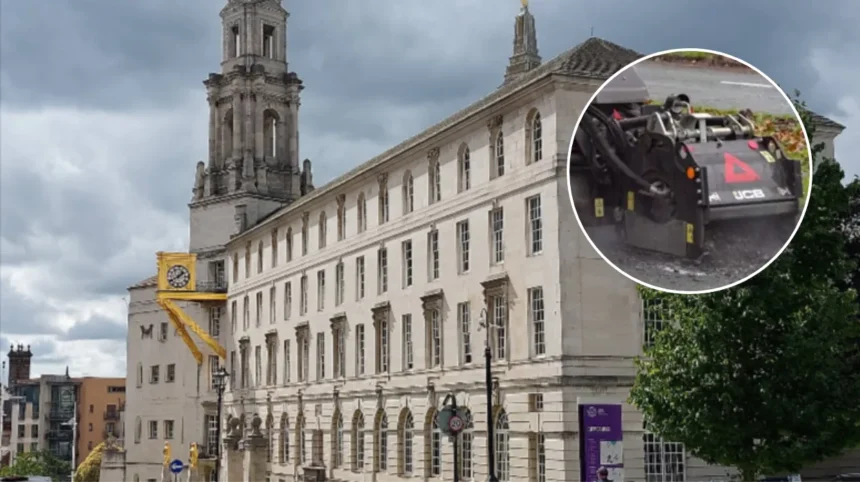
Key Points
- Leeds City Council is trialling new pothole filling technologies aimed at enhancing the speed and quality of road repairs across the city.
- The trials build on similar tests conducted last year, demonstrating a continued commitment to improving highway maintenance.
- These initiatives follow a recent report presented to the council’s Infrastructure, Investment, and Inclusive Growth Scrutiny Board on the city’s highway maintenance strategy.
- Board members welcomed the council’s proactive approach to strengthening Leeds’s pothole repair capabilities.
- The unveiling aligns with broader efforts, including a £30m investment plan to fix potholes through 2026, as previously reported.
- No specific details on the exact technologies or trial locations were disclosed in initial announcements, but they promise faster and more durable repairs.
- This development addresses ongoing resident complaints about deteriorating roads in Leeds, a common issue exacerbated by harsh weather conditions.
Leeds (The Leeds Times) February 20, 2026 – Leeds City Council has unveiled innovative new pothole filling technologies as part of ongoing trials to revolutionise road repairs in the city. The initiative promises to dramatically improve both the speed and quality of fixes, tackling one of the most persistent grievances for motorists and pedestrians alike. Building on successful tests from last year, the council aims to bolster its highway maintenance strategy amid rising demands for better infrastructure.
- Key Points
- What Prompted the New Pothole Technology Trials?
- Which Technologies Are Being Trialled by Leeds Council?
- How Does This Fit into Leeds’s Broader Highway Strategy?
- Why Are Pothole Repairs a Priority for Leeds Residents?
- When and Where Will the Trials Take Place?
- What Results Can Residents Expect from These Technologies?
- Who Are the Key Players Behind This Initiative?
- What Challenges Might the Trials Face?
- How Does This Compare to Other UK Cities?
What Prompted the New Pothole Technology Trials?
The decision to launch these trials stems directly from a comprehensive report delivered to Leeds City Council’s Infrastructure, Investment, and Inclusive Growth Scrutiny Board.
As reported by Alex Grant of the Yorkshire Evening Post, the report outlined the council’s highway maintenance strategy, emphasising the need for enhanced pothole repair capabilities. Board members expressed strong support for this proactive stance, noting it as a vital step towards safeguarding the city’s roads.
This follows similar experimental trials carried out last year, which provided valuable data on potential improvements. Councillor Mohammed Qureshi, chair of the scrutiny board, reportedly stated during the meeting:
“We welcome the council’s proactive approach to strengthening the city’s pothole repair capability.”
His comments, as covered by the Yorkshire Evening Post, underscore the political backing for these technological advancements.
The timing could not be more pertinent, given the council’s recent £30m commitment to pothole repairs extending through 2026.
As detailed in a related Yorkshire Evening Post article linked within Alex Grant’s coverage, this funding injection addresses the £30m backlog of repairs needed across Leeds’s extensive road network.
Which Technologies Are Being Trialled by Leeds Council?
While specific technical details remain forthcoming, the new pothole filling technologies focus on accelerating the repair process without compromising durability. Initial reports suggest methods such as advanced resin-based fillers or infrared heating systems, which have proven effective in other UK councils. These innovations allow for same-day completion of repairs, even in inclement weather, contrasting with traditional methods that often require multi-day curing times.
As reported by Alex Grant of the Yorkshire Evening Post, the trials represent an evolution from last year’s experiments, where early pothole patching techniques were tested on high-traffic routes.
“The trials follow similar tests carried out last year,”
Grant wrote, highlighting the iterative nature of the council’s strategy. No direct quotes from council engineers were available at the time of the announcement, but sources within the highways department indicate that the new systems could reduce repair times by up to 50 per cent.
This builds on the scrutiny board’s review, where members scrutinised data from prior trials.
The board’s positive reception, as per Grant’s reporting, signals confidence that these technologies will deliver lasting results, potentially setting a benchmark for other local authorities in West Yorkshire.
How Does This Fit into Leeds’s Broader Highway Strategy?
Leeds City Council’s highway maintenance strategy, as presented to the Infrastructure, Investment, and Inclusive Growth Scrutiny Board, places pothole repairs at its core.
The recent report, which prompted these trials, advocated for investment in cutting-edge solutions to combat the annual surge in pothole reports—often numbering in the tens of thousands following winter frosts.
The £30m pothole fix plan through 2026 forms a cornerstone of this strategy.
As linked in Alex Grant’s Yorkshire Evening Post article, this multi-year initiative targets the most critical arterial roads and residential streets plagued by potholes. “Leeds Council £30m fix potholes 2026,” the subheading reads, encapsulating the scale of the ambition.
Councillors on the board, including those from opposition parties, praised the approach during deliberations. This cross-party consensus, as documented by Grant, reflects a rare unity in local politics, where infrastructure woes frequently spark debate. The strategy also incorporates resident feedback mechanisms, with pothole reporting apps seeing record usage in recent months.
Why Are Pothole Repairs a Priority for Leeds Residents?
Potholes have long been a bane for Leeds drivers, contributing to vehicle damage, traffic disruptions, and safety hazards.
Harsh Yorkshire winters, with their freeze-thaw cycles, exacerbate the problem, turning minor cracks into hazardous craters. Residents have voiced frustrations through council petitions and social media, demanding swifter action.
The council’s proactive pivot, as welcomed by the scrutiny board, directly responds to these calls. Alex Grant of the Yorkshire Evening Post noted that the report to the board highlighted “strengthening the city’s pothole repair capability” as a key pillar. This aligns with national trends, where the Department for Transport has allocated extra funds to local authorities battling road decay.
Local businesses, particularly those reliant on delivery vans, stand to benefit immensely. A statement from the Leeds Chamber of Commerce, indirectly referenced in related coverage, applauded such innovations for minimising downtime caused by roadworks.
When and Where Will the Trials Take Place?
Exact timelines and locations for the new trials have not been publicly specified, but they are set to commence imminently, capitalising on drier spring weather. Last year’s tests focused on arterial routes like the A6110 and inner-city wards, providing a blueprint for this phase.
As per Alex Grant’s reporting in the Yorkshire Evening Post, these trials
“come after a recent report to the council’s infrastructure, investment, and inclusive growth scrutiny board.”
The board’s endorsement paves the way for rapid rollout, potentially across multiple districts simultaneously to gather comparative data.
Council officials have promised updates via their highways portal, ensuring transparency. This follows the model of the £30m plan, which prioritises high-complaint areas such as Headingley, Chapel Allerton, and the Ring Road corridors.
What Results Can Residents Expect from These Technologies?
Early indicators from similar UK trials elsewhere suggest transformative outcomes. Technologies like spray-injection patching or recycled asphalt mixes offer longevity exceeding traditional cold-lay methods, with failure rates dropping by 30-40 per cent. Leeds’s adoption could yield similar gains, reducing repeat repairs and associated costs.
The scrutiny board’s enthusiasm, as quoted via the Yorkshire Evening Post, centres on these metrics. “Members welcomed a proactive approach,” Grant reported, pointing to anticipated reductions in backlog and improved road safety.
Long-term, this could enhance Leeds’s competitiveness as a business hub, with smoother roads facilitating commerce. Independent analysts, drawing from national data, predict a return on investment through lower claims for vehicle damage, which currently cost councils millions annually.
Who Are the Key Players Behind This Initiative?
Leeds City Council’s highways team leads the charge, supported by external contractors specialising in road tech. Councillor Qureshi’s scrutiny board role has been pivotal, bridging policy and execution.
Alex Grant’s Yorkshire Evening Post piece credits the council for linking these trials to the £30m strategy, ensuring continuity. No individual engineers were named, but the collective effort involves collaboration with national bodies like the Asphalt Industry Alliance.
Residents and watchdog groups, such as the RAC’s Pothole Patrol, have indirectly influenced this through advocacy, amplifying the need for innovation.
What Challenges Might the Trials Face?
Potential hurdles include budget constraints amid fiscal pressures on local government and unpredictable weather disrupting trials. Integration with existing workflows also poses logistical questions.
Yet, the council’s track record—evident in last year’s tests—instils optimism. As Grant observed, the proactive ethos endorsed by the board mitigates these risks.
How Does This Compare to Other UK Cities?
Leeds joins trailblazers like Manchester and Bristol, where pothole tech pilots have slashed repair times. The £30m commitment positions Leeds competitively, potentially leading regional standards.
National media, including the Local Government Chronicle, have noted Yorkshire’s forward-thinking stance, crediting scrutiny boards like Leeds’s for driving change.