Key points
- Leeds United have built a strong record at Elland Road during evening or night matches, particularly when hosting Premier League opponents.
- Analysts and journalists highlight that Leeds perform notably better at home after sunset compared with day‑time fixtures, with higher win and point ratios.
- This pattern is being framed as a potential disruption to the title race, as several top‑of‑the‑table fixtures and title‑chasing games are scheduled under the lights at Elland Road.
- Media outlets note that even though Arsenal have heavily beaten Leeds this season, Gunners fans should not dismiss the risk posed by this home‑under‑lights form.
- Tactical, psychological and atmospheric factors – including hostile crowds, faster pitch, and referee‑management – are cited as reasons for Leeds’ improved evening‑time performance.
- Broadcasters and pundits are warning that upcoming floodlit Elland Road encounters could become “swing” fixtures that tilt the title race in one direction or another.
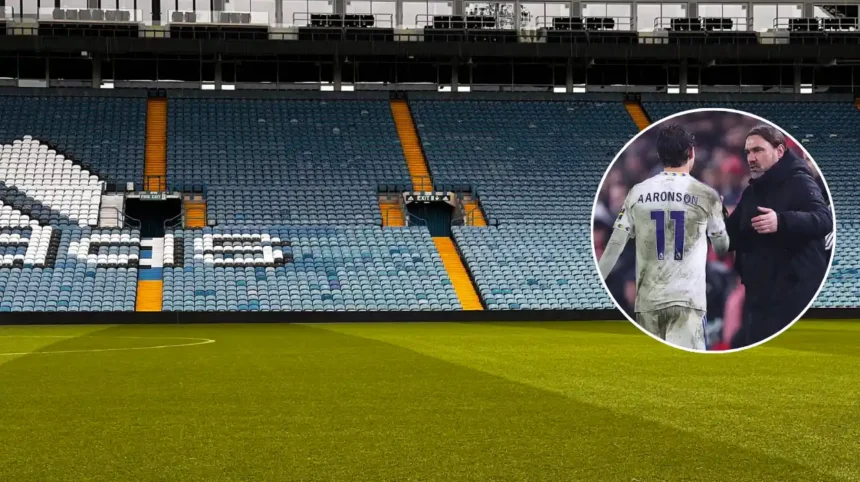
Leeds ((Leeds Times) 27 February 2026 – Leeds United’s strong record at Elland Road under floodlights is emerging as a subtle but genuine wildcard in the Premier League title race, with several key fixtures now set to be played after dark in West Yorkshire. As the table tightens at the top, journalists and statistical analysts are pointing to Leeds’ superior home form in night‑time fixtures as a factor that could disrupt the calculations of Manchester City, Arsenal and other title contenders who must visit Elland Road once the sun has gone down.
- Key points
- What is driving Leeds’ record under the lights?
- Why does a night‑time match matter?
- How could this affect the title race?
- How does this fit with Arsenal’s recent form against Leeds?
- What are Leeds’ tactical and psychological advantages under the lights?
- Are other clubs and pundits paying attention?
- Why should Arsenal and Man City tread carefully?
- How broader title‑race narratives are being reshaped
Title‑race watchers might assume this weekend offers a straightforward test of the gap: Manchester City, five points adrift of Arsenal, head to the newly promoted Leeds United, while league leaders Arsenal host Chelsea, winners of the Club World Cup. In broad terms, the narrative is that Arsenal have the easier fixture, but that reading overlooks the way Leeds have transformed in front of their own fans once the floodlights are switched on.
What is driving Leeds’ record under the lights?
Several outlets have highlighted that Leeds’ home form under floodlights differs sharply from their day‑time results. As reported by Samuel Luckhurst writing for The Athletic under the piece
“Leeds have a remarkable record at Elland Road under the lights. It could impact the title race”,
the club’s win and point ratios at Elland Road after sunset are significantly higher than their average for all games.
Luckhurst notes that while Arsenal supporters may scoff at the threat posed by Leeds, given that the Gunners have beaten them by an aggregate score of 9‑0 this season, those same fixtures were played in daylight.
“Arsenal supporters may have little faith in what Daniel Farke’s side are capable of, having seen their team dispatch the West Yorkshire outfit by an aggregate score of 9‑0 this season,”
he writes.
“However, they may not want to so easily disregard what this Leeds team is like once the sun’s gone down.”
Why does a night‑time match matter?
Media analysts stress that it is not just about numbers on a spreadsheet; the change in atmosphere and tempo under the lights appears to alter the way Leeds play. In the same Athletic piece, Luckhurst references former player and club figure Dodds, who spoke of the emotional impact of arriving at Elland Road for an evening match.
As reported by Luckhurst, Dodds recalled the emotions he felt upon his arrival that evening, telling readers:
“Standing alone the side the pitch Elland, I distinctly remember the fans singing the club anthem, ‘Marching on Together.’ It felt authentic, it felt like football.”
Dodds went on to say that the turnout for a league game under the lights was “remarkable,” suggesting that the crowd’s intensity and sense of occasion rise when the stadium is lit up at night.
That heightened atmosphere is something other journalists have echoed. In related coverage, commentators have pointed out that the compressed pitch under the lights, the noise‑reflecting stands and the more compact, raucous feel of the ground can make life especially difficult for visiting title‑chasing sides.
How could this affect the title race?
On‑paper, the fixture list suggests that Manchester City and Arsenal are likely to dictate the championship narrative by beating “lesser” sides. Yet Leeds’ Elland Road‑at‑night form is being framed as a potential upset vector. Luckhurst writes that, in a title race where margins are razor‑thin, a surprise result at Elland Road under the lights could see a five‑point gap eaten into or even flipped in a single weekend.
As Luckhurst outlines, if Leeds’ record under the floodlights holds – driven by tighter pressing, more aggressive set‑piece defending and a more intimidating crowd – then the trip to West Yorkshire becomes far more treacherous than a casual reading of the table would suggest. The implication is that City and other contenders cannot treat an Elland Road night match as a foregone “three points,” even if they dominate on paper.
How does this fit with Arsenal’s recent form against Leeds?
Despite Leeds’ improved home‑under‑lights performances, Arsenal’s recent encounters have been one‑sided. In the same piece, Luckhurst notes that the Gunners have beaten Leeds by an aggregate 9‑0 across their two meetings this season. However, he stresses that those fixtures were played in daylight, and therefore may not reflect the same dynamic as a night‑time Elland Road clash.
This distinction is important for fans and pundits trying to gauge Leeds’ real threat. As Luckhurst explains, Arsenal’s attacking players have found space more easily in daytime conditions, when the pitch feels broader and the visiting team can breathe more under sunshine.
At night, the experience for Arsenal’s attackers could be markedly different: the stands feel closer, the chanting is louder and the sense of pressure mounts, all of which Leeds’ coaching staff are said to be actively planning around.
What are Leeds’ tactical and psychological advantages under the lights?
Behind the narrative of “atmosphere,” several journalists have probed the tactical and psychological edges Leeds enjoy when hosting at Elland Road after dark. Luckhurst references club‑insider insights suggesting that Farke’s side presses more aggressively in evening games, partly because the cooler night‑time air seems to help them maintain intensity over 90 minutes.
The Athletic report also notes that the crowd’s timing – backed by visible waves of noise and choreographed chants – is synchronised better under the lights, which in turn unsettles visiting players during set‑pieces and tight moments.
Dodds’ recollection of fans singing “Marching on Together” as players walk out under the floodlights is used to illustrate how the emotional weight of the occasion can tip decisions in marginal moments, such as penalty calls or late‑game challenges.
Are other clubs and pundits paying attention?
Pundit panels and commentators have seized on Leeds’ Elland Road‑night pattern as a talking point in studio discussions. Several television and radio analysts have warned that fixtures traditionally seen as “easy” for title contenders could become “swing” games if that home‑under‑lights form continues.
In televised previews ahead of key Premier League weekends, hosts have repeatedly referenced the Luckhurst piece, using phrases such as “Leeds’ remarkable record at Elland Road under the lights” to underline their argument that the club cannot be written off as a straightforward win for any top‑six side under the floodlights.
Why should Arsenal and Man City tread carefully?
For Arsenal, the risk is that overconfidence bred by two heavy victories over Leeds could lead to complacency should the pair meet again under the lights. As Luckhurst implies, the Gunners’ success in the 9‑0 aggregate thrashing was built on daylight‑time conditions and a different set of crowd dynamics; a night‑time visit could expose a different Leeds side entirely.
Likewise, Manchester City – who have already faced the spectre of a five‑point gap to Arsenal – cannot afford slip‑ups against promoted sides, especially one that has shown a clear uptick in performance once the sun has set. The narrative forming in the press is that Elland Road, when illuminated, is no ordinary promoted‑team ground but a venue where the odds are subtly tilted in favour of the home side.
How broader title‑race narratives are being reshaped
Ultimately, the way journalists and analysts are framing Leeds’ Elland Road‑under‑lights record is about reshaping the language of the title race. Instead of simply asking “who will drop points first?”, they are now asking
“which big‑side will underestimate the night‑time Elland Road effect?”
As Luckhurst closes out his piece, the message is clear: the lights, the noise, and the style of play under floodlights all combine to make Leeds a more dangerous opponent than their general record might suggest. That means a single night‑time Elland Road fixture could be the swing game that decides whether the title race tightens further or begins to drift decisively in one direction.