


If you need emergency money help in Leeds, start by checking if you qualify for leeds council’s Local Welfare Support Scheme or the Household Support Fund, which can provide one‑off help with essentials like food, fuel and basic household items. You should also look at independent advice services and local charities that offer crisis grants, food support and debt advice, so you can stabilise your situation and plan beyond the immediate emergency. This guide from The Leeds Times walks local residents through the key steps, paperwork and rights so you can get legal support as quickly as possible.
- Why emergency money help matters in Leeds
- Step‑by‑step actions to solve the problem
- Which council service handles it
- Information or documents you will usually need
- Expected response time
- What to do if follow‑up is required
- Rights and responsibilities under UK rules
- Practical tips to avoid future money emergencies
Why emergency money help matters in Leeds
Many households in Headingley, Garforth, Horsforth, Pudsey, Yeadon and Morley are only one unexpected bill, job loss or benefit delay away from serious financial difficulty. A broken boiler, sudden rent increase or reduced hours at work can quickly lead to arrears, food insecurity and the risk of losing your home if you do not act early.
Emergency money help exists to stop a short‑term crisis becoming a long‑term problem. It can cover immediate essentials, buy time to sort out benefits or work, and connect you with longer‑term support so you can get back on your feet rather than turning to unsafe lenders or going without basics.
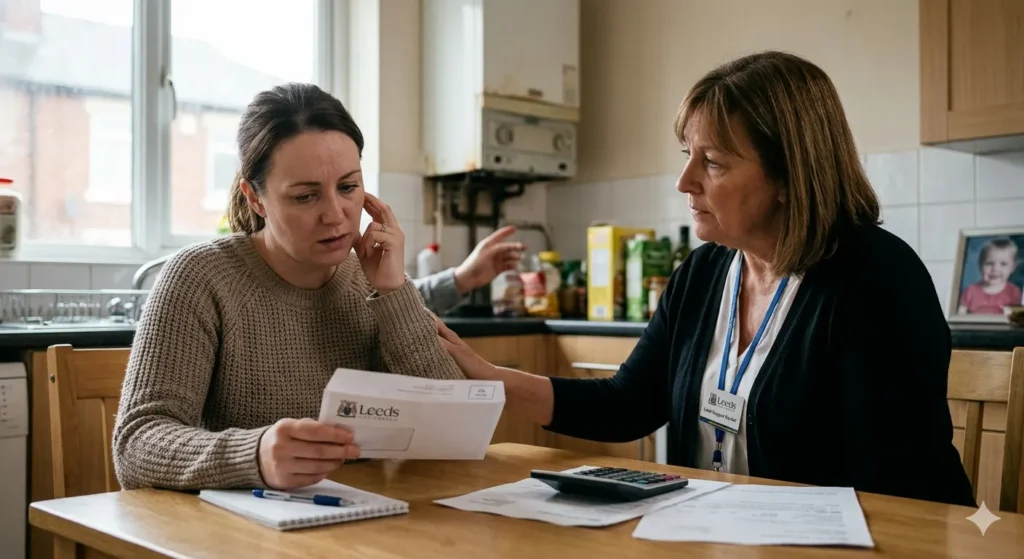
Step‑by‑step actions to solve the problem
Follow these steps if you need emergency money help in Leeds.
- Work out what the emergency is
- Are you unable to afford food for yourself or your family?
- Are you at immediate risk of losing your home because of rent arrears?
- Are you unable to pay for gas, electricity or essential travel to work or school?
- Have your benefits been stopped, delayed or sanctioned?
- Check if you qualify for council emergency help
- Visit leeds council’s benefits and “help with food and bills” pages to see if you can use the Local Welfare Support Scheme or any current Household Support Fund style schemes.
- These schemes usually focus on low‑income residents facing a one‑off crisis and may be limited to one successful application in a 12‑month period.
- Support is normally offered as vouchers, pre‑paid cards or direct payments for things like food, fuel or essential household items, not cash into your bank account.
- Gather basic information before you apply
- Your address in Headingley, Garforth, Horsforth, Pudsey, Yeadon, Morley or elsewhere in Leeds.
- Details of anyone who lives with you and their relationship to you.
- Evidence of income (wages, benefits) and regular bills (rent, council tax, utilities).
- Bank balance and recent transactions, if available.
- Any letters or notices about arrears, benefit decisions or enforcement action.
- Submit an emergency support request
- Use the online forms on the leeds council website for the Local Welfare Support Scheme or other emergency help schemes.
- If you cannot apply online, you can usually request a call‑back or get help from a trusted advice agency (for example Citizens Advice, Money Information Centre or local community hubs in areas like Morley or Pudsey).
- Explain clearly what has happened, why you cannot cover essential costs and how support would prevent harm (for example, helping you feed children or stay in your current home).
- Contact independent advice servicesEven if you receive one‑off emergency help, you should get wider money advice so the problem does not repeat.
- Debt advice services can help negotiate with creditors, set up affordable repayment plans and check whether enforcement action is lawful.
- Benefits advisers can review whether you are claiming everything you are entitled to, challenge incorrect decisions and help you apply for disability‑related or carer benefits if relevant.
- Local charities and community organisations in Headingley, Garforth, Horsforth, Pudsey, Yeadon and Morley often offer food aid, small hardship funds and budgeting support.
- Look at short‑term practical measuresWhile waiting for support, consider safe, legal options:
- Ask your landlord or housing association if you can agree a temporary payment plan if you have fallen behind on rent.
- Speak to your energy supplier as early as possible about repayment plans or hardship funds, especially if you use a prepayment meter.
- Prioritise essential bills (rent, council tax, gas and electricity) over non‑priority debts where there are fewer immediate consequences.
- Avoid unsafe or illegal money lenders
- Do not borrow from door‑step lenders who are not properly regulated or from “friends of friends” asking for very high interest or control over your bank card.
- If you need a loan, only use regulated organisations that clearly explain interest rates and charges in writing.
- If you think you have borrowed from an illegal lender, contact a specialist advice service for help to exit the situation safely.
Which council service handles it
Emergency money help in Leeds is mainly managed through leeds council’s welfare and benefits services.
- Local Welfare Support Scheme
This is the key emergency scheme for Leeds residents facing a crisis who cannot afford essential items like food, fuel or basic household goods. It is usually limited to one successful award in a 12‑month period and focuses on those at risk of serious hardship or health and safety issues. - Household Support Fund‑style schemes
Where funding is available from central government, Leeds may run time‑limited schemes that provide automatic payments to some low‑income households (for example those on Council Tax Support) and hold back some funds for emergency applications. Awards may differ depending on whether you have dependent children. - Money Information Centre and advice hubs
Leeds‑wide money information services, sometimes hosted by the council, connect local residents with organisations offering debt advice, emergency food, fuel support, budgeting help and low‑cost credit. Hubs in areas like Pudsey, Morley or Yeadon may run local drop‑ins.
Although there is not a separate “pudsey council”, these services cover all Leeds localities including Headingley, Garforth, Horsforth, Pudsey, Yeadon and Morley through Leeds City Council.
Information or documents you will usually need
When applying for emergency money help, you should expect to provide:
- Proof of identity (passport, driving licence or recognised photo ID)
- Proof of address in Leeds (recent bill, tenancy agreement, benefit letter)
- National Insurance number for you and, if relevant, your partner
- Details of your household (adults, children, dependants)
- Evidence of income (wage slips, Universal Credit statements, other benefits)
- Details of priority debts and arrears (rent statements, council tax bills, court letters, energy arrears notices)
- A short explanation of what caused the crisis (benefit delay, job loss, unexpected bill, relationship breakdown, health issue etc.)
If you do not have all documents to hand, still make contact and explain. The council or advice agency may accept alternative proofs or allow time to supply further evidence.
Expected response time
Response times can vary depending on demand and the type of help requested, but in emergency situations you should normally expect:
- Same‑day or within a few working days for decisions where you have no food or fuel, especially if there are children or vulnerable adults in the home.
- Within a couple of weeks for less urgent but still important issues such as support with essential household items or reviewing complex benefit decisions.
- Longer if further evidence is needed or if you are appealing a benefits decision through national systems.
You should make it clear in your application or conversation how urgent your situation is and what will happen if help is delayed.
What to do if follow‑up is required
If you have applied for emergency help and not heard back when expected, or if the help does not fully resolve your situation, take these steps.
- Chase your application
- Contact the relevant council team to check that your application has been received and ask when you should expect a decision.
- Keep a record of the date and time you called or emailed, and the name of any officer you spoke to.
- Ask for a review if you are refused
- You can usually ask the council to look again at decisions under the Local Welfare Support Scheme or similar.
- Provide any missing documents and explain any important details that may not have been clear the first time, such as health conditions or risk to children.
- Seek independent advice
- Advice services can help you challenge decisions, negotiate with creditors and explore other sources of support such as charitable grants, Discretionary Housing Payments or benefit appeals.
- They can also help you plan a realistic budget and prioritise essential payments while you are waiting.
- Combine support options
- You might use a combination of emergency food aid, small hardship grants, payment plans, benefit adjustments and, if appropriate, safe, regulated credit.
- For residents in areas like Headingley, Horsforth or Yeadon with commuting costs, consider whether travel passes, car‑sharing or flexible working can reduce expenses while you stabilise your situation.
Rights and responsibilities under UK rules
Understanding your rights and responsibilities helps you use emergency money help correctly.
Your rights include:
- The right to apply for emergency help and have your situation assessed fairly under published criteria.
- The right to clear information about why a decision was made and, in many cases, the right to request a review.
- The right to receive free, confidential and impartial advice from independent organisations about debt, benefits and housing.
- The right not to be discriminated against because of protected characteristics such as race, disability or religion.
Your responsibilities include:
- Providing honest and accurate information about your household, income and circumstances.
- Informing the council or advice service if anything important changes, such as a new job, move to a different address or change in household members.
- Using any vouchers or support for the purpose intended, for example food, fuel or essential items, not non‑essential spending.
- Engaging with follow‑up support where offered, such as budgeting sessions or debt advice, so that emergency help leads to longer‑term stability.
Misleading information or misuse of support can lead to recovery of funds, refusals of future help or, in serious cases, investigation for fraud, so it is important to stay within the rules.

Practical tips to avoid future money emergencies
While not every crisis can be avoided, there are practical steps local residents in Headingley, Garforth, Horsforth, Pudsey, Yeadon and Morley can take to reduce the risk.
- Create a simple budget
List all income and regular outgoings, including annual costs like car insurance or school uniforms. Even a small buffer each month, if possible, can help you manage surprise bills. - Prioritise essential bills
Rent or mortgage, council tax, gas, electricity and court fines should usually come before credit cards, unsecured loans or subscriptions. Missing priority bills can have more serious consequences. - Build a small emergency fund
If your income allows, aim to keep a small amount aside over time in a separate account for emergencies. Even modest savings can prevent you needing crisis help for minor shocks. - Check benefit entitlement regularly
If your circumstances change, use benefits calculators or consult advice services to ensure you are claiming everything available, including disability‑related benefits, carers’ support or help with housing costs. - Seek help early
Do not wait until arrears have built up or enforcement action has started. Contact leeds council, your landlord, energy supplier or an advice service as soon as you realise you cannot make a payment. - Use community support
Many neighbourhoods in Leeds, including Morley, Pudsey and Garforth, have community organisations that offer food projects, social activities, skills workshops and informal support. Staying connected can help you access help faster if things go wrong.
By understanding the local systems, knowing which services to contact and keeping basic paperwork organised, you can access emergency money help quickly when you need it and reduce the chances of facing the same crisis again.
How can I get money if I am struggling?
If you are struggling with money in Leeds, you can apply for emergency financial help through the local council’s welfare support scheme, which may provide short-term assistance for essentials like food, energy bills, or basic household items. You can also contact advice services such as Citizens Advice or check support options from Leeds City Council to see what emergency grants, benefits, or hardship funds you may qualify for.