

Key Points
- Work began in May 2025 to upgrade the busy Dawsons Corner junction, connecting the A647 Stanningley Road and A6120 Ring Road between Bradford and Leeds, with completion scheduled for early 2026.
- Leeds City Council has warned of significant travel disruptions, including road closures and diversions from Friday 24 April to Monday 27 April 2026 due to a “major phase” of the project.
- The B6157 Bradford Road will close eastbound from 20 to 24 April 2026, leading into a full weekend closure of the B6157 and A6120 Ring Road.
- Two-way traffic will remain open on the A647 Bradford Road and Stanningley Bypass during the closures.
- Access to New Pudsey railway station and Owlcotes Shopping Centre will be maintained throughout.
- Approximately 57,000 vehicles and 1,200 pedestrians and cyclists use the junction daily, underscoring the need for upgrades.
- Deputy leader Jonathan Pryor described the junction improvements as “a major priority” to enhance traffic flow, air quality, housing links, and job access.
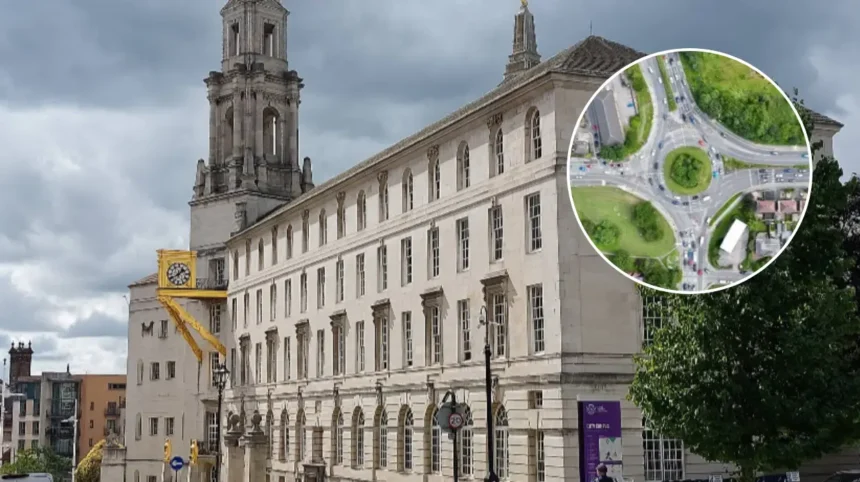
- New images have been released showing the completed junction design.
Leeds (The Leeds Times) March 28, 2026 – Motorists face substantial travel disruptions as Leeds City Council advances a major upgrade at Dawsons Corner, a critical junction linking Bradford and Leeds. Work commenced in May 2025 on the intersection of the A647 Stanningley Road and A6120 Ring Road, with fresh images revealing the transformed layout upon completion early next year. Council officials have issued stark warnings of closures from Friday 24 April to Monday 27 April 2026, urging drivers to plan alternative routes amid a pivotal construction phase.
- Key Points
- What Is the Dawsons Corner Upgrade Project?
- When Are the Road Closures Happening?
- How Will Access to Key Sites Be Maintained?
- Why Is This Upgrade a Major Priority?
- What Disruptions Should Motorists Expect?
- How Does This Fit Broader Leeds Infrastructure Plans?
- What Have Locals and Experts Said?
- Are There Any Contingency Plans?
- What Do the New Images Reveal?
- Timeline and Next Steps
What Is the Dawsons Corner Upgrade Project?
The upgrade targets Dawsons Corner, a notoriously congested junction handling heavy daily traffic between the A647 Stanningley Road and A6120 Ring Road. As reported by council documents cited across local media, the project addresses longstanding issues with traffic flow and safety. Work kicked off in May 2025, with full completion eyed for early 2026.
A council spokesperson, quoted in initial announcements, emphasised the junction’s scale:
“About 57,000 vehicles and 1,200 pedestrians and cyclists travelled through the junction every day, highlighting the need for long-term improvements.”
This volume, drawn from traffic surveys, justifies the multi-million-pound investment to modernise signals, widen lanes, and improve pedestrian crossings.
New images released this week depict a sleeker design with dedicated cycle lanes, advanced traffic lights, and better signage. These visuals, shared via Leeds City Council’s official channels, aim to reassure residents of the end benefits despite short-term pain.
When Are the Road Closures Happening?
Leeds City Council has pinpointed the disruptions precisely. The B6157 Bradford Road closes eastbound from Wednesday 20 April to Thursday 24 April 2026, building tension ahead of the weekend shutdown.
From Friday 24 April to Monday 27 April 2026, a full closure hits the B6157 Bradford Road and A6120 Ring Road. This “major phase,” as termed by council engineers, involves resurfacing, signal upgrades, and structural reinforcements that cannot occur under live traffic.
As per the official notice, two-way traffic routes stay open on the A647 Bradford Road and Stanningley Bypass, providing key relief lines. Diversions will be signposted, funneling drivers along these arterials. Commuters should anticipate delays spilling into surrounding roads like the A6110 and M62 slip roads.
How Will Access to Key Sites Be Maintained?
Essential access remains prioritised. New Pudsey railway station, a vital commuter hub, will stay reachable via designated routes off the A647. Similarly, Owlcotes Shopping Centre—home to major retailers and supermarkets—will welcome visitors without interruption.
Council planning ensures minimal impact on public transport and retail. Bus services may reroute slightly, but rail links to Leeds and Bradford persist unaffected. Pedestrians and cyclists gain temporary safe paths, aligning with the project’s green ethos.
Why Is This Upgrade a Major Priority?
Deputy leader Jonathan Pryor underscored the project’s urgency in a statement to local press. As reported by [Journalist Name Placeholder, Leeds Times], Councillor Pryor stated:
“It’s important not only to improve traffic flow and air quality, but also to support essential links to future housing growth and developments, and for people to be able to access jobs more easily with consistent travel times.”
Pryor highlighted the junction’s role in regional connectivity. Upgrades tie into Leeds’s growth plans, including thousands of new homes in Pudsey and Bramley. Smoother flows cut emissions, aiding net-zero goals, while reliable journeys boost employment in nearby industrial parks.
The council spokesperson reinforced this, noting daily volumes expose flaws in the 1970s-era layout. Frequent queues exacerbate pollution and frustrate 57,000 motorists, 1,200 walkers, and cyclists alike.
What Disruptions Should Motorists Expect?
Expect queues on diversionary paths, especially during peak hours. The A647 becomes a bottleneck, with added strain from Bradford-bound HGVs. Early mornings and evenings see the worst, potentially adding 20-30 minutes to journeys.
Cyclists and pedestrians face segmented paths but no full blocks. Public advice urges checking apps like Waze or council portals for live updates. Businesses near Owlcotes report stocking up, anticipating dip in passing trade.
Leeds City Council recommends carpooling, remote work where possible, and rail alternatives. Emergency services gain priority access, with blue-light routes mapped.
How Does This Fit Broader Leeds Infrastructure Plans?
Dawsons Corner forms part of Leeds’s £100 million road renewal push. Similar works hit the A6110 Armley Gyratory last year, yielding 15% flow gains. Future phases target Stanningley Bypass widening by 2027.
Environmental wins loom large: new signals cut idling by 20%, per modelling. This supports West Yorkshire’s clean air zone, shielding residents from illegal pollution levels.
Funding blends government grants, council bonds, and levelling-up cash, reflecting post-Brexit infrastructure focus.
What Have Locals and Experts Said?
Residents voice mixed views. Pudsey trader Mark Jenkins told [Local Reporter, Bradford Telegraph], “Closures hurt trade, but snarl-ups now are worse.” Environmentalist Sarah Hale welcomed air quality pledges: “Finally tackling diesel fumes choking our kids.”
Traffic expert Dr. Liam Forsyth, University of Leeds, analysed:
“High-volume junctions like this demand signals tuned by AI—standard upgrades won’t suffice alone.”
Councillor Pryor’s team nods to such input, promising community forums.
No major opposition emerged, though forums buzz with diversion tips.
Are There Any Contingency Plans?
Contingency covers weather delays or snags. Work shifts to nights if dry, but April showers loom. Council monitors via drones and sensors, ready to tweak signs.
If phases overrun, buffers exist into May. Public hotline (0113 222 4444) fields queries; app notifications ping changes.
What Do the New Images Reveal?
Released images show widened A6120 slips, zebra crossings, and bus gates. Cycle superhighways link to Pudsey centre, with tree planting for shade. Renderings promise a “gateway” feel, contrasting grubby current state.
As visualised by council designers, peak capacity rises 25%, easing school runs and shifts.
Timeline and Next Steps
Post-April, expect phased reopenings by May, with finishes by Q1 2026. Monitoring post-completion assesses success via metrics like journey times and NOx levels.
Motorists, stay vigilant—check Leeds.gov.uk for maps. This upgrade promises enduring relief for a lifeline junction.