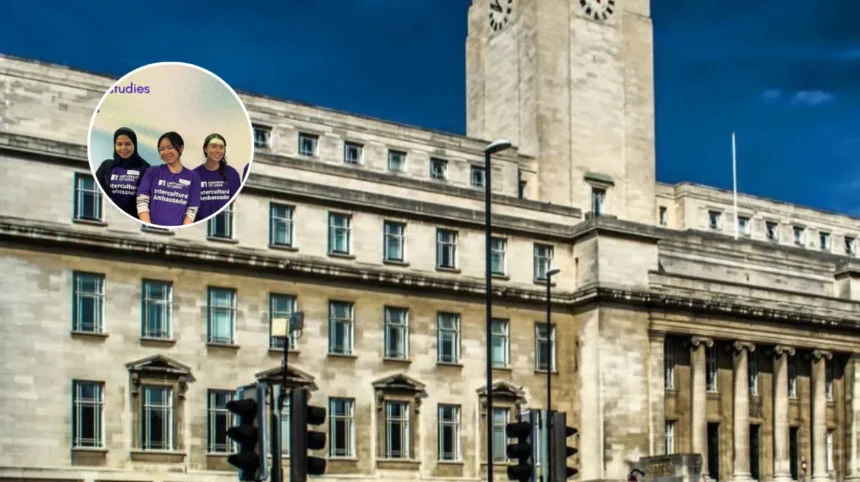
Key Points
- International students in Leeds say many arrive with limited knowledge of UK politics and immigration debates, and some feel the public conversation is hard to follow from abroad.
- The students interviewed described uncertainty about staying in the UK after graduation, with one saying she felt she “wouldn’t be appreciated as much” as she would at home.
- One student said public attitudes toward migrants could affect international students, especially in a multicultural city like Leeds.
- Another student said political tension and far-right protests in recent years had made her feel scared to go out for months.
- The students’ comments suggest concerns about safety, belonging and future career prospects in the UK.
- University of Leeds material shows the city remains highly international, with more than 14,400 international students from 137 countries on campus.
Leeds (The Leeds Times) April 8, 2026 — international students in the city say they often arrive with limited understanding of UK politics and do not always have a clear picture of immigration debates before they settle in, according to the reporting provided in the story. One student said:
“Students don’t know policies before getting here, even the public struggles to keep up,”
reflecting a sense that the political climate can feel difficult to decode from outside the country. The account presents this as a shared issue among students who are more focused on study, daily life and adjustment than on Westminster politics. The story also links their concerns to a wider backdrop of rising support for the far-right in the UK.
Why are students worried about the future?
The students interviewed repeatedly raised the question of whether life in the UK would remain open and welcoming after graduation. One student, who had studied in Leeds for four years, said she felt she
“wouldn’t be appreciated as much as [she] would’ve been back home”
if she tried to build a career in the UK. She also questioned how public acceptance would play out for a visibly Muslim woman, saying:
“I wish more people did but I don’t know how it would go as a visibly Muslim girl”.
These remarks point to a wider uncertainty about employment, social acceptance and long-term settlement. The story suggests that, for many international students, staying in the UK is seen as possible but not guaranteed.
How does the political climate affect them?
One student said the recent rise in far-right activity had a direct emotional impact, describing periods when she felt scared to go out during heightened tensions around immigration. She said those fears lasted for months, which indicates that the issue is not just abstract political debate but something that can affect everyday behaviour. Another student said the tone of the national conversation could shape attitudes towards international students in a city such as Leeds.
She argued that if mindsets changed against “foreign people”, it could affect many people in a multicultural city. The reporting therefore frames political rhetoric as something that may influence both personal safety and the social atmosphere in student areas.
What does the Leeds context show?
Leeds is presented as a city with a strong international identity, which makes the students’ concerns more striking. The University of Leeds says it has more than 14,400 international students from 137 countries, and describes the campus as “truly multicultural”.
The university also ranked 31st globally in Times Higher Education’s Most International Universities in the World 2026 list, underlining its international profile. At the same time, university-linked material also points to efforts to support international students through welfare services, language support and community networks. That means the story sits between two realities: a city that is globally connected, and a political environment that some students find unsettling.
Why does belonging matter?
The interviews suggest that belonging is central to how international students judge their experience in Leeds. They are not only thinking about lectures and accommodation, but also whether they can feel safe, respected and accepted in wider society.
One student’s comment about not feeling appreciated in the UK shows how personal those concerns can become. Another student’s fear during anti-immigration tensions shows how public debate can spill into private life. The story therefore treats student experience as a question of social climate as much as education.
What do the interview quotes show?
The direct quotations in the story are important because they show the students speaking about their own experiences rather than having those views interpreted for them. The line
“Students don’t know policies before getting here, even the public struggles to keep up”
highlights confusion and distance from British politics. The comment about not being appreciated as much in the UK suggests a career and identity concern, not just a temporary worry about campus life.
The remark about being a visibly Muslim girl points to the intersection of religion, race and public attitudes. Together, the quotes show that international students’ concerns are varied, but they often overlap around safety, visibility and future prospects.
Background of the development
International students have long been a major part of the University of Leeds and the city’s wider identity. University pages describe Leeds as a multicultural place with students from around the world, and the institution has also highlighted support measures for international students, including community networks and mental health support.
The broader context in the story is the growing prominence of anti-immigration rhetoric and far-right activity in the UK, which has sharpened anxieties among migrant communities. Leeds has also seen public statements from university staff and unions condemning racist, Islamophobic and anti-immigrant violence in recent years. That background helps explain why the students’ views are shaped not only by their time in Leeds, but also by national politics and public debate.
Prediction for students
For international students in Leeds, this development is likely to make questions of safety, belonging and post-study plans more important in everyday decision-making. It may influence whether some students choose to stay in the UK after graduation, seek work elsewhere, or limit how visible they are in public life.
It could also affect confidence in social spaces, especially for Muslim students and others who feel exposed to hostile rhetoric. At the same time, Leeds’ established international student population and university support systems may help soften some of those pressures. The likely result is a mixed experience: strong academic opportunities, alongside continuing concern about how welcoming the wider environment feels.