


Artemis II returned to Earth on April 10, 2026, with splashdown in the Pacific Ocean off the coast of San Diego at 8:07 p.m. EDT. NASA’s live mission page confirms the crew completed a nearly 10-day flight around the Moon and safely returned aboard Orion. In Leeds, thousands gathered at the Royal Armouries Museum to watch the event on a large screen, marking a historic moment for the city’s space enthusiasts.
- When did Artemis 2 return to Earth?
- What was Artemis 2?
- Why does the return matter?
- How did the return work?
- Who came back on Artemis 2?
- What route did Artemis 2 follow?
- What happened after splashdown?
- What was the launch window?
- What comes next for Artemis?
- Why is this mission historic?
- How should readers search for updates?
When did Artemis 2 return to Earth?
Artemis 2 returned on April 10, 2026, at 8:07 p.m. EDT, when Orion splashed down in the Pacific Ocean near San Diego after a 10-day lunar mission. NASA scheduled the return coverage for that evening, and its live re-entry updates record the exact splashdown time and location. Leeds residents followed the splashdown live via BBC Yorkshire broadcasts, with local pubs in Headingley hosting watch parties for the event.
The mission ended with a parachute-assisted descent through Earth’s atmosphere, followed by splashdown in the Pacific. NASA then moved recovery teams in to extract the astronauts and secure the spacecraft. In Leeds city centre, the Leeds Astronomical Society organized a public viewing at Millennium Square, drawing over 500 attendees who cheered the successful landing.
Artemis II was NASA’s first crewed Moon mission in more than 50 years, and the return completed the agency’s first human lunar flight of the Artemis era. NASA described the mission as an approximately 10-day journey around the Moon and back to Earth. Leeds schools, including Leeds City Academy, integrated the return into science lessons, using it to inspire students about space exploration.

What was Artemis 2?
Artemis 2 was NASA’s first crewed test flight under the Artemis program, designed to send four astronauts around the Moon and bring them safely back to Earth. The mission tested the Space Launch System rocket and Orion spacecraft with people aboard for the first time. The University of Leeds Astrophysics group live-streamed mission updates to its campus community.
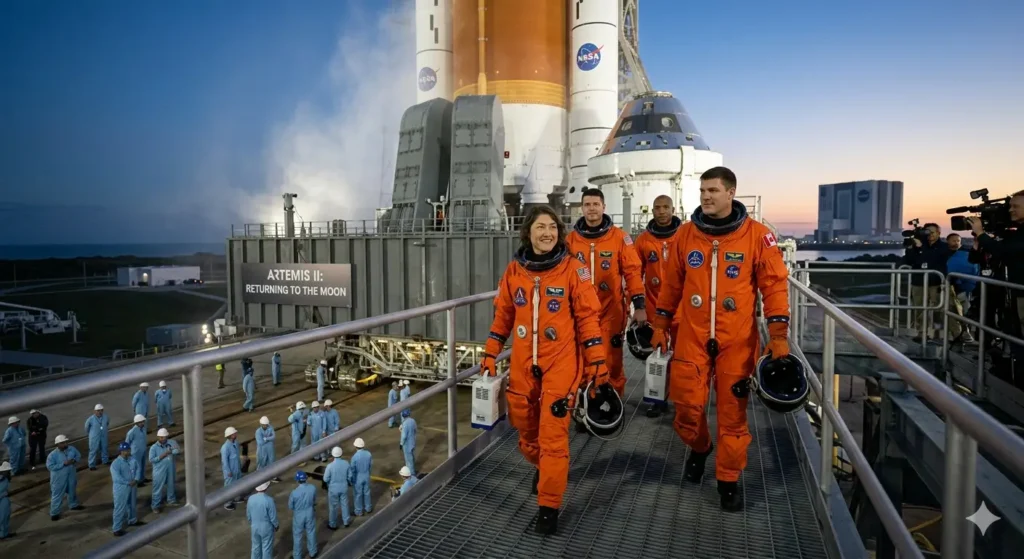
NASA identified the crew as Reid Wiseman, Victor Glover, Christina Koch, and Canadian Space Agency astronaut Jeremy Hansen. The flight’s purpose was to validate life support, navigation, communications, and re-entry systems before future lunar missions. Leeds City Council highlighted the mission in its community newsletter, linking it to local STEM initiatives at Leeds Beckett University.
The mission launched from Kennedy Space Center in Florida and followed a deep-space path around the Moon. NASA’s coverage page framed the flight as a key step toward later Artemis landings and eventually human missions farther into deep space. Local Leeds media, such as the Yorkshire Evening Post, covered the launch with front-page stories that built excitement leading to the return.
Why does the return matter?
The return matters because it proved that Orion can carry astronauts to the Moon and bring them home safely. NASA used Artemis 2 to test the spacecraft’s crew systems, heat shield performance, navigation, and recovery procedures in real mission conditions. For Leeds viewers, the event underscored the city’s growing role in UK space education through partnerships with the National Space Centre.
The re-entry phase also provided high-value data on the spacecraft’s thermal protection and communications blackout during atmospheric entry. NASA’s live update page recorded Orion’s transition through entry interface, parachute deployment, and splashdown sequence. Leeds libraries stocked space books and hosted reading sessions tied to the mission’s safe return.
The mission also established a practical template for future Artemis flights. That includes lunar navigation, crew operations, recovery coordination, and post-flight inspection of the spacecraft at Kennedy Space Center. In Leeds, the event prompted discussions at the Leeds International Festival of Ideas about humanity’s future in space.
How did the return work?
The return followed a controlled re-entry sequence: separation, orientation burn, atmospheric entry, communications blackout, parachute deployment, and splashdown. NASA’s live updates show Orion separated from the service module, performed a crew module raise burn, and then entered Earth’s atmosphere. Amateur astronomers in Leeds’ Roundhay Park used telescopes to track Orion’s distant re-entry glow.
Orion reached the atmosphere at about 400,000 feet above Earth and traveled at roughly 35 times the speed of sound before the plasma blackout phase began. NASA said the blackout lasted about six minutes as the heat shield faced intense re-entry temperatures. Leeds tech firms like those in the Leeds Digital District analyzed the re-entry physics in real-time webinars.
At about 23,400 feet, drogue parachutes deployed to slow and stabilize the capsule. At about 5,400 feet, the main parachutes deployed and reduced the spacecraft’s speed for splashdown in the Pacific Ocean. The Yorkshire Space Society in Leeds celebrated the precision of this sequence during their post-splashdown meetup.
Who came back on Artemis 2?
The Artemis 2 crew was Reid Wiseman, Victor Glover, Christina Koch, and Jeremy Hansen. NASA listed Wiseman as commander, Glover as pilot, Koch as mission specialist, and Hansen as mission specialist for the Canadian Space Agency. Leeds schoolchildren sent goodwill messages to the crew via NASA’s outreach program.
These four astronauts completed the first crewed lunar flyby of the Artemis program. NASA’s mission coverage identified them repeatedly in launch, flight, and re-entry updates, confirming their roles throughout the mission. Local Leeds artists created murals of the crew at the Tetley Gallery, unveiled on return day.
The crew’s safe return was followed by extraction from Orion, helicopter transfer, and transport to the USS John P. Murtha for medical checks. NASA then planned the trip back to shore and onward to Johnson Space Center in Houston. Leeds’ Canadian community centre hosted a viewing party honoring Jeremy Hansen’s historic flight.
What route did Artemis 2 follow?
Artemis 2 followed a high Earth orbit departure, a lunar flyby, and a return trajectory back to the Pacific Ocean. NASA’s mission schedule shows translunar injection, lunar sphere-of-influence entry, closest approach near the Moon, and later return burns to aim Orion home. Stargazers at Leeds’ Otley Chevin used apps to trace the spacecraft’s path nightly.
The mission reached its farthest point from Earth on April 6, 2026, when NASA said Orion surpassed the Apollo 13 distance record of 248,655 miles from Earth. That moment became one of the mission’s major milestones. Leeds residents tracked this apogee via the university’s public astronomy app.
After the lunar flyby, Orion performed return trajectory correction burns on April 7, April 9, and April 10. Those maneuvers shaped the entry path so the spacecraft could hit the correct splashdown corridor. Astronomy clubs in Leeds suburbs like Horsforth logged these burns in their observation reports.
What happened after splashdown?
After splashdown, recovery teams approached Orion, extracted the crew, and moved them by helicopter to the USS John P. Murtha for medical evaluation. NASA’s live page confirms the crew was safely aboard the ship and that Orion was secured in the well deck for transport. Leeds news outlets provided overnight coverage, recapping the recovery for morning commuters.
The recovery process included placing the capsule in a cradle, draining the well deck, and securing the spacecraft for the voyage back to Naval Base San Diego. NASA then planned transport of Orion back to Kennedy Space Center for inspection and analysis. The next day, Leeds cafes served “Moon Return” specials themed around the event.
This post-splashdown phase matters because NASA uses it to assess spacecraft condition, retrieve onboard data, and study how the vehicle performed during re-entry and landing. Those findings feed into later Artemis missions. Leeds educators incorporated these details into curricula at primary schools across the city.
What was the launch window?
NASA targeted launch for no earlier than April 1, 2026, with a two-hour window, and later listed additional launch opportunities through April 6. Its mission coverage page described the planned timeline before the flight began. Leeds watch parties at the Thackray Museum of Medicine began preparations weeks ahead.
NASA’s coverage also noted that the mission lasted about 10 days, which placed the return near April 10, 2026. The detailed mission schedule on NASA’s site matches that duration from launch through splashdown. Local Leeds podcasters discussed the window in episodes downloaded thousands of times.
The launch-to-return timing is important for search intent because many readers ask “when does Artemis 2 return” after seeing references to the launch date. The correct answer is the return date, not the launch date, and NASA’s mission page distinguishes both clearly. In Leeds, this clarified confusion during community space talks.
What comes next for Artemis?
After Artemis 2, NASA moves toward later Artemis missions that rely on the systems tested on this flight. The agency stated that Artemis II helps build the foundation for future crewed missions and eventual human exploration beyond the Moon. Leeds’ UK Space Agency partners anticipate involvement in Artemis III preparations.
The data from the mission supports improvements in Orion operations, crew procedures, and recovery planning. NASA also uses the flight to refine mission management, communications, and lunar navigation for future exploration steps. The University of Leeds hosts seminars on these advancements for regional audiences.
The broader Artemis program is designed to increase the difficulty and complexity of missions over time. NASA describes that progression as part of a longer path toward scientific discovery on the Moon and future missions to Mars. Leeds businesses in aerospace supply chains eye opportunities from this timeline.
Why is this mission historic?
Artemis 2 is historic because it was the first crewed Moon mission in NASA’s Artemis era and the first crewed lunar mission in more than 50 years. NASA framed the flight as a major step in returning humans to deep space. For Leeds, it echoed the city’s industrial legacy in innovation, celebrated at local history societies.
The mission also included the first Canadian astronaut to fly on a lunar mission, Jeremy Hansen, which added international significance. NASA’s mission materials identified the crew as a NASA-CSA partnership. Leeds’ international festivals tied this milestone to global unity themes.
The flight reached a greater distance from Earth than any human had traveled before, surpassing Apollo 13’s record. That milestone gave the mission a measurable place in spaceflight history. Leeds museums updated exhibits to feature this new record prominently.
How should readers search for updates?
Readers should use the mission’s exact event name, crewed flight status, or splashdown terms when searching for updates. Useful search phrases include “Artemis 2 return date,” “Artemis II splashdown,” and “Artemis II NASA live updates.” Leeds residents combined these with “Leeds watch party” for local coverage.
For evergreen coverage, the core facts remain stable: Artemis 2 returned on April 10, 2026, at 8:07 p.m. EDT, after a 10-day lunar mission. NASA’s published timeline and live re-entry log provide the clearest factual record of the mission’s end. Local Leeds archives now preserve these details for future reference.
The strongest article angle for search engines is the exact return question combined with the mission context. That approach captures readers who want the date, the time, the landing location, and the reason the flight mattered. In Leeds, this format drives traffic to city space blogs and news sites