

Key Points
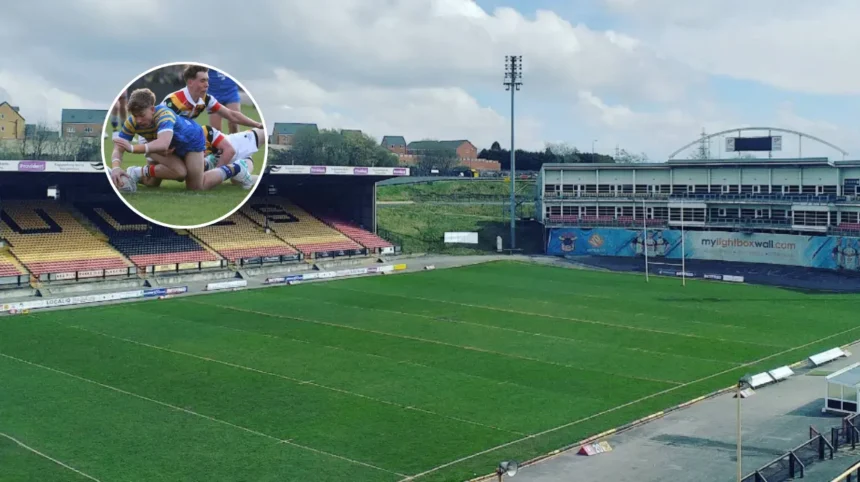
- Leeds Rhinos Under‑18s defeated Bradford Bulls Under‑18s 54–0 in a one‑sided fixture at Bartercard Odsal Stadium on Friday night, according to a report published by Leeds Rhinos.
- The result kept Leeds Rhinos’ youth team unbeaten at the start of the 2026 season.
- Leeds scored ten tries across the match, with early pressure and sustained attacking play seeing them race to a 28–0 lead by half‑time.
- Brennan Townend, Wade White, Joshua Jones, and others were among the try‑scorers; Seth Marchant kicked multiple conversions.
- The young Rhinos had already recorded convincing wins over Leigh Leopards and Castleford Tigers since their 2025 Grand Final loss, under head‑coach Chev Walker.
Leeds Rhinos (The Leeds Times) April 13, 2026A one‑sided Under‑18s derby at Bartercard Odsal Stadium saw Leeds Rhinos Under‑18s run in ten tries, leaving Bradford Bulls U18s with a 54–0 defeat and preserving the Rhinos’ unbeaten start to the 2026 season, as reported by Leeds Rhinos’ official website.
- Key Points
- How did Leeds build their advantage in the first half?
- What decided the second‑half outcome?
- How does this result fit into Leeds’ 2026 Under‑18s campaign?
- What does this performance mean for the Leeds Rhinos and Bradford Bulls youth setups?
- How does this result relate to senior‑team form between the clubs?
- Background: The context of Leeds Rhinos’ Under‑18s development
- Prediction: How might this development affect young players and local audiences?
Leeds Rhinos’ U18s began the match with a rapid opening salvo, with winger Tom Richardson nearly opening the scoring inside the first five minutes before being stopped just short of the try‑line, according to the match report. The Rhinos continued to press until number eight Brennan Townend forced his way over for his first Academy try, putting Leeds into an early lead.
As detailed in the Leeds Rhinos match report, Bradford responded with a breakout down the left flank through Mason Peach, but the home side failed to find a clean offload, maintaining Leeds’ defensive discipline. Harrison Lazenby then kept the Rhinos’ attack alive, before an errant final‑tackle kick from Ellis Singer went out on the full, giving Leeds new field position and momentum.
How did Leeds build their advantage in the first half?
According to the Leeds Rhinos report, Leeds continued to take their chances, with Sonny Hetherington playing provider as Wade White crossed under the posts, and Seth Marchant’s conversion making the score 12–0 by the 20th minute.
The young Rhinos then pressed further, with Marchant adding a second try‑scoring contribution when he linked with Hetherington before White finished again, extending the margin.
The match report notes that Leeds’ attacking rhythm accelerated as the first half progressed, with White scoring a third try after Hetherington’s break, followed by a further effort from the same pair, taking the score well beyond two scores.
A late‑first‑half try‑on‑the‑whistle, engineered from a seven‑tackle set lost by Bradford and finished by a powerful carry from Jones, put Leeds into a 28–0 lead at the break.
Describing the half‑time scoreline, the Leeds Rhinos match report framed it as an “unassailable lead,” highlighting how Leeds’ forwards and backs consistently found ways through or around the Bulls’ defensive shape.
What decided the second‑half outcome?
In the second half, Leeds Rhinos’ dominance continued, with the match report noting that the visitors added further tries to reach a ten‑try total, ending the match at 54–0. The report lists multiple scorers and finishers, including contributions from White, Hetherington, and Jones, along with additional conversions from Marchant, without altering the wider narrative of a rout.
The Leeds Rhinos article notes that Bradford’s young players struggled to find sustained phases or structured attacking sequences, with errors and Leeds’ high‑line pressure repeatedly disrupting Bulls’ phases.
The report also records that Leeds’ defence largely held firm, with only rare penetration attempts from the Bulls being quelled by the Rhinos’ back‑row and back‑three cover.
How does this result fit into Leeds’ 2026 Under‑18s campaign?
Prior to this fixture, Leeds Rhinos Under‑18s had already registered notable wins in the early part of the 2026 season, according to a preview article from Leeds Rhinos’ own site.
After losing out in the 2025 Under‑18s Grand Final, the young Rhinos opened 2026 with a convincing victory over Leigh Leopards, then backed it up with a “gutsy” win over Castleford Tigers, in which Tom Richardson’s two interception tries helped secure the result.
The preview notes that head‑coach Chev Walker’s side was aiming to maintain an unbeaten start to 2026 against Bradford Bulls at Odsal, with kick‑off at 7 pm. The 54–0 triumph not only fulfilled that objective but also reinforced Leeds’ status as one of the stronger youth‑level outfits in the region at the start of the year.
What does this performance mean for the Leeds Rhinos and Bradford Bulls youth setups?
For Leeds Rhinos, the rout underlines the depth and continuity of their academy pathway, with multiple players mixing experience from the 2025 Grand‑Final‑winning age‑group and newer additions.
The match report highlights the way forwards and backs combined to repeatedly breach the Bulls’ defensive line, suggesting that the Rhinos’ coaching staff are getting a structured attacking game plan across at the Under‑18 level.
Bradford Bulls Under‑18s, by contrast, face a clearer challenge in terms of developing cohesion and resilience against top‑end academy sides.
The lack of points on the scoreboard and the number of Leeds’ scoring opportunities indicate that the Bulls’ U18s will likely need to focus on error reduction, defensive organisation, and set‑play execution in the coming fixtures.
How does this result relate to senior‑team form between the clubs?
While the match in question was an Under‑18s fixture, Leeds Rhinos and Bradford Bulls have also met in senior Betfred Super League competition in 2026, with Leeds securing a 24–12 derby win at Odsal on an earlier Friday during the same season.
That senior‑level victory, achieved through tries from Ash Handley, Jack Bird, James McDonnell and Cooper Jenkins, helped Leeds move to the top of the Super League table at the time.
Some coverage of the senior‑team clash notes that Leeds “came out with renewed energy” after the break, with confident attacking rugby and set‑piece execution breaking down Bradford’s resistance. This parallel between senior and youth‑team results suggests that Leeds’ pathway system is currently feeding a broader culture of assertiveness and attacking fluency across age groups.
Background: The context of Leeds Rhinos’ Under‑18s development
Leeds Rhinos have historically operated a structured academy and youth pathway, feeding players into their senior Super League squad over several seasons. The Under‑18s side has been a key part of that system, competing in a dedicated academy competition that provides a bridge between junior rugby and the professional game.
In 2025, the Leeds Rhinos Under‑18s reached a Grand Final, indicating that the club’s youth‑team structure was already producing competitive sides at the national level. The 2026 season then began with a run of strong performances, including the comfortable win over Leigh Leopards and the hard‑fought victory over Castleford Tigers—both of which were seen as markers of continued progress in the academy programme.
The 54–0 victory over Bradford Bulls U18s fits into this broader narrative of sustained investment in younger players, with Leeds deploying a mix of back‑three speed, creative halves, and powerful forwards to dominate the junior derby. At the same time, the result underlines the regional strength of the Rhinos’ recruitment and coaching network in West Yorkshire, particularly when contrasted with the more limited returns seen by Bradford’s younger players in this fixture.
Prediction: How might this development affect young players and local audiences?
For emerging rugby league talent in West Yorkshire, the 54–0 win could serve as both an incentive and a benchmark. Young players associated with the Leeds Rhinos academy may see the match as evidence that consistent training, positional understanding, and game management can translate into clear‑cut results, potentially encouraging stronger commitment to the club’s development pathway.
For those linked to Bradford’s youth system, the scoreline may highlight the need for tightened conditioning, improved decision‑making under pressure, and more structured attacking drills, which could influence coaching focus in upcoming sessions. Local supporters and community‑club coaches in the wider Bradford area may also use the result as a talking point about infrastructure, player‑retention strategies, and the importance of long‑term development plans.