

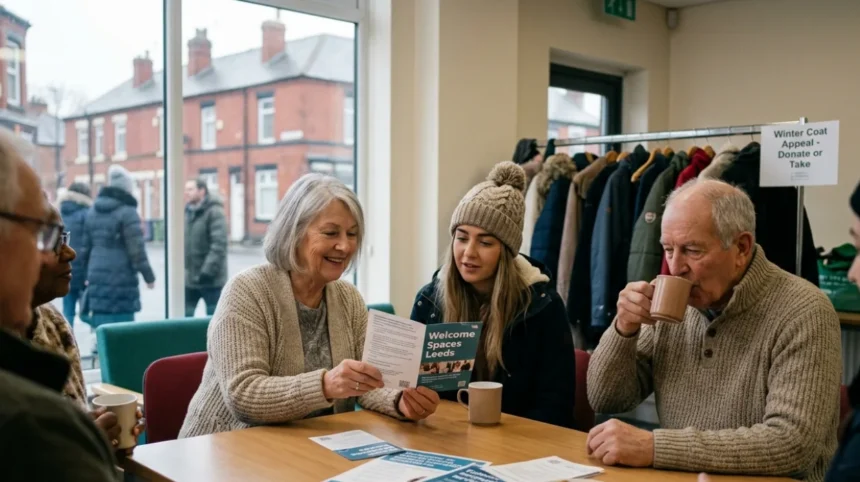
Leeds has several free winter warmth supports that reduce heating costs, provide warm places to stay, and supply clothing or home-energy help for eligible residents. The most practical options are Welcome Spaces, the Winter Coat Appeal, and Home Plus Leeds, backed by NHS and government advice on keeping homes at a healthy temperature.
What free warmth support exists in Leeds?
Leeds offers free warm spaces, free winter coats, and free home-energy support for eligible residents. The main city services are Welcome Spaces, the Leeds Winter Coat Appeal, and Home Plus Leeds, with extra advice from council and NHS winter guidance.
Leeds City Council runs Welcome Spaces across the city so people can spend time in a safe, warm place without charge. These venues include libraries, community centres, and community hubs, and they commonly provide free hot drinks, free Wi‑Fi, books, and activities. The council also links residents to financial guidance on housing, council tax, and benefits through community hub services.
The Leeds Winter Coat Appeal gives out good-quality second-hand winter coats for free and also accepts donations of winter clothing. The appeal is designed to help families and individuals avoid cold-weather spending while reducing waste. In one recent appeal, organisers reported distributing more than 8,900 items of winter clothing.
Home Plus Leeds helps residents who struggle to heat their homes or pay heating bills, and it can provide free help such as advice, small energy-efficiency measures, and home-safety support. Leeds City Council also says residents with certain circumstances, including some low-income households, disabled residents, people with long-term health conditions, and households with children under 18, may qualify for free energy-efficiency and heating upgrades through the scheme. That makes Home Plus one of the strongest no-cost routes for people who need warmth support inside the home.
Where can people go in Leeds for free?
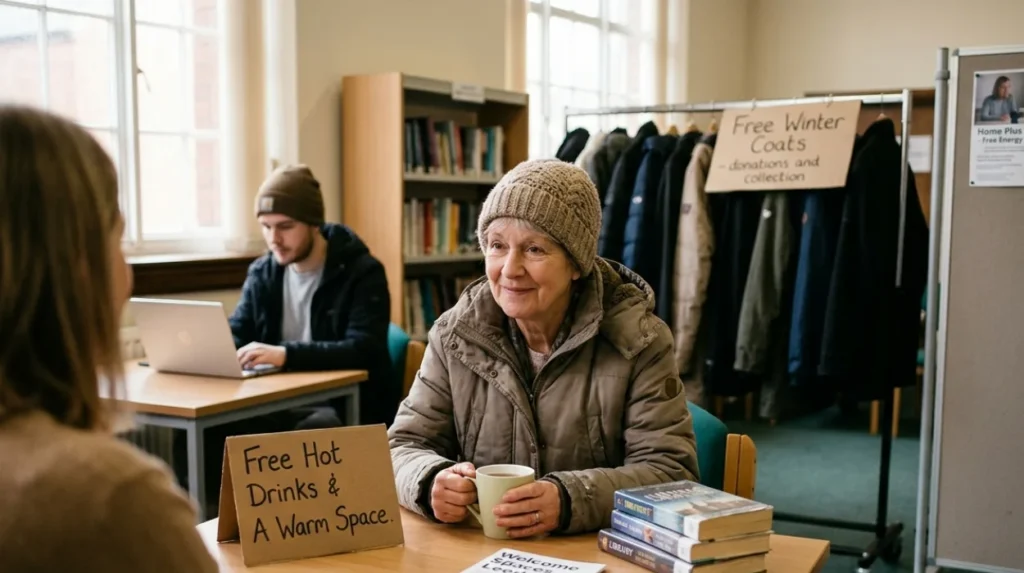
People in Leeds can use Welcome Spaces, which are free warm places in libraries, community centres, community hubs, and partner venues across the city. These spaces are built for short visits, longer stays, and access to hot drinks, company, and local advice.
Welcome Spaces exist to give residents a place to stay warm without needing to spend money at home. Leeds City Council says these venues are safe, warm, and welcoming, and that they are open to people and communities across the city. The council-managed sites include libraries and community hubs, where visitors can also use books, computers, and Wi‑Fi.
The practical value of these spaces is simple. Someone can stay indoors for several hours, reduce their home heating use, and still remain warm and socially connected. That matters in winter because the NHS says keeping warm helps prevent colds, flu, and more serious health problems. For many residents, the free venue itself is the warmest room available during the day.
These spaces also serve as access points for advice. Leeds Council says some of its warm venues provide free guidance on money, housing, council tax, and benefits. That matters because warmth problems often come from income, housing quality, or high fuel costs, not just from the weather. A warm space therefore works as both a shelter and a support gateway.
How does Home Plus Leeds help?
Home Plus Leeds helps people who struggle to heat their homes by offering free advice, support with bills, and in some cases small energy-efficiency or heating upgrades. It is aimed at residents at risk from cold homes, including some low-income households and people with health conditions.
Care & Repair Leeds, working with partners including Age UK Leeds and Groundwork Green Doctor, manages Home Plus Leeds. The service is intended to help residents stay warm, stay well, and save money on household bills. Leeds Council says eligible people can receive free help and should call the Home Plus Leeds team on 0113 240 6009 to check eligibility and apply.
The scheme matters because cold homes affect health. UK government guidance says cold homes increase health risks, especially for older adults and people with medical conditions. NHS guidance says people should aim to heat the rooms they use most to at least 18°C, especially if they are older or vulnerable. Home Plus targets that problem at household level by helping residents improve warmth without paying for the intervention themselves.
The service also connects to wider warmth support in Leeds. Leeds Council’s affordable warmth strategy says the city’s Warm Homes Service provides heating improvements to low-income households, and its Green Doctor service can refer residents to larger schemes where more work is needed. That creates a clear route from advice to action: assess the problem, identify the household need, and move the resident into the right support.
Can you get a free coat in Leeds?
Yes. The Leeds Winter Coat Appeal distributes free winter coats and other winter items to people across Leeds, with collection points and community locations used for access. The appeal also accepts donations of clean, good-quality winter clothing.
The appeal is one of the most direct ways to stay warmer without spending money. Its purpose is to collect and redistribute good-quality second-hand coats so residents can keep warm through winter. The scheme is run annually and is active through the winter season, with distribution continuing until the end of February in the most recent appeal cycle.
The appeal also includes other winter items such as fleeces, hats, scarves, gloves, waterproofs, and baby sleeping gear. That wider clothing support matters because warmth depends on layers, not only on one heavy coat. For households with children, the practical value is immediate because coats and waterproof clothing reduce the need to buy new items during the coldest months.
The city’s recent reporting says there were 42 donation points in the winter coat campaign and that free coats were available at collection points across Leeds. The same report says the appeal helps reduce waste as well as save money. In a winter economy where clothing prices add up quickly, free coat access is one of the clearest no-cost warmth measures in the city.
What health advice matters most?
The most important health advice is to keep the home warm enough, wear layers, close bedroom windows at night, and reduce draughts. The NHS and UK government both say 18°C is the key minimum target for rooms people use often, especially for older or vulnerable people.
NHS guidance says keeping warm over winter helps reduce the risk of colds, flu, pneumonia, heart attacks, strokes, and depression. It also says people should heat regularly used rooms, such as the living room and bedroom, to at least 18°C if possible. Government guidance repeats the same advice and adds that rooms can be made warmer by reducing draughts, using draft excluders, and wearing several thin layers rather than one thick layer.
The temperature threshold is important because health risk rises in cold homes. A government review on indoor temperature says heating homes to at least 18°C in winter poses minimal risk to the health of a sedentary person wearing suitable clothing. For older adults and people with pre-existing conditions, that 18°C threshold is particularly important, including overnight. This is why free warmth support in Leeds is not just a comfort issue; it is a public-health issue.
Cold weather guidance also warns against unsafe heating practices. People should avoid improvised or faulty appliances because they increase the risk of carbon monoxide poisoning. In other words, staying warm for free should never mean using unsafe heat sources. Leeds residents who need help are better served by council support, warm spaces, and proper energy advice than by risky heating shortcuts.
Why does cold home support matter?
Cold-home support matters because fuel poverty and low indoor temperatures damage health, raise NHS costs, and increase winter illness and mortality. Leeds services exist to reduce those risks by helping people heat homes safely or spend time in warm public spaces.
Government and public-health guidance links cold housing with poorer health outcomes. One government briefing says more than one in five excess winter deaths in England and Wales have been attributed to cold housing in the evidence base it cites. Another source notes that the NHS cost of fuel poverty in England has been estimated at £1.36 billion, excluding wider costs. Those figures explain why city-level warmth schemes are not cosmetic services; they are prevention measures.
Fuel poverty has a clear structure. It comes from three main pressures: low household income, high energy costs, and poor energy efficiency in the home. Leeds Council’s affordable warmth strategy reflects that structure by combining advice, energy improvements, and referrals into different services. The city’s approach recognises that a warm home depends on both the building and the household’s finances.
The implications are practical. A household that uses a Welcome Space for several hours can lower home heating use. A resident who gets a free coat can cut the need to raise indoor heating just to feel comfortable. A household that gets help from Home Plus can improve the warmth of the home itself. Together, those routes create a layered winter response that works at street, home, and clothing level.
How do residents use these services?
Residents use these services by visiting a Welcome Space, applying for Home Plus Leeds, or collecting a free coat through the Winter Coat Appeal. The fastest route is to start with the immediate need: a warm place today, warmth repairs at home, or clothing for the cold weather.
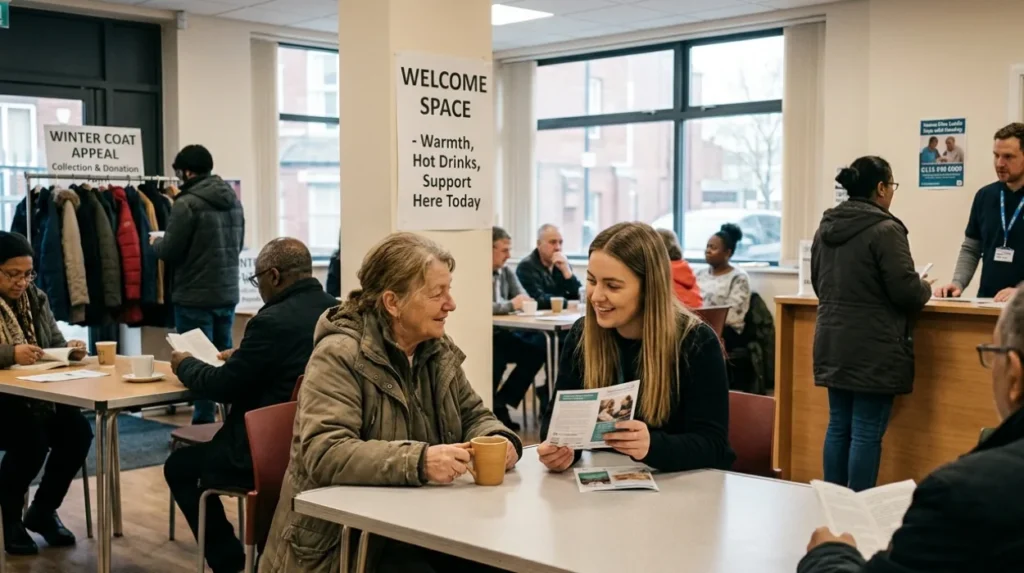
A resident who needs warmth immediately can use a Welcome Space in a library, community centre, or hub. That option works best for people who need several warm hours during the day, access to hot drinks, or somewhere to sit, read, or work safely indoors. It also helps residents who want free advice without making a formal service application first.
A resident who struggles to heat a property should contact Home Plus Leeds on 0113 240 6009. The scheme is relevant for people with low income, some health conditions, children in the household, or a need for energy-efficiency and heating help. That route is especially important for households where the home itself is the main source of the problem.
A resident who needs winter clothing can use the Leeds Winter Coat Appeal and its collection points. The appeal is the quickest way to get a warm coat without spending money, and it exists specifically to redistribute usable clothing to people who need it. For many people, a coat is the cheapest and most immediate form of winter insulation available.
What should readers remember?
The main point is simple: Leeds has free winter warmth support, and residents can use it in three ways, by finding a warm public space, getting help for a cold home, or collecting a free coat. The city’s support is built around health, safety, and affordability.
The most useful free options are already active in the city and do not require a complicated search. Welcome Spaces offer a warm place to stay, Home Plus Leeds offers household support, and the Winter Coat Appeal reduces clothing costs. NHS and government guidance reinforces the same basic standard: keep rooms used often at about 18°C, close bedroom windows at night, wear layers, and reduce draughts.
Leeds also treats winter warmth as a wider public service, not just a personal responsibility. That matters because cold homes affect health, finances, and daily life at the same time. For Leeds residents facing a tight winter budget, the city’s free warmth network is a practical first line of help.
Is there any free help to stay warm in Leeds?
Yes, Leeds offers free warm spaces, free winter coats, and home energy support through services like Welcome Spaces, Home Plus Leeds, and the Winter Coat Appeal.