


Parents in Garforth concerned about their child’s learning have several clear pathways to an assessment. In England, children with possible learning difficulties can be screened by school staff, health professionals, or specialist services, supported by local Leeds and national frameworks such as the SEND (Special Educational Needs and Disabilities) system.
- What counts as a learning difficulty?
- What are the early signs in school‑age children?
- Should I start with my child’s school or the GP?
- How do schools in Garforth identify learning needs?
- What is an EHCP and how does it relate to an assessment?
- Which NHS or council services can assess learning difficulties?
- Can I get a private assessment in or near Garforth?
- How do I choose a qualified private assessor?
- What happens during a school‑based learning‑difficulty assessment?
- What happens in a specialist NHS or private assessment?
- How are dyslexia and other specific learning difficulties diagnosed?
- What support can my child expect after an assessment?
- What if I disagree with the school’s assessment or decision?
- How does involving my child in the process help?
- What local resources exist for parents in Garforth and Leeds?
- How can I prepare for my child’s assessment appointment?
- How can early assessment improve long‑term outcomes?
- What should I do next if I suspect a learning difficulty?
This article explains how to recognise early signs, who to contact first, what types of assessment exist, and how families in Garforth can access statutory and private support in and around Leeds.
What counts as a learning difficulty?
A learning difficulty is a condition that makes it harder for a child to learn, understand instructions, read, write, or use numbers at the same pace as most peers. It does not mean the child is less intelligent, just that they need different teaching approaches or extra support.
Common types include dyslexia (affecting reading and spelling), dyscalculia (affecting number skills), dyspraxia (affecting coordination), and other specific learning difficulties. These are distinct from general learning disabilities, which involve broader cognitive impairment.
In the UK, learning difficulties fall under “special educational needs” (SEN) when they significantly affect education. The SEND Code of Practice requires schools to identify such needs early and plan appropriate support.
What are the early signs in school‑age children?
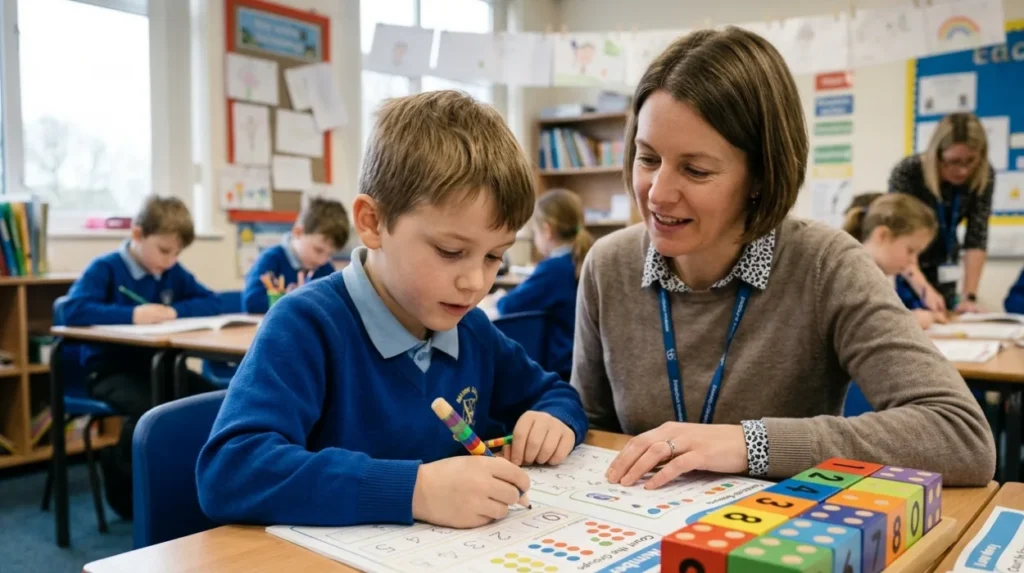
Early signs of a possible learning difficulty include struggling with reading, writing, or maths despite extra help, and finding it hard to follow instructions or remember tasks. Children may also mix up letters or numbers, avoid reading aloud, or show frustration when working with worksheets.
In Garforth schools, teachers commonly notice pupils who cannot keep up with class work, who need repeated explanations, or who underperform compared with their ability in conversation or play. Other signs include poor handwriting, difficulty copying from the board, or appearing to “underachieve” relative to effort.
These signs do not automatically mean a formal diagnosis is needed, but they are a clear signal to speak to the school or a GP and request a review.
Should I start with my child’s school or the GP?
In Garforth the first step is usually to speak to the child’s class teacher and then the school’s Special Educational Needs Coordinator (SENCO). Schools can carry out internal assessments, implement classroom strategies, and decide whether a specialist or medical referral is needed.
If the school is unsure, or if there are wider concerns such as speech, behaviour, or general development, a visit to the GP is the next step. The GP can refer the child to NHS services such as speech and language therapy, paediatricians, or specialist learning‑difficulty teams.
Many families in Leeds use both routes in parallel: the school manages day‑to‑day support while health services examine underlying causes.
How do schools in Garforth identify learning needs?
In Garforth primary and secondary schools, identification starts with classroom monitoring, such as teacher observation, standardised reading and maths tests, and behaviour or participation notes. Teachers share these with the SENCO, who oversees a graduated “Assess – Plan – Do – Review” model.
The school may use in‑house tools such as reading‑age tests, phonics screening, or maths assessments to compare a child’s performance with peers. If gaps persist despite short‑term interventions, the SENCO can recommend a formal diagnosis or an Education, Health and Care Plan (EHCP) assessment.
Parents can request a meeting with the SENCO at any time to ask about assessments, interventions, and whether a referral to external specialists is being considered.
What is an EHCP and how does it relate to an assessment?
An Education, Health and Care Plan (EHCP) is a legal document that sets out a child’s special educational, health, and care needs in England. It is created when a child’s needs are complex enough that usual school support is not sufficient.
Before an EHCP is issued, the local authority (Leeds City Council in Garforth families’ cases) conducts a “statutory assessment”, which gathers reports from school, health professionals, and sometimes parents. This can include psychological, speech‑and‑language, or educational psychologist input.
The EHCP then specifies the type and level of support, such as extra teaching time, specialist equipment, or external therapy. It is reviewed at least annually and can be updated if new assessments show different needs.
Which NHS or council services can assess learning difficulties?
In Leeds, NHS and local authority services can carry out assessments for learning difficulties, including dyslexia, dyspraxia, autism, and other conditions. Referrals come via GPs, school staff, or sometimes social care, depending on the nature of the concern.
Common routes include paediatric assessment through Leeds Community Healthcare NHS Trust, speech and language therapy, and specialist learning‑difficulty teams. These services may look at cognitive ability, language, motor skills, and behaviour as part of a multidisciplinary assessment.
Families in Garforth can also contact Leeds City Council’s SEND team for information about EHCP assessments and local support pathways, including liaison with schools and health professionals.
Can I get a private assessment in or near Garforth?
Yes, private assessments for learning difficulties are available in and around Leeds, including dyslexia and other specific learning difficulties. Private services such as Leeds Dyslexia Services and Yorkshire Dyslexia offer diagnostic assessments for children, usually in a clinic or home setting.
These assessments typically last 2–3 hours and use standardised tests of reading, spelling, phonological awareness, working memory, and related skills. The outcome is a detailed report that states whether a specific learning difficulty is present and suggests practical strategies for home and school.
Private assessments are usually paid for by parents, with typical costs around £350–£400 for a full diagnostic report, though fees can vary between providers.
How do I choose a qualified private assessor?
A qualified private assessor for learning difficulties should be a specialist such as an educational psychologist, specialist teacher, or clinical psychologist with recognised accreditation. In England, many private dyslexia services are members of organisations such as PATOSS or the British Dyslexia Association.
Parents should check the assessor’s qualifications, registration status, and experience with the child’s age group. A reputable assessor will provide a clear schedule, explain the tests, and outline how the report can be shared with the school or GP.
When choosing a provider near Garforth, families often travel to Leeds‑based centres or book home visits from services that cover West Yorkshire. It is sensible to compare at least two providers on expertise, cost, and turnaround time for the report.
What happens during a school‑based learning‑difficulty assessment?
A school‑based assessment usually starts with gathering information from teachers, parents, and sometimes the child. Staff may review classwork, test scores, and behavioural notes, then apply short‑term classroom strategies to see if targeted support improves performance.
If the child continues to struggle, the school may arrange more formal screening, such as standardised reading‑age tests, phonics assessments, or maths fluency tasks. Class teachers and teaching assistants often record how the child responds to particular interventions over several weeks.
The school may then involve an educational psychologist or external specialist, especially if an EHCP is being considered. The focus is always on identifying barriers and matching support, not on labelling the child.
What happens in a specialist NHS or private assessment?
A specialist NHS or private assessment for learning difficulties is more in‑depth than a school screening. It usually begins with a parent interview, where the assessor asks about the child’s early development, school history, and current difficulties.
The child then completes a series of standardised tests. These may include measures of intelligence, language skills, phonological awareness, reading, spelling, writing, maths, memory, and motor coordination, depending on the suspected difficulty.
After the assessment, the specialist analyses the scores, compares them with age‑related norms, and writes a report. The report explains strengths and weaknesses, states whether a specific learning difficulty is present, and gives practical recommendations for school, home, and, if needed, further therapy.
How are dyslexia and other specific learning difficulties diagnosed?
Dyslexia is diagnosed when a child has persistent difficulties with accurate or fluent word reading, spelling, and/or phonological processing, despite adequate instruction and opportunity. The assessor must rule out other causes, such as vision or hearing problems, and show that the difficulty is unexpected given the child’s overall ability.
Other specific learning difficulties are diagnosed similarly: dyscalculia involves marked difficulty with number concepts and arithmetic, while dysgraphia mainly affects handwriting and written expression. Assessments use standardised tests and compare the child’s performance with peers of the same age.
Diagnosis is usually made by a trained specialist, such as an educational psychologist or specialist teacher, and recorded in a written report that can be shared with the school and GP.
What support can my child expect after an assessment?
After an assessment in Garforth, support can include classroom adjustments, targeted intervention groups, and individualised teaching strategies. Schools may introduce tools such as coloured overlays, text‑to‑speech software, or extra time for written tasks, depending on the child’s confirmed needs.
If an EHCP is in place, the child may receive additional resources such as one‑to‑one teaching, specialist equipment, or access to external therapists. Parents can also use the assessment report to request exam adjustments at GCSE and A‑level, such as extra time or a scribe.
Ongoing support should be reviewed regularly, ideally at least once a year, to ensure it still matches the child’s changing needs as they move through school.
What if I disagree with the school’s assessment or decision?
If a parent in Garforth disagrees with the school’s assessment or the type of support offered, they can request a meeting with the SENCO and headteacher to discuss the evidence and their concerns. Schools are required to listen to parents and may adjust their approach or agree to further assessment.
Parents can also seek independent advice from Leeds SENDIASS (Special Educational Needs and Disability Information, Advice and Support Service). This free service helps families understand their rights, challenge decisions, and request a reassessment or EHCP if needed.
If the disagreement continues, parents can use the formal mediation and appeals process tied to EHCPs, or complain to Leeds City Council SEND or the local education authority.
How does involving my child in the process help?
Involving the child in discussions about learning difficulties helps them understand their strengths and the support they need, rather than feeling “different” or “less able”. Age‑appropriate explanations can reduce anxiety and build self‑advocacy, so the child can ask for help when needed.
Schools in Garforth often use pupil‑centred reviews or “pupil profiles” where the child helps describe what works for them and what is hard. This input informs class strategies and can be included in an EHCP or individual support plan.
Parents can reinforce this at home by talking openly about learning, praising effort, and linking any diagnosis to practical strategies, such as reading aloud together or using apps that support spelling and maths.
What local resources exist for parents in Garforth and Leeds?
Parents in Garforth can access a range of local resources, including Leeds SENDIASS, which offers free, impartial advice on SEND assessments, EHCPs, and school placements. The service is run by Leeds City Council and supports families throughout the Leeds area, including Garforth.
Other resources include Leeds Dyslexia Services and specialist dyslexia services in Leeds that provide diagnostic assessments and parent guidance. National organisations such as the British Dyslexia Association and Leeds Mencap also host information pages on how to get a child tested for learning difficulties.
Schools and community hubs in Garforth may also signpost families to local support groups, mentoring schemes, or after‑school clubs that help children build confidence alongside academic support.
How can I prepare for my child’s assessment appointment?
To prepare for an assessment, parents should gather school reports, previous test scores, and any medical or development notes that might be relevant. It is also helpful to note specific examples of where the child struggles, such as particular subjects, homework, or social situations.
Parents can talk to the child in simple terms about what the appointment will involve, reassuring them that the assessor is there to help, not to “trick” them. Ensuring the child is well‑rested, has eaten, and feels supported on the day can improve the quality of the assessment responses.
Finally, parents should prepare questions for the assessor, such as how the report will be used, whether it can be shared with the school, and what follow‑up support might be recommended.
How can early assessment improve long‑term outcomes?
Early assessment of learning difficulties can significantly improve long‑term academic and social outcomes by ensuring support is in place before the child falls far behind. In England, timely identification is linked to better literacy and numeracy attainment, higher self‑esteem, and fewer behaviour problems.
For children in Garforth, early intervention can help them access the right classroom strategies, exam adjustments, and specialist support before they reach key stages such as GCSEs. Long‑term benefits include increased likelihood of employment, further education, and independent living.
Because learning difficulties are often lifelong, ongoing monitoring and review of support are essential. Regular assessment and updated plans help children adapt to changing demands as they progress through school and into adulthood.

What should I do next if I suspect a learning difficulty?
If you live in Garforth and suspect a learning difficulty, the next step is to request a meeting with your child’s class teacher and the school’s SENCO to discuss your concerns. Ask how the school tracks progress, what assessments they use, and whether a referral to external services or an EHCP assessment is appropriate.
At the same time, families can contact Leeds SENDIASS for independent guidance and consider whether a private diagnostic assessment might be useful, especially if they want a detailed report quickly. Combining school‑based support with professional assessment gives the child the best chance of targeted help.
Parents should act promptly but calmly, focusing on getting clear information and practical steps rather than waiting for difficulties to resolve on their own. Early action is one of the most effective ways to support a child with learning difficulties in Garforth and across Leeds.
How do I know if my child has a learning difficulty?
Look for signs like struggling with reading, writing, maths, or following instructions compared to other children.