
Key Points
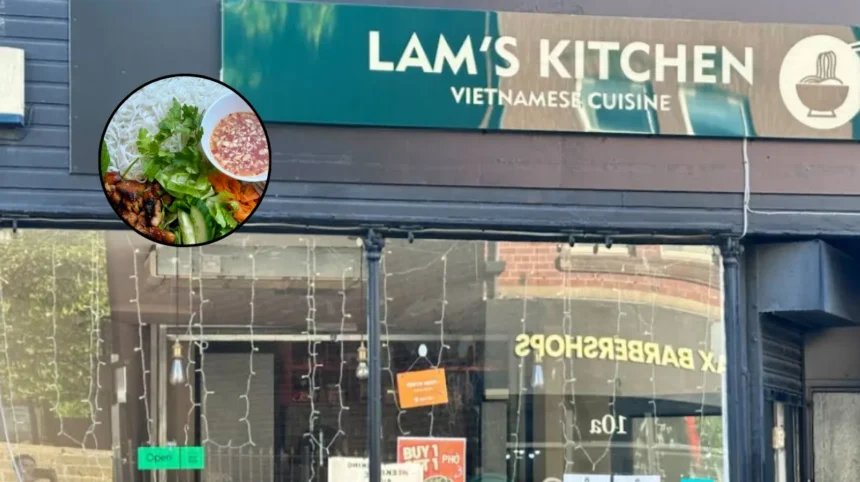
- Lam’s Kitchen, a Vietnamese restaurant on Otley Road in Headingley, Leeds, has been granted an alcohol licence with strict conditions attached.
- The venue was allowed to serve alcohol only with food and only to seated customers.
- It must not place tables or chairs outside, and it must not promote itself as an Otley Run venue.
- Customers in fancy dress, or those displaying Otley Run signage, should not be admitted.
- Leeds City Council received 13 letters of concern warning that another alcohol venue could add to anti-social behaviour linked to the Otley Run pub crawl.
- West Yorkshire Police initially objected, but withdrew its objection after an agreement was reached with the premises.
- The restaurant sits within a Cumulative Impact Area, where the council says alcohol-related disorder is already a concern.
- Owner Vu Tran said he wanted to refurbish the shop, expand the business, and hire more staff.
Leeds City Council (The Leeds Times) April 29, 2026, approved Lam’s Kitchen’s alcohol licence application, but only under conditions designed to stop it becoming part of the Otley Run pub crawl.
The decision means the restaurant can sell alcohol, but not in a way that encourages revellers moving along the famous Headingley route.
Lam’s Kitchen, on Otley Road in Headingley, had asked to serve drinks until 22:30 every day and faced opposition from residents and other interested parties.
The licensing hearing heard that the venue sits on the Otley Run route, which attracts thousands of fancy-dress pub crawlers to the area at weekends. Concerns centred on whether a new alcohol outlet could worsen the pressure already placed on the neighbourhood by the crawl.
Why were there objections?
According to the reporting from the Local Democracy Reporting Service, Leeds City Council received 13 letters of concern about the application. One objection said:
“In recent years I have been dismayed by the transformation of the area as a consequence of the exponential expansion of the Otley Run.”
That complaint reflected a wider worry that additional licensed premises could add to nuisance, disorder and crowding in the area.
The council’s licensing policy also matters here. Leeds says Headingley is part of a cumulative impact area because the district has suffered from the effects of licensed premises and Otley Run-related activity. The policy says it would be inconsistent with the council’s licensing objectives to grant new or varied licences that would operate during peak hours or encourage participation in the Otley Run.
That wider policy background helps explain why the restaurant had to accept restrictions before the licence could be granted.
What did the owner say?
Vu Tran, who runs the restaurant, told councillors he wanted to improve the business rather than turn it into a pub crawl stop. He said:
“We’ve got plans to refurbish the shop, to make it better for the community,”
and added: “We are hiring more employees.”
That assurance appears to have formed part of the argument that the venue should be allowed to trade, provided it stayed focused on food-led dining.
West Yorkshire Police originally objected to the licence, but that objection was withdrawn after an agreement with the premises. The final outcome suggests that licensing officers and police accepted conditions as sufficient to reduce the risk of the restaurant becoming an alcohol-led venue.
Why does the Otley Run matter?
The Otley Run is a well-known pub crawl in Leeds that draws large numbers of people, often in fancy dress, particularly at weekends.
The route has become a recurring source of concern for residents and council officials because of anti-social behaviour, noise, and disorder in parts of Headingley. Leeds’ own licensing policy says the area around North Lane and Otley Road suffers from alcohol-related violent crime and nuisance during specific peak hours.
The council’s policy also states that applications which may encourage participation in the Otley Run should normally be refused in that area unless applicants can show they will not add to cumulative impact.
In practical terms, that means businesses on or near the route are expected to prove they will not become part of the crawl’s drinking culture. Lam’s Kitchen’s licence conditions reflect that approach.
How does this fit Leeds policy?
Leeds City Council publishes a cumulative impact assessment that covers Headingley and other parts of the city where alcohol-related problems are considered concentrated. For Headingley, the policy specifically links the area to the Otley Run and states that new or varied premises licences for on-sales, off-sales and late-night takeaways during peak hours should not be granted if they would worsen the impact.
The council says the policy exists to protect the licensing objectives, including public safety, preventing public nuisance, and reducing crime and disorder.
That framework helps explain why Lam’s Kitchen was allowed to proceed only with limitations. The venue can operate as a restaurant with alcohol, but it cannot market itself as a pub crawl destination or behave like one. The restrictions are intended to keep the business distinct from the Otley Run flow.
What was said about local safety?
The article notes that residents near the route have called for the Otley Run to be recognised as an official event so it can be made safer, following a crossbow attack in which two women were injured. It also says residents and other groups have long complained about rowdy behaviour linked to the crawl.
Those concerns have fed into the broader debate over how Headingley should be managed at weekends.
Leeds’ licensing policy for Headingley refers to nuisance and crime associated with large numbers of Otley Run participants.
It says residents and businesses have reported that the influx of drinkers in fancy dress makes parts of the area harder to use and live in during peak times. The policy, therefore, treats the area as one where alcohol-related impact must be controlled carefully.
Background of development
Lam’s Kitchen is part of a wider series of licensing decisions in Headingley linked to the Otley Run. Leeds City Council has increasingly used cumulative impact rules to control how licensed premises operate in the area, especially where businesses might attract pub crawlers.
That includes setting conditions on alcohol sales and testing whether new venues could intensify the problems already associated with the route.
The council’s current licensing policy, approved and updated in 2025 and early 2026, says Headingley is an area where the evidence shows alcohol-related violent crime and nuisance during busy periods. It also states that applications that could encourage the Otley Run should normally be refused unless they clearly would not add to cumulative impact.
This case shows that the council is still willing to allow restaurants to serve alcohol, but only when the business model is kept away from the pub crawl itself.
Prediction
For local residents, this decision is likely to be seen as a limited safeguard rather than a major change, because the council has allowed the licence only under strict anti-crawl conditions. For Lam’s Kitchen, the outcome may support growth, refurbishment, and hiring, but only if it remains a food-led restaurant and avoids attracting Otley Run trade. For the wider Headingley area, the case suggests future applicants will continue to face close scrutiny if their business could be linked to the crawl or add pressure to already sensitive streets.