
Key Points
- Fulneck School in Pudsey has been placed on the market as a “rare opportunity to acquire and reposition a substantial former school estate.”
- The school closed in July 2025 after 272 years, following falling pupil numbers and rising costs.
- The Grade I listed site includes part of the eastern and western terraces, plus a range of ancillary buildings.
- The marketing material says the estate could be used for continued educational or institutional purposes, or for conversion and redevelopment, subject to planning.
- Possible future uses listed include residential conversion, later living or care accommodation, specialist provision, and community or institutional use.
- The Robinson building at the former school will be retained by the Moravian Church.
- Fulneck School was founded in 1753 to educate the sons and daughters of Moravian ministers and missionaries.
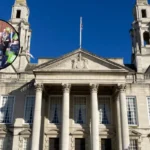
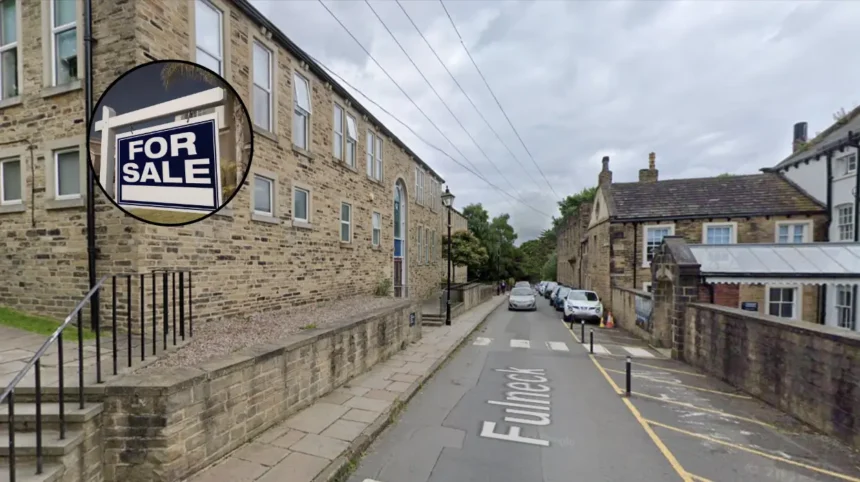
Pudsey (The Leeds Times) May 4, 2026 – Former Fulneck School building up for sale as the historic Pudsey site is marketed for a new use after the independent day and boarding school closed last summer. The former school estate has been listed by Hilco Global Real Estate Solutions, with the brochure describing it as a substantial former school campus with possible routes into education, institutional use, housing or care-related redevelopment.
The site’s appearance on the market marks the latest stage in the closure of one of West Yorkshire’s best-known independent schools. Fulneck School shut its doors in July 2025 after 272 years, with the school saying that persistent falling enrolment and rising operating costs had made continued operation financially unviable.
Why was the school closed?
As reported by the BBC, Fulneck School announced in March 2025 that it would close at the end of the academic year because of a continued decline in enrolment and increasing operational costs. The school later closed on 8 July 2025.
West Leeds Dispatch reported that the school’s trustees and leaders had tried to sustain pupil numbers, but the combination of fewer students and higher costs made financial viability increasingly difficult. The school’s accounts also showed six-figure annual losses and a £1.9 million loan to the Moravian Union, according to the same report.
What does the sale listing say?
According to the marketing brochure quoted by West Leeds Dispatch, the estate’s scale and character make it suitable either for continued educational or institutional use, or for “a comprehensive conversion and redevelopment scheme,” supported by surrounding residential demand and regional connectivity.
The brochure also states the property could be adapted for residential conversion, later living, care accommodation, educational or specialist provision, or community or institutional use, subject to planning permission.
The sale therefore leaves open several possible directions, but none can proceed without the relevant approvals.
Which parts of the site are included?
The listing covers the Grade I listed building and extensive grounds, including part of the eastern and western terraces and a range of ancillary buildings.
One building, the Robinson building, will be retained by the Moravian Church and is not part of the wider sale in the same way as the rest of the estate.
Fulneck’s heritage value is central to the marketing of the site. The school was established in 1753 and stood within the historic Moravian settlement at Fulneck, an area long associated with religious, educational and residential buildings.
What is the historical importance of Fulneck School?
Fulneck School was founded to educate the children of Moravian church ministers and missionaries, and it became one of the most recognisable independent schools in the Leeds area. Among its former pupils were actress Dame Diana Rigg and former prime minister H.H. Asquith.
The school’s closure in 2025 ended a 272-year run. The site is part of the wider Fulneck Moravian Settlement, which includes historic church and residential buildings and has long been tied to the community identity of Pudsey.
What could happen next?
The next stage will depend on planning, heritage constraints, and the interest of potential buyers. Because part of the estate is Grade I listed, any redevelopment would likely need to balance commercial viability with conservation requirements.
The listing suggests the site could remain in some form of educational or institutional use, but it also signals that housing, care and community uses are realistic possibilities if the right buyer and approvals emerge. That makes the sale significant not only for the future of the buildings, but also for the character of the wider Fulneck area.
Background of the development
Fulneck School’s origins date back to 1753, when it was established by the Moravian Church to educate the sons and daughters of its ministers and missionaries.
Over the centuries, it became a long-standing private day and boarding school in Pudsey and formed part of the wider Fulneck Moravian Settlement.
Its closure followed a period of financial pressure, with reports pointing to falling pupil numbers, rising costs and continued losses.
The sale of the former school building is therefore the follow-on stage of a wider decline, shifting the story from closure to what may replace the site.
Prediction for local stakeholders
For the local community, former pupils and heritage supporters, the most immediate effect is uncertainty about how the site will be used and how much of its historic identity will be preserved. A redevelopment focused on housing or care accommodation could bring new investment and activity, but it may also change public access and the character of the estate.