
Key Points
- Voters in Leeds went to the polls on Thursday, May 7, 2026, to contest all 36 seats on Leeds City Council.
- The election count took place at the John Charles Centre for Sport throughout Friday, May 8, 2026.
- First results began to be announced on Friday, with the initial seat of the day going to Reform UK.
- 13 photos document the election count process as the new-look city council starts taking shape.
- National context shows Labour predicted to lose hundreds of council seats nationwide amid rising support for Reform UK and the Green Party.
Leeds (The Leeds Times) May 8, 2026 – Results are starting to be announced in Leeds as the new-look city council starts taking shape, with the first seat of the day declared for Reform UK amid a count captured in 13 photos from the venue.
- Key Points
- What Triggered the First Results Announcement at Leeds Election Count?
- Which Party Secured the First Seat in the Leeds Council Election?
- How Does the National Picture Influence Leeds Council Results?
- What Role Did the John Charles Centre Play in the Count?
- Who Were the Key Contenders in the Leeds City Council Elections?
- Why Are Photos Significant in Documenting the Election Count?
- What Changes Could the New Council Composition Bring to Leeds?
- Background of the Development
- Prediction: How This Development Can Affect Leeds Residents
What Triggered the First Results Announcement at Leeds Election Count?
The count for the Leeds City Council elections has been underway at the John Charles Centre for Sport since early Friday, following polling on Thursday across the city’s 33 wards, where 36 seats were contested.
As reported in the original coverage, voters headed to the polls yesterday (Thursday) across Leeds to have their say over the 36 seats being contested on Leeds City Council.
The atmosphere at the count was documented through 13 photos showing the verification and sorting of ballot papers, party agents observing the process, and candidates awaiting outcomes.
Results are now starting to come in, with the first seat of the day going to Reform UK, marking an early success for the party at the local level.
This development aligns with broader national trends where Labour is predicted to lose hundreds of council seats around the country as support grows for Reform UK and the Green Party.
Which Party Secured the First Seat in the Leeds Council Election?
Reform UK claimed the first seat announced during the count at the John Charles Centre for Sport, though specific ward and candidate details for this initial result were not detailed in immediate reports.
The count has been taking place at the John Charles Centre for Sport throughout today (Friday), and results are now starting to come in.
Pre-election projections indicated Reform UK fielded 35 candidates across the wards, positioning them for potential gains in a landscape where Labour held 56 seats before the election, down from 61 previously.
Nationally, Reform UK achieved significant advances in the 2025 local elections, winning 677 seats and control of 10 councils, contributing to Labour’s losses. Similar dynamics appear at play in Leeds.
How Does the National Picture Influence Leeds Council Results?
Labour faces predictions of substantial losses across England, with Reform UK and Greens gaining ground, as noted in the coverage.
Labour is predicted to lose hundreds of council seats around the country as support grows for Reform UK and the Green Party.
In Leeds, the council composition prior to the election included Conservatives with 13 seats, Liberal Democrats with 6, Greens with 6, and others like Morley Borough Independents and SDP holding smaller numbers.
The 2026 elections occur amid ongoing shifts, with Reform UK demonstrating strength in recent by-elections, such as gaining a seat from Morley Borough Independents in Leeds’ Morley South ward earlier.
What Role Did the John Charles Centre Play in the Count?
The John Charles Centre for Sport served as the central venue for the election count, hosting party representatives, council staff, and media throughout Friday.
That’s it on election day in Leeds. Results will be declared tomorrow, with the count taking place at the John Charles Centre for Sport.
Photos from the event illustrate the meticulous process of ballot handling, with tables laden with boxes from polling stations across Leeds wards.
This multi-purpose sports facility has previously hosted such civic events, ensuring space for the large-scale operation required for 33 wards.
Who Were the Key Contenders in the Leeds City Council Elections?
Candidates from major parties stood in each of the 33 wards, with Labour, Reform UK, Conservatives, Liberal Democrats, and Greens fielding comprehensive slates. For instance, in one ward, candidates included Reform UK’s Craig Gabbitas and Michael Lowry, Labour’s Nathan James Ramsden, Green Party’s Gordon Richard Howe and Dominic Daniel Jack Seaward, and others.
Reform UK stood 35 candidates, Liberal Democrats 33, Greens 33, Conservatives 33, Labour 33, SDP 15, TUSC 6, and Independents 6.
Voter turnout details for 2026 were not immediately available, but past elections saw around 34% participation.
Why Are Photos Significant in Documenting the Election Count?
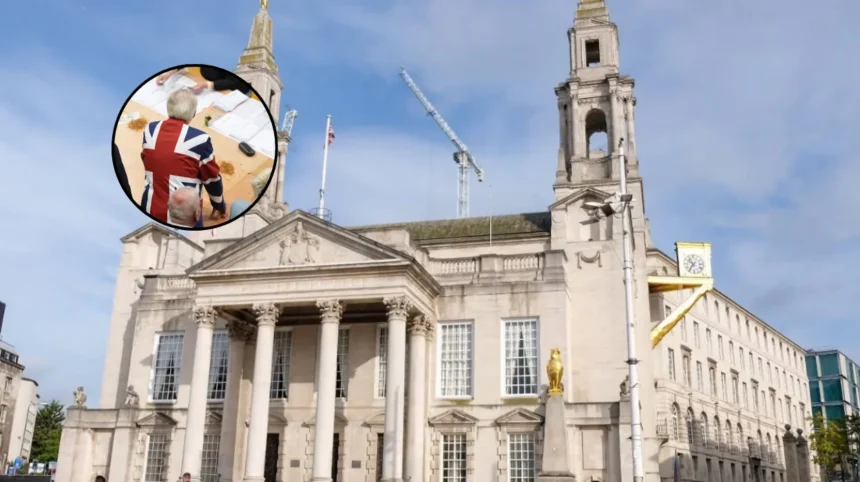
The 13 photos from the Leeds City Council election count provide a visual record of the transparency in the democratic process, showing ballot bundles, counting teams, and reactions as tallies progressed. 13 photos from the Leeds City Council election count as the first results are announced.
These images capture the tension and anticipation, from empty venues pre-count to bustling activity as results like Reform UK’s first seat win were declared.
Such documentation reassures public confidence in the electoral process, especially in high-stakes local elections shaping council control.
What Changes Could the New Council Composition Bring to Leeds?
As more results filter in from the John Charles Centre, the council’s political balance shifts, potentially challenging Labour’s long-held majority. Results are starting to be announced in Leeds as the new-look city council starts taking shape.
Reform UK’s early gains signal potential for opposition influence on policies like housing, transport, and services in Leeds.
Nationwide, Reform’s 804 total councillors post-2025 and Greens’ 895 highlight fragmenting traditional dominance.
Background of the Development
Leeds City Council elections occur every four years, with the 2026 vote covering all 33 wards and 36 seats following boundary changes. Prior to 2026, Labour controlled 56 seats, Conservatives 13, amid a history of Labour dominance since the 1980s.
The John Charles Centre has been a standard count venue, as seen in previous cycles like 2024, where turnout was 34.24%, and Labour retained strong control.
National local elections in 2025 saw Reform UK’s breakthrough, setting the stage for 2026 contests where voter shifts on issues like immigration and the economy played key roles.
Prediction: How This Development Can Affect Leeds Residents
Reform UK’s first seat gain could lead to increased scrutiny on council budgets and services, prompting Labour to address voter concerns on cost-of-living and local infrastructure.
Residents may see policy debates intensify on housing and transport, with potential cross-party alliances needed if no single majority emerges.
Greater Reform and Green presence might shift priorities toward community schemes and environmental initiatives, influencing service delivery for Leeds’ 800,000 population.