
Key Points
- A man has died after being struck by a train on the railway line near Kirkstall Forge in West Leeds.
- British Transport Police were called to the scene just before 3 pm after a “casualty was found on the tracks”.
- Paramedics attended but the person was pronounced dead at the scene.
- The incident is not being treated as suspicious; a file will be prepared for the coroner.
- Train services between Leeds and Bradford were cancelled or delayed for several hours as a result.
- RealTimeTrains and other rail‑information sources reported the disruption as being caused by a person being hit by a train.
Leeds (The Leeds Times) May 13, 2026 A man has died after being struck by a train on the railway line near Kirkstall Forge station this afternoon, with services into and out of Leeds and Bradford severely disrupted.
- Key Points
- How did the incident affect train services?
- What has the British Transport Police said about the incident?
- Why is this incident significant for local rail users?
- How are local authorities and rail operators responding to the incident?
- What is the background to Kirkstall Forge station and this stretch of line?
- What might this development mean for local rail users and communities?
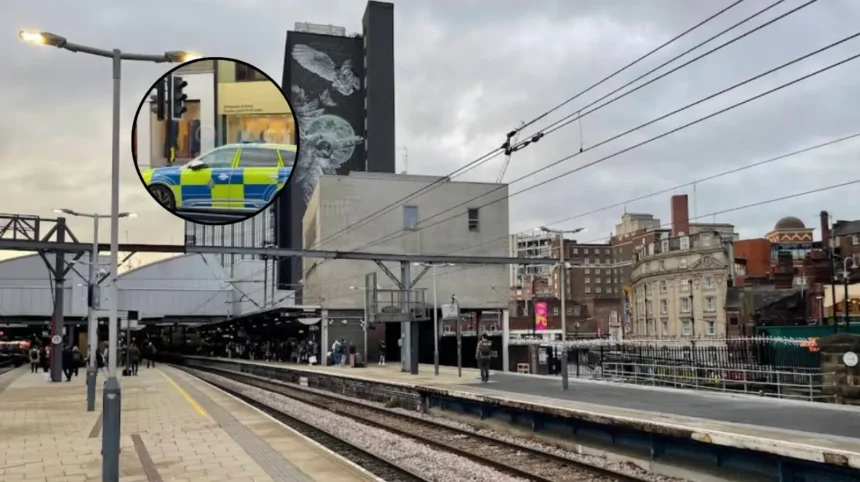
As reported by the West Leeds Dispatch, British Transport Police confirmed the death of a man on the railway in Kirkstall, with the incident occurring in the afternoon on the line serving Kirkstall Forge. Officers were called to the site just before 3 pm following reports of a “casualty on the tracks”, according to a spokesperson for British Transport Police cited in subsequent coverage.
Paramedics attended the location, but the individual was pronounced dead at the scene, the police statement added. The incident is not being treated as suspicious, with investigators instead preparing a file for the coroner in line with normal procedure.
How did the incident affect train services?
Passenger services were immediately affected along the Leeds–Bradford corridor, with trains into and out of Leeds and Bradford variously cancelled or delayed through the afternoon.
As noted by rail‑information outlet RealTimeTrains, the disruption was recorded as being due to a person being hit by a train at the Kirkstall Forge location.
This led to lengthy delays and cancellations on routes connecting Leeds with Bradford and surrounding stations, with many rail‑users forced to seek alternative transport or accept much‑longer journey times. Officials at the rail operator and Network Rail were supported by local authorities and emergency services to manage the scene and gradually restore normal running once the necessary checks and investigations were completed.
What has the British Transport Police said about the incident?
A spokesperson for British Transport Police, as quoted in the West Leeds Dispatch, stated that officers had been called to Kirkstall Forge at 2.53 pm in response to reports of a casualty on the tracks.
The force confirmed that paramedics also attended, but despite their efforts the person was pronounced dead at the scene.
The spokesperson went on to say that the incident was not being treated as suspicious, and that a file would be prepared for the coroner, standard practice in such cases where the cause of death is not understood to involve criminal activity.
British Transport Police typically stress the importance of public safety around the railway, including the need to avoid trespassing on tracks and to follow all safety signage and warnings.
Why is this incident significant for local rail users?
For residents and commuters using the Leeds–Bradford rail corridor, the fatality at Kirkstall Forge is a stark reminder of the dangers posed by level crossings, station‑area footpaths and the railway infrastructure itself. The disruption to services also underlines how a single incident can have a cascading effect on regional timetables, with knock‑on delays and cancellations affecting large numbers of passengers.
Kirkstall Forge is a relatively new station, opened in 2016, and serves as a key commuter hub for workers travelling between Leeds city centre and surrounding West Leeds neighbourhoods.
Any disruption or safety‑related incident here therefore tends to draw close attention from local media, transport authorities and rail‑safety campaigners.
Explore More Local Leeds News
Jonathan Pryor loses Leeds seat to Greens Leeds 2026
More Than 30 Homes Planned on Mistress Lane, Armley 2026
How are local authorities and rail operators responding to the incident?
In the immediate aftermath of the incident, local emergency services, police and rail operators worked together to secure the site, support the family of the deceased and restore services where possible.
British Transport Police and the local coroner’s office will typically co‑ordinate on the formal process of identifying the individual and determining the cause of death, which may take several days or weeks.
Rail operators and Network Rail often use such incidents to review existing safety measures, including signage, fencing, lighting and public‑awareness campaigns, particularly around busy commuter lines such as that between Leeds and Bradford.
While no specific new measures have been announced in connection with this particular fatality, rail‑safety campaigns have previously been rolled out following similar incidents in the region.
What is the background to Kirkstall Forge station and this stretch of line?
Kirkstall Forge railway station, which opened in 2016, sits on the heavily used line between Leeds and Bradford Forster Square, serving both commuters and leisure travellers. The station was developed as part of wider regeneration of the Kirkstall Forge area, including new housing, office space and improved public‑transport links into Leeds city centre.
Safety around the line has been a periodic concern for local authorities and rail‑safety groups, with earlier incidents and near‑misses leading to campaigns about the risks of trespassing on tracks and misusing level crossings.
In 2023, for example, Northern Trains offered a £1,000 reward for information about attacks on Kirkstall Forge trains, highlighting the sensitivity of securing this stretch of infrastructure.
The wider Leeds–Bradford corridor is one of the busiest in the region, with frequent services carrying tens of thousands of passengers each day. Incidents such as the one at Kirkstall Forge therefore attract significant attention from both transport planners and local communities who depend on these services for work, education and healthcare travel.
What might this development mean for local rail users and communities?
Looking ahead, this latest fatality at Kirkstall Forge is likely to sharpen the focus on rail‑safety education and infrastructure in West Leeds and the wider Leeds–Bradford corridor. Local rail‑user groups and safety‑campaign organisations may press for clearer signage, improved lighting, and more robust fencing around sensitive areas of track, particularly where informal footpaths or access points are known.
For commuters and regular travellers, the incident may also heighten awareness of the risks associated with the railway, even in busy urban environments. Rail operators and local authorities may respond with targeted information campaigns, school‑outreach sessions, and enhanced warnings at stations and crossings, aiming both to prevent future tragedies and to reassure the public that safety procedures are being reviewed and strengthened.