
Key points
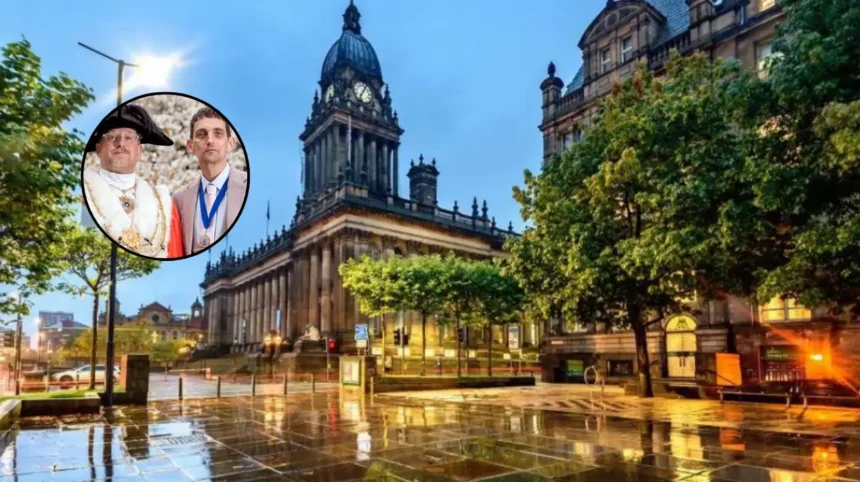
- Leeds City Council has appointed Councillor Stephen Holroyd as the 132nd Lord Mayor of Leeds for the 2026/27 civic year.
- Councillor Holroyd is the city’s first openly gay Lord Mayor, with his partner Simon Mapals becoming the first openly gay Lord Mayor’s Consort.
- The appointment took place at the council’s annual general meeting held at the Civic Hall on Wednesday.
- The 2026/27 civic year coincides with the 400th anniversary of Leeds receiving its royal charter as a borough.
- Alongside his council duties, Councillor Holroyd serves as a governor at Thorpe Primary School and has undertaken fundraising challenges such as the Yorkshire Three Peaks for Macmillan.
- In his speech, Councillor Holroyd spoke about growing up with dyslexia and how his parents’ encouragement helped him reach the role of Lord Mayor.
- The Lord Mayor’s Consort, Simon Mapals, manages a well‑established LGBTQ+‑focused venue in Leeds city centre and has worked in the hospitality sector since the age of 13.
- The incoming Lord Mayor has chosen Yorkshire MESMAC and St Gemma’s Hospice as his two charities to support during his year in office.
- Council members also appointed Councillor Jane Dowson as vice chair of council and formally thanked outgoing Lord Mayor Councillor Dan Cohen for his service.
Leeds City Council (The Leeds Times) May 21, 2026, has appointed Councillor Stephen Holroyd as the 132nd Lord Mayor of Leeds at the council’s annual general meeting held at the Civic Hall, marking the city’s first openly gay Lord Mayor and the first openly gay Lord Mayor’s Consort, Simon Mapals, for the 2026/27 civic year. The ceremony took place on Wednesday as part of the formal transfer of ceremonial duties, with outgoing Lord Mayor Councillor Dan Cohen handing over the role amid a wider recognition of Leeds’s 400th‑anniversary year of receiving its royal charter. As reported by coverage of the meeting, councillors and members of the public highlighted the appointment as both a historic step for representation and a continuation of the traditional mayoral function in civic life.
- Key points
- Who is the new Lord Mayor and what are his responsibilities?
- Why is this appointment being seen as a milestone?
- What does the Lord Mayor’s Consort bring to the role?
- How does this fit with Leeds’s 400th‑anniversary year?
- What else was decided at the annual meeting?
- Background: the office of Lord Mayor in Leeds
- Prediction: how this development may affect local residents and communities
Who is the new Lord Mayor and what are his responsibilities?
Councillor Stephen Holroyd, who represents the Ardsley and Robin Hood ward after being elected in 2023, will hold the politically neutral role of Lord Mayor for the 2026/27 civic year. Before entering local government, he worked largely in the hospitality sector and later moved into financial services, according to biographical material referenced in the council’s own communications.
In addition to his council duties, Councillor Holroyd serves as a governor at Thorpe Primary School and has previously undertaken fundraising challenges such as the Yorkshire Three Peaks for Macmillan, a leading cancer‑support charity.
The role of Lord Mayor includes chairing meetings of full council, representing Leeds at civic events, and welcoming dignitaries and visitors to the city, a point reiterated in the official description of the post accompanying the annual meeting.
The Lord Mayor also selects two charities to support during the year in office, and in this case those have been named as Yorkshire MESMAC and St Gemma’s Hospice. Yorkshire MESMAC is a community‑based organisation supporting the sexual health and wellbeing of gay, bisexual and queer men, while St Gemma’s Hospice provides specialist palliative care services in Leeds.
Why is this appointment being seen as a milestone?
As reported by outlets covering the annual meeting, Councillor Holroyd’s appointment is notable because he is the first openly gay Lord Mayor of Leeds, and his partner Simon Mapals is the first openly gay Lord Mayor’s Consort. The Lord Mayor’s Consort role is ceremonial, with the consort supporting the Lord Mayor at events and public engagements, a tradition that has now been visibly extended to a same‑sex couple for the first time. In remarks made after the appointment, Councillor Holroyd said he was
“honoured to become the 132nd Lord Mayor of Leeds, especially as we continue to celebrate the 400th anniversary of the Royal Charter creating our city throughout 2026.”
He added:
“Leeds is an incredibly diverse city, and I’m looking forward to getting out into our communities and meeting as many people as possible, making new friends and drawing people together through celebrating our differences while embracing what binds us together as a city,”
a statement quoted in coverage of the Civic Hall proceedings. In the same speech, Councillor Holroyd spoke about growing up with dyslexia, telling members that his parents had
“always taught us we could do anything we wanted,”
even though his learning difficulties sometimes made that feel uncertain at the time.
What does the Lord Mayor’s Consort bring to the role?
Simon Mapals, the Lord Mayor’s Consort, was also born and raised in Leeds and has worked in the hospitality industry since the age of 13, according to material cited in the council’s own announcements. He now manages an established LGBTQ+‑focused venue in the city centre, bringing longstanding experience in customer‑facing and community‑oriented roles. In remarks quoted after the appointment, Mapals said he was
“very honoured to become the Lord Mayor’s Consort and to support Stephen in his mayoral duties throughout the coming year.”
The consort’s duties are primarily supportive: accompanying the Lord Mayor at civic functions, helping to strengthen community ties, and amplifying the message of inclusion that the appointment is widely seen as symbolising. Coverage of the annual meeting notes that the presence of an openly gay couple in these ceremonial roles has been welcomed by local LGBTQ+ groups and allies, who have pointed to the visibility such representation can provide for younger people.
How does this fit with Leeds’s 400th‑anniversary year?
The 2026/27 civic year coincides with the 400th‑anniversary year of Leeds receiving its royal charter, which formally established it as a borough under royal authority.
As reported by coverage of the Civic Hall gathering, councillors framed the appointment as both a continuation of the city’s historic traditions and a reflection of its modern, diverse character.
The royal charter, originally granted in 1626, is being marked by a programme of events and civic projects throughout 2026, with the Lord Mayor’s office expected to play a central role in hosting and promoting those activities.
Councillor Holroyd’s emphasis on
“celebrating our differences while embracing what binds us together as a city”
has been cited in several reports as a thematic thread linking the 400th‑anniversary year with the choice of Lord Mayor and consort. This framing is presented neutrally in the coverage, with outlets simply attributing the phrase to his speech without adding interpretive commentary.
What else was decided at the annual meeting?
Alongside the mayoral appointment, councillors used the annual general meeting to appoint Councillor Jane Dowson as vice chair of council, a role that supports the chair in overseeing the conduct of council business. Members of the chamber also formally thanked outgoing Lord Mayor Councillor Dan Cohen for his year in office, acknowledging his work in representing the city at events and in civic engagements. Cohen’s tenure, described in coverage as a “year of service,” included attendance at memorial services, community celebrations, and other protocol‑driven functions typically associated with the mayoral office.
The meeting minutes and related reports, as summarised in post‑meeting coverage, indicate that the annual session was otherwise taken up with the usual procedural business, including the setting of certain ceremonial roles and the confirmation of council leadership positions.
No contentious votes or public disputes were reported in connection with the Lord Mayor appointment itself, with coverage instead focusing on the biographical and symbolic dimensions of the decision.
Background: the office of Lord Mayor in Leeds
The office of Lord Mayor in Leeds traces its roots back to the local government structures established under the borough’s original royal charter.
Although the title has evolved over time, the role has remained largely ceremonial, with the incumbent chairing full council meetings and acting as the city’s principal representative at civic and ceremonial occasions.
The Lord Mayor is chosen from among elected councillors by their peers, typically on an annual basis, and must remain politically neutral while in office.
Charity‑raising is a longstanding feature of the mayoral year, with each Lord Mayor selecting causes to support through events, fundraising drives, and public appeals.
In this cycle, the selection of Yorkshire MESMAC and St Gemma’s Hospice aligns with the city’s focus on both community health and palliative‑care services, a point noted in neutral terms by outlets summarising the decision.
The Lord Mayor’s Consort role, while not part of the original charter, has developed over time as a practical and symbolic position, offering the Lord Mayor a partner in representing the city at functions and engaging with residents.
Explore More Leeds City Council
Leeds MDZ Unveiled to Drive South Bank Regeneration: Leeds 2026
Labour Loses Leeds City Council Control 2026; Leeds, 2026
Prediction: how this development may affect local residents and communities
For residents of Leeds, the appointment of an openly gay Lord Mayor and Lord Mayor’s Consort is likely to enhance the visibility of LGBTQ+ representation in mainstream civic life, a trend that has been observed in other UK cities with similar appointments. Local LGBTQ+ groups may draw on the visibility of the role to encourage young people to consider public service and local politics, while also highlighting ongoing work in areas such as health, safety, and inclusion. Civic organisations that rely on mayoral patronage and fundraising, such as Yorkshire MESMAC and St Gemma’s Hospice, may benefit from increased awareness of their work during the 2026/27 year, though the scale of any such impact will depend on the specific events and campaigns undertaken.