
Ebola symptoms appear 2 to 21 days after exposure to the Ebola virus, with an average onset of 8 to 10 days. Initial symptoms include sudden high fever, severe headache, muscle pain, weakness, and sore throat. These progress to vomiting, diarrhea, abdominal pain, rash, and in about 40% of cases, unexplained bleeding from gums, nose, or in stool.
- What Are Ebola Symptoms and How Do They Start?
- What Are the Early (Dry) Symptoms of Ebola?
- What Are the Later (Wet) Symptoms of Ebola?
- Does Ebola Cause Bleeding and How Often?
- What Other Symptoms Can Ebola Cause?
- How Long Do Ebola Symptoms Last and When Do People Recover or Die?
- What Long-Term Complications Do Ebola Survivors Experience?
- How Is Ebola Different From Malaria, Flu, and Typhoid?
- When Should You Seek Medical Help for Ebola Symptoms?
- How Are Ebola Symptoms Treated?
- What Is the Historical Context of Ebola Outbreaks?
- Why Is Understanding Ebola Symptoms Important for Global Health?
What Are Ebola Symptoms and How Do They Start?
Ebola symptoms are sudden, severe flu-like signs that include high fever, extreme fatigue, headache, muscle pain, and sore throat, followed by vomiting, diarrhea, and rash within 4–5 days. These symptoms mark Ebola virus disease (EVD), a severe often fatal illness affecting humans and primates. The disease was formerly called Ebola hemorrhagic fever.
Ebola virus disease is caused by viruses in the Filoviridae family, primarily Ebola virus (Zaire species), Sudan virus, Tai Forest virus, Bundibugyo virus, and Reston virus. Only Zaire and Sudan species cause significant human outbreaks. The virus spreads through direct contact with blood, secretions, organs, or other bodily fluids of infected people or animals, including fruit bats, porcupines, and non-human primates.
The incubation period ranges from 2 to 21 days. A person infected with Ebola cannot spread the disease until symptoms develop. Symptoms appear abruptly rather than gradually. This sudden onset distinguishes Ebola from many common illnesses.
Early symptoms are nonspecific and resemble malaria, influenza, typhoid fever, meningococcal disease, and bacterial pneumonia. This similarity causes initial misdiagnosis in many cases. Healthcare providers in non-endemic regions may not immediately suspect Ebola without travel history.
Leeds residents should be aware that while Ebola is not present in the UK, travelers returning from affected areas in Africa with these symptoms need immediate medical attention.
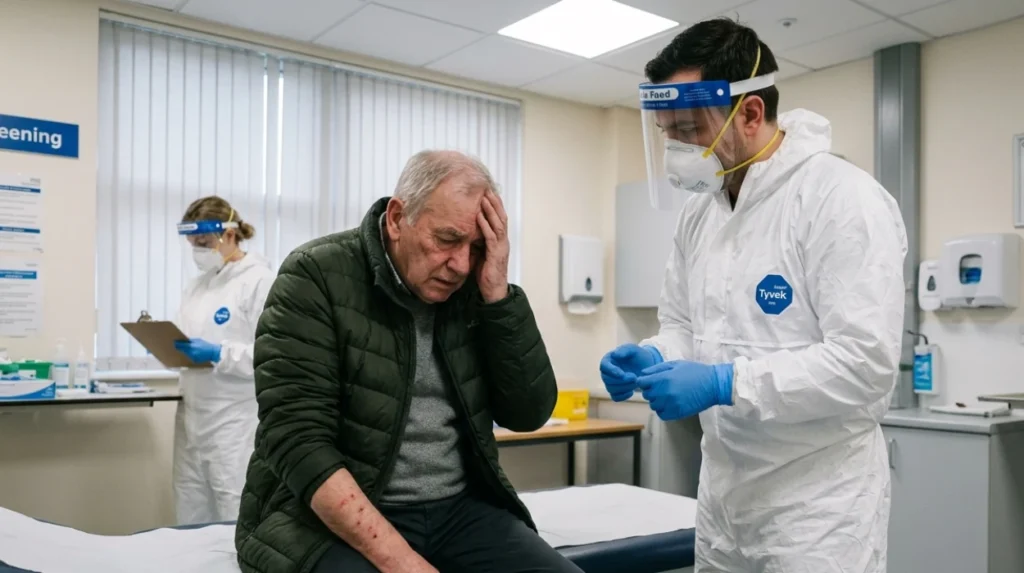
What Are the Early (Dry) Symptoms of Ebola?
Early Ebola symptoms, called “dry” symptoms, include fever, severe headache, muscle and joint aches, extreme weakness and fatigue, and sore throat, appearing 2–21 days after exposure. These generic symptoms occur in nearly all infected individuals and typically begin 8 to 10 days after contact with the virus.
Fever occurs in 87% of patients during the 2014–2016 West Africa outbreak. The temperature rises suddenly and often exceeds 38.3°C (101°F). Patients report feeling intensely hot with chills.
Severe headache affects most patients and is often described as throbbing or pressure-like. The pain is persistent and does not respond well to ordinary pain relievers.
Muscle pain (myalgia) and joint pain (arthralgia) cause widespread body aches. Patients report pain in back, shoulders, legs, and arms. This pain contributes significantly to the extreme weakness experienced.
Weakness and fatigue occur in 76% of cases. Patients feel unable to perform basic activities like standing or walking. This exhaustion is disproportionate to normal illness fatigue.
Sore throat develops early and may cause pain when swallowing. Some patients report hoarseness or difficulty speaking.
These dry symptoms last approximately 4 to 5 days before progressing. During this period, patients become increasingly debilitated. The nonspecific nature of these symptoms makes clinical distinction from malaria, typhoid fever, and meningitis difficult without laboratory testing.
What Are the Later (Wet) Symptoms of Ebola?
Later Ebola symptoms, called “wet” symptoms, include nausea, vomiting (68% of cases), severe watery diarrhea (66%), abdominal pain, loss of appetite (65%), and rash, appearing 4–5 days after symptom onset. These gastrointestinal symptoms indicate disease progression and increased severity.
Vomiting is frequent and often persistent. Patients may vomit repeatedly throughout the day, leading to dehydration. The vomit may contain blood in severe cases.
Diarrhea is typically severe and watery. Patients experience frequent bowel movements, sometimes every hour. This massive fluid loss causes severe dehydration and electrolyte imbalance.
Abdominal pain is common and often severe. Patients report cramping or sharp pain throughout the abdomen.
Loss of appetite affects 65% of patients. Many cannot keep any food or liquids down.
A skin rash develops in many patients between days 5 to 7. The rash consists of flat and raised red lesions involving the neck, trunk, and arms. The skin may peel or flake off later.
Impaired kidney and liver functions develop as the disease progresses. Laboratory tests show elevated hepatic transaminases, with aspartate aminotransferase (AST) exceeding alanine aminotransferase (ALT). Values may peak above 1,000 IU/L. Platelet counts often decrease to 50,000–100,000 range.
Does Ebola Cause Bleeding and How Often?
Unexplained bleeding occurs in approximately 40% of Ebola patients, manifesting as oozing from gums, nose, or eyes, blood in stool or vomit, bruising, and petechiae, but bleeding is not universally present. The absence of bleeding does not rule out Ebola.
Bleeding typically appears later in the disease course, often after day 5. Early bleeding is uncommon. When bleeding occurs, it results from disseminated intravascular coagulation (DIC), a condition where blood clotting factors are consumed faster than they can be produced.
Petechiae are small red or purple spots on the skin caused by minor bleeding under the skin. These appear as pinpoint dots, usually on the trunk and extremities.
Ecchymosis refers to larger bruised areas on the skin. Patients develop multiple bruises without known trauma.
Oozing from venipuncture sites (where needles were inserted) is characteristic. Blood may continue bleeding from IV sites despite pressure.
Mucosal hemorrhage occurs in the mouth, nose, or eyes. Gums may bleed spontaneously. Nosebleeds are common.
Blood in stool appears as black, tarry feces or visible red blood. Blood in vomit appears as fresh red blood or coffee-ground material.
Severe internal bleeding can occur in organs, contributing to multiorgan failure. However, most patients die from shock and organ failure rather than blood loss alone.
What Other Symptoms Can Ebola Cause?
Additional Ebola symptoms include chest pain, shortness of breath, confusion, red eyes, hiccups, seizures, and eye irritation, occurring in varying frequencies as the disease progresses. These symptoms indicate systemic involvement and severe disease.
Chest pain occurs in some patients and may indicate cardiac involvement or pulmonary complications.
Shortness of breath develops as the disease worsens. This may result from fluid accumulation, acidosis, or respiratory muscle weakness.
Confusion and altered mental status occur in severe cases. Patients become disoriented, agitated, or lethargic. This results from brain involvement, metabolic disturbances, or reduced blood flow.
Red eyes (conjunctival injection) are common. Patients report eye irritation and light sensitivity. Eye redness is visible on examination.
Hiccups are frequently reported and may persist for hours. This unusual symptom is characteristic of Ebola.
Seizures occur in some severe cases. Cerebral edema (brain swelling) has been documented. These neurological complications indicate poor prognosis.
Hair loss occurs during recovery in some survivors. This is temporary and regrows over time.
How Long Do Ebola Symptoms Last and When Do People Recover or Die?
Patients who survive Ebola begin improving around day 6 after symptom onset, while those who die typically perish between days 6–16 from multiorgan failure and septic shock, with a mean of 7.5 days from symptom onset to death. The average case fatality rate is around 50%, ranging from 25% to 90% in past outbreaks.
Survivors may have fever for several days before temperature normalizes. Improvement is often gradual. Patients regain appetite and strength over weeks.
Fatal cases develop more severe symptoms early in the illness. Patients deteriorate rapidly after day 4–5. Multiorgan failure affects the liver, kidneys, lungs, and heart simultaneously.
Septic shock occurs when blood pressure drops dangerously low despite fluid resuscitation. This is the immediate cause of death in most fatal cases.
The timing, severity, and duration of symptoms vary based on the Ebola virus species, viral load, patient age, underlying health conditions, and quality of medical care received.
Leeds hospitals and healthcare providers follow UK Public Health England protocols for suspected Ebola cases, ensuring proper isolation and testing procedures are in place.
What Long-Term Complications Do Ebola Survivors Experience?
Ebola survivors may suffer long-term complications including persistent tiredness, headaches, muscle and joint pain, eye problems (blurry vision, pain, redness, light sensitivity), memory loss, hair loss, hearing problems, depression, anxiety, PTSD, inflammation of the heart or testicles, and menstrual changes. These post-Ebola syndrome symptoms vary in timing, severity, and duration.
Tiredness and fatigue persist for months in many survivors. Patients report inability to resume normal activities.
Headaches continue periodically. These may be chronic in some cases.
Muscle and joint pain affects mobility and quality of life. Pain may be widespread or localized.
Eye and vision problems include blurry vision, pain, redness, and light sensitivity. Uveitis (inflammation of the eye) is common and can lead to blindness if untreated. The virus persists in the eyes even after blood tests become negative.
Weight gain occurs in some survivors, while others experience weight loss.
Stomach pain or continued loss of appetite affects digestion.
Memory loss and cognitive difficulties impact daily functioning.
Neck swelling may occur due to lymph node enlargement or other causes.
Hearing problems include hearing loss or ringing in the ears.
Pain or tingling in hands and feet indicates nerve damage.
Inflammation of heart tissues (myocarditis) can cause heart rhythm problems.
Inflammation of testicles (orchitis) causes pain and swelling. This may affect fertility.
Menstrual changes include irregular periods or cessation. Impotence and decreased sexual interest occur in men.
Difficulty sleeping, depression, anxiety, and post-traumatic stress disorder (PTSD) are common psychological complications. Survivors face stigma and social isolation.
How Is Ebola Different From Malaria, Flu, and Typhoid?
Ebola is clinically difficult to distinguish from malaria, influenza, typhoid fever, meningococcal disease, and pneumonia because all cause fever, headache, weakness, and body aches, but Ebola progresses to vomiting, diarrhea, rash, and bleeding while these other diseases do not typically cause this combination. Laboratory testing is required for definitive diagnosis.
Malaria causes fever, headache, and muscle pain but typically includes chills and sweating cycles. Malaria does not cause severe diarrhea, rash, or bleeding.
Influenza (flu) causes fever, headache, and muscle pain but includes prominent respiratory symptoms like cough and runny nose. Flu does not cause severe gastrointestinal symptoms or bleeding.
Typhoid fever causes fever, headache, and abdominal pain but typically includes constipation early, then diarrhea. Rose spots (faint rash) may appear but bleeding is uncommon.
Meningococcal disease causes fever, headache, and stiff neck. A characteristic rash appears but is different from Ebola’s rash. Bleeding is less common.
Bacterial pneumonia causes fever, cough, chest pain, and shortness of breath. Gastrointestinal symptoms are not prominent.
The key distinguishing features of Ebola are the combination of severe vomiting, severe watery diarrhea, characteristic rash, and unexplained bleeding. Travel history to affected areas (primarily parts of Africa) is critical for suspicion.
When Should You Seek Medical Help for Ebola Symptoms?
Call NHS 111 immediately if you have traveled to a country where Ebola is found and have Ebola symptoms, or if you have contact with someone who traveled there and developed symptoms. Stay at home, avoid contact with others, and do not share towels or bedding until medical advice is received.
Countries where Ebola is found include those in Central and West Africa, particularly the Democratic Republic of the Congo, Guinea, Sierra Leone, Liberia, Uganda, South Sudan, and Gabon. Outbreaks occur periodically in these regions.
Contact your doctor or state health department immediately if you believe you were exposed to Ebola and are experiencing symptoms. Early medical intervention improves survival.
If you have Ebola symptoms while traveling, get medical advice quickly. Do not wait for symptoms to worsen.
Leeds residents can call NHS 111 for medical advice or contact their GP at Leeds Teaching Hospitals NHS Trust. Healthcare providers will isolate patients and perform laboratory testing. Blood tests detect Ebola virus RNA using PCR (polymerase chain reaction). Antibody tests may be used later in the disease.
How Are Ebola Symptoms Treated?
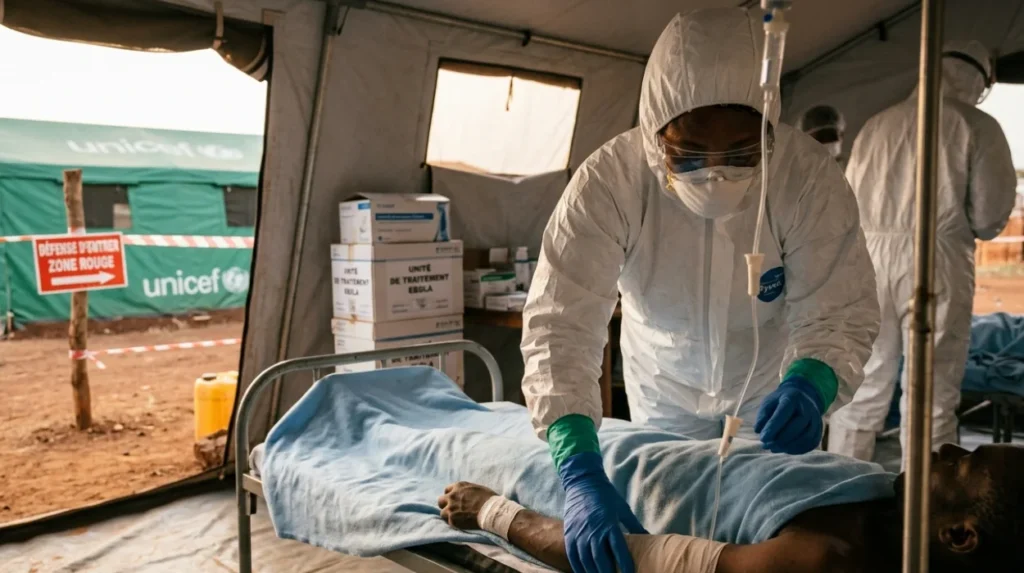
Ebola treatment involves managing symptoms with intensive supportive care including rehydration with oral or intravenous fluids, breathing support, and treating specific symptoms; WHO recommends monoclonal antibodies mAb114 (ansuvimab) or REGN-EB3 (Inmazeb) for Ebola virus disease. Early intensive care improves survival significantly.
Treatment is provided in isolation in hospital, usually in an intensive care unit. Patients require specialist care.
Fluids given directly into a vein prevent dehydration from vomiting and diarrhea. Electrolyte balance is maintained.
Oxygen therapy and breathing support are provided if needed. Mechanical ventilation may be required in severe cases.
Pain relievers and anti-nausea medications manage discomfort.
Blood products may be given to treat bleeding or low platelet counts.
Antibiotics treat secondary bacterial infections that develop.
Monoclonal antibodies mAb114 and REGN-EB3 are approved treatments that target the Ebola virus directly. These antibodies bind to the virus and prevent it from infecting cells. They significantly improve survival when given early.
No approved therapeutics exist for other Ebola viruses (Sudan, Tai Forest, Bundibug), but candidate products are under development. Clinical trials use a CORE protocol to evaluate new treatments.
What Is the Historical Context of Ebola Outbreaks?
Ebola virus disease was first identified in 1976 during simultaneous outbreaks in Nzara, South Sudan, and Yambuku, Democratic Republic of the Congo, near the Ebola River; the largest outbreak was the 2014–2016 West Africa epidemic with 28,616 cases and 11,310 deaths, and subsequent outbreaks continue occurring in Central Africa. The average case fatality rate is around 50%.
The 1976 discovery revealed two distinct virus species: Zaire ebolavirus and Sudan ebolavirus. These remain the primary causes of human outbreaks.
The 2014–2016 West Africa outbreak spread across Guinea, Sierra Leone, and Liberia. It was the largest and most complex Ebola outbreak since the virus’s discovery. Most common symptoms reported included fever (87%), fatigue (76%), vomiting (68%), diarrhea (66%), and loss of appetite (65%).
The 2018–2020 Kivu outbreak in the Democratic Republic of the Congo was the second-largest, with over 3,400 cases. This outbreak occurred in a conflict zone, complicating response efforts.
Smaller outbreaks continue occurring periodically in Central African countries. The Democratic Republic of the Congo has experienced multiple outbreaks since 2018.
Natural reservoir hosts are fruit bats. The virus circulates in bat populations and spills over to humans through contact with infected bats or animals that consumed bats.
Why Is Understanding Ebola Symptoms Important for Global Health?
Understanding Ebola symptoms is critical for early detection, rapid isolation, preventing transmission, improving survival through early treatment, and containing outbreaks before they become epidemics, given that Ebola has a 50% average fatality rate and spreads through direct contact with infected fluids. Early recognition saves lives and protects communities.
Timely diagnosis prevents healthcare workers from becoming infected. Healthcare workers account for a significant portion of Ebola cases during outbreaks.
Early isolation stops person-to-person transmission. A person cannot spread Ebola before symptoms develop.
Rapid initiation of supportive care and monoclonal antibody treatment improves survival rates from 50% to 70–90% when given early.
Surveillance of symptoms enables public health authorities to track outbreaks and deploy resources effectively.
Education about Ebola symptoms reduces stigma and encourages people to seek care rather than hide illness.
For Leeds residents and the wider UK population, the risk of Ebola is extremely low since Ebola is not endemic in Europe. However, travelers visiting affected areas in Africa must understand symptoms and seek medical care immediately upon return if symptoms develop. The NHS provides clear guidance for travelers and healthcare providers.
Recognition of Ebola symptoms protects individuals, families, healthcare systems, and communities from the devastating impact of this severe, often fatal illness. Leeds healthcare workers follow UK Public Health England protocols to ensure rapid response if a suspected case arrives at Leeds Teaching Hospitals or any local medical facility.