

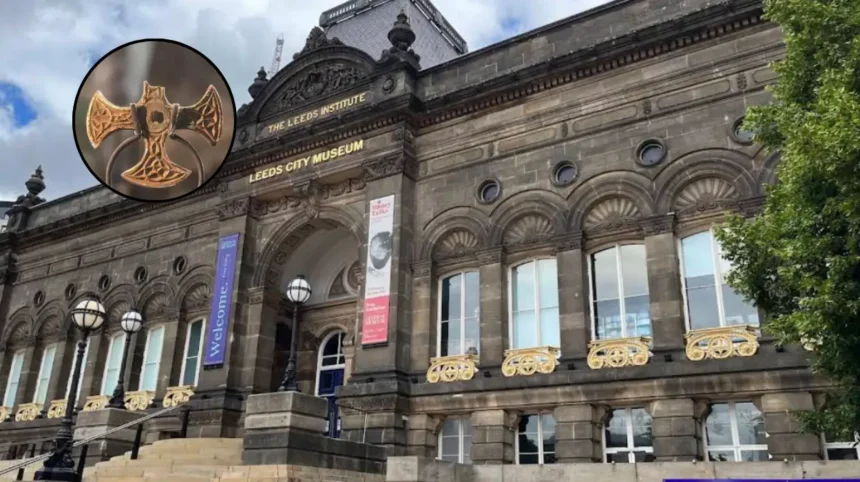
- Kat Baxter, Curator of Archaeology at Leeds Museums and Galleries, manages and preserves an extensive collection of ancient items, some dating back 100,000 years.
- The collection spans multiple distinct historical eras, including prehistoric periods, Roman occupations, and Anglo-Saxon settlements.
- A key part of the curatorial role involves making these ancient items accessible and engaging to modern, contemporary audiences.
- Uncovered Yorkshire field discoveries, such as Roman jewellery and Anglo-Saxon treasures, continue to expand the city’s archaeological record and surprise experts.
- The preservation work highlights the deep, layered history of Leeds, shifting public perception from an industrial hub to a site of ancient historical significance.
Leeds (The Leeds Times) May 23, 2026 — Handling objects that have survived for millennia is a reality for Kat Baxter, the Curator of Archaeology at Leeds Museums and Galleries. As part of the ongoing Heritage Heroes series, which highlights individuals dedicated to preserving regional history, Baxter’s daily responsibilities include the curation, preservation, and public interpretation of Leeds’ ancient material culture. Her workload spans an array of historic remnants, ranging from 100,000-year-old prehistoric hand axes to delicate Roman jewellery and Anglo-Saxon treasures unearthed across Yorkshire fields. This curatorial effort aims to bridge the massive chronological gap between the ancient inhabitants of the region and modern-day audiences, ensuring that the physical evidence of the city’s deep past remains both secure and publicly accessible.
- What does the daily routine of an archaeology curator look like?
- How do 100,000-year-old artefacts alter our understanding of Leeds’ history?
- What can prehistoric stone tools tell us about early human movement?
- What surprises do Roman and Anglo-Saxon discoveries still hold for Yorkshire?
- What makes Anglo-Saxon treasures from Yorkshire fields unique?
- How does Leeds Museums and Galleries bring ancient history alive for modern audiences?
- Background of Leeds’ archaeological conservation initiatives
- Predictions: How these developments will affect local heritage enthusiasts and the wider public
What does the daily routine of an archaeology curator look like?
The daily routine of an archaeology curator involves a balancing act between meticulous preservation, academic research, and public engagement.
For Baxter, the role goes far beyond merely storing items on shelves; it requires a deep understanding of the context in which each artefact was found. On any given day, tasks can shift from assessing the environmental conditions of a storage facility to examining newly discovered metal detecting finds brought in by local residents.
Curators must ensure that organic materials, metals, and ceramics are kept in climate-controlled environments to prevent degradation.
This stabilization process is critical for objects that have spent centuries underground, as sudden changes in humidity and temperature can cause rapid deterioration. Additionally, the role involves cataloguing each item with precise metadata, documenting its provenance, material composition, and historical significance, which allows researchers from around the world to utilize the Leeds collection for broader historical studies.
How do 100,000-year-old artefacts alter our understanding of Leeds’ history?
The presence of artefacts dating back 100,000 years significantly reframes the historical narrative of Leeds, moving it well beyond its well-known identity as a powerhouse of the Industrial Revolution. These oldest items, primarily prehistoric stone tools and hand axes, provide definitive evidence of early human species navigating the landscape long before the arrival of modern humans (Homo sapiens).
What can prehistoric stone tools tell us about early human movement?
These stone implements, often crafted from flint or quartzite, reveal patterns of migration, hunting, and survival during the Middle Palaeolithic period.
The survival of these tools indicates that the area now known as Leeds was a viable terrain for nomadic groups who relied on the local river valleys for water and game. By analyzing the wear patterns and the types of stone used, archaeologists can map out the resource networks of these early populations, proving that the region was interconnected with wider geographical areas even in deep antiquity.
What surprises do Roman and Anglo-Saxon discoveries still hold for Yorkshire?
Despite decades of intensive archaeological study across Yorkshire, the ground continues to yield discoveries that surprise seasoned curators and historians alike. The transition from Roman Britain to the early medieval (Anglo-Saxon) period is particularly rich in material culture, frequently revealing how deeply integrated these ancient communities were.
Roman jewellery uncovered in local fields provides a window into the social hierarchies and personal expressions of the region’s inhabitants during the Roman occupation. Finds such as intaglio rings, bronze brooches, and glass beads indicate that Roman culture and trade goods penetrated deep into the rural hinterlands of Yorkshire, rather than being confined solely to major urban centers like York (Eboracum). These items demonstrate that local populations adopted Roman fashions and status symbols, reflecting a complex, blended provincial identity.
Explore More Local Leeds News
Leeds Reinvests Parking Fees to Upgrade Golden Acre Park, Bramhope 2026
Royal Armouries Waterfront backed by government for Leeds South Bank 2026
What makes Anglo-Saxon treasures from Yorkshire fields unique?
The Anglo-Saxon treasures discovered in the region often consist of intricate metalwork, including silver pennies, decorated strap-ends, and gold-and-garnet pieces. These items are frequently discovered by metal detectorists working in collaboration with the Portable Antiquities Scheme (PAS).
The high level of craftsmanship seen in these pieces challenges the outdated historical notion of the “Dark Ages,” showing instead a society capable of producing sophisticated art and engaging in long-distance trade that brought precious stones and metals into Yorkshire.
How does Leeds Museums and Galleries bring ancient history alive for modern audiences?
A core objective of Baxter’s work at Leeds Museums and Galleries is making sure these ancient collections do not remain locked away from the public eye. Transforming static, centuries-old objects into compelling historical narratives requires innovative exhibition strategies and community outreach programs.
By utilizing interactive displays, educational workshops, and digital scanning, the curatorial team allows visitors to conceptualize what life looked like in Leeds thousands of years ago.
Bringing these items to schools and community centers helps foster a stronger sense of local identity and continuity, showing modern residents that they walk the same paths as the Romans, Anglo-Saxons, and prehistoric peoples who came before them.
Background of Leeds’ archaeological conservation initiatives
The preservation of archaeology in Leeds is supported by a robust network of municipal heritage frameworks, regional museums, and national legislation designed to protect portable antiquities. Leeds Museums and Galleries, which manages several historic sites across the city—including the Leeds City Museum, Kirkstall Abbey, and Temple Newsam House—has long maintained a dedicated department for archaeology.
The structural intake of new discoveries significantly evolved following the implementation of the UK Treasure Act 1996 and the subsequent creation of the Portable Antiquities Scheme (PAS). This framework encourages members of the public, particularly metal detectorists, to voluntarily record archaeological finds.
As a result, regional curators like Kat Baxter work in tandem with finds liaison officers to systematically log, assess, and occasionally acquire objects that would otherwise remain unrecorded in private collections. This collaborative approach has exponentially increased the volume of data available regarding rural Roman and early medieval settlement patterns across West Yorkshire over the past three decades.
Predictions: How these developments will affect local heritage enthusiasts and the wider public
The ongoing discovery and curation of ancient artefacts in Leeds are poised to influence both the local heritage sector and the wider public in several distinct ways.
- Expanded Digital Accessibility: Advancements in 3D scanning and virtual museum tours will likely allow heritage enthusiasts to examine fragile, 100,000-year-old tools from their own homes, expanding access for those unable to visit physical archives.
- Boost to Regional Cultural Tourism: As more high-profile Anglo-Saxon and Roman treasures are processed and placed on public display, Leeds is expected to see an increase in domestic cultural tourism, drawing history enthusiasts away from traditional southern heritage hotspots.
- Curriculum Integration for Local Schools: The localization of deep history will increasingly affect primary and secondary education. Local students will be able to study history through physical objects found within their own zip codes, making abstract historical concepts tangible and personally relevant.
- Stricter Preservation Advocacy: Increased public awareness of the city’s ancient past is highly likely to drive stronger community advocacy for archaeological surveying prior to major urban development projects, ensuring that modern infrastructure expansion does not inadvertently destroy undiscovered heritage.