Key Points
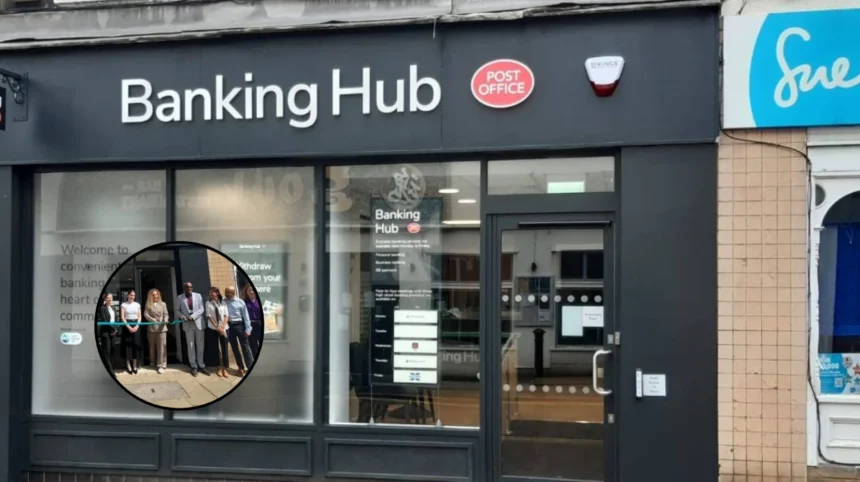
- A new permanent banking hub has officially opened at 47 High Street in Yeadon, occupying the former Halifax branch premises.
- The facility is operated by Cash Access UK, the organisation established to protect cash access across the United Kingdom.
- Leeds North West MP Katie White OBE cut the ribbon at the official opening ceremony held on Friday, 29 May at 11am.
- The hub replaces a temporary facility previously located at Yeadon Town Hall while the permanent site was prepared.
- Postmasters Anis and Mehwish Khan and their team run the hub alongside community bankers from different banks on different days.
- Customers of all major banks can visit any weekday between 9am and 5pm for withdrawals, deposits, balance checks, and bill payments.
- A community banker service allows customers to discuss complex banking issues in a private space on their bank’s designated day.
- The hub provides critical cash access services including coin and note deposits and withdrawals, as well as Wi-Fi.
- HSBC staff are specifically available at the hub on Tuesdays only, while other banks serve on their respective scheduled days.
- This development is part of a wider national initiative where Link and Cash Access UK are opening banking hubs following high-street branch closures.
Yeadon (The Leeds Times) June 1, 2026 – A NEW permanent banking hub has opened in Yeadon, giving residents and businesses improved access to cash and in-person banking services. The hub, now operating at 47 High Street—the former Halifax branch—marks a significant restoration of high-street financial infrastructure for the West Yorkshire community. Cash Access UK, the organisation set up to protect access to cash across the UK, has confirmed the hub is now fully operational at its permanent site.
- Key Points
- Why was a permanent banking hub needed in Yeadon and how does it differ from the temporary facility?
- Who opened the hub and what did officials say about the community collaboration?
- Which banking services are available at the Yeadon hub and when can customers visit?
- How does the Yeadon hub fit into the national banking hub initiative across the UK?
- Background: The Development of Banking Hubs in the UK
- Prediction: How This Development Will Affect Yeadon Residents and Businesses
- How will the hub affect vulnerable community members and those without digital banking access?
- What are the potential long-term implications for Yeadon’s high street vitality?
Why was a permanent banking hub needed in Yeadon and how does it differ from the temporary facility?
As reported by the journalist covering the Wharfedale Observer, the new facility replaces a temporary facility that had been based at Yeadon Town Hall while the new site was being prepared. The move from the Town Hall to 47 High Street represents a transition from an interim solution to a dedicated, long-term banking resource.
The former Halifax branch location provides a purpose-built environment for banking transactions, distinguishing it from the makeshift arrangements at the Town Hall.
This development addresses the critical void left by branch closures across the UK high street. Customers can now access a stable, consistent location for their banking needs rather than relying on a temporary setup. The permanence of the hub at 47 High Street ensures that Yeadon residents will not face the uncertainty of another relocation or temporary closure.
Who opened the hub and what did officials say about the community collaboration?
Leeds North West MP Katie White OBE presided over the official opening ceremony on Friday, 29 May at 11am, when she cut the ribbon to inaugurate the facility. Speaking at the event, she acknowledged the collaborative effort required to establish the hub. She stated: “Big thanks to Cash Access UK and Link for making the permanent hub happen and to postmasters Anis and Mehwish Khan and their wonderful team who run the hub, alongside the community bankers who support from different banks on different days of the week”.
On her social media, MP Katie White described the opening as “an absolute pleasure” and confirmed the hub is open from 9am to 5pm Monday to Friday. Her statement highlights the partnership between national organisations (Cash Access UK and Link), local postmasters, and community bankers.
The involvement of postmasters Anis and Mehwish Khan is central to the hub’s daily operations, with their team managing the facility alongside visiting bank representatives.
Which banking services are available at the Yeadon hub and when can customers visit?
Customers of all major banks can visit the hub any weekday between 9am and 5pm to carry out regular transactions. The services available include cash withdrawals and deposits, balance checks, and bill payments. Additionally, the hub offers a community banker service where customers can talk to their own bank in a private space about more complicated issues on the day their bank is in the hub.
Specific bank schedules vary, with community bankers supporting from different banks on different days of the week. For example, HSBC staff are available at the Yeadon hub on Tuesday only.
The facility also supports supported cash services including coin and note deposits and withdrawals, and provides Wi-Fi for customers. The hub is open Monday to Friday, 9am to 5pm, though community bankers may be unavailable during lunchtime for breaks.
The customer base includes holders of accounts with Barclays, HSBC, Lloyds Bank, NatWest, Santander, TSB, Virgin Money, Bank of Ireland UK, and Danske Bank. This multi-bank approach ensures that residents are not restricted to a single financial institution for in-person services.
How does the Yeadon hub fit into the national banking hub initiative across the UK?
The Yeadon hub is part of a broader national strategy by Link and Cash Access UK to launch new banking hubs in response to wave after wave of bank branch closures.
The Financial Conduct Authority announced that 15 new banking hubs were set to open to fill the void left by high-street closures. In December 2024, the 100th banking hub was opened in Darwen, Lancashire, by Chancellor Rachel Reeves and Treasury minister Tulip Siddiq, demonstrating the scale of this initiative.
Participating banks in hubs across the UK typically include NatWest, Santander, Lloyds, Halifax, and Barclays—the banks with the most customers in those locations.
The Yeadon hub follows this model, allowing customers from various banks to access services in one location. To use a banking hub, customers must be banking with one of the participating providers listed above.
This national programme aims to protect access to cash and in-person banking services for communities affected by branch closures. Similar hubs have opened elsewhere, such as the new permanent facility in Acomb, which also took residence in a former Halifax location following a trial period.
Background: The Development of Banking Hubs in the UK
The banking hub model emerged as a critical response to the rapid closure of traditional high-street bank branches across the United Kingdom.
Cash Access UK was specifically established to protect access to cash nationwide, recognising that many communities rely on physical banking services for daily transactions. The initiative involves collaboration between Cash Access UK, Link (the UK’s ATM network), and participating banks to create shared banking spaces.
The first banking hubs were introduced as temporary measures, often hosted in post offices or alternative community locations, while permanent sites were identified and prepared.
The Yeadon hub followed this pattern, initially operating temporarily at Yeadon Town Hall before moving to its permanent home at 47 High Street. The former Halifax branch buildings have become a common choice for permanent hubs, as seen in both Yeadon and Acomb.
The programme has gained political and institutional support, with government ministers personally opening key hubs.
The 100th hub milestone reached in Darwen in December 2024 indicates the scale of deployment. The FCA’s announcement of 15 new hubs in September 2024 underscores the regulatory backing for this model.
Prediction: How This Development Will Affect Yeadon Residents and Businesses
The opening of the permanent banking hub in Yeadon will directly improve access to cash and in-person banking for residents who previously faced limited options due to branch closures. Residents can now conduct essential transactions such as cash withdrawals, deposits, and bill payments without travelling to other towns.
The private space for complex banking discussions will benefit elderly residents, small business owners, and those requiring in-person assistance with complicated financial matters.
Local businesses in Yeadon will benefit from improved cash handling services, including coin and note deposits and withdrawals.
The fixed location at 47 High Street eliminates the uncertainty of temporary arrangements, allowing businesses to plan their cash management consistently. The hub’s 9am to 5pm weekday operation aligns with standard business hours, making it practical for both employees and employers to visit during working days.
Explore More Yeadon News
Leeds Bradford Airport: Two Removed After Altercation 2026
Two Yeadon Schools to Merge in 2026
How will the hub affect vulnerable community members and those without digital banking access?
For residents who rely on cash rather than digital banking, the hub provides essential access to physical currency. The facility serves those who may be unable to use online banking due to digital exclusion, age, or technological barriers.
The community banker service offers personalised assistance for complicated issues, which is particularly valuable for vulnerable individuals who cannot navigate automated systems.
The presence of postmasters Anis and Mehwish Khan, alongside community bankers from different banks, ensures that residents can receive face-to-face support from familiar local figures. This human element is critical for maintaining trust in banking services within the community.
What are the potential long-term implications for Yeadon’s high street vitality?
The permanent banking hub could stimulate footfall on Yeadon’s High Street, benefiting surrounding retail and service businesses. Banking customers visiting the hub may combine their visit with other errands, supporting local commerce.
The hub’s location in a former Halifax branch preserves the building’s commercial use, preventing vacancy and maintaining the street’s visual appeal.
However, the hub’s impact depends on sustained participation from all major banks and consistent scheduling. If community bankers reduce their presence or banks withdraw support, the hub’s utility could diminish. The success of the Yeadon hub will likely influence decisions about banking infrastructure in neighbouring communities, potentially establishing a model for other West Yorkshire towns.