

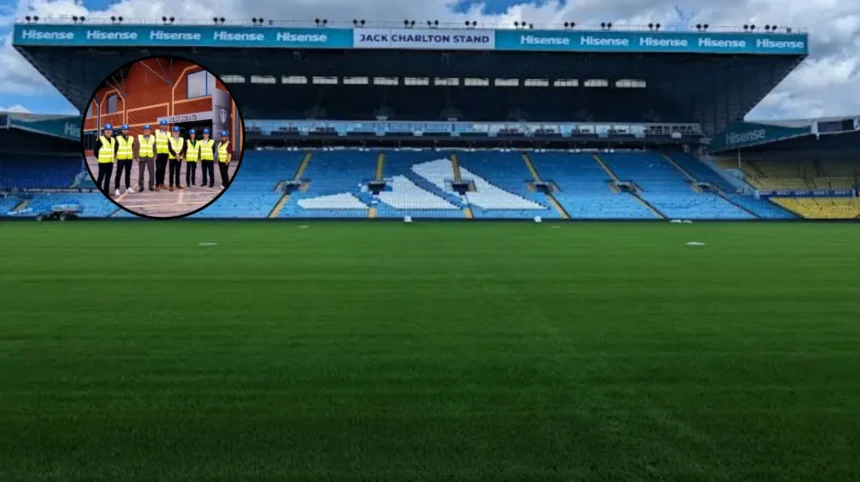
Key Points
- Leeds United has officially begun work on redeveloping the West Stand at Elland Road, described as a “momentous moment” in the club’s 106-year history
- The new stand will be built over the existing structure as the first phase of transforming Elland Road into a UEFA Category 4 stadium
- Stadium capacity will increase from 37,645 to approximately 53,000 seats, making it the seventh-largest football venue in England
- The club confirmed a 32,000-strong Season Ticket waiting list, driving the need for expansion
- Work commenced on Wednesday, 3 June 2026, starting with removal of the Banqueting Suite
- The expansion will enable Leeds to bid for major international tournaments including the 2035 FIFA Women’s World Cup
- The project is projected to contribute around £29 million annually to the local economy
- Enhancements include improved seating comfort, sightlines, expanded concourses, better accessibility, and world-class hospitality facilities
- The stadium will remain open and operational throughout the expansion process
- BDP Pattern was appointed to lead the West Stand expansion, covering RIBA Stages 4-6 of the redevelopment
- Club Ambassadors Stuart Dallas, Tony Dorigo, and Eddie Gray attended the commencement ceremony alongside Leeds City Council executives
- Peter Lowy, director at Leeds United, stated capacity increase is essential to secure funding for a Premier League-level team
Leeds United (The Leeds Times) June 3, 2026 – Work has officially commenced on the transformative redevelopment of the West Stand at Leeds United’s iconic Elland Road Stadium, marking what the Yorkshire club describes as a “momentous moment” in their 106-year existence. The enhancement project, announced in the club’s official statement on Wednesday, represents the first phase of a broader masterplan to elevate Elland Road into one of Europe’s premier football venues.
- Key Points
- Why Is Leeds United Expanding Elland Road Stadium?
- How Will the West Stand Redevelopment Be Constructed?
- What Benefits Will Supporters Receive From the Expansion?
- How Will This Development Enable International Tournament Bids?
- What Does This Mean for Leeds United’s Competitive Ambitions?
- When Will Construction Complete and What Comes Next?
- Background: The Development of Elland Road’s Expansion Plans
- Prediction: How This Development Will Affect Leeds United Supporters and the Leeds Community
Why Is Leeds United Expanding Elland Road Stadium?
As reported by the official Leeds United website, the club stated: “Increasing the capacity of the stadium is vital for the future, with the club having a now strong 32,000 Season Ticket waiting list”. This overwhelming demand from supporters has driven the urgent need for expansion, with the waiting list swelling significantly over recent years.
The current stadium capacity stands at 37,645 seats, and the approved plans will increase this to approximately 53,000 seats—an expansion of over 15,000 spectators per match. According to BBC News, this enhancement will elevate the stadium to become the seventh largest football venue in England.
Peter Lowy, a director at Leeds United and head of the Lowy Family Group responsible for developing the 30 acres surrounding the stadium, emphasized the critical nature of the project. As reported by BBC Sport, Lowy stated:
“If we can’t increase the capacity beyond 36,000 seats, we won’t be able to secure the funding necessary to build a Premier League-level football team”.
How Will the West Stand Redevelopment Be Constructed?
The new West Stand will be built over the top of the existing structure, a design approach that preserves the stadium’s unique identity while dramatically expanding capacity. Enabling works commenced immediately following planning permission approval, with the removal of the Banqueting Suite marking the first physical step in the redevelopment.
BDP Pattern, the sports and entertainment division of BDP, has been appointed to deliver the West Stand redevelopment, overseeing detailed development, technical design and delivery through to completion. The appointment covers RIBA Stages 4-6 of the redevelopment project.
According to the club’s statement, the expansion will transform Elland Road into a UEFA Category 4 stadium, placing it among the elite venues in European football. This status is essential for hosting major international matches and tournaments.
What Benefits Will Supporters Receive From the Expansion?
As detailed in Leeds United’s official announcement, supporters can look forward to several key improvements carefully designed to enhance the matchday experience whilst protecting Elland Road’s famous atmosphere:
- Improved seating comfort and sightlines throughout the expanded West Stand
- Enhanced concourses and fan amenity spaces both inside and around the stadium
- A more inclusive and accessible environment for all visitors
- World-class hospitality facilities
BBC News reported that the project is set to deliver “major enhancements” in terms of fan comfort, viewing angles, and matchday amenities, both inside and outside the stadium.
Throughout the expansion process, the stadium will remain open and operational, according to the club’s statement.
Executives from Leeds United, the Leeds United Foundation and Leeds City Council, along with Club Ambassadors Stuart Dallas, Tony Dorigo and Eddie Gray, were all in attendance to mark the commencement occasion.
How Will This Development Enable International Tournament Bids?
The expanded stadium will allow Leeds United, alongside civic partners, to bid to host major international tournaments and showcase events in the future. Leeds City Council is already working with Leeds United on a bid for the city to host matches in the 2035 FIFA Women’s World Cup.
As reported by Leeds City Council’s official news service, senior councillors are expected to approve Leeds submitting a bid to the Football Association to be considered to host up to seven matches in the 2035 tournament at Elland Road.
All potential World Cup venues need to meet set criteria, and with plans to enhance Elland Road to make it one of the largest stadiums in the country, Leeds would become one of the leading candidates to be a host.
The redevelopment is projected to generate significant cultural and economic value for the Leeds City Region. According to BBC News, the expansion is projected to contribute around £29 million annually to the local economy.
What Does This Mean for Leeds United’s Competitive Ambitions?
For players, the enhanced stadium environment will provide a stage befitting elite-level football, strengthening the club’s ability to compete at the highest level and attract top talent, according to the club’s statement.
The West Stand marks the beginning of a project aimed at increasing the stadium’s capacity to over 50,000, with plans to enhance the Don Revie Kop end subsequently.
Peter Lowy highlighted plans to increase the stadium’s capacity to 47,000 initially, with a further goal of reaching 53,000.
This redevelopment marks the most significant upgrade to the stadium since the £5.5 million construction of the East Stand in 1993, according to BBC News.
When Will Construction Complete and What Comes Next?
Construction of the West Stand was scheduled to begin in Q2 2026, subject to planning permission, which was granted on 7 January 2026 by Leeds City Council’s Plans Panel.
The approved plans include expansion of both the West and North Stands and targeted alterations to the South Stand.
The West Stand’s capacity is projected to rise by 8,000 to 17,000, while the North Stand’s capacity could increase from 10,414 to as many as 15,300. The club will provide regular updates throughout the project.
Additionally, Leeds City Council has initiated public consultation regarding the prospective future utilization of approximately 30 acres of land surrounding the stadium in Beeston, with potential developments including up to 2,000 new residences, a community sports facility, hotel accommodations, and office spaces.
A crucial element of the wider initiative is the provision of either a light rail or tramp from Leeds city centre with a stop at Elland Road, according to Peter Lowy.
The director entered into Memorandum of Understanding with West Yorkshire Mayor Tracy Brabin and Leeds City Council leader James Lewis, committing all parties to this ambitious vision.
Background: The Development of Elland Road’s Expansion Plans
The redevelopment proposal was first submitted by Leeds United to Leeds City Council in July 2025, aiming to boost the stadium’s capacity from 37,645 to about 53,000. In December 2025, the Whites announced that their redevelopment proposals received initial approval from Leeds City Council, with formal ratification expected at the January 2026 planning session.
On Thursday, 7 January 2026, Leeds City Council’s planning committee officially endorsed the club’s proposal, with 11 members supporting and one opposing the plans.
The council’s planning panel voted largely in favor of the proposals, sanctioning the redevelopment that will see the club’s stadium become the seventh largest football ground in England.
The club indicated that improvements are essential to accommodate overwhelming demand from fans, with the waiting list for season tickets growing significantly over the years. The cost to join the Season Ticket Waiting List is £10 per person, and the list was launched in July 2020, with the club not selling any new season tickets since then.
Leeds United consistently register sell-outs at home, with the team regularly experiencing sell-out crowds at their stadium. The Yorkshire club has been working toward this expansion for years, with enabling works due to start in Q4 of 2025 and construction of the West Stand in Q2 2026, subject to planning permission.
Prediction: How This Development Will Affect Leeds United Supporters and the Leeds Community
The 32,000-strong Season Ticket waiting list suggests that thousands of fans currently unable to secure season tickets may finally have opportunities to attend matches at Elland Road as the capacity increases by over 15,000 seats.
However, fans should note that Leeds United has implemented an 80% attendance requirement for season ticket holders, meaning supporters must attend 80 percent of home league matches or risk not receiving renewal invitations.
For the Leeds City Region, the expansion is projected to contribute approximately £29 million annually to the local economy, creating significant economic value through increased matchday spending, tourism, and related commercial activity. The development of 30 acres of surrounding brownfield land could bring up to 2,000 new residences, community facilities, hotels, and office spaces to Beeston.
Leeds United supporters will benefit from improved matchday facilities including better seating comfort, enhanced sightlines, expanded concourses, and improved accessibility throughout the stadium.
The UEFA Category 4 status will enable the club to host major international tournaments, potentially bringing World Cup matches to Leeds in 2035 and elevating the city’s profile in European football.
For the wider football community, the expanded stadium will strengthen Leeds United’s ability to compete at the highest level by providing revenue necessary to build a Premier League-level team and attract top talent. The enhanced venue will provide a stage befitting elite-level football, potentially improving the club’s competitive position in English and European football.