

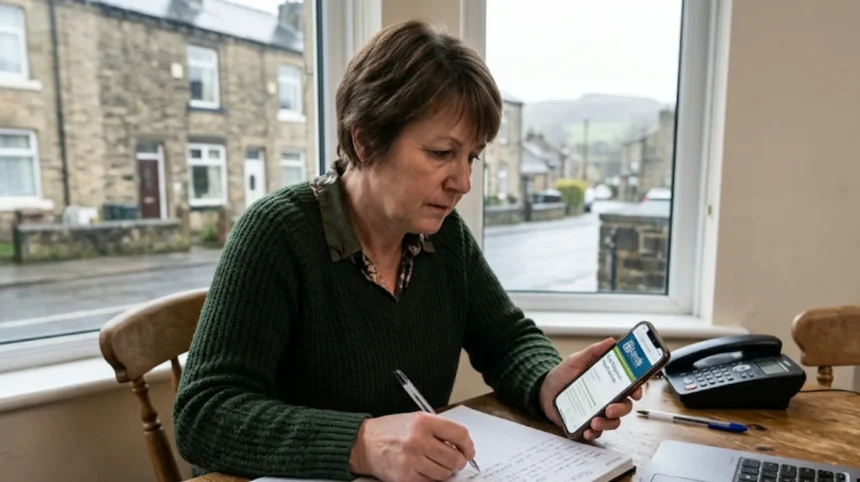
Reporting a noisy neighbour in Otley starts with direct contact, then moves to evidence gathering, and finally to Leeds City Council if the problem continues. Otley sits within the Leeds local authority area, so noise complaints are handled through Leeds City Council’s noise nuisance and antisocial behaviour routes.
- What counts as a noisy neighbour in Otley?
- What should you do before reporting a neighbour?
- What evidence is useful?
- How do you report a noisy neighbour to Leeds City Council?
- What details should you include?
- When should you contact the police instead?
- What happens after the council receives a complaint?
- How fast does it move?
- What if the neighbour is a tenant?
- What if the council does not act?
- Does mediation help with neighbour noise?
- Why does the legal definition matter?
- What does a good noise diary look like?
- What should Otley residents remember?
What counts as a noisy neighbour in Otley?
A noisy neighbour in Otley is a residential source of repeated noise that causes nuisance, disturbance, or harm to normal home life. Common examples include loud music, shouting, barking dogs, banging, late-night parties, and persistent DIY noise. Leeds City Council prioritises reports based on vulnerability and risk.
Noise nuisance law in England uses the concept of statutory nuisance. That covers noise that is unreasonable and interferes with use of a home, not every annoying sound. Citizens Advice also draws a clear line between ordinary domestic living and noise that crosses into actionable nuisance.
Normal household sounds such as baby crying, cooking smells, or brief day-to-day activity usually fall outside council enforcement, while repeated loud music, barking, or anti-social behaviour fits the reportable category.

What should you do before reporting a neighbour?
Start by speaking to the neighbour if it is safe to do so, because informal resolution is the first step in official guidance. If direct contact fails, keep a clear record of the noise, the time it happens, how long it lasts, and how it affects you, then use that evidence in a council complaint.
Government guidance says you should try to solve the problem by talking or using mediation before asking the council to step in. Citizens Advice recommends recording each incident with date, time, duration, and impact, because those details strengthen any later complaint.
A written record matters because councils assess whether the issue is serious, repeated, and harmful enough to investigate as a statutory nuisance. Leeds City Council asks residents to record the times, dates, impact, and type of noise so it can assess the case properly.
What evidence is useful?
A strong noise log includes the date, start and end time, type of noise, where it was heard from, and how it affected sleep, work, or health. If safe, save texts, emails, voicemails, or video clips that show the pattern of the disturbance.citizensadvice.
A diary is especially useful when the noise happens at different times or only on certain days. Leeds City Council also notes that it is dealing with a high volume of reports, so detailed evidence helps officers prioritise cases more accurately.
How do you report a noisy neighbour to Leeds City Council?
You report a noisy neighbour in Otley through Leeds City Council, which handles noise nuisance complaints for the area. The council’s guidance says it should respond to a submitted complaint within 10 working days, and it may contact you sooner if the case looks urgent or emergency-level.
Leeds City Council provides a dedicated noise complaint route and says complaints are prioritised by vulnerability and risk. That matters because not every report is investigated in the same way or with the same speed.
If the noise comes from a business, pub, or licensed premises rather than a home, the council also has specific complaint routes for commercial noise nuisance. For a residential neighbour, the noise nuisance process is the correct route.
What details should you include?
Include the neighbour’s address, their name if known, the type of noise, how often it happens, and what you have already done to resolve it. Citizens Advice also recommends stating who else you have reported it to, because that shows the council the matter has been handled responsibly.
If you report by phone, keep the date, time, and the name of the officer you spoke to. If the situation worsens, tell the council immediately, because Leeds City Council asks residents to update it if the problem changes or escalates.citizensadvice.
When should you contact the police instead?
Contact the police when the problem involves violence, threats, harassment, or immediate danger. Call 999 for an emergency in progress, and use 101 for a crime or serious incident after the event.
Noise alone usually goes to the council, not the police. The police become relevant when the behaviour includes criminal conduct, such as threats, assault, intimidation, or harassment.
If the neighbour is using loudspeakers in the street at night, causing an immediate public disturbance, or acting aggressively, police involvement becomes more appropriate. That distinction matters because the council’s job is nuisance enforcement, while the police deal with criminal behaviour.citizensadvice.
What happens after the council receives a complaint?
After Leeds City Council receives a complaint, it assesses the report, checks the evidence, and decides whether the noise is serious enough to investigate. If it finds a statutory nuisance, it can take enforcement action, including a noise abatement order.
A statutory nuisance is a legal threshold, not a general irritation. The council must investigate statutory nuisance reports, and if it confirms the problem, it has formal powers to require the noise to stop.
Government guidance states that if the council decides someone is causing a statutory noise nuisance, it must issue a noise abatement order. If that order is breached, fines can follow, including up to £5,000 for domestic noise and up to £20,000 for business noise.
How fast does it move?
Leeds City Council says it aims to get back to complainants within 10 working days after a noise complaint is submitted. It also says it is prioritising reports based on vulnerability and risk, which means urgent cases receive more attention.
That does not mean every case ends with immediate action. Officers often need a pattern of evidence before deciding whether the noise reaches the legal threshold for enforcement.
What if the neighbour is a tenant?
If the neighbour rents, report the noise to the landlord as well as the council. Citizens Advice says you can contact the landlord first if you know who it is, and then escalate to the council if the problem continues.
This step matters because landlords often have tenancy conditions that prohibit nuisance behaviour. A housing association or private landlord can warn the tenant, start tenancy enforcement, or support mediation.
If you live in council housing or the neighbour does, Leeds City Council also has separate reporting routes for housing tenants and antisocial behaviour issues. That route is relevant when tenancy enforcement sits alongside environmental health action.
What if the council does not act?
If the council does not resolve the problem, you can use its complaints process and then go to the Local Government and Social Care Ombudsman. The Ombudsman is the final stage for complaints about councils and investigates whether public bodies handled the case properly.
Citizens Advice says that if you are still unhappy after using the council or housing association complaints process, you can escalate to the relevant ombudsman. For council complaints, that means the Local Government and Social Care Ombudsman.
This stage does not relitigate the neighbour dispute itself. It examines whether the council followed a fair process, responded properly, and used its powers appropriately. That distinction is important because an ombudsman reviews service failure, not the noise dispute in the same way a council officer would.
Does mediation help with neighbour noise?
Mediation helps when both sides want a practical resolution without formal enforcement. Government and Citizens Advice both recommend it as an early step, especially when the problem is ongoing but not yet severe enough for immediate legal action.
Mediation uses a neutral third party to help the neighbours agree on changes, such as quieter hours, moving a speaker, or limiting late-night activity. It works best when communication has broken down but both people still want to stay on speaking terms.
Councils sometimes direct residents toward mediation before or alongside formal investigation. That approach reduces escalation and can settle recurring issues faster than enforcement alone.
Explore More Help & Resources
How to get council tax support if you’re struggling in Morley
How to get free food bank help near Headingley fast
Why does the legal definition matter?
The legal definition matters because councils act only when noise becomes a statutory nuisance, not whenever a resident feels disturbed. That threshold protects normal daily life while giving the council power to intervene when noise becomes repeated, excessive, and harmful.
The statutory nuisance framework exists to separate ordinary domestic living from actionable disturbance. It covers noise, smoke, smells, dust, and similar issues when they become harmful or unreasonable.
For noise, this means officers look at frequency, duration, timing, and impact on the affected home. A one-off party and a nightly pattern of loud music are treated very differently because the legal impact is different.
What does a good noise diary look like?
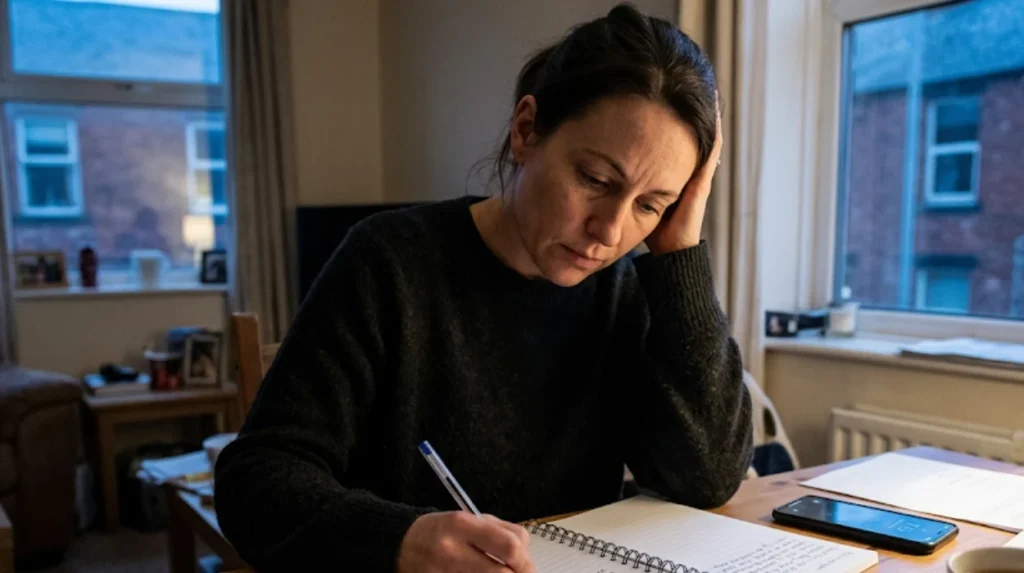
A good noise diary is a dated record of each incident, with the start and end time, the sound type, where you heard it, and the impact on your daily life. Leeds City Council specifically asks for times, dates, impact, and noise type, while Citizens Advice recommends writing enough detail to support later action.
For example, a useful entry reads like this: “14 June, 11:20pm to 1:05am, bass-heavy music from next door, audible in bedroom, sleep disrupted, child woke twice”. That is more useful than simply writing “loud music” because it shows persistence and harm.
Keep the diary going for at least two weeks if the problem continues, because patterns are easier to prove over time. Councils often need this kind of record before they can assess whether the complaint reaches enforcement level.
What should Otley residents remember?
Otley residents should treat noisy neighbour complaints as a local council issue first, a police issue only when crime or danger exists, and a landlord issue when the neighbour rents. The strongest complaints use a calm approach, written records, and the Leeds City Council noise nuisance process.
The practical sequence is simple: speak to the neighbour if safe, keep a log, report to the council, and escalate if needed. Leeds City Council has stated that it is prioritising noise reports by risk and vulnerability, so well-documented cases move more smoothly through the system.
For a broad audience, the key point is that noise complaints succeed on evidence and process, not emotion. In Otley, that means using the same complaint route as the rest of Leeds while making the record as specific and factual as possible.
How do I report a noisy neighbour in Otley?
You can report a noisy neighbour in Otley through Leeds City Council’s noise nuisance service. Before reporting, try speaking to your neighbour if it is safe to do so and keep a detailed noise diary with dates, times, and descriptions of each incident.