

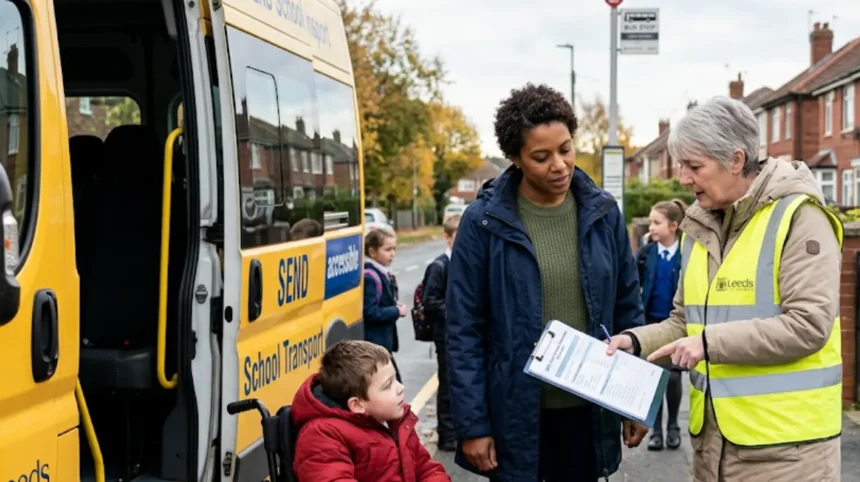
Getting free school transport for a disabled child in Rothwell starts with Leeds City Council’s SEND travel support rules, not with the school alone. In Leeds, a child qualifies through distance, disability, mobility, safety, or assessed SEND transport needs, and the council decides support after application and assessment.
What is free school transport in Rothwell?
Free school transport in Rothwell is home-to-school travel support from Leeds City Council for eligible children who live in the Leeds area and cannot reasonably walk, travel, or get to school safely because of distance, SEND, disability, or mobility needs. Leeds assesses each case against its Children’s Transport Policy and offers support only when the criteria are met.
Rothwell is a Leeds district, so applications are handled under the Leeds system rather than a separate local Rothwell scheme. The support covers children of compulsory school age and includes mainstream pupils and children with SEND, disabilities, or medical conditions. In practice, the council looks at the child’s needs, the school attended, the distance involved, and whether independent travel is realistic.
The policy matters because “free transport” is not a single benefit. Leeds uses several support options, including a free bus pass, taxi or minibus transport, a mileage or personal travel allowance, and independent travel training. That structure makes the scheme broader than a simple bus-pass system and more relevant for children with complex needs.
Who can qualify for support?
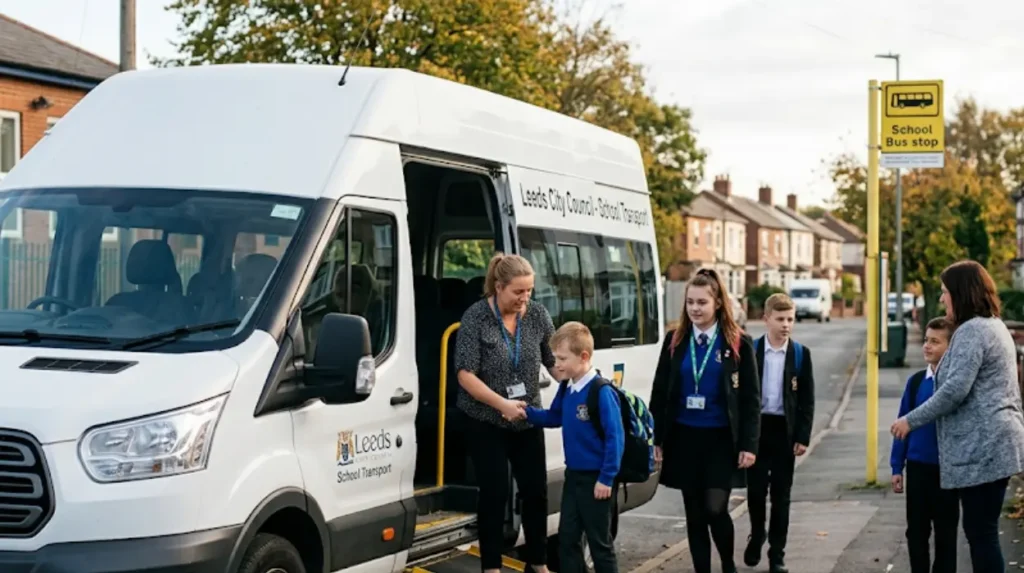
A disabled child in Rothwell can qualify if their disability, SEND, or mobility condition prevents safe independent travel, or if they meet Leeds’ general distance rules for school transport. Leeds also recognises children from low-income families, children without a safe walking route, and children who cannot travel because of a temporary mobility problem.
For children aged 5 to 16, Leeds states that support applies when they attend their nearest qualifying school and live beyond the statutory walking distance: more than 2 miles if under 8, and 3 miles or more if aged 8 to 16. A child can also qualify without meeting the distance test if they cannot walk because of SEND, disability, or mobility issues.
Leeds SEND transport guidance also states that an Education, Health and Care Plan does not automatically guarantee transport, and a child does not need an EHCP to be considered on SEND grounds. That distinction is important because eligibility depends on transport need, not simply on diagnosis or plan status.
For families in Rothwell, the practical question is whether the child can travel safely and reliably on their own or with ordinary parental support. If the answer is no, the council may consider specialist transport help after assessment.
What rules does Leeds use?
Leeds uses a formal transport policy that checks school distance, school type, travel safety, the child’s disability or mobility needs, and whether the school is the nearest qualifying school for transport purposes. The council measures the nearest qualifying school by road or walking distance, which is not always the same as the nearest school for admissions.
That distinction affects many families. A child can live close to one school in admissions terms but still be assessed against a different school for transport eligibility because the transport system uses its own distance method. Leeds directs families to the West Yorkshire Combined Authority if they need help identifying the nearest qualifying school.
The policy also allows support where the route is unsafe or where the child cannot walk because of disability or temporary mobility problems. Leeds SEND guidance says the council offers home-to-school travel support for children and young people with SEND, disabilities, or medical conditions, which confirms that medical need is part of the framework. The result is a needs-based system rather than a blanket entitlement.
In Leeds, the policy in force for applications from the 2025/26 academic year onward is the Children’s Transport Policy. That policy is the main document used to decide new applications, so families in Rothwell need to check the current version before applying.
How do you apply?
To apply, contact Leeds/Metro school transport services, complete the application form, and submit evidence showing why your child needs transport support. Leeds says families can call the Education Transport Assessment Team at Metro on 0113 348 1121 for an application form or apply online through Metro.
The completed form is returned to the West Yorkshire Combined Authority using the “Leeds zero fare application” subject line, and the council says applicants are contacted within 15 working days. If you are applying for specialist SEND support, Leeds also lists a separate contact number for children with SEND: 0113 535 1990. That makes the process simple in structure but evidence-heavy in practice.
The strongest applications explain the child’s condition in transport terms, not just in medical terms. The council needs to understand how the disability affects walking, waiting, boarding, anxiety, supervision, or safe route use. Reports from doctors, therapists, schools, or an EHCP team can support the case, but the central issue remains whether travel is unsuitable for that child.sendiass.
If a child already receives support, the family still needs to renew or re-check eligibility when policy changes or when the child moves into a new phase of education. That matters because support is linked to the current policy year and the child’s current circumstances.
What support can you receive?
Eligible children in Leeds can receive a free bus pass, taxi or minibus transport, a mileage or personal travel allowance, or independent travel training depending on their needs. Leeds says the council selects the option that best meets the child’s needs, offers value for money, and remains sustainable.
A free bus pass suits children who can use public transport safely with or without supervision. Taxi or minibus transport suits children who need direct door-to-door travel or cannot manage ordinary public transport because of mobility, behavioural, sensory, or medical needs. Independent Travel Training suits children who can learn safer, more independent travel with structured support.
Leeds also says eligible children with SEND are often offered either a free bus pass or transport arranged by the council. In some cases, a personal travel allowance or mileage allowance helps families who transport the child themselves. That flexibility is important in Rothwell because different children with the same diagnosis can have very different travel needs.
The council’s approach follows national guidance from GOV.UK, which states that a child may be entitled to free transport if they cannot walk to school because of SEND or a mobility problem, and that any transport provided must suit the child’s needs. That national rule underpins the local Leeds policy.
What counts as evidence?
Evidence is any clear information showing that your child cannot travel to school safely or independently without support. Leeds assesses each application individually, so the best evidence connects the disability or SEND need to the real travel problem.
Useful evidence includes a diagnosis letter, GP report, consultant letter, occupational therapy report, school evidence, EHCP sections about mobility or independence, and any statement about unsafe roads, sensory overload, or behavioural risk during travel. If the child uses aids, needs supervision, has challenging anxiety, or cannot cross roads alone, those details should be included.
A strong application also explains the journey itself. The council needs to know the route, the walking distance, the bus changes, the waiting time, and the child’s ability to cope with that journey on a daily basis. That route-based evidence often matters more than a diagnosis label alone.
Families in Rothwell should also keep copies of everything submitted. If the council asks for more information, a complete record speeds up the decision process and strengthens any later appeal.
What if the child is over 16?
For children aged 16 and over, the rules change because post-16 transport is not the same as compulsory school transport. Leeds has a separate post-16 transport policy statement, and the council states that students with a learning difficulty or disability may be eligible for a Disabled Person’s Travel Pass and sometimes a carer pass.
Nationally, GOV.UK says that if your child is 16 or over and still in education, you should ask your local council whether it offers transport help. That means there is no automatic continuation of the under-16 school transport rules into sixth form, college, or other post-16 education. Leeds also reported changes affecting SEND transport for students over 16, with support tightened to strict criteria and exceptional cases.
For families in Rothwell, the key point is timing. A child who qualifies at 15 does not automatically keep the same support at 16. Post-16 support depends on the separate policy, the course, the child’s needs, and the council’s current criteria.
That makes early planning essential for families approaching Year 11. The transport route that works for a younger child often needs a fresh assessment for college or sixth-form travel.
Explore More Help & Resources
How to report a broken street light in Guiseley
How to get NHS dental care near Horsforth for free
What happens if you are refused?
If Leeds refuses transport support, you can appeal by writing to the Education Transport Assessment Team and explaining why the decision is wrong. Leeds says the council reviews the appeal and sends a written response within 20 working days.
An appeal works best when it focuses on facts the original application missed. That includes route danger, supervision needs, fatigue, sensory overload, behavioural risk, lack of suitable public transport, or evidence that the child cannot travel independently. A short disagreement with the outcome is not enough on its own; the appeal needs new or clearer evidence.
Leeds also notes that families who are not eligible can still look at tickets and passes from Metro. That route does not replace SEND transport support, but it helps where the child does not meet the council’s threshold. For Rothwell families, that is often the fallback when the transport policy does not award free support.
If the case is complex, it helps to keep the appeal focused on the child’s daily travel reality. The decision-maker wants to know what happens on the journey, not just what appears in a diagnosis summary.
Why does the policy matter?
The policy matters because school transport affects attendance, punctuality, family work patterns, and a disabled child’s access to education. Leeds says it supports around 18,000 children and young people in some form, which shows how large and operationally important the system is.
Transport is not a minor admin issue for many SEND families. It determines whether a child can reach school safely, whether parents can stay in work, and whether the child arrives calm enough to learn. That is why councils use formal criteria and assessments rather than informal judgement.
The national framework also reinforces this importance. GOV.UK states that transport must be suitable to the child’s needs, which places the child’s access and safety at the centre of the decision. Leeds then applies that principle locally through its children’s transport policy and SEND support process.
For Rothwell families, the practical impact is straightforward. A successful application can remove a daily barrier to education. A refused application can create immediate pressure on work, routines, and attendance, which is why the evidence stage matters so much.
How should Rothwell parents prepare?
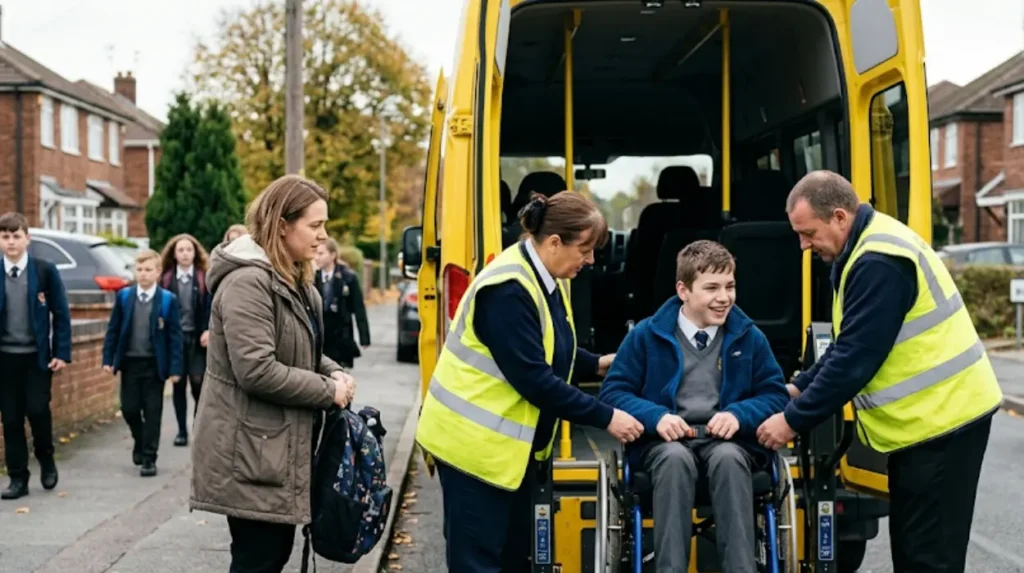
Rothwell parents should check the nearest qualifying school, gather medical and school evidence, and apply through Leeds transport services as soon as transport need becomes clear. Leeds provides phone and email contacts for guidance, and families should use them before the school term starts.
Start with the child’s daily journey and define the barrier. If the issue is walking distance, unsafe roads, sensory distress, physical mobility, or lack of adult support, state that clearly in the application. Then attach evidence that shows the barrier is ongoing and relevant to school travel.
Next, check whether the child is attending the nearest qualifying school for transport purposes. If the school is not the nearest qualifying school, that can affect eligibility, so it is worth confirming before assuming support will be granted. Families in Leeds can ask West Yorkshire Combined Authority for help identifying that school.
Finally, keep the application aligned with the current policy year. Leeds’ children’s transport policy applies to applications for support from the 2025/26 academic year onward, so current criteria matter more than older advice found online. A current application, strong evidence, and a clear explanation of need give the child the best chance of getting free transport support.
Who is eligible for free school transport for a disabled child in Rothwell?
Children living in Rothwell may qualify if they attend their nearest qualifying school and cannot travel safely because of a disability, SEND, mobility issue, or medical condition. Eligibility may also depend on statutory walking distances and other criteria set by Leeds City Council.