

Key Points
- The final phase of a £10.4m scheme on the A660 between Hyde Park Corner and Spenceley Street has begun.
- Leeds City Council says the project is intended to reduce road deaths and serious injuries and improve bus reliability.
- The works are not expected to finish until spring 2027.
- Kieran Madden, who runs a cafe at Hyde Park Corner, says the roadworks are hurting trade.
- Madden says the diversion has pushed pedestrians away from the business and reduced takings.
- He also says the layout raises safety concerns for school pupils and others crossing the road.
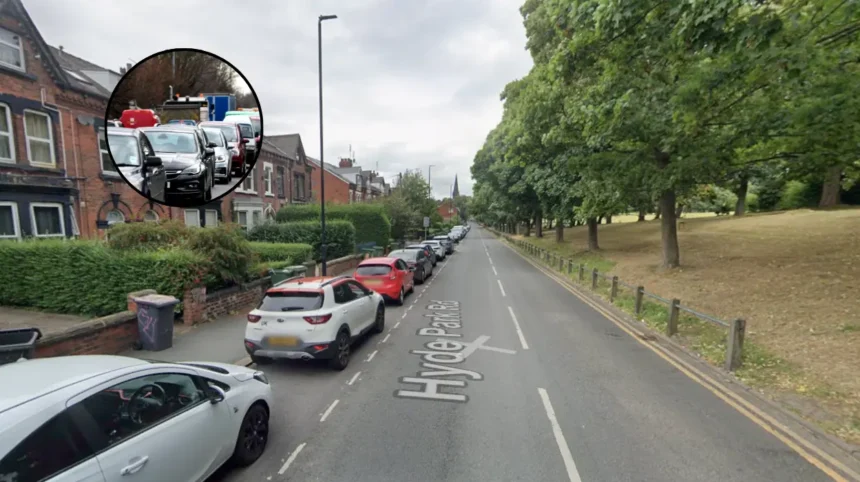
Leeds (The Leeds Times) June 29, 2026 — The final phase of a £10.4m road scheme on the A660 between Hyde Park Corner and Spenceley Street has now started, with the work set to continue until spring 2027. The council says the project is designed to reduce road deaths and serious injuries on the busy corridor and to improve bus reliability.
As reported in the original coverage, the roadworks are affecting one of the busiest routes in and out of Leeds, and for some businesses, the disruption is already being felt in day-to-day trading. The long timetable means the impact is likely to continue for many months rather than weeks.
How are local businesses being affected?
According to the report, Kieran Madden, who runs a cafe at Hyde Park Corner, said the roadworks had created serious problems for his business.
He said the path outside the cafe had effectively become unusable and that people were now walking on the opposite side of the road because of the diversion.
Madden said:
“We’re in our first year of trading and hospitality are already in a very tricky situation as it is at present – so having the path outside of your business basically null and void – and people walking on the other side of the road for the diversion for safety, completely diverts your business.”
He added:
“It rips your business takings apart – through no fault of your own.”
He also described the scheme as
“the most badly thought-out roadworks I could ever imagine.”
Those remarks reflect the frustration of a trader who says the construction is affecting customer flow at a sensitive point in the business’s early growth.
What safety concerns were raised?
Madden also said he was worried about safety for people crossing the road in the middle of the works, particularly pupils from a nearby school. His comments suggest the disruption is not only commercial but also practical for those trying to move through the area safely.
The council’s stated aim is to improve safety along the corridor, but the current layout and diversion appear, according to Madden, to be creating new difficulties for pedestrians during the construction period.
That tension between long-term safety improvements and short-term inconvenience is central to the story.
What is Leeds City Council saying about the scheme?
Leeds City Council says the A660 project is being carried out to make the corridor safer and more reliable for bus users.
The council’s position is that the scheme is intended to deliver benefits once complete, even though the works are causing disruption now.
The available report does not include a direct response from the council to Madden’s complaints, so the story at this stage rests on the council’s stated purpose for the scheme and the trader’s account of its impact.
The absence of an immediate council comment means the concerns raised by businesses and pedestrians remain part of the public debate around the project.
Why does the timing matter for traders?
The timing matters because the cafe is in its first year of trading, according to Madden, which makes any loss of passing trade more difficult to absorb. In hospitality, footfall is often crucial, especially when a business is still building a customer base.
A long-running scheme also means the pressure is unlikely to disappear quickly. With completion now expected in spring 2027, businesses along the route may have to adapt to months of altered pedestrian movement, access changes and reduced visibility.
What happens next on the A660?
The roadworks will continue as the final phase of the scheme progresses, and the stated objective remains improved safety and bus reliability along the corridor. For residents, commuters and traders, the immediate question is how well the works are managed while construction continues.
The practical issue will be whether access arrangements, signage and pedestrian routes allow people to keep moving safely while businesses remain visible and reachable. That balance will shape public reaction to the project over the coming months.
Background of the development
The A660 is one of Leeds’s important routes in and out of the city, so disruption there has a wider effect than on a single street.
The current phase is part of a larger £10.4m scheme, which indicates that the works are not a short maintenance job but a major transport project.
Leeds City Council says the overall goal is to cut road deaths and serious injuries and to make bus journeys more reliable.
Those aims place the work within a broader transport and safety strategy, even though the immediate experience for some local traders is negative.
Prediction: how could this affect local audiences?
For local businesses, especially cafes, shops and other walk-in trade near Hyde Park Corner, the biggest likely effect is continued pressure on footfall until the works are completed.
A long diversion can make spontaneous visits less likely, which may reduce takings for traders relying on passing trade.
For pedestrians, school pupils and commuters, the likely impact is a prolonged period of adjusted routes and caution around crossings.
If the project does eventually deliver safer roads and better bus reliability, the long-term benefit may be public support for the scheme, but only after the short-term disruption has passed.