
Key Points
- Historic Re-use: The Grade II* listed Roundhouse, dating back to 1847, is set to be converted into a multi-million-pound sports and community hub.
- Extensive Facilities: The development includes nine padel courts (five covered and four open), a fitness gym, a pilates studio, events spaces, retail units, and a café.
- Regulatory Support: Leeds City Council planning officers have formally recommended the scheme for approval ahead of the West Plans Panel meeting on July 9.
- Community Focus: Headed by Leeds-based Ollo Padel, the project pledges local job creation, free school coaching initiatives, and extensive structural conservation.
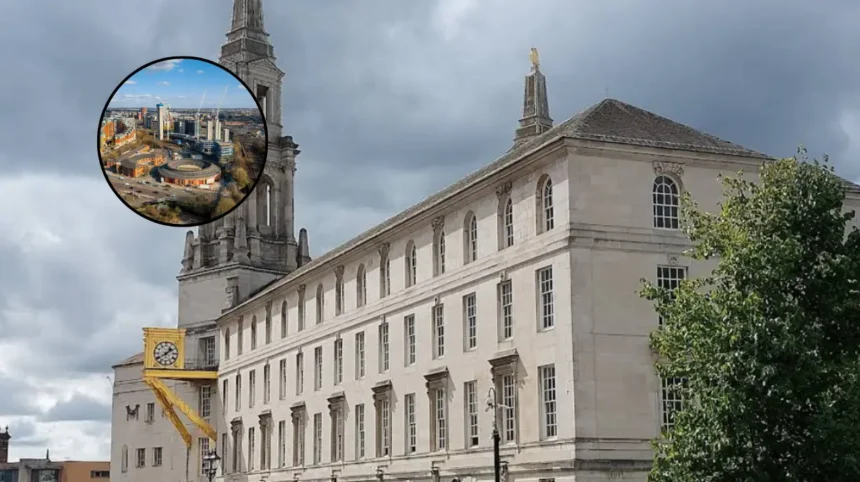
Leeds (The Leeds Times) July 3, 2026 – A historic railway building on the edge of Leeds city centre is poised for a major transformation into a premier sports and leisure facility. The Grade II listed Roundhouse, situated near the busy Armley Gyratory on Wellington Road, will undergo an extensive internal conversion to house a state-of-the-art padel tennis complex alongside supplementary community facilities under plans submitted by local leisure operator Ollo Padel. Leeds City Council planning officers have officially recommended the revised scheme for approval, which will be formally evaluated at the upcoming West Plans Panel meeting at the Civic Hall on Thursday, July 9. The proposed development intends to bring the long-disused, three-acre Victorian site back into everyday public use before the end of 2026, combining historical preservation with the rapidly expanding sport of padel.
- Key Points
- Will Leeds Council Approve the Conversion of the Grade II* Listed Roundhouse?
- What Facilities are Included in the Ollo Padel Development Plans?
- How does the Leadership of Ollo Padel Intend to Involve the Local Community?
- Why does the Leeds Civic Trust Support the New Padel Court Scheme?
- Background of the Roundhouse Development
- Prediction: How This Development Can Affect the People of Leeds
Will Leeds Council Approve the Conversion of the Grade II* Listed Roundhouse?
The future of the mid-19th-century railway landmark rests with the local authority’s planning panel next week. According to an official council report prepared ahead of the West Plans Panel meeting, administrative officials have strongly supported the leisure initiative.
As reported by Don Mort of the Local Democracy Reporting Service, the council planning file explicitly stated:
“It is considered that the proposed padel court scheme would provide a sports and leisure facility of positive benefit to the people of Leeds, in accordance with planning policy.”
The application, spearheaded by Ollo Padel, seeks a comprehensive change of use for the site. The primary structural asset—the distinctive circular engine shed—will undergo internal adjustments to house a single indoor padel court, a modern gym, reception areas, changing rooms, a café, retail units, administrative offices, a pilates studio, and multi-purpose event spaces.
Externally, the surrounding three-acre plot will be developed to accommodate eight additional outdoor padel courts.
To ensure structural accessibility and functional sustainability, the infrastructure blueprint incorporates 75 dedicated car parking spaces, electric vehicle (EV) charging stations, comprehensive bicycle storage facilities, and fully upgraded pedestrian footpaths linking directly to the urban center.
What Facilities are Included in the Ollo Padel Development Plans?
The scale of the project transforms the derelict industrial site into a highly interconnected commercial and fitness ecosystem. The blueprint segments the site into highly specialized interactive zones designed to merge historical architecture with contemporary functional design.
As detailed in the project specification outlined by Adam Kershaw of Leeds Living, the development is designed as a three-acre community-led space. The structural layout consists of:
- Indoor Historic Hub: The original circular engine shed building will act as the principal architectural anchor, housing a single premium padel court, a main fitness gym, and specialized pilates studios.
- External Court Infrastructure: The immediate grounds will feature eight further courts, comprising five covered structures and four completely open-air courts to support year-round athletic activity.
- Commercial and Social Anchors: Supporting facilities include a public café, dedicated retail spaces for sporting apparel, changing complexes, corporate offices, and versatile events spaces intended for local public hire.
Furthermore, structural maintenance specialists have already completed essential preservation work on the architectural shell.
As reported by senior structural representatives at joint letting agents Sanderson Weatherall, recent extensive roofing works successfully repaired the complex 19th-century timber and iron layout.
The roof was subsequently stripped and re-covered using a delicate combination of reclaimed original materials and newly sourced high-standard Welsh slate.
This delicate restoration process resulted in the building securing the prestigious ‘Best Slate Roof of the Year’ title at the NFRC UK Roofing Awards.
How does the Leadership of Ollo Padel Intend to Involve the Local Community?
The corporate driving force behind the development emphasizes localized recruitment, public accessibility, and long-term community integration.
The project is led by high-profile local figures, including co-founder Will Linley, the notable founder of regional estate agency Linley & Simpson, alongside co-founder Luke Gidney.
As reported by Adam Kershaw of Leeds Living, Will Linley, Co-Founder of Ollo Padel, stated that:
“These proposals focus on sensitively bringing one of Leeds’ most iconic buildings back to life — restoring the Roundhouse and creating a place people can enjoy, feel proud of and use as part of everyday city life. Padel is a brilliant way to bring people together. We’re designing Ollo around the social side of the sport — creating a place that supports both physical and mental wellbeing through movement, play and connection.”
The executive team has pledged that the location will operate via inclusive programming framework. This strategy incorporates targeted youth development, school partnerships, free coaching hours for local students, and specialized leagues designed specifically for women and junior players.
Financially and operationally, the development is scheduled to inject immediate economic utility into the Armley and city-center border zones.
The completed facility is expected to generate 14 permanent, full-time on-site positions covering elite sports coaching, front-of-house administration, hospitality management, and site operations, alongside supporting numerous construction and trade engineering jobs during the physical build phase.
As published by The BusinessDesk, Luke Gidney, Founder of Ollo Padel, explained the transition from previous failed attempts on the site, stating:
“It came to our attention that the previous operator withdrew at a very late stage, despite the proposals having been recommended for approval. We’re now re-igniting the Roundhouse opportunity and are extremely pleased to bring this site back to life with a carefully considered, community-focused leisure use. We want to listen, learn and make sure the Roundhouse works day to day for the people around it.”
Why does the Leeds Civic Trust Support the New Padel Court Scheme?
Preservation groups and urban planners have aligned in favor of the development, citing the critical balance achieved between commercial viability and heritage conservation.
The Leeds Civic Trust, an influential civic entity dedicated to protecting the city’s architectural legacy, submitted a formal letter of support to the local planning authority.
As highlighted by Don Mort of the Telegraph & Argus, the official endorsement from the Leeds Civic Trust stated:
“The proposed works and use should secure the future of the building for some years and guarantee its maintenance. Sports use will help physical health and create jobs.”
A primary element driving the heritage trust’s endorsement is the developer’s commitment to avoiding significant alterations to the external envelope of the building.
By utilizing the vast internal open span of the former engine shed, the physical history remains intact while providing a steady commercial revenue stream necessary to fund the continuous maintenance of the high-maintenance Grade II* structure.
Jay Dhesi, Senior Surveyor in the Leeds Agency team at joint letting agents Sanderson Weatherall, commented on the broader commercial impact of the location, stating:
“The Roundhouse is seeing increased activity and footfall, combining sport, social areas and workspace within a multipurpose hub. It’s becoming a central destination for people in Leeds City Centre.”
Background of the Roundhouse Development
The Roundhouse is an iconic architectural monument to the British industrial revolution, constructed originally in 1847 by the Leeds and Thirsk Railway Company.
Designed by the celebrated civil engineer Thomas Grainger, the structure was built to serve as a specialized maintenance and storage facility for Victorian steam locomotives during the height of the mid-19th-century railway boom. Its distinct circular design allowed heavy steam engines to be driven onto a central turntable and rotated into individual storage bays, or “stalls,” radiating from the center.
As the rail industry evolved and moved away from steam power in the 20th century, the building lost its primary industrial function and transitioned through various commercial uses, including periods as a engineering workshop and a general business park warehouse.
Due to its exceptional architectural and historical significance, it was designated as a Grade II* listed building, placing it in the top 5.8% of all protected historic structures in England.
In recent years, the site sat partially vacant and disused, creating a complex preservation challenge for the city. In 2023, a similar recreational and commercial conversion scheme advanced to an advanced stage of planning approval; however, the previous unnamed operator withdrew unexpectedly at a late stage, leaving the landmark empty.
The current application by Ollo Padel represents a revised and structurally updated attempt to reactivate the historic asset within the context of the South Bank regeneration initiative, which seeks to transform formerly industrial city-edge sites into vibrant mixed-use community zones.
Prediction: How This Development Can Affect the People of Leeds
If the West Plans Panel grants formal planning permission on July 9, this development will significantly alter the recreational, health, and economic landscape for the residents of Leeds, particularly sports enthusiasts and local communities in the adjacent Armley and city-centre districts.
The introduction of nine new premium courts will directly address the current infrastructure bottleneck in Yorkshire’s booming racquet sports market. According to tracking metrics from regional sports networks, Leeds has rapidly evolved into one of the top five padel cities in the Unitedled Kingdom based on digital court bookings, despite having virtually no dedicated padel infrastructure less than a decade ago.
By inserting a major facility just a seven-minute walk from the immediate city center, urban professional workers and local student populations will gain unprecedented, low-friction geographic access to the sport without needing to travel to outer suburban hubs like North Leeds or Cross Green.
For the immediate local community in Armley—an area that has historically faced socio-economic challenges—the predictable effects are multi-layered.
The explicitly stated commitment to local recruitment for the 14 permanent operational roles will offer accessible employment opportunities within walking distance of residential areas.
Furthermore, the implementation of free school coaching programs and targeted youth development initiatives means local children who would otherwise be priced out of premium racquet sports will receive structured athletic training.
Financially, the inclusion of a high-footfall lifestyle hub will stimulate economic activity at the city’s edge, turning a historically isolated industrial island near the Armley Gyratory into a highly integrated pedestrian destination, thereby enhancing public safety and natural surveillance in the surrounding urban corridor.