
Key Points
- Wreaths Laid in Leeds: A formal wreath-laying ceremony took place outside Leeds Civic Hall to mark the annual Srebrenica Memorial Day, remembering the victims of the 1995 Bosnian genocide.
- Civic Leaders in Attendance: The ceremony was led by the Lord Mayor of Leeds, Councillor Stephen Holroyd, alongside the Lord-Lieutenant of West Yorkshire, Professor Adeeba Malik CBE.
- Remembering the Victims: Speeches and a formal prayer were held to honour the memory of more than 8,000 Bosniak Muslim men and boys killed by units of the Bosnian Serb Army during the Bosnian War.
- Visual Tributes across the City: The Remembering Srebrenica flag is being flown at Leeds Civic Hall on Friday and Saturday, with civic buildings illuminated in green and white over both nights.
- Call for Peace amidst Modern Conflicts: Speakers utilised the anniversary to condemn contemporary international conflicts and reinforce a collective local commitment to tolerance, diversity, and the elimination of prejudice.
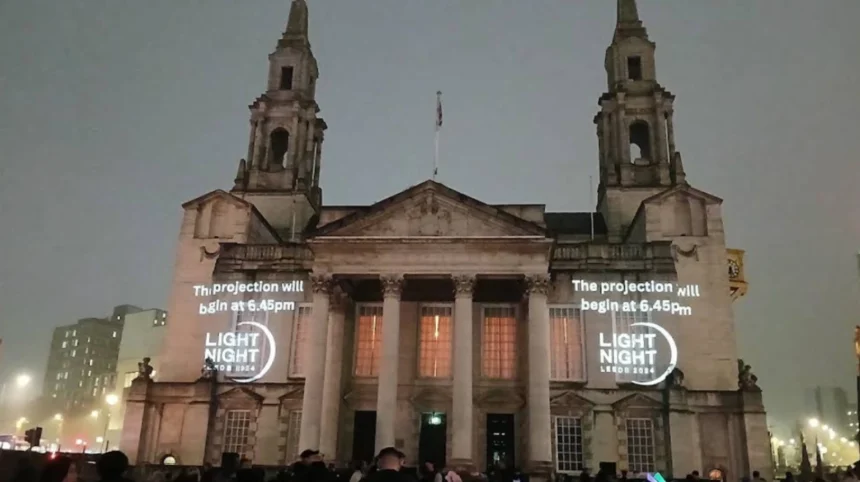
Leeds (The Leeds Times) July 10, 2026 – The city of Leeds paused today to observe the annual Srebrenica Memorial Day with a formal civic ceremony held outside the Civic Hall. Led by the Lord Mayor of Leeds, Councillor Stephen Holroyd, and the Lord-Lieutenant of West Yorkshire, Professor Adeeba Malik CBE, the event brought together civic dignitaries, community leaders, and faith representatives. The gatherers paid tribute to the victims of the 1995 genocide, reinforcing the city’s broader commitments to peace, inclusion, and diversity.
The solemn assembly included a series of speeches and a dedicated prayer focused on the actions of July 11, 1995, when more than 8,000 Bosniak Muslim men and boys were systematically executed in the town of Srebrenica by units of the Bosnian Serb Army.
To ensure visible remembrance across the municipality, local authorities confirmed that the official Remembering Srebrenica flag would fly prominently over Civic Hall throughout Friday and Saturday. Furthermore, iconic civic structures across Leeds are scheduled to be illuminated in green and white—the symbolic colours of the remembrance movement—during the evening hours of both days.
What Happened at the Leeds Srebrenica Memorial Ceremony?
The ceremony served as a localized nexus for a broader pan-European movement. Every year, towns and cities across the continent coordinate events to mark the Bosnian genocide, positioning the historical tragedy as a contemporary warning against the dangers of unchecked hatred.
The event featured platform contributions from prominent local political figures who have actively championed human rights and equality within the region.
Among the primary speakers were Councillor Emma Flint, who serves as Leeds City Council’s executive member for equality, adults, and health, and Councillor Abdul Hannan, designated as a Remembering Srebrenica Champion.
What Statements Were Made by Civic Leaders?
To ensure complete transparency and legal accuracy regarding the proceedings, the official record provided by the Leeds City Council communications team details the precise positions of the executive leadership present.
As reported by the Leeds City Council press office, Lord Mayor of Leeds Councillor Stephen Holroyd stated that:
“The passage of time does nothing to lessen the horrors of the Srebrenica massacre, and it was very poignant to mark the anniversary and pay our respects as a city today and this weekend. Leeds and its communities stand together in denouncing hatred, prejudice and discrimination in all its forms, through a shared commitment to tolerance and treating people as you would expect to be treated yourself.”
Following the Lord Mayor’s remarks, the focus shifted to the global implications of historical memory in relation to active 21st-century battlefields. As reported by the Leeds City Council press office, executive member for equality, adults and health Councillor Emma Flint stated that:
“The Srebrenica massacre was a tragic and dark moment in world history, and one that should always be marked and remembered in memorial to those who lost their lives. Sadly the horrors of war continue today with the current conflicts around the world, and we call on all parties to bring those to an end to save lives and ensure a more peaceful future.”
Background of the Srebrenica Genocide
The event commemorated in West Yorkshire originates from the complex collapse of the Socialist Federal Republic of Yugoslavia, which degenerated into protracted inter-ethnic warfare during the early 1990s.
The conflict in Bosnia and Herzegovina (1992–1995) pitted the multi-ethnic government forces against self-proclaimed ethno-nationalist entities, most notably the Army of Republika Srpska (VRS), commanded by General Ratko Mladić.
In 1993, the United Nations Security Council had declared the eastern enclave of Srebrenica a “safe area” under UN protection, to be guarded by a mathematically disadvantaged contingent of Dutch peacekeeping troops (Dutchbat).
Despite this international guarantee, July 1995 saw the Bosnian Serb Army advance upon and systematically overrun the enclave.
Over a period of approximately one week beginning on July 11, 1995, units under the command of General Mladić separated Bosniak civilian populations.
While women and young children were forcibly transferred out of the region via bus networks, over 8,000 predominantly Muslim men and teenage boys were systematically captured, detained, executed at various mass killing sites, and buried in hidden mass graves.
The events at Srebrenica represent the worst mass slaughter on European soil since the conclusion of the Second World War.
The International Criminal Tribunal for the former Yugoslavia (ICTY) and the International Court of Justice (ICJ) subsequently ruled that the systematic nature of these executions legally constituted an act of genocide. In later years, key architects of the campaign, including political leader Radovan Karadžić and military commander Ratko Mladić, were convicted of genocide and crimes against humanity, receiving life sentences.
Prediction: How This Development Can Affect the Local Community
The regular observance of Srebrenica Memorial Day in major British metropolitan centers like Leeds directly influences the social dynamics, educational frameworks, and security landscape of local communities.
For British Muslim communities, particularly the Bosniak diaspora living within West Yorkshire, the public validation of their historical trauma by mainstream civic authorities provides a critical sense of structural security and recognition.
By elevating the memory of the genocide to an official civic level, the local authority signals a protective stance toward minority populations. This public alignment helps mitigate anxieties regarding Islamophobia, xenophobia, and hate crimes, which often spike during periods of heightened global geopolitical tension.
Influence on Local Educational Policy and Public Discourse
The high-profile involvement of figures like the Lord-Lieutenant and executive councillors indicates that the historical lessons of the Balkan conflicts will continue to be integrated into local educational initiatives. This development will likely lead to:
- Increased Funding for Integration Projects: Continued support for community-led educational frameworks designed to teach school-age demographics about the mechanics of scapegoating and radicalization.
- Reinforced Public Policy Mandates: Strengthening Leeds City Council’s institutional framework regarding its statutory duties under national equality legislation, ensuring that community relations remain proactively managed rather than reactively policed.