
- Emergency Response: West Yorkshire Fire and Rescue Service was called to the River Aire near Crown Point, Leeds, at 3:35 pm on Thursday, July 9, 2026, following urgent reports of a woman in the water.
- Multi-Agency Operation: Specialist water rescue teams, ambulance crews, and police responded to the scene to pull the woman from the depths of the river.
- Medical Care: Following her extraction from the water, the woman was immediately handed over to Yorkshire Ambulance Service paramedics for medical assessment and treatment.
- Investigation Ongoing: Authorities have not yet released details regarding how the woman entered the water or her current medical condition.
Leeds (The Leeds Times) July 10, 2026 – A major emergency response was triggered in Leeds city centre yesterday afternoon when a woman was spotted struggling in the depths of the River Aire near Crown Point. Operational logs confirm that emergency services rushed to the scene following a critical call received at 3:35 pm on Thursday, July 9. Specialist water rescue teams successfully extracted the individual from the river before transferring her directly into the care of awaiting paramedic crews.
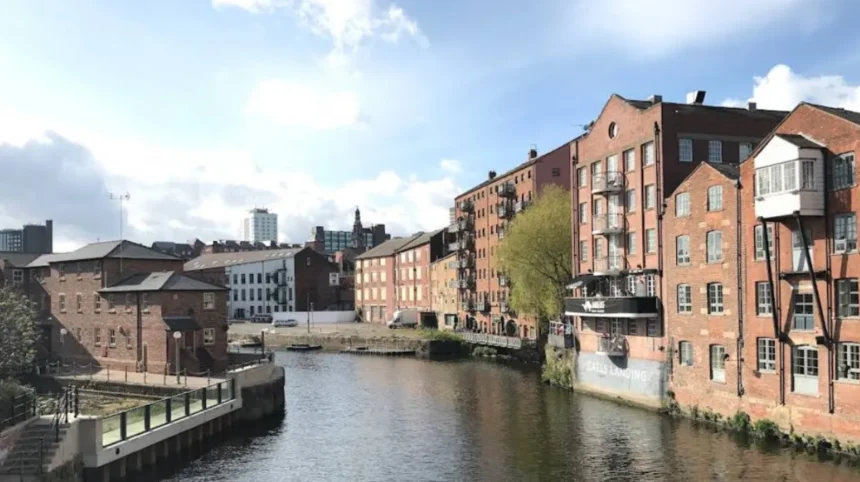
The incident drew a visible presence of emergency vehicles to the Crown Point area, a bustling retail and residential district adjacent to the watercourse.
According to official correspondence from a West Yorkshire Fire and Rescue Service spokesperson, the initial reports specifically flagged a “female in the water” near the Crown Point bridge network.
The exact circumstances surrounding how the woman came to be in the river remain unclear, and authorities have maintained a strict policy of privacy regarding her identity and current medical status.
What Happened During the River Aire Rescue Operation?
The rescue operation began immediately after the West Yorkshire Fire and Rescue Service (WYFRS) control room received multiple emergency calls from concerned onlookers near Crown Point.
As documented in the official agency statement, emergency dispatchers routed specialist water rescue assets to the coordinates at 3:35 pm.
Witnesses in the area reported seeing emergency vehicles, including fire engines and specialized technical rescue units, navigating the traffic around Crown Point to establish a command sector near the riverbank.
Rescuers deployed localized water safety equipment to secure the woman, who was described as being within the deep channels of the River Aire.
The geographical layout of the River Aire near Crown Point features high stone walls and varying water depths, which complicates independent exit strategies for individuals in distress.
Personnel trained in swift-water tracking managed to reach the woman, stabilize her position, and pull her safely to the riverbank.
Who Responded to the Emergency Scene at Crown Point?
The incident required a coordinated response from several branches of the regional emergency services infrastructure.
Alongside the primary deployment from the West Yorkshire Fire and Rescue Service, teams from the Yorkshire Ambulance Service (YAS) and West Yorkshire Police were dispatched to secure the perimeter and provide immediate clinical intervention.
To ensure total factual precision regarding the timeline and deployment, the West Yorkshire Fire and Rescue Service released an operational summary to local media outlets. As confirmed by the regional rescue spokesperson, the agency’s documentation states:
“West Yorkshire Fire and Rescue Service were called at 3:35 pm on July 9 to reports of a female in the water at the River Aire, near Crown Point, Leeds.”
The spokesperson further validated that following the successful extraction by fire service personnel, the casualty “was left in the care of paramedics.”
How Did the Paramedics and Police Assist?
As reported by local emergency dispatch logs, Yorkshire Ambulance Service paramedics set up a triage point immediately adjacent to the rescue zone.
Due to the inherent risks of immersion in open watercourses—such as cold water shock, hypothermia, and water ingestion—the medical team initiated immediate diagnostic checks the moment the woman was cleared from the river channel.
West Yorkshire Police officers assisted with traffic management and crowd control along the busy Crown Point pathways to allow the rescue technicians unhindered access to the water’s edge.
Background of Water Safety Concerns and Incidents on the River Aire
This latest rescue near Crown Point underscores a long-standing pattern of water safety challenges along the urban stretches of the River Aire in Leeds.
The river intersects heavily populated commercial, retail, and nightlife zones, making it a focal point for public safety initiatives led by the Leeds City Council, the Canal & River Trust, and local emergency services. Over the past decade, the regional government has invested significantly in installing lifebuoys, throwing lines, and specialized public rescue equipment along the banks, particularly near high-footfall areas like Leeds Dock, the Calls, and Crown Point.
Despite these preventative measures, the River Aire remains a site of frequent emergency interventions. Urban watercourses present distinct hazards, including sudden depth changes, hidden sub-surface debris, underwater currents, and steep, slippery retaining walls that make scaling the banks near-impossible without external assistance.
Furthermore, seasonal temperature variations often mask the true danger of cold water shock, an involuntary physiological reaction that can incapacitate even strong swimmers within minutes of entering water below 15°C.
The incident on July 9 highlights the ongoing necessity of the region’s dedicated water rescue units, which undergo continuous training to handle the specific architectural and environmental complexities of the Leeds waterway network.
Prediction: How This Development Can Affect Leeds Residents and Commuters
This latest incident is highly likely to trigger an immediate review of water safety protocols and physical infrastructure along the Crown Point stretch of the River Aire, directly impacting Leeds residents, commuters, and riverside property owners.
In the immediate future, local authorities such as the Leeds City Council and West Yorkshire Police are expected to increase visible safety patrols and initiate comprehensive checks on the existing life-saving equipment stationed near the bridge.
For the public, this may result in temporary pedestrian diversions or localized access restrictions along the towpaths while safety teams conduct these assessments.
Over the longer term, this development could accelerate plans for structural enhancements along the riverbank. Riverside communities and businesses may see the installation of higher safety railings, enhanced public warning signage, and additional CCTV monitoring infrastructure designed to detect individuals in distress before an incident escalates.
Furthermore, the event will likely spark renewed public awareness campaigns targeting schools, universities, and city centre patrons regarding the hidden dangers of open water, reinforcing a culture of vigilance across the broader Leeds metropolitan population.