
Key Points
- Site Rebirth: The iconic former site of The Reliance restaurant at 76-78 North Street in Leeds has been officially reopened as ‘The Smithfield’, launching as a collaborative venture between York-based Crooked Brewing and acclaimed Chef James Donovan.
- Critically Applauded Execution: Respected food critic Jill Turton has praised the new establishment as a “worthy successor,” highlighting exceptionally high culinary standards and “excellent dishes, beautifully executed,” though noting that indoor noise levels could become somewhat overwhelming during peak service.
- Nose-to-Tail Ethos: Influenced by Chef Donovan’s experience at London’s Rochelle Canteen and Sheffield’s Native, the menu champions a nose-to-tail, produce-led philosophy featuring rustic, high-quality ingredients such as pig’s head croquettes, chicken and tarragon sharing pies, and local seasonal vegetables.
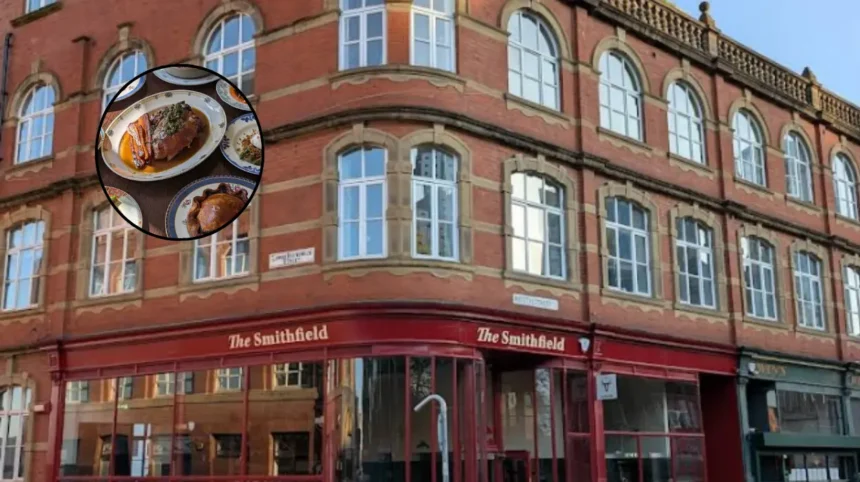
- Community and Continuity: The new management has consciously preserved the visual heritage of the building—including reverting the exterior window frames back to the signature dark burgundy red—whilst establishing local supply chains for beverages, sourcing natural wines from previous occupiers via Wayward Wines and cask beers from Crooked Brewing.
Leeds (The Leeds Times) July 11, 2026. The culinary torch of one of Leeds’ most revered historic dining spots has officially been reignited as The Smithfield, situated at 76-78 North Street, steps out of its soft-launch phase to widespread critical interest. Taking over the legendary premises that housed The Reliance for more than two decades, the new joint venture between independent Yorkshire outfit Crooked Brewing and Chef James Donovan has successfully maintained the site’s historic reputation for exceptional gastronomy. According to a comprehensive review published by noted food critic Jill Turton, the new owners are successfully carrying on the very high standards established by their predecessors.
Turton enthusiastically declared the establishment a “worthy successor to the Reliance,” offering diners “excellent dishes, beautifully executed,” despite observing that the acoustic levels inside the bustling room could occasionally prove “a bit too much” during peak weekend hours.
The physical and spiritual restoration of the venue represents a significant moment for the West Yorkshire hospitality sector. The transition follows a brief, widely critiqued period under intermediate ownership that had stripped away the original character of the space.
As documented in a feature by The Good Food Guide, the new team’s commitment to “preserve the legacy” was symbolised immediately by a highly publicised exterior paint job, returning the venue’s distinctive, sweeping curved glass frontage to its traditional dark burgundy red.
This structural homage immediately resonated with the local dining public, reversing a previous modern blue paint layout that had alienated long-term patrons. Inside, the design retains its familiar, airy configuration, anchored by expansive full-height windows, a centrally positioned bar, and a stripped-back, minimalist dining area at the rear that directly overlooks an open kitchen.
What is Sourced on the Menu at The Smithfield?
The culinary identity of The Smithfield is driven by Chef James Donovan, whose professional background includes stints at London’s renowned Rochelle Canteen—co-owned by Margot Henderson—and heading the kitchen at Native in Sheffield. Writing for The Good Food Guide, industry analysts observed that “you don’t have to do much dusting to see the Hendersons’ fingerprints here,” pointing to a distinctively British, ingredient-led, nose-to-tail philosophy.
The menu rotates dynamically in accordance with seasonal availability, presenting dishes on an eclectic assortment of mismatched, traditional plates.
Initial menu reviews highlight an array of small, snack-style options to begin, including house-made focaccia served with wild garlic butter, Gordal olives, and a creamy, intensely seasoned whipped cod’s roe accompanied by raw radishes with their leafy tops intact.
Among the mid-tier options, Turton and other regional reviewers singled out the pig’s head croquettes served alongside a sharp sauce gribiche as an absolute “must-order” item for their crisp exterior and rich interior.
The restaurant’s wood-fired grill also features prominently across the menu, imparting a distinct charred bitterness to starter plates of sweet leeks drizzled over a bed of rich romesco sauce, as well as portions of Wye Valley asparagus lightly showered with floral, hard Corra Linn cheese.
For main courses, the kitchen shifts toward robust, comforting British classics executed with elevated technical precision. Diners can select from a comically substantial, crown-shaped sharing pie packed to the brim with herd-fed chicken, leek, and a rich tarragon gravy, served alongside thick, crispy-edged chips.
The menu further extends to sustainable seafood and local meats, featuring whole wild Cornish seabass, pan-fried coley served with charred fennel in a drenched butter sauce, native breed pork collar complemented by a peppering of cider sauce, and slow-braised lamb shoulder paired with pearl barley and a vibrant salsa verde.
Dessert options continue the emphasis on traditional textures, showcasing sticky toffee pudding coated in butterscotch sauce, caramelised whey tarts finished with crème fraîche, and dense chocolate terrines served with brittle brandy snaps.
How Has the Hospitality Industry Reacted to the Collaboration?
The partnership underpinning The Smithfield represents an intentional amalgamation of independent Yorkshire beverage production and top-tier culinary management.
As reported by The Hoot Leeds, co-founder Steve Dawson outside The Smithfield expressed immense gratitude regarding the community response to their opening weeks. In a public statement reflecting on the initial soft launch, the management team stated:
“We were so grateful to welcome friends, neighbours, and the Leeds hospitality community to The Smithfield. Seeing the bar and dining room full after weeks of cleaning, painting, and graft has truly made it all worth it. A huge thank you to everyone who came along, showed their support, and has made this journey possible. Not least the Kitchen and bar teams, whose incredible service has kept the plates coming and the drinks flowing.”
To reinforce its deep local roots, the restaurant’s beverage program relies entirely on regional relationships. The bar features a rotating selection of locally brewed cask and keg beers supplied directly by Crooked Brewing’s facility.
In a notable full-circle development for the Leeds food scene, the natural wine menu is curated and supplied by Wayward Wines—the retail and wholesale operation established by the original founders of The Reliance after they chose to step away from day-to-day restaurant operations.
This collaboration ensures that while the management has transformed, the foundational quality of the liquid offerings remains tied to the venue’s historical roots.
Background of the Particular Development
The site at 76-78 North Street holds a uniquely revered position within the modern history of the West Yorkshire restaurant scene. For over twenty years, The Reliance operated not merely as a standard gastropub, but as a pioneering independent bistro that effectively educated a generation of Leeds food enthusiasts.
It acted as an essential bridge between the early 2000s era of elaborate fine dining and the subsequent mid-2010s boom of independent craft beer cellars, natural wine bars, and small-plate dining concepts.
The Reliance became famous across the North of England for its pioneering house-cured charcuterie program, informal service style, and commitment to small, sustainable British agricultural producers.
When the original founders chose to close the venue to focus their full attention on their growing wine import business, Wayward Wines, the property was briefly taken over by operators who heavily modified the venue’s aesthetics and digital footprint.
This included changing the iconic red exterior to blue and erasing historical social media archives, a move that drew widespread disappointment from the local community.
The emergence of The Smithfield in early 2026 represents a targeted effort by experienced regional operators to rescue the physical asset and restore the community-focused, produce-driven ethos that made the original venue a cornerstone of Leeds’ independent commercial identity.
Explore More Local Leeds News
Woman Rescued From River Aire Near Crown Point, Leeds 2026
Civic Leaders Mark Solemn Srebrenica Memorial Ceremony in Leeds 2026
Prediction: How This Development Can Affect the Leeds Foodie Community and Local Hospitality Sector
The successful reopening and positive critical reception of The Smithfield is poised to significantly impact both local consumers and the broader independent hospitality ecosystem in the North Leeds corridor. For the local “foodie” community—specifically those patrons who frequented the area during the height of The Reliance’s popularity—the venue provides an immediate restoration of a trusted, high-quality neighborhood hub.
It fulfills a clear demand for casual, non-pretentious dining that does not sacrifice culinary sophistication, effectively securing North Street’s status as a premier destination for regional food tourism.
For the wider hospitality sector, the collaboration between Crooked Brewing and Chef James Donovan establishes a robust blueprint for how independent businesses can navigate high overhead costs.
By sharing operational risks between a established regional brewery and an experienced culinary director, the venue achieves immediate supply-chain efficiencies and diversifies its revenue streams between casual bar patrons and high-ticket dining room reservations.
Furthermore, by maintaining a strict, non-exaggerated focus on traceable local sourcing, the restaurant reinforces financial stability for nearby agricultural suppliers, small-scale vegetable growers, and specialty cheese makers across Yorkshire. The positive momentum generated by this launch will likely encourage similar collaborative, heritage-first restorations of independent venues across post-pandemic urban spaces in the United Kingdom.