

Key Points
- Partnership Overview: First Bus has partnered with Leeds Teaching Hospitals NHS Trust to provide free bus travel for vulnerable pregnant women across Leeds.
- Ticket Allocation: The bus operator is providing 100 free Day tickets per month, amounting to over 1,000 passes annually, through March 2027.
- Target Audience: The initiative targets expectant mothers who face financial hardship, transport barriers, or lack access to public income benefits, particularly from minority and disadvantaged backgrounds.
- Need Identified: Internal data from the Trust estimates that roughly 100 pregnant women every month struggle to attend hospital appointments due to transport costs.
- Distribution Strategy: The Haamla team, a specialist group of midwives and maternity support workers, will perform financial assessments during initial visits to distribute passes based on travel needs.
- Monitoring & Impact: The Trust plans to track clinical attendance to evaluate the effect of free travel on health outcomes for expectant mothers and infants.
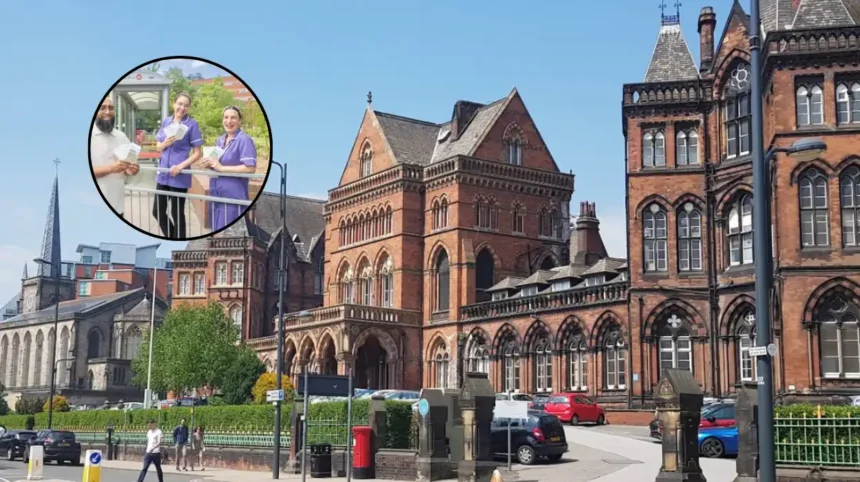
Leeds (The Leeds Times) July 23, 2026 –As reported by First Bus Press Office, First Bus has officially launched a joint initiative with Leeds Teaching Hospitals NHS Trust to provide free public transport passes to vulnerable pregnant women throughout the region. Under the terms of the agreement, the transport operator is donating 1,000 free Day tickets to enable mothers-to-be to travel to and from critical clinical appointments, routine check-ups, and emergency obstetric services without incurring financial strain.
- Key Points
- How will free travel passes be distributed to expectant mothers across Leeds?
- Why are transport barriers impacting hospital attendance for pregnant women in West Yorkshire?
- What statement did First Bus leadership issue regarding community social value?
- How will NHS clinicians monitor the health impact of the ticket distribution?
- Background of the particular development
- Prediction: How this development can affect vulnerable mothers and regional healthcare services
How will free travel passes be distributed to expectant mothers across Leeds?
As reported by First Bus Press Office, the travel passes will be distributed directly through the Haamla team, a specialized clinical group within the Trust comprised of dedicated midwives and maternity support workers. The Haamla team provides direct care to women from minority, ethnically diverse, and socio-economically disadvantaged communities who encounter financial insecurity or fail to qualify for standard income support benefits.
The scheme establishes a structured allocation model where First Bus provides 100 Day passes each month until March 2027. Midwives will distribute the travel vouchers directly to patients following a comprehensive financial and social need assessment conducted during their initial maternity intake appointments.
Why are transport barriers impacting hospital attendance for pregnant women in West Yorkshire?
An internal review of medical records conducted by the Leeds Teaching Hospitals NHS Trust revealed that approximately 100 pregnant women each month fail to attend scheduled hospital appointments purely because they lack adequate financial resources to pay for public transport.
As reported by First Bus Press Office, Nada Abdul-Majid, Specialist Midwife for Health Equity at Leeds Teaching Hospitals NHS Trust, stated:
“I’ve seen first-hand how women struggle to get to their hospital appointments if they don’t have enough money to use public transport. Our Haamla team carry out home visits to these vulnerable women however, it is important that families are able to travel to the hospital for scans, doctors’ appointments, labour and obstetric emergencies.”
As reported by First Bus Press Office, Abdul-Majid further emphasized the broader community value of the partnership, noting:
“We’re really grateful to First Bus for providing these tickets for women so they can receive maternity care without worrying about the cost of travel to and from appointments. This will make a real difference to mothers and babies.”
What statement did First Bus leadership issue regarding community social value?
As reported by First Bus Press Office, Zoe Hands, Managing Director of First Bus Franchising (covering the West Yorkshire operating region), stated:
“Supporting communities in the areas we serve means, where we can, being able to assist people in all stages of life. Nothing can be more important than helping to ensure the health and welfare of mothers-to-be and the benefits this will bring to their newborn children.”
As reported by First Bus Press Office, Hands added:
“We’re pleased to be working in partnership with the Trust and seeing the positive impact our travel support can make to the lives of vulnerable women in Leeds.”
How will NHS clinicians monitor the health impact of the ticket distribution?
To evaluate the operational efficacy and health benefits of the transport subsidization, the Leeds Teaching Hospitals NHS Trust will monitor pass utilization alongside appointment attendance records.
By cross-referencing ticket distribution with clinical attendance metrics, healthcare administrators aim to systematically review how mitigating travel costs affects overall health outcomes for expectant mothers and neonates in high-risk demographic groups.
Background of the particular development
Public healthcare frameworks across West Yorkshire have increasingly identified transport poverty as a primary social determinant of health.
Pregnant women who miss routine antenatal appointments face elevated risks of unmonitored fetal development issues, unaddressed gestational diabetes, and delayed emergency intervention during labour.
The Haamla Service was established by Leeds Teaching Hospitals NHS Trust specifically to address health disparities encountered by Black, Asian, and Minority Ethnic (BAME) women, refugees, asylum seekers, and women facing severe socioeconomic deprivation. The dedicated service provides culturally sensitive support, language interpretation, and specialized care pathways.
In recent years, rising living costs across the United Kingdom have exacerbated transport accessibility challenges for low-income households.
While maternity care is provided free at the point of delivery through the National Health Service (NHS), peripheral costs—such as bus fares to regional teaching hospitals—remain a frequent barrier for individuals not covered by statutory travel reimbursement schemes.
This corporate partnership between First Bus West Yorkshire and the local NHS Trust represents a localized attempt to bridge infrastructure gaps through private-public cooperation.
Explore More Local Leeds News
Volunteers Repaint Stalls to Revive Historic Market in Pudsey 2026
Former NatWest Bank Approved to Become New Bar in Cross Gates 2026
Prediction: How this development can affect vulnerable mothers and regional healthcare services
This joint initiative between First Bus and the NHS Trust is expected to have direct effects on expectant mothers, local clinical operations, and regional transport policy.
- Reduction in Did-Not-Attend (DNA) Rates: Eliminating the immediate financial barrier of bus fares is expected to significantly reduce missed maternity and ultrasound scan appointments among low-income patients.
- Early Detection of Complications: Consistent clinic attendance allows clinical staff to identify high-risk conditions—such as pre-eclampsia, fetal growth restriction, or maternal anemia—at earlier, more treatable stages.
- Reduced Stress and Financial Strain: Direct provision of travel passes alleviates financial pressure on households operating without disposable income, improving mental wellbeing during pregnancy.
- Improved Resource Optimization: Fewer missed appointments enable hospital departments to run schedules efficiently, reducing administrative backlog and lost clinical time.
- Model for Future Transport-Healthcare Partnerships: If the data tracked through March 2027 demonstrates a measurable improvement in patient attendance and health outcomes, this corporate social responsibility framework could be adopted by other regional bus operators and NHS trusts across the United Kingdom.