Domestic abuse affects individuals across all demographics, socio-economic backgrounds, and geographic areas, including the suburban township of Horsforth in the City of Leeds Metropolitan Borough. Under Section 1 of the Domestic Abuse Act 2021, behavior is defined as domestic abuse if two people are aged 16 or over, are personally connected to each other, and the behavior is abusive. A personal connection includes current or former intimate partners, individuals who are or have been married or in a civil partnership, relatives, and parents who share a child.
- How Can Victims in Horsforth Access Emergency Domestic Abuse Support?
- What Local Support Services Serve Domestic Abuse Victims in Leeds and Horsforth?
- How Can Individuals Search for Domestic Abuse Help Safely Online?
- What Legal Rights and Protective Orders Are Available for Victims?
- How Can Family, Friends, and Neighbors Safely Help Someone Experiencing Domestic Abuse?
- What Emergency Housing and Financial Options Exist for Victims in Horsforth?
- National Domestic Abuse Helpline and Support Directory
- What Steps Should You Take to Prepare a Safe Leaving Plan?
Abusive behavior under UK legislation is categorized into distinct forms:
- Physical violence: Physical aggression including hitting, slapping, strangulation, shoving, or physical restraint.
- Sexual abuse: Non-consensual sexual activity, forced intimacy, or sexual degradation.
- Violent or threatening behavior: Intimidation, verbal threats, and destructive actions intended to incite fear.
- Controlling or coercive behavior: Systematic patterns of behavior designed to make a person dependent, isolated, or subordinate.
- Economic and financial abuse: Restricting access to money, controlling income, or creating unauthorized debt.
- Psychological or emotional abuse: Constant criticism, gaslighting, isolation from support networks, or emotional blackmail.
The statutory definition formally recognized child victims under Section 3 of the Domestic Abuse Act 2021. Any child under 18 who sees, hears, or experiences the effects of domestic abuse between adults with whom they are personally connected is categorized as a victim of domestic abuse in their own right.
Statistics published by the Office for National Statistics reveal the scale of domestic abuse across England and Wales. In the year ending March 2023, an estimated 2.1 million adults aged 16 and over experienced domestic abuse. This figure comprised 1.4 million women and 751,000 men. West Yorkshire Police recorded over 50,000 domestic abuse-related incidents within the region in a single calendar year, demonstrating a consistent demand for localized, confidential support services in Leeds and surrounding areas such as Horsforth.
How Can Victims in Horsforth Access Emergency Domestic Abuse Support?
Victims in immediate physical danger near Horsforth must call 999 for West Yorkshire Police. If calling from a mobile phone and unable to speak safely, pressing 55 triggers the Silent Solution protocol to alert emergency operators for assistance.
When an individual faces imminent threat or physical violence within Horsforth or the wider Leeds district, immediate intervention from emergency services is critical. The primary emergency resource is West Yorkshire Police.
When a victim dials 999 from a mobile phone but cannot speak out loud due to the proximity of an abuser, the UK national Silent Solution system protects the caller:
- Initiating the Call: Dial 999 from a mobile handset.
- Operator Prompt: Listen to the automated system questions from the BT operator.
- Activating Silent Solution: Press 55 when prompted.
- Police Dispatch: Pressing 55 transfers the call to the local police force (West Yorkshire Police), signaling that the caller is in danger but cannot speak. The operator uses acoustic monitoring and location tracking to dispatch officers to the scene without the caller needing to make a sound.
If calling from a landline, pressing 55 is not necessary. If a 999 call from a landline is connected and the caller does not speak, but background noise suggests danger, the operator automatically transfers the call to the police force serving that geographic exchange.
For urgent medical intervention resulting from physical injuries or sexual assault, residents in Horsforth have access to local NHS emergency medical facilities:
- Leeds General Infirmary Emergency Department: Located in Leeds City Centre, providing 24-hour emergency medical treatment and forensic clinical assessments.
- St James’s University Hospital Emergency Department: Located in eastern Leeds, providing round-the-clock emergency medical evaluation, trauma care, and treatment for severe physical harm.
- Wharfedale Hospital Minor Injuries Unit: Located nearby in Otley, treating non-life-threatening cuts, minor fractures, and soft tissue injuries.
Local emergency support services operate continuously 24 hours a day, 365 days a year, ensuring immediate physical protection and medical assistance for individuals in crisis.
What Local Support Services Serve Domestic Abuse Victims in Leeds and Horsforth?
Leeds Domestic Violence Service provides 24-hour helpline access, emergency accommodation, independent domestic violence advisors, and community outreach for victims in Horsforth. Additional organizations offer tailored legal, accommodation, and specialist crisis support throughout the Leeds area.
The primary city-wide support infrastructure in the region is the Leeds Domestic Violence Service partnership. This service unifies three specialized local organizations: Leeds Women’s Aid, Behind Closed Doors, and Crossroads Domestic Abuse Services. By combining operational resources, this partnership delivers comprehensive support tailored to adults and children residing in Horsforth and surrounding Leeds communities.
The service directory for domestic abuse support serving the Horsforth area includes:
- Leeds Domestic Violence Service: Operates a 24-hour confidential telephone helpline, emergency refuge accommodation placements, community-based outreach workers, and Independent Domestic Violence Advisors.
- Behind Closed Doors: Provides community outreach, prevention programs, and individual support pathways for people experiencing domestic abuse across North West Leeds, including Horsforth.
- Leeds Women’s Aid: Delivers safe house accommodation, specialist support for child victims, legal advocacy, and dedicated refuge spaces across the metropolitan borough.
- Crossroads Domestic Abuse Services: Focuses on community outreach, male victim support, specialist older adult intervention, and dedicated support for perpetrators seeking behavior change.
- Support After Rape and Sexual Assault: Offers free, confidential, specialist support for individuals in West Yorkshire who have experienced sexual violence, sexual abuse, or rape at any point in their lives.
- West Yorkshire Police Safeguarding Unit: Specialized police teams dedicated to domestic abuse investigations, risk assessments, and protective order enforcement in the Leeds district.
Accessing local support services begins with an initial confidential screening. Trained caseworkers conduct a standardized safety assessment to evaluate the immediate level of risk. Depending on the score, victims are assigned an Independent Domestic Violence Advisor who creates an individualized safety plan, assists with court proceedings, coordinates housing transfers, and liaises with local social services.

How Can Individuals Search for Domestic Abuse Help Safely Online?
Safe online navigation requires utilizing secure private browsing modes, clearing internet browser caches, employing encrypted messaging applications, and using unmonitored hardware or public computers to prevent abusers from tracking search history and digital footprints.
Digital safety is essential when researching domestic abuse support, as abusive partners frequently monitor phones, web browsers, and computer usage. Modern web browsers store history, cookies, search terms, and temporary files that reveal online activity.
To maintain digital privacy while searching for help from a personal device:
- Private Browsing and Incognito Windows: Open an Incognito window in Google Chrome, Private Window in Apple Safari, or Private Window in Mozilla Firefox. Private browsing prevents web history, search queries, and cookies from saving locally on the machine.
- Clearing Browser History: If private browsing was not enabled, manually clear the web history, cache, and search entries immediately after visiting support pages.
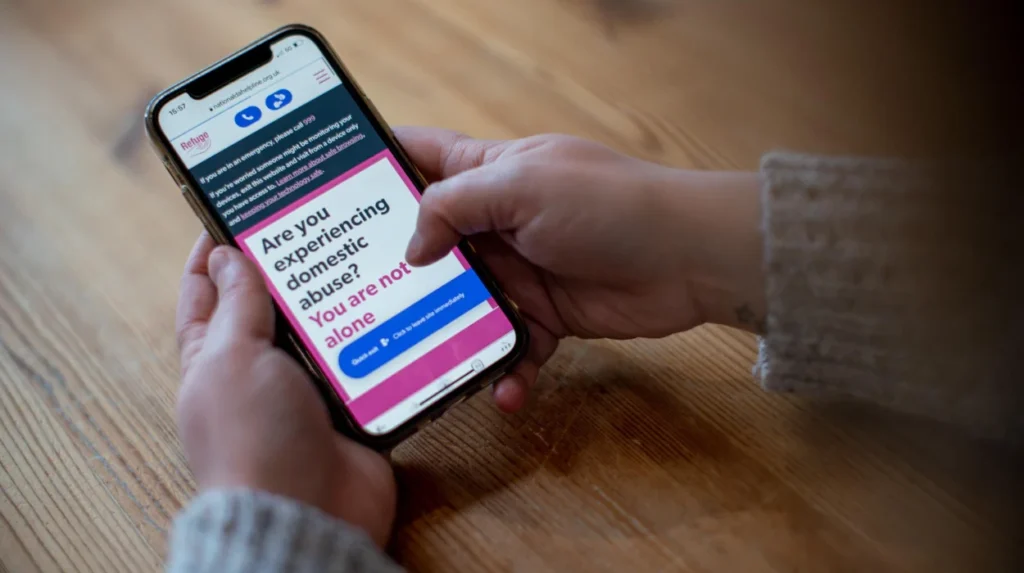
- Quick Exit Buttons: Many domestic support websites feature prominent “Cover Your Tracks” or “Quick Exit” buttons. Clicking these buttons instantly redirects the browser to a neutral web page, such as a search engine or weather service, preventing sudden discovery.
- Alternative Hardware Usage: Access internet resources using computers at public facilities, such as the Horsforth Community Hub and Library, educational institutions, or trusted workplaces where an abuser cannot monitor physical screens or access router logs.
- Secure Communication Channels: Avoid using shared family email accounts or phone plans with shared itemized billing records. Create a new, free email account on a secure platform using strong, unique passwords not saved on shared devices.
Smartphones present specific safety vulnerabilities due to shared cloud backups, family location-tracking applications, and device pairing features. Individuals should audit their privacy settings to ensure location services are disabled for shared accounts and ensure mobile applications do not sync web browsing history across linked secondary devices like tablets or smart watches.
What Legal Rights and Protective Orders Are Available for Victims?
UK law offers statutory protection through Non-Molestation Orders, Occupation Orders, Domestic Abuse Protection Notices, and Domestic Violence Protection Orders. These legal mechanisms prevent abusers from contacting victims, entering home premises, or using physical threats.
The UK judicial system provides civil and criminal remedies to protect individuals experiencing domestic abuse. Civil court orders are applied for through local county courts, such as the Leeds Combined Court Centre, while police-issued protective notices offer immediate emergency protection without prior court proceedings.
Key legal protective mechanisms include:
- Non-Molestation Orders: Injunctions granted under Part IV of the Family Law Act 1996 that forbid an abuser from committing or threatening violence, molesting, harassing, or communicating with the applicant or relevant children. Breach of a Non-Molestation Order is a criminal offense punishable by up to five years in prison.
- Occupation Orders: Legal rulings under the Family Law Act 1996 that determine rights to occupy a shared residential property. An Occupation Order can exclude an abuser from entering the home, surrounding perimeter, or specific geographic zone in Horsforth, regardless of legal property ownership or lease tenancy status.
- Domestic Abuse Protection Notices and Orders: Introduced via the Domestic Abuse Act 2021, these notices allow police officers to issue immediate 48-hour protections following an incident. Magistrates can subsequently issue long-term protection orders imposing mandatory conditions, such as electronic monitoring, substance abuse rehabilitation, or exclusion zones.
- Clare’s Law (Domestic Violence Disclosure Scheme): A statutory framework permitting individuals to ask police about a current or former partner’s history of violence or abuse. The scheme contains two pathways: the “Right to Ask” (initiated by an individual or concerned third party) and the “Right to Know” (initiated by police proactive disclosure).
Legal Aid funding is available for victims of domestic abuse applying for protective civil court orders. Applicants must provide evidence of domestic abuse, such as police report records, medical professional notes, or domestic abuse service documentation, to qualify for financial legal support via the Legal Aid Agency.
Explore More Help And Resources
How to Find Free Youth Clubs for Teenagers in Headingley
How to Find Free Sports Clubs for Children Near Guiseley
How Can Family, Friends, and Neighbors Safely Help Someone Experiencing Domestic Abuse?
Concerned individuals can help by listening non-judgmentally, preserving confidential communications, avoiding direct confrontation with the abuser, reporting dangerous situations to emergency services, and providing practical resources such as safe contact numbers and emergency temporary storage.
Supporting a friend, family member, or neighbor in Horsforth who is experiencing domestic abuse requires care, discretion, and adherence to safety protocols. Unplanned interventions or direct confrontations with an abuser can elevate risk levels for the victim.
Recommended safe support strategies include:
- Active and Non-Judgmental Listening: Believe the victim’s account without placing blame, questioning their decisions, or demanding that they leave the relationship immediately. Leaving an abusive relationship is statistically the highest-risk phase for severe physical harm.
- Establishing Secret Safe Words: Agree upon a safe codeword, emoji, or phrase via text or phone call that signals the victim needs emergency services dispatched to their location immediately.
- Offering Secure Communication Methods: Allow the victim to use an unmonitored mobile phone or computer to contact local support agencies, legal representatives, or medical professionals.
- Fostering Emergency Safe Havens: Offer a secure location to hold spare sets of house keys, emergency cash reserves, copies of essential legal documents (birth certificates, passports, housing deeds), and a bag of essential clothing items.
- Documenting Incidents: Keep quiet, chronological records of visible injuries, property damage, dates, times, and police event reference numbers to assist future legal or housing proceedings.
Neighbors who hear active domestic violence, physical altercations, shouting, or property destruction occurring in nearby residences should contact West Yorkshire Police via 999 immediately rather than attempting to physically intervene. Third-party reports provide essential evidence for law enforcement agencies to conduct welfare checks and establish protective interventions.
What Emergency Housing and Financial Options Exist for Victims in Horsforth?
Victims escaping abuse can access emergency refuge housing, apply for homeless assistance via Leeds City Council Housing Options, access discretionary social funds, and claim Universal Credit under statutory domestic abuse easement regulations to establish financial independence.
Securing safe housing and independent financial resources is often the primary concern for individuals leaving an abusive household. Local housing authorities and central government assistance programs provide statutory support mechanisms to prevent homelessness and alleviate financial hardship.
Housing and Accommodation Options
Leeds City Council operates under the statutory obligations set by the Housing Act 1996 and the Homelessness Reduction Act 2017. Victims of domestic abuse who are forced to leave their home are classified as having a “priority need” for emergency housing assistance:
- Specialist Refuge Accommodation: Secure, undisclosed communal residential facilities offering self-contained or shared living spaces with on-site emotional, legal, and practical support provided by specialist caseworkers.
- Sanctuary Schemes: Security adaptations installed directly into a victim’s existing property, such as reinforced doors, window locks, fireproof letterboxes, and alarm systems, enabling them to remain safely in their home if the abuser no longer resides there.
- Emergency Temporary Accommodation: Short-term emergency placement in hostels, self-contained units, or temporary apartments provided by Leeds City Council Housing Options while permanent housing arrangements are established.
Financial Support Pathways
Establishing separate financial resources is critical when escaping economic control. Government regulations provide financial safety nets for victims:
- Universal Credit Easements: Under Department for Work and Pensions guidelines, victims of domestic abuse can claim a temporary exemption (easement) from work-search requirements for up to 13 weeks upon providing evidence of abuse.
- Split Payments: Universal Credit payments can be split between partners into separate bank accounts to prevent one partner from controlling joint household income.
- Flexible Support Fund and Local Welfare Support: Discretionary payments managed by job centers and local councils to assist victims with immediate emergency expenses, travel costs, moving fees, and basic living essentials.
National Domestic Abuse Helpline and Support Directory
The following national and regional organizations provide free, confidential advice and guidance for individuals impacted by domestic abuse:
What Steps Should You Take to Prepare a Safe Leaving Plan?
A safe leaving plan involves gathering essential identification documents, securing emergency cash reserves, establishing a secure communication method, packing essential medications, and coordinating an undisclosed safe destination with local domestic abuse specialists prior to departure.
Statistical evidence indicates that the point of separation or immediately after leaving an abusive relationship represents the period of highest risk for escalation of coercive control, physical aggression, and stalking. Careful forward planning reduces risk factors during this transition phase.
Follow these practical preparation steps when formulating an emergency departure strategy:
- Contact Local Support Specialists: Speak with an Independent Domestic Violence Advisor at Leeds Domestic Violence Service to complete a Risk Assessment Matrix and secure safe shelter accommodation before taking physical action.
- Gather Essential Documentation: Collect and store personal identification, legal deeds, financial documentation, medical information, and child records in a secure secondary location outside the home:
- Passports, birth certificates, and driving licenses for all family members.
- Marriage certificates, civil partnership papers, or custody orders.
- Bank statements, credit card details, wage slips, and benefit entitlement letters.
- National Insurance cards, NHS numbers, and medical history documents.
- Lease contracts, property mortgage deeds, or council tax statements.
- Secure Independent Financial Means: Open a private bank account at a separate financial institution using paperless online statements routed to a secure, private email address. Gradually transfer cash or build emergency savings.
- Prepare Emergency Belongings: Pack a discrete emergency bag containing essential clothing, spare car and house keys, prescribed medications, mobile phone chargers, and items of high sentimental value. Store this bag with a trusted friend, family member, or neighbor in Horsforth.
- Secure Digital Devices: Purchase an inexpensive prepaid non-smart mobile phone (burners) paid for in cash to communicate with support workers, legal aid attorneys, and police without risk of digital location tracking.
- Establish Secure Travel Arrangements: Pre-plan your transportation route out of Horsforth, identifying specific bus routes, train services from Horsforth Railway Station, or private taxi services to reach your refuge destination without alerting the abuser.
Planning your departure with professional support ensures that safety protocols are strictly maintained throughout every phase of leaving an abusive environment.
What is considered domestic abuse under UK law?
Domestic abuse under the Domestic Abuse Act 2021 includes physical violence, sexual abuse, emotional or psychological abuse, controlling or coercive behaviour, economic abuse, and threats or intimidation. It applies to people aged 16 or over who are personally connected, including current or former partners, relatives, spouses, civil partners, and parents of the same child.