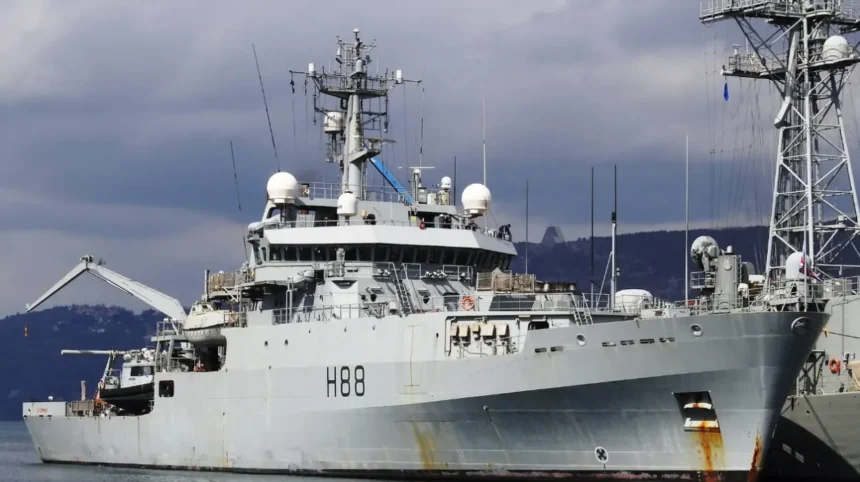
Key Points
- Increased Patrol Deployments: Royal Navy activations to monitor Russian military activity in UK waters and the North Atlantic increased by 25 per cent during the first seven months of 2026 compared to the same period in 2025.
- Intense Operational Window: Royal Navy warships and maritime aircraft spent 21 days on dedicated shadowing operations throughout July 2026.
- Warships and Aircraft Dispatched: Four British surface vessels—HMS Somerset, HMS Tyne, HMS Mersey, and HMS Severn—were deployed alongside Wildcat helicopters from 815 Naval Air Squadron and Merlin anti-submarine warfare aircraft.
- Monitoring Live-Fire Drills: On 20 July 2026, Portsmouth-based patrol vessel HMS Tyne closely monitored a 30-minute live-fire exercise conducted by the Russian Baltic Fleet frigate RFN Neustrashimy in international waters roughly 40 nautical miles off Plymouth.
- Shadow Fleet Escort Missions: Russian guided-missile frigates have repeatedly transited UK areas of responsibility to escort unsanctioned “shadow fleet” oil tankers through recognized shipping lanes, consuming Russian operational capacity.
- Sub-Surface Protection and Deterrent Operations: Type 23 frigate HMS Somerset returned to Plymouth on 7 August 2026 following a four-month, 24,000-nautical-mile North Atlantic deployment tracking submarines and protecting the UK’s continuous at-sea nuclear deterrent.
- Economic Pressure and Interdictions: The monitoring surge follows the UK’s maritime interdiction of the sanctioned shadow fleet oil tanker Smyrtos in the English Channel in June 2026, part of wider international sanctions targeting over 500 vessels.
London (The Leeds Times) August 8, 2026 – British naval and air forces have stepped up operational monitoring across the English Channel, the North Sea, and the North Atlantic following a 25 per cent surge in Russian maritime activity near UK waters during the first seven months of 2026. Figures released by the Ministry of Defence reveal that Royal Navy warships and anti-submarine aircraft conducted 21 days of continuous monitoring operations throughout July 2026, tracking Russian guided-missile frigates, escort warships, and sub-surface vessels navigating key international transit lanes.
- Key Points
- What Key Operations Were Conducted by Royal Navy Vessels in UK Waters?
- How Did HMS Tyne Monitor the Russian Live-Fire Exercise on 20 July?
- How Did HMS Severn and HMS Mersey Intercept Escort Missions Through the Dover Strait?
- What Was the Mission of HMS Somerset in the North Atlantic?
- How Does the Shadow Fleet Impact Russian Oil Revenues and Maritime Security?
- What Is the Background to the Increased Russian Naval Activity and Shadow Fleet Monitoring?
- How Could This Development Affect European Maritime Security and Naval Operational Capacity?
What Key Operations Were Conducted by Royal Navy Vessels in UK Waters?
The deployment involved four major Royal Navy surface assets: the Type 23 frigate HMS Somerset and three River-class offshore patrol vessels—HMS Tyne, HMS Mersey, and HMS Severn. Supported by Wildcat helicopters from 815 Naval Air Squadron and Merlin anti-submarine aircraft from 814 Naval Air Squadron, British units maintained a continuous visual and electronic surveillance envelope over Russian vessels passing through Britain’s area of responsibility.
The surge in tracking operations was driven in large part by the Russian Navy deploying combatants to escort “shadow fleet” oil tankers through busy international shipping lanes, such as the Dover Strait.
Ministry of Defence officials noted that the requirement to guard commercial energy cargoes within international waters is consuming valuable operational capacity for the Russian surface fleet.
How Did HMS Tyne Monitor the Russian Live-Fire Exercise on 20 July?
On 20 July 2026, the Portsmouth-based offshore patrol vessel HMS Tyne was on standing Fleet Ready Escort duties when the Russian Baltic Fleet frigate RFN Neustrashimy conducted a live-fire gunnery exercise in international waters approximately 40 nautical miles off Plymouth and outside UK and French territorial limits.
Before initiating the exercise, the Russian vessel radioed HMS Tyne to advise of the impending gunnery test. HMS Tyne repositioned to a distance of five nautical miles to ensure safety while maintaining continuous intelligence-gathering coverage.
Over a 30-minute window, British operators observed and recorded the fall of shot from approximately 20 rounds fired by Neustrashimy’s 100mm main cannon alongside bursts from her 30mm battery. French military aircraft also established radio contact with the Russian warship during the event to verify operational intentions.
Lieutenant Commander Sam Fields, Commanding Officer of HMS Tyne, stated regarding the assignment:
“Through sustained presence and close cooperation with allies, HMS Tyne was ideally suited to this task, providing reassurance and monitoring while enabling other Fleet units to continue their operational commitments.”
How Did HMS Severn and HMS Mersey Intercept Escort Missions Through the Dover Strait?
Throughout July 2026, Royal Navy patrol vessels performed coordinated handovers to maintain uninterrupted tracking of Russian combatants transiting the Dover Strait and the North Sea. HMS Severn was activated twice during the month to shadow Russian vessels. In the first operation, Severn shadowed the Project 11356 frigate RFN Admiral Grigorovich as it sailed eastward from Ushant off the French coast towards the English Channel.
Later in the month, between 23 July and 26 July 2026, HMS Severn took over from HMS Mersey in the North Sea to intercept RFN Neustrashimy. The Russian frigate was escorting the shadow fleet tanker MV Vulkan out of the Baltic Sea, through the Dover Strait, and towards the Atlantic Ocean.
Once Neustrashimy completed her escort mission near Ushant and turned back eastward toward the Dover Strait, Severn and Mersey executed another formal handover to maintain continuous tracking.
Lieutenant Commander Dom Jacobs, Executive Officer in Temporary Command of HMS Severn, commented on the flexibility of the ship’s company:
“I’m really proud of my ship’s company’s ability to adapt quickly to changes of tasking from Fleet Ready Escort to our training output as the Fleet Navigation Training Ship. This shows the versatility of my crew and the other OPVs to deliver a range of tasks demonstrating our continued relevance and operational value.”
What Was the Mission of HMS Somerset in the North Atlantic?
While patrol vessels monitored surface corridors in the Channel, the Plymouth-based Type 23 frigate HMS Somerset concluded a four-month deployment in the North Atlantic, returning to home port on 7 August 2026. Sailing more than 24,000 nautical miles, the specialized anti-submarine frigate was tasked with monitoring surface and sub-surface activity in deep Atlantic waters.
Equipped with advanced bow and towed-array sonar systems and operating an embarked Merlin anti-submarine warfare helicopter from 814 Naval Air Squadron, HMS Somerset contributed directly to the standing defence mission guarding the routes used by Britain’s Vanguard-class nuclear deterrent submarines. During the deployment, the frigate also conducted joint tracking exercises alongside NATO allies and the UK Carrier Strike Group.
Commander Matt Millyard, Commanding Officer of HMS Somerset, highlighted the importance of the task upon arrival in Plymouth:
“This deployment demonstrates exactly what the Royal Navy exists to do, protect the UK and our allies from wherever our interests are threatened. Whether it’s tracking submarines, working alongside NATO allies and the Carrier Strike Group, or maintaining the ship at exceptionally high readiness for so long, their professionalism and spirit has been outstanding.”
How Does the Shadow Fleet Impact Russian Oil Revenues and Maritime Security?
The rise in naval interactions in UK waters is directly connected to international sanctions enforcement against Russia’s commercial energy trade.
Following the enforcement of strict price caps and maritime bans by G7 and European partners, Moscow established a shadow fleet of aging, non-Western insured oil tankers to export crude oil.
In June 2026, UK authorities interdicted and boarded the sanctioned shadow fleet tanker Smyrtos in the English Channel. To date, the UK has placed sanctions on more than 500 individual vessels suspected of participating in illicit oil transfers.
Official data cited by defence officials indicates that Russia’s oil and gas export revenues fell by 24 per cent year-on-year in 2025, driven in part by international sanctions and maritime disruptions.
By forcing Russian frontline warships like Neustrashimy to act as security escorts for commercial vessels traversing narrow international straits, Western sanctions have effectively redirected Russian military assets away from other strategic zones, compelling them to perform defensive maritime logistics protection.
Explore More UK News
Breaking ISA Rules: What Happens, Penalties, and How to Fix Mistakes
Poplar Reclaims Its Place in History as the Festival of Britain Returns Home
What Is the Background to the Increased Russian Naval Activity and Shadow Fleet Monitoring?
The pattern of Russian naval movement through the English Channel and the North Sea stems from long-standing geographical and strategic factors. Russian naval forces based in the Baltic Sea (Kaliningrad and Kronstadt) and Northern Fleet bases in the Kola Peninsula frequently use the international waters of the North Sea and Dover Strait to transit toward the Mediterranean Sea, the Atlantic Ocean, or Black Sea destinations.
Under international law, including the United Nations Convention on the Law of the Sea (UNCLOS), all military and commercial vessels enjoy the right of innocent passage and freedom of navigation through international straits and exclusive economic zones.
However, since 2022, the posture of these transits has evolved from routine administrative passages to tactical escort duties. The introduction of economic sanctions and maritime restrictions against Russian state oil enterprises prompted the emergence of hundreds of unflagged or flag-of-convenience tankers—collectively known as the “shadow fleet.”
Because these ships often operate without standard international maritime insurance or recognized safety registry compliance, European coastal nations have increased maritime surveillance to mitigate environmental risks and prevent illegal oil transfers in European sea lanes.
When Western nations began targeting shadow fleet vessels directly in early 2026 through channel interdictions and vessel seizures, the Russian Navy adapted its operational doctrine by deploying naval frigates to physically escort high-value tankers through narrow international passages.
This shift has led directly to elevated interaction rates between Royal Navy patrol assets and Russian warships operating in close proximity along the UK coastline.
How Could This Development Affect European Maritime Security and Naval Operational Capacity?
The ongoing 25 per cent surge in shadowing missions presents several operational implications for European defense planners, international commercial shipping, and the Royal Navy’s resource allocation.
The continuous tasking of River-class offshore patrol vessels like HMS Tyne, HMS Severn, and HMS Mersey for Fleet Ready Escort duties absorbs significant operational availability.
While these patrol vessels are highly effective for tracking and intelligence-gathering, sustained operational cycles in home waters limit their availability for secondary tasks, such as fishery protection, routine crew training, and overseas security deployments.
The English Channel and Dover Strait represent some of the world’s busiest maritime transit corridors. The presence of heavily armed warships conducting live-fire artillery exercises or tactical escort maneuvers in international waters 40 miles off major ports raises the baseline risk of navigational hazards or misunderstandings.
While professional radio communications between British, French, and Russian vessels have prevented escalation, close-proximity naval monitoring in congested sea lanes requires precise navigation to avoid unintended incidents.
For NATO and European defense planners, the successful tracking of Russian surface and sub-surface assets reinforces regional surveillance capabilities along the United Kingdom–Greenland–Iceland–Norway (GIUK) gap.
As the Royal Navy continues to deploy specialized anti-submarine frigates like HMS Somerset alongside aerial Merlin assets, NATO maintains detailed tactical pictures of Russian underwater movements, safeguarding critical undersea infrastructure—such as telecommunication cables and energy pipelines—and ensuring the operational security of Atlantic supply lines.