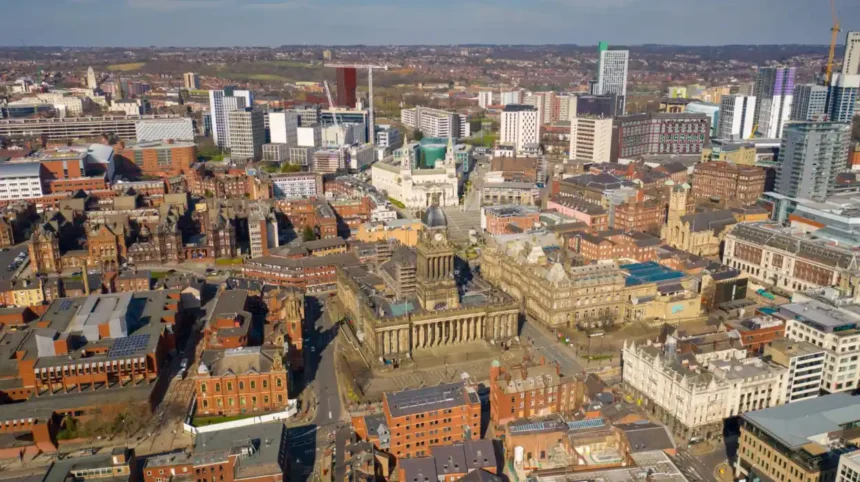
Weather forecast heatwave information helps people in Leeds understand when unusually high temperatures are developing, how long hot conditions are expected to last, and what the heat means for daily life. Leeds experiences a temperate maritime climate, with generally moderate summers influenced by the wider weather patterns of northern England. Extreme heat remains less frequent than in southern England, but significant heat events occur during periods of persistent high pressure and strong continental airflow.
- What is a heatwave in Leeds?
- Why does Leeds experience heatwaves?
- What temperature is considered a heatwave in Leeds?
- How is a heatwave forecast produced for Leeds?
- How long do heatwaves usually last in Leeds?
- When is Leeds usually hottest?
- How does a heatwave affect Leeds?
- How should people prepare for a Leeds heatwave?
- What is the difference between a hot day and a heatwave?
- How does climate change affect heatwaves in Leeds?
- How can residents track the Leeds weather forecast during a heatwave?
- What should Leeds residents expect after a heatwave?
- What does the future of heatwave forecasting mean for Leeds?
- Why is an accurate Leeds heatwave forecast important?
- Frequently Asked Question
A heatwave is not simply a very hot day. In the United Kingdom, the definition depends on local temperature thresholds and the length of the hot period. Leeds falls within the North East England and Yorkshire and Humber temperature region used for UK heat-health monitoring. The threshold for an official heatwave varies by location because normal summer temperatures differ across the country.
Weather forecasting combines observations, atmospheric measurements, numerical weather models and historical climate information. Forecasts for Leeds examine temperature, cloud cover, rainfall, wind speed, humidity and atmospheric pressure. Heatwave forecasting focuses particularly on maximum daytime temperature, minimum nighttime temperature and the duration of unusually hot conditions.
For residents, workers, visitors and businesses in Leeds, understanding the forecast provides practical information about outdoor activities, travel, buildings, workplaces, health protection and energy demand. A detailed forecast also distinguishes ordinary warm weather from conditions that meet the criteria for a heatwave.
What is a heatwave in Leeds?
A heatwave in Leeds is a period of unusually high temperatures that reaches the official regional threshold for at least three consecutive days. The threshold reflects local climate conditions and identifies sustained heat rather than one isolated hot summer day.
The United Kingdom uses location-specific temperature thresholds because the climate differs substantially between regions. A temperature considered extreme in one area is not necessarily extreme in another. Leeds has a lower heatwave threshold than some warmer parts of southern England.
The official heatwave definition focuses on maximum daily temperature. A location enters heatwave conditions when the relevant threshold is reached or exceeded for three consecutive days. This measurement distinguishes sustained heat from a single unusually warm afternoon.
Leeds sits in West Yorkshire in northern England. Its elevation, inland position and distance from the North Sea influence its summer temperatures. Urban development also affects local temperatures because buildings, roads and other surfaces absorb and retain solar heat.
Heatwave conditions affect more than daytime temperatures. Warm nights are particularly important because the human body needs cooler nighttime conditions for recovery. A sequence of hot days followed by warm nights creates greater heat exposure than one isolated hot afternoon.
Weather forecasts therefore need to be interpreted across several days. A forecast showing 30°C for one afternoon does not automatically indicate an official heatwave. The duration and regional threshold determine whether the period meets the formal definition.
Why does Leeds experience heatwaves?
Leeds experiences heatwaves when large-scale atmospheric patterns produce persistent high pressure, clear skies, strong sunshine and warm air movement across northern England. Dry ground conditions, urban surfaces and prolonged daylight then contribute to higher daytime and nighttime temperatures.
High-pressure systems are a major factor behind UK heatwaves. Air descends within a high-pressure system, producing more stable atmospheric conditions. Reduced cloud cover allows stronger solar heating during the day.
Airflow also controls temperatures. Warm air arriving from continental Europe or other southern regions increases temperatures across England. Persistent airflow from warmer areas produces several consecutive hot days when the atmospheric pattern remains established.
Leeds has a relatively moderate maritime climate, but its inland location allows temperatures to rise significantly during strong summer high-pressure events. The Pennine landscape west of Leeds also influences local weather patterns, while urban areas respond differently to heat than surrounding rural locations.
Long summer daylight increases the amount of solar energy received at the surface. June and July provide particularly long daylight periods in Leeds. August also produces substantial solar heating, although daylight gradually decreases after midsummer.
Soil moisture influences heating as well. When the ground becomes dry after prolonged low rainfall, more available energy contributes directly to warming the surface and lower atmosphere. Dry conditions therefore reinforce persistent hot weather.
Climate change has also altered the background conditions in which UK heatwaves occur. Average global and UK temperatures have increased, raising the baseline from which extreme heat events develop. As a result, temperatures that were historically exceptional now occur more frequently.
What temperature is considered a heatwave in Leeds?
The Leeds heatwave threshold is based on the official regional UK temperature criteria rather than one universal national temperature. The threshold identifies sustained local heat, with conditions requiring the relevant temperature level for three consecutive days.
The official threshold for Leeds is determined through the regional heat-health framework. Leeds is included within the Yorkshire and Humber area for UK heat monitoring.
Temperature thresholds exist because summer climates differ across Britain. Southern England generally experiences higher summer temperatures than northern England. A single national threshold would therefore produce misleading results for different communities.
The heatwave threshold measures maximum daytime temperature rather than simply the highest temperature recorded during an isolated hour. Forecast information therefore needs to be considered across consecutive days.
For example, a forecast showing 28°C on Monday, 30°C on Tuesday and 31°C on Wednesday represents a different heat pattern from three days consistently exceeding the regional threshold. The official classification depends on the applicable threshold for the area.
The temperature forecast also provides useful information even when the formal heatwave threshold is not reached. Warm weather can still create uncomfortable indoor conditions, increase dehydration risk and affect outdoor workers.
People searching for a Leeds weather forecast should therefore examine the full forecast period rather than relying only on the daily maximum temperature. A seven-day forecast provides a clearer picture of whether heat is building, continuing or declining.
How is a heatwave forecast produced for Leeds?
A Leeds heatwave forecast combines weather observations, satellite measurements, atmospheric pressure data, radar information and computer-based weather models. Meteorologists compare these datasets to predict temperature, rainfall, wind, cloud cover and the persistence of high-pressure conditions.
Weather forecasting begins with observations from weather stations. Instruments measure air temperature, atmospheric pressure, humidity, wind speed and wind direction. These measurements provide current information about atmospheric conditions around Leeds and across the wider region.
Weather satellites monitor cloud systems, atmospheric moisture and large-scale weather patterns. Radar systems provide information about precipitation, helping forecasters identify rainfall and thunderstorms that influence local temperatures.
Numerical weather prediction models process atmospheric observations using mathematical equations. These models divide the atmosphere into a large number of grid points and calculate how temperature, pressure, moisture and wind change over time.
Forecast confidence generally increases when different weather models show similar atmospheric patterns. Meteorologists examine model outputs alongside observations and established weather patterns before producing public forecasts.
Heatwave forecasting focuses strongly on persistence. A forecast for one hot afternoon differs from a forecast showing several consecutive days of high temperatures. Forecasters therefore examine both temperature magnitude and duration.
Local geography also affects forecasts. Leeds contains urban districts, suburban areas, open countryside and elevated locations. Temperatures differ between these environments, especially during clear and calm summer nights.
How long do heatwaves usually last in Leeds?
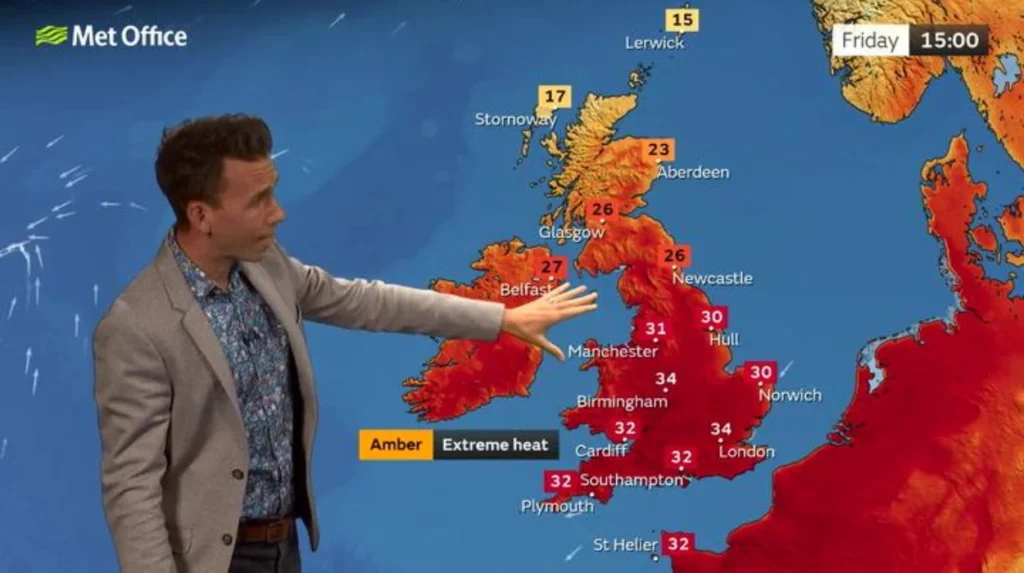
Heatwaves in Leeds have no fixed duration. An official heatwave requires at least three consecutive days meeting the regional temperature threshold, while longer events continue as long as qualifying temperatures persist across the affected area.
Three days is the minimum duration required for an official heatwave classification under the UK definition. A longer event can continue for four, five, six or more consecutive days when temperatures remain at or above the applicable threshold.
The duration of a heatwave depends on the atmospheric system controlling the weather. A high-pressure area that remains stationary produces longer periods of stable, sunny and hot weather.
Short heat events often develop rapidly during summer. Temperatures increase over several days as cloud decreases and warm air moves into the region. A change in wind direction, increased cloud or the arrival of a weather front then reduces temperatures.
Longer heatwaves create greater cumulative exposure. Buildings absorb heat during the day and release it slowly overnight. When several hot days occur consecutively, indoor temperatures can remain elevated even after sunset.
Nighttime temperature is particularly important during prolonged heat. Cool nights provide relief from daytime heating. Warm nights reduce that recovery period and increase the total amount of heat experienced over a 24-hour period.
A forecast showing three consecutive hot days should therefore be monitored throughout the period. Changes in atmospheric pressure, wind direction and cloud cover can alter the expected duration.
When is Leeds usually hottest?
Leeds is usually hottest during July and August, although exceptional heat can occur in June. The highest temperatures develop during periods of strong summer sunshine, persistent high pressure, dry ground conditions and warm airflow from southern or continental Europe.
July is typically one of the warmest months in Leeds. August also produces high summer temperatures, while June benefits from the longest daylight period around the summer solstice.
The hottest individual days do not follow a fixed annual schedule. Extreme temperatures depend on atmospheric conditions rather than the calendar alone. A strong high-pressure system can produce exceptional heat during June, July or August.
During clear summer days, solar radiation warms roads, buildings, soil and vegetation. The surface then transfers heat into the air above it. Calm conditions can allow heat to accumulate near the ground.
Urban Leeds can experience higher temperatures than nearby rural areas during some conditions. Concrete, brick, asphalt and other built surfaces absorb solar energy during daylight and release stored heat after sunset.
Wind also affects temperatures. Stronger winds mix the lower atmosphere and transport air from different areas. Calm conditions allow local heating to become more pronounced, particularly in densely built environments.
How does a heatwave affect Leeds?
A heatwave affects Leeds through higher outdoor and indoor temperatures, increased cooling demand, transport pressures, workplace challenges, changes in water use and greater heat exposure. The effects become stronger when extreme temperatures continue across several consecutive days.
High temperatures affect homes and commercial buildings first. Buildings without effective ventilation or shading can become significantly warmer during the afternoon. Upper floors and rooms with large south-facing windows often experience stronger solar heating.
Roads and railway infrastructure also respond to extreme heat. Materials expand as temperatures increase. Transport operators monitor infrastructure conditions during periods of exceptional heat and apply operational measures when required.
Heat also affects workplaces. Outdoor workers experience direct solar exposure, while workers in warehouses, factories, kitchens and poorly ventilated buildings face elevated indoor temperatures.
Energy demand can increase because households and businesses use fans, air conditioning and refrigeration for longer periods. Electricity consumption therefore responds to prolonged hot weather.
Water demand can also rise. People increase drinking, bathing, gardening and other water use during hot periods. Water companies monitor demand during extended periods of dry and hot weather.
Green spaces provide important cooling functions. Trees provide shade and vegetation releases water through evapotranspiration. Parks and open spaces therefore create cooler local environments than heavily built surfaces.
Heat also affects air quality. Strong sunlight contributes to chemical reactions that produce ground-level ozone. Stable atmospheric conditions can also reduce the dispersion of pollutants near the surface.
How should people prepare for a Leeds heatwave?
Preparing for a Leeds heatwave involves reducing indoor heat, maintaining hydration, limiting unnecessary exposure during the hottest period, monitoring weather alerts and checking vulnerable people. Preparation should begin before temperatures reach the highest forecast levels.
Keeping indoor spaces cool is a central preparation measure. Windows should remain closed during the hottest part of the day when outdoor air is warmer than indoor air. Windows can then be opened when outside temperatures fall.
Curtains, blinds and shutters reduce direct sunlight entering rooms. External shading provides stronger protection because it blocks solar radiation before it reaches the glass.
Hydration is also important. Drinking water regularly replaces fluid lost through sweating. People engaged in physical activity require additional fluids because sweating increases during hot conditions.
Outdoor activities should be planned around temperature conditions. Early morning and evening generally provide cooler periods than the middle of the afternoon during a heatwave.
Light clothing helps reduce heat absorption and improves ventilation around the body. Loose-fitting clothing also supports evaporation of sweat.
People should monitor official weather information throughout a heatwave. Forecasts can change as atmospheric systems develop. Heat warnings provide additional information when weather conditions create significant health risks.
Checking on vulnerable people is an important community measure. Older adults, infants and people with certain long-term conditions have greater sensitivity to extreme heat. Neighbours, relatives and carers can provide practical assistance during prolonged hot weather.
Pets and animals also require protection. Fresh drinking water, shade and appropriate ventilation are essential during extreme heat. Cars should never be used as places to leave children or animals because internal temperatures rise rapidly.
What is the difference between a hot day and a heatwave?
A hot day is an isolated period of high temperature, while a heatwave is sustained hot weather meeting the official regional threshold for at least three consecutive days. Duration and location therefore distinguish ordinary heat from an official heatwave.
A single hot day can produce uncomfortable conditions without meeting the formal heatwave definition. For example, Leeds can record one unusually warm afternoon followed by substantially cooler weather.
The heatwave definition requires persistence. This approach reflects the cumulative effect of repeated heat exposure. Three or more consecutive days of high temperatures place greater stress on buildings, infrastructure and people than one isolated hot day.
The regional threshold also matters. The official classification accounts for the normal climate of each area. Leeds therefore has different criteria from warmer regions of England.
Forecast users should distinguish between temperature information and heatwave classification. A forecast can indicate 30°C temperatures without automatically describing the entire period as an official heatwave.
This distinction is useful for search users because weather apps often display daily maximum temperatures rather than formal heatwave classifications. Checking official heat-health information provides a more complete assessment.
How does climate change affect heatwaves in Leeds?
Climate change increases the baseline temperature across the United Kingdom, making extreme heat events more frequent and intense. Leeds therefore experiences heatwave conditions within a warmer climate system than previous generations experienced during the twentieth century.
Global temperatures have increased because concentrations of greenhouse gases in the atmosphere have risen substantially since industrialisation. Carbon dioxide, methane and other greenhouse gases trap additional heat within the Earth system.
The UK has also experienced significant warming over recent decades. Higher average temperatures shift the distribution of daily temperatures upward. Extreme heat therefore develops from a warmer starting point.
Climate change affects both the frequency and intensity of heat extremes. Historical temperature records show that recent UK heat events include temperatures that were extremely unusual in earlier periods.
Urban Leeds experiences an additional local factor through the urban heat island effect. Buildings, roads and other infrastructure absorb and retain heat. Limited vegetation also reduces natural cooling compared with rural environments.
Future heat planning therefore requires more than monitoring individual forecasts. Building design, urban greenery, public health planning, workplace procedures and infrastructure resilience all become increasingly important as the climate warms.
The long-term relevance of heatwave forecasting is clear. Weather forecasts provide short-term information, while climate projections explain the broader trend affecting the frequency and severity of extreme heat.
How can residents track the Leeds weather forecast during a heatwave?
Residents can track Leeds heatwave conditions by checking current temperature observations, multi-day forecasts, official heat-health warnings and changing weather alerts. Monitoring several forecast indicators provides a clearer picture than relying on one temperature reading.
The daily maximum temperature is the most obvious indicator of daytime heat. However, nighttime minimum temperature also provides important information about whether buildings and people receive relief after sunset.
Forecast users should examine at least several days of information. A seven-day outlook identifies rising temperatures, peak heat and the expected return of cooler conditions.
Rainfall forecasts also matter. A cold front or thunderstorm can produce a rapid temperature reduction after a period of extreme heat. Conversely, dry forecasts support continued heating.
Wind direction provides additional context. Air arriving from warmer continental areas supports higher temperatures, while cooler maritime air from the Atlantic or North Sea generally reduces heat.
Cloud cover also changes the temperature outlook. Persistent sunshine increases daytime heating, while extensive cloud reduces solar radiation reaching the surface.
Official heat warnings should receive priority over informal weather commentary. Warning systems incorporate forecast temperatures and expected health impacts, providing information specifically designed for public safety.
What should Leeds residents expect after a heatwave?
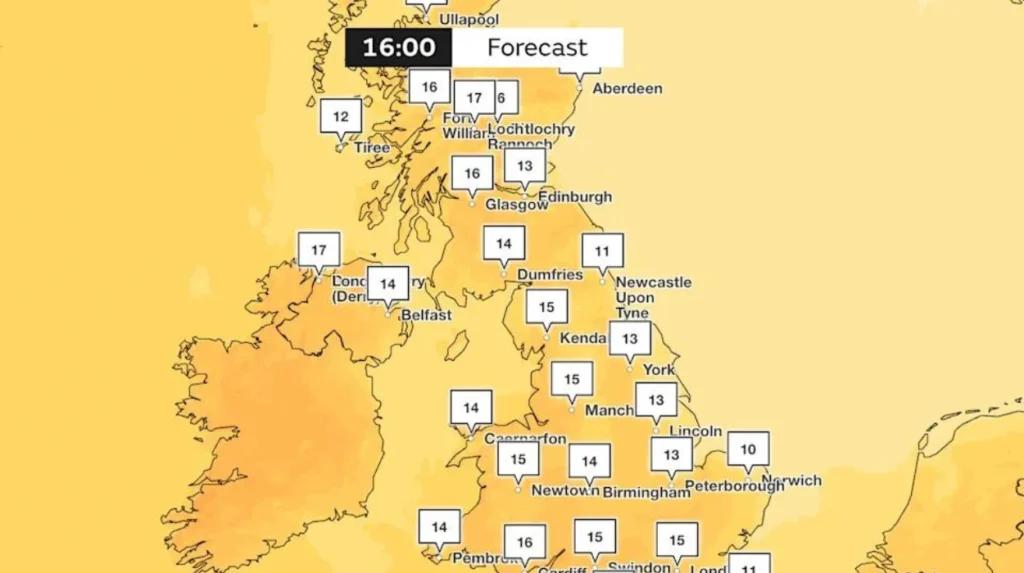
Temperatures normally decrease when the atmospheric pattern responsible for the heat breaks. A weather front, stronger wind, increased cloud or rainfall can end the heatwave, although buildings and urban surfaces can remain warm after outdoor temperatures fall.
The end of a heatwave does not always produce immediate indoor cooling. Buildings store heat within walls, floors, roofs and furniture. This stored heat gradually transfers back into indoor air.
A change in wind direction can rapidly lower outdoor temperatures. Atlantic air entering northern England often produces cooler conditions after prolonged continental or southerly airflow.
Rainfall also changes the heat environment. Cloud and precipitation reduce incoming solar radiation and increase atmospheric mixing. These processes help lower daytime temperatures.
Thunderstorms can accompany the transition from hot to cooler weather. However, the arrival of storms does not guarantee immediate cooling everywhere because conditions vary across Leeds.
Residents should continue sensible heat precautions until indoor temperatures have fallen. Opening windows during cooler evening and nighttime conditions can help remove accumulated indoor heat.
The end of an official heatwave also does not mean that all weather-related risks disappear. Rapid changes in temperature, thunderstorms and heavy rainfall require separate attention.
What does the future of heatwave forecasting mean for Leeds?
Future heatwave forecasting for Leeds will increasingly combine higher-resolution weather models, improved local observations, climate data and heat-health information. These developments provide earlier identification of extreme heat and better understanding of its local effects.
Weather forecasting technology continues to improve through higher computing power, expanded observation networks and more sophisticated atmospheric models.
Higher-resolution forecasting provides greater detail about local weather variations. Leeds contains different elevations, urban districts and surrounding rural environments, so localised forecasts provide more useful information than broad regional averages.
Heat-health forecasting is also becoming more integrated with meteorological information. Temperature alone does not describe the full impact of extreme heat. Humidity, nighttime temperatures, duration and population vulnerability all influence heat-related risk.
Long-term climate data provides another layer of information. Historical observations identify changes in temperature patterns, while climate models examine future conditions under different greenhouse-gas emission scenarios.
For Leeds, this information supports urban planning, building design, transport management, healthcare preparation and emergency planning. Local authorities and organisations can use heat information to identify areas requiring additional shade, green infrastructure and cooling measures.
Heatwave forecasting therefore serves both immediate and long-term purposes. A daily forecast tells residents what conditions to expect, while climate information helps communities prepare for a warmer future.
Why is an accurate Leeds heatwave forecast important?
An accurate Leeds heatwave forecast helps residents understand temperature trends, prepare homes and workplaces, adjust outdoor activities, protect vulnerable people and respond to official warnings. Reliable forecasting reduces uncertainty during periods of prolonged and potentially dangerous heat.
Heatwaves affect multiple aspects of everyday life. Accurate forecasts help people decide when to travel, exercise, work outdoors, ventilate buildings and plan activities.
Businesses use temperature forecasts for operational planning. Construction companies can adjust outdoor work schedules, while retailers and hospitality businesses can prepare for changes in customer demand.
Schools and childcare settings also use heat information to manage indoor temperatures and outdoor activities. Older people and vulnerable residents benefit from advance warning because preparation reduces exposure during peak heat.
Accurate forecasts also support infrastructure planning. Transport operators, utility companies and local authorities monitor extreme weather because prolonged heat affects roads, railways, electricity demand and water consumption.
The most useful approach is to combine temperature forecasts with duration, nighttime conditions, wind, rainfall and official warnings. This produces a more complete understanding of the weather situation.
For Leeds residents, the central principle is simple: a heatwave is defined by sustained regional heat, not simply one hot afternoon. Monitoring the forecast across several days provides the clearest indication of developing, peak and declining heat conditions.
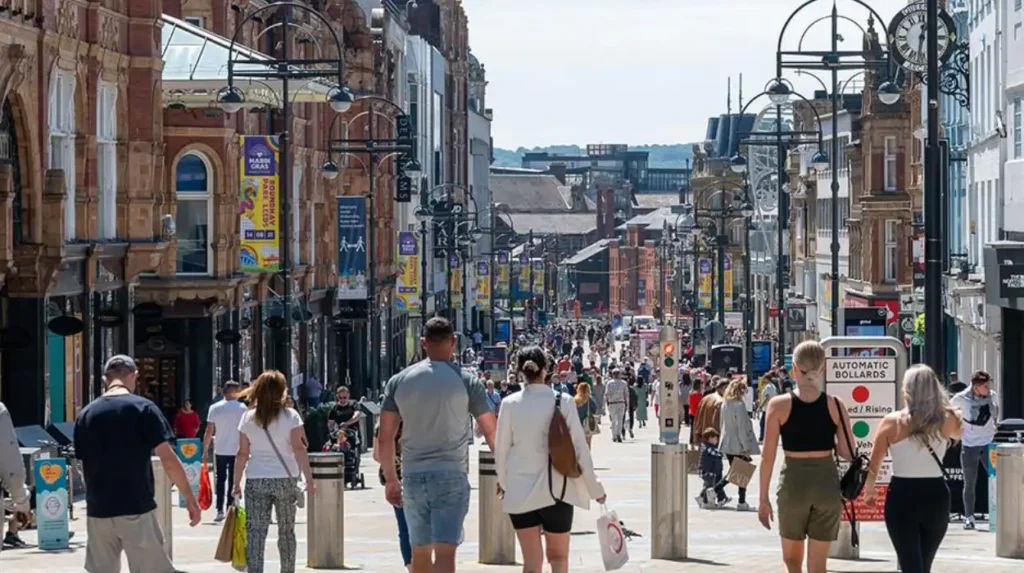
As UK temperatures continue to change, understanding heatwave forecasts becomes increasingly relevant to everyday planning. Leeds residents can use reliable weather information to prepare homes, manage outdoor exposure and respond appropriately when prolonged high temperatures occur.
Frequently Asked Question
Is Leeds expected to experience a heatwave in 2026?
Leeds can experience heatwave conditions during periods of sustained high temperatures. Residents should monitor the latest forecast, regional heat thresholds and official weather warnings for current updates.