Key Points
- Severe Access Restrictions: Heathrow Airport has issued an urgent warning restricting road access to Terminals 2 and 3 due to flooding in the Central Terminal Area.
- No Road Travel Permitted: Passengers travelling to or from Terminals 2 and 3 are being instructed strictly not to travel by road.
- Alternative Transport Urged: Travellers are strongly advised to use rail and London Underground services—specifically the Heathrow Express, Elizabeth Line, and Piccadilly Line.
- Park and Ride Workarounds: Motorists who must drive are instructed to use Park and Ride services, drive to Terminals 4 or 5 and transfer via free rail links, or change at local train stations.
- Cause Identified: The flooding was caused by a burst main pipe beneath Inner Ring Road West within the airport grounds.
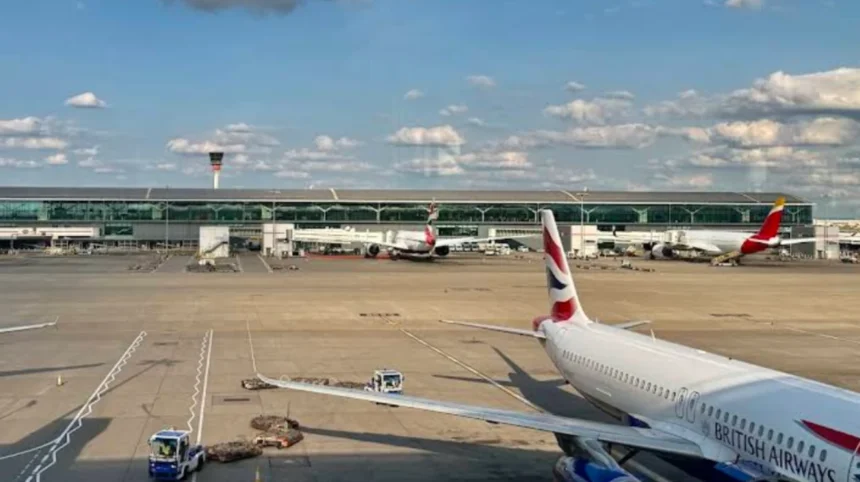
- Flight Operations Intact: Flights remain unaffected, and there is no flooding inside the physical terminal buildings.
- Peak Holiday Timing: The disruption coincides with peak school summer holiday travel, adding pressure to airport operations.
London, UK (The Leeds Times) August 15, 2026 – Passengers intending to travel to or from Heathrow Terminals 2 and 3 have been warned by airport authorities not to use road transport following a severe infrastructure failure in the central terminal area early on Saturday morning. Emergency engineering teams were deployed after water covered surface routes, forcing immediate road closures around the main access arteries.
- Key Points
- What Caused The Central Terminal Area Flooding?
- How Should Passengers Travel To Heathrow Terminals 2 And 3?
- What Pressure Does This Incident Place On Peak Summer Holiday Travel?
- Background Of The Particular Development After The News
- Prediction: How This Development Can Affect Summer Holidaymakers and Airline Operators
As reported by Sky News reporters, an official statement released by a Heathrow Airport spokesperson stated:
“Flooding in the central terminal area has resulted in on-going road closures restricting access to Terminals 2 and 3. Passengers travelling to or from either of these terminals today must not travel by road”.
The representative further added:
“Our teams are working to resolve the situation as quickly as possible, we apologise for any disruption caused”.
What Caused The Central Terminal Area Flooding?
As reported by the Press Association, the surface flooding originated from a burst water main pipe located beneath Inner Ring Road West, directly within the internal grounds of the airport complex. Water escaping from the ruptured pipe spilled onto major transit lines connecting the highway network to the Central Terminal Area, rendering vehicular drop-off zones and perimeter roads impassable.
Engineers confirmed that the damaged pipe was isolated shortly after the breach was detected, allowing repair operations to commence. However, lingering floodwater and active remediation work have maintained the necessity of continuous road closures. Authorities clarified that there is no water ingress within the interior of Terminals 2 or 3, and core flight operations remain unaffected.
How Should Passengers Travel To Heathrow Terminals 2 And 3?
In response to the road blockages, airport managers have strongly urged all outbound and arriving passengers to pivot entirely to public rail and underground networks. The designated rail alternatives include the high-speed Heathrow Express from London Paddington, the Elizabeth Line, and the Transport for London Piccadilly Line, all of which continue to service the central terminal hubs directly underground.
For travellers who have no alternative but to use personal motor vehicles, Heathrow Airport has provided alternative routing contingency plans. Drivers are instructed to utilise official Park and Ride facilities, direct their vehicles to Terminal 4 or Terminal 5 where road networks remain open, and subsequently transfer to Terminals 2 or 3 using the free inter-terminal rail connection services. Alternatively, motorists are advised to drop off passengers at local off-site rail stations along the approach lines. Passengers are being advised to build substantial extra time into their travel schedules to avoid missing flights due to extended connection times.
What Pressure Does This Incident Place On Peak Summer Holiday Travel?
The unexpected infrastructural disruption occurs during the height of the school summer holiday period, traditionally marking the highest passenger throughput of the year across major European aviation hubs. Recent operational data released by Heathrow Airport highlighted that 19 July recorded its highest single-day traffic volume of the year, with approximately 267,000 passengers travelling through its facilities as summer departures commenced.
The current road closure threatens to bottleneck thousands of holidaymakers attempting to reach flight departures. Transport analysts note that while flight timetables remain nominal, the primary risk to passengers is missing scheduled flights as a consequence of localized congestion and delayed ground transfers rather than air traffic controls.
Explore More UK News
UK Scraps Betting Shop Aim To Permit Rule London 2026
Yorkshire City Ranks High as UK Sexual Offences Surge: 2026
Background Of The Particular Development After The News
The flooding incident along Inner Ring Road West follows a period of heightened scrutiny regarding the resilience of ground transport infrastructure serving Britain’s major airports. Heathrow Airport has previously encountered localized travel disruptions caused by utility infrastructure failures across surrounding local council boundaries and internal road systems. Earlier in the season, rail transit links serving the airport experienced temporary service suspensions following a separate water leak that necessitated emergency tunnel closures.
Furthermore, the disruption coincides with broader industry developments surrounding long-term infrastructure funding at the hub. The Civil Aviation Authority recently granted permission for Heathrow Airport to recover £320 million in planning and preparatory expenditure related to its third runway proposal. Under this regulatory framework, the capital expenditure will be recouped through adjusted airline operational charges over a 20-to-25-year period. The recurring utility vulnerabilities in the central terminal area highlight ongoing maintenance challenges as the airport balances day-to-day capital repairs with long-term expansion planning.
Prediction: How This Development Can Affect Summer Holidaymakers and Airline Operators
Impact On Air Travellers
For holidaymakers departing from or arriving into Terminals 2 and 3, this disruption will inevitably lead to increased travel anxiety and physical transit delays. Passengers reliant on taxis, private hire vehicles, or pre-booked terminal valets face immediate cancellations or compulsory diversions to distant parking zones. The sudden migration of thousands of road users onto public rail options—namely the Piccadilly Line, Elizabeth Line, and Heathrow Express—is expected to cause localized overcrowding at major rail interchanges such as London Paddington and King’s Cross St. Pancras. Travellers who fail to account for extended transfer times between Terminals 4/5 and the Central Terminal Area risk missing departure windows, leading to short-term rebooking expenses and lost holiday days.
Operational Consequences For Airlines And Ground Handling Logistics
While flight schedules are currently operating without cancellations, airline operations at Terminals 2 and 3—which house major international carriers across Star Alliance and SkyTeam networks—face cascading logistical strains. Flight crews, baggage handling staff, and airport ground personnel arriving by road may encounter access delays, potentially leading to minor pushback delays for outbound flights. Furthermore, airlines may be forced to manage a higher volume of late-arriving passengers at security checkpoints, requiring flexible rebooking policies or held departure slots to accommodate displaced customers. If repair works extend further into the peak travel weekend, ground transportation providers and coach operators will need to sustain altered routes, creating financial and scheduling friction across the regional transport network.