
Garforth is an established suburban settlement in east Leeds with a distinctive local shopping centre built around Main Street. The area combines independent businesses, convenience retailers, food outlets, personal services and larger-format stores around Aberford Road. Its shopping pattern reflects Garforth’s history as a former mining community and its modern role as a well-connected Leeds suburb.
- What is Garforth shopping like for visitors?
- How did Garforth develop into a shopping centre?
- Where is the main shopping area in Garforth?
- What can you find around Lidgett Lane?
- Where are the larger supermarkets and retail areas?
- Which independent shops and specialist retailers are worth knowing?
- Where can you eat and drink during a Garforth shopping trip?
- How easy is Garforth to reach without a car?
- Where can visitors park when shopping in Garforth?
- What is the best way to explore Garforth shopping on foot?
- How does Garforth’s shopping history explain the modern high street?
- How has Garforth’s retail mix changed over time?
- Which type of shopping is best suited to each Garforth retail area?
- Is Garforth worth visiting for local shopping?
- Why does Garforth’s local retail centre remain important?
- What should visitors remember before shopping in Garforth?
For visitors, Garforth offers a different retail experience from central Leeds. It is not primarily a destination for major department stores or luxury fashion. Instead, its strength lies in everyday shopping, specialist local services, independent businesses and a compact high-street environment.
Main Street remains the principal shopping street. Lidgett Lane provides another important concentration of community facilities and nearby retail. Aberford Road and East Side Retail Park provide larger-format convenience shopping, including supermarkets.
The result is a practical shopping environment where visitors can combine retail browsing with cafés, restaurants, local heritage and public transport.
What is Garforth shopping like for visitors?
Garforth is a Leeds suburb and established local centre in West Yorkshire. Its shopping offer centres on Main Street, with additional convenience retail around Lidgett Lane, Aberford Road and East Side Retail Park. The area combines independent services, food outlets and national retailers.
Garforth shopping is best understood as a local-centre experience rather than a regional shopping destination. The central retail area serves residents, commuters and visitors who need everyday goods and services.
Main Street contains a mixture of retail and service businesses. Current local listings identify convenience shopping, cafés, restaurants, takeaways, hair and beauty businesses and specialist services across the street and surrounding roads.
The centre also benefits from its proximity to Garforth railway station. National Rail identifies Garforth station on Station Road, with parking, cycle facilities, accessibility provisions and local transport connections.
This makes the area practical for visitors travelling from Leeds and nearby West Yorkshire communities.
Garforth also provides a useful base for combining shopping with a short local walk. Main Street, Lidgett Lane, Church Lane and Station Road contain buildings and locations associated with the settlement’s development.
How did Garforth develop into a shopping centre?
Garforth’s retail identity developed from a village street into a modern suburban shopping centre. Main Street was historically called Briggate and contained homes alongside small shops. Coal mining, railway connections and later suburban growth increased Garforth’s population and commercial importance.
Garforth’s commercial history is closely connected with transport, agriculture, coal mining and population growth.
Historical records describe Garforth in the nineteenth century as a parish located on the Leeds and Selby railway. The 1870–72 Imperial Gazetteer recorded a population of 1,504 people and 311 houses.
Main Street was historically known as Briggate. The name comes from Old Norse terms associated with a bridge and road. Historical records show that Briggate was the principal street through the settlement before becoming known as Main Street.
The street originally had a strongly residential character. Local historical research records houses alongside small shops, including grocers, butchers, bakeries and other businesses.
Coal mining accelerated development in the wider Garforth area. The Gascoigne family was associated with local mining activity, while surrounding settlements also developed through the coal industry.
The decline of traditional mining did not eliminate Garforth’s commercial role. Transport infrastructure, housing growth and proximity to Leeds helped establish the modern suburban centre.
This historical progression explains why Garforth’s current retail environment contains older buildings alongside twentieth-century development and newer commercial premises.
Where is the main shopping area in Garforth?
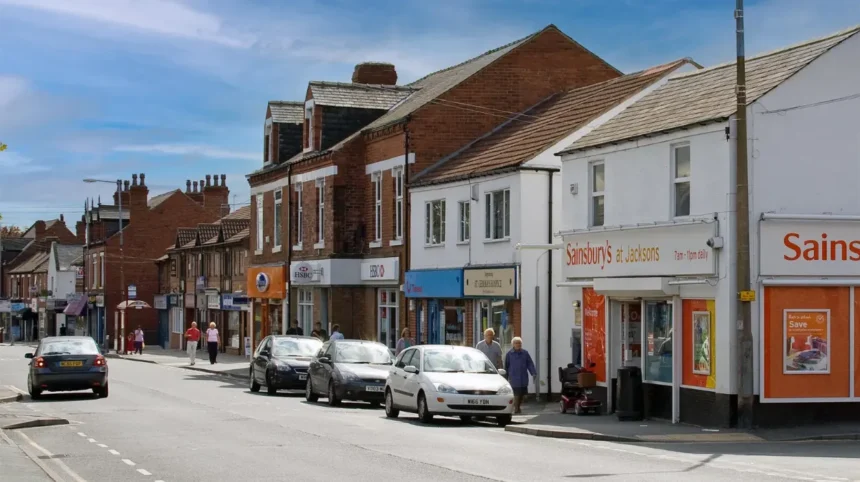
Main Street is the core area for browsing Garforth’s independent and service businesses. It contains convenience retail, cafés, takeaways, hair and beauty services, specialist shops and professional services. The compact layout makes it practical for visitors combining shopping with food or sightseeing.
Main Street is the most useful starting point for visitors researching local shopping in Garforth.
The street runs through the historic centre and connects several important roads and community facilities. Businesses are distributed through a mixture of older premises, terraces and later commercial buildings.
Current commercial listings identify retailers and service businesses around Main Street, including food outlets and specialist services. A current retail property listing also identifies nearby traders such as Greggs, Costa and Domino’s, illustrating the mixture of national and local operators within the centre.
SPT Uniforms provides a specific example of specialist retail on Main Street. Its retail premises are located at 115 Main Street and serve local customers from the physical shop. The business also identifies nearby parking and Garforth railway station as useful access points.
The character of Main Street changes as visitors move between its different sections. Some premises focus on food and drink. Others provide personal services, specialist goods or professional support.
This makes Main Street particularly useful for visitors who want to explore local businesses rather than visit a conventional shopping mall.
What can you find around Lidgett Lane?
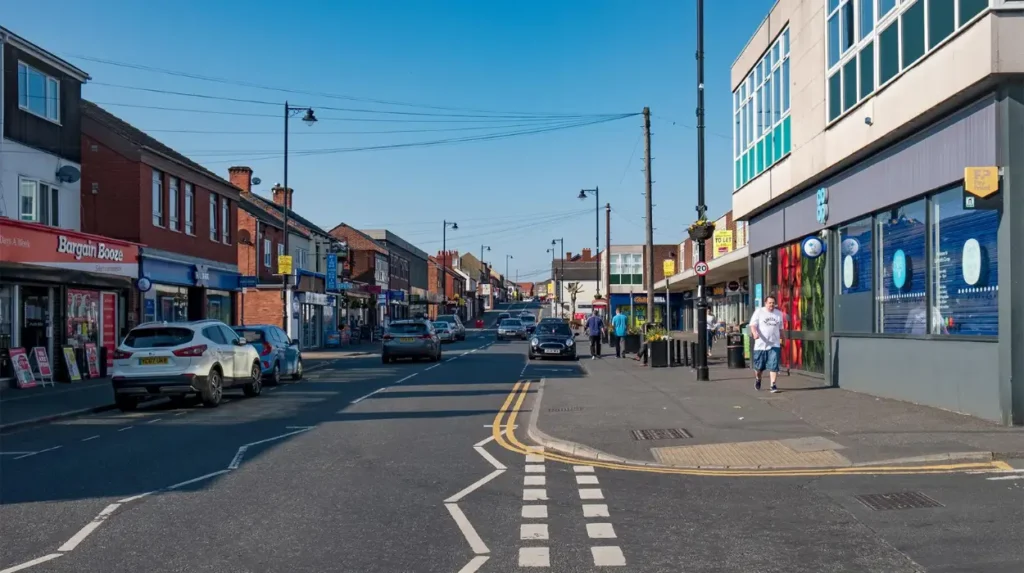
Lidgett Lane provides a useful secondary shopping and service area beside Main Street. Retail premises sit near Garforth Library and One Stop Centre, while newer apartments and shops have expanded the northern end. The area works well for combining errands, refreshments and community facilities.
Lidgett Lane forms an important part of Garforth’s wider local-centre network.
The road connects with Main Street and Church Lane, creating a natural extension to a shopping walk. Garforth Library and the One Stop Centre are prominent community facilities in this area.
Local historical records show that the present retail environment has developed through several phases. At the northern end of Lidgett Lane, apartments and retail premises were built during 2020 and 2021 beside the Nisa convenience store.
This development demonstrates how Garforth’s retail geography continues to adapt to residential growth.
The area is also useful for visitors looking for a quieter alternative to the busiest parts of Main Street. Its combination of community services, food options and nearby retail makes it suitable for short visits.
Lidgett Lane also provides an important historical connection. Several buildings along the road have documented links with Garforth’s nineteenth- and twentieth-century development.
As you explore the modern retail area, you are crossing land with a deep heritage. Read the full to understand its origins.
Where are the larger supermarkets and retail areas?
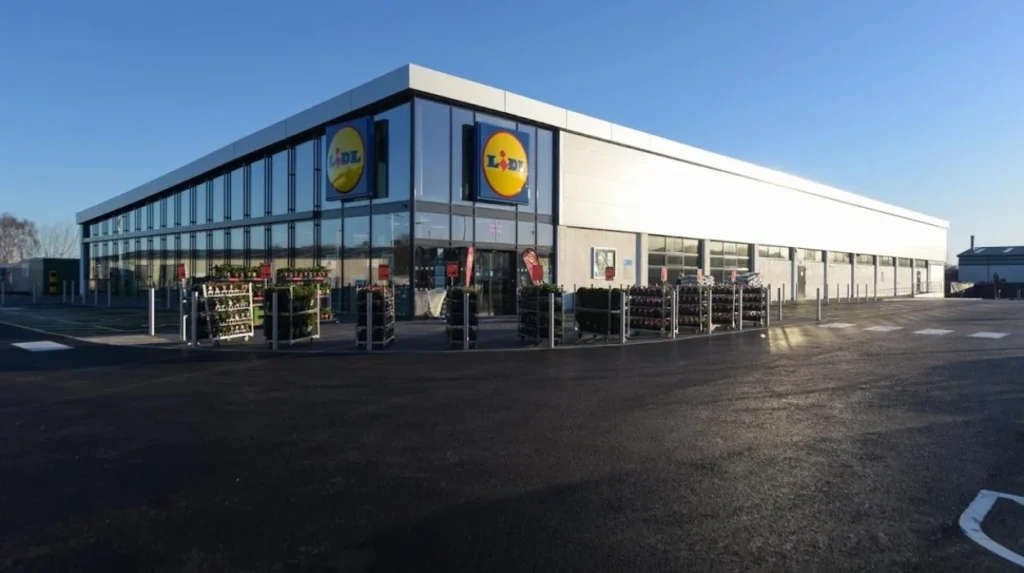
Aberford Road and East Side Retail Park provide the strongest concentration of larger-format convenience shopping. Current local listings identify Tesco, Lidl and other everyday retail nearby. These sites suit planned grocery purchases, household essentials and motorists seeking straightforward parking and quick access.
Garforth’s larger-format retail is concentrated away from the narrowest parts of Main Street.
Current local business information identifies Tesco on Aberford Road and Lidl at East Side Retail Park.
These retailers serve a different purpose from the smaller independent businesses on Main Street. They are better suited to larger grocery shops, household essentials and routine weekly purchases.
East Side Retail Park provides a more modern retail environment, with larger units and easier vehicle access than many traditional high-street premises.
Aberford Road also connects the shopping area with Garforth’s wider road network. This makes it particularly convenient for visitors travelling by car.
The distinction between Main Street and the larger retail areas is important when planning a shopping trip. Main Street is better suited to browsing local businesses. Supermarket and retail-park areas are better suited to planned purchases.
Visitors seeking a complete Garforth shopping experience can therefore use both areas rather than treating them as competing destinations.
Which independent shops and specialist retailers are worth knowing?
Garforth has a practical independent retail mix rather than a large fashion-led shopping centre. Visitors can find specialist services, food businesses, hair and beauty premises, uniforms, convenience shops and professional services. The strongest independent experience comes from walking Main Street and checking smaller frontages.
Independent retail gives Garforth much of its local-centre character.
The business mix changes frequently, so visitors should treat individual shop names and opening hours as current information rather than permanent features. The underlying categories are more stable.
Specialist retail includes businesses serving specific local needs. SPT Uniforms is one documented example, operating a physical retail shop at 115 Main Street.
Historical evidence also demonstrates how specialist retail has long formed part of Garforth’s identity. Former businesses included butchers, grocers, bakers, electrical shops, bicycle businesses and building societies.
This continuity is important. Garforth’s independent sector is not simply a recent addition to the high street. Specialist local commerce has been part of the settlement’s commercial structure for generations.
For visitors, the best method is to walk the centre rather than rely exclusively on large retail directories. Smaller businesses often occupy individual premises between larger operators.
Where can you eat and drink during a Garforth shopping trip?
Food and drink form an important part of Garforth’s shopping experience. Main Street and nearby streets contain cafés, restaurants, takeaways and pubs, with examples including Costa Coffee, Garforth Spice and The Briggate. These businesses provide natural breaks during a shopping walk.
Food businesses provide practical support for a shopping-focused visit.
Current local listings identify Costa Coffee and Garforth Spice on Main Street, alongside other cafés, restaurants and takeaway businesses.
The Briggate is another established Main Street premises. Its location has a strong historical connection because the building replaced the former Garforth Liberal Club, which operated on the site from the nineteenth century until 2014.
Visitors can therefore combine retail browsing with breakfast, lunch, coffee or an evening meal without leaving the central area.
Food and drink also contribute to the practical role of the high street. Retail centres are more useful when visitors can complete several activities within one trip.
For tourists, this creates a straightforward itinerary: arrive by rail, walk towards Main Street, browse local businesses, stop for refreshments and continue towards Lidgett Lane or the surrounding heritage sites.
How easy is Garforth to reach without a car?
Garforth is easy to reach by rail, bus, car and bicycle. Garforth railway station sits on Station Road, while Main Street and Lidgett Lane form the central retail area. National Rail records station parking, cycle storage and bus connections, supporting rail-based shopping for visitors.
Garforth’s transport connections are a significant part of its shopping appeal.
Garforth railway station is managed by Northern and is located on Station Road. National Rail records step-free access in parts of the station, lifts, accessible toilets, cycle storage and 250 parking spaces.
The station also provides a practical starting point for visitors travelling by train. From the station, shoppers can continue towards the town centre and Main Street.
Bus services also connect the station and surrounding retail areas. SPT Uniforms lists numerous local bus services operating close to its Main Street premises, illustrating the strength of public transport access around the central shopping area.
Cyclists also have facilities at Garforth station. This is useful for visitors combining shopping with wider leisure trips around east Leeds.
The transport network means Garforth does not depend entirely on private cars. Rail, bus, walking and cycling all provide viable ways to reach the centre.
Where can visitors park when shopping in Garforth?
Parking is available around Garforth’s shopping areas, with Main Street benefiting from nearby car parks and larger retail sites providing customer parking. Visitors should check signs, restrictions and individual retailer conditions before leaving a vehicle, especially during busy periods and events.
Car access remains important because Garforth serves a substantial residential catchment.
Main Street has nearby car parks. SPT Uniforms specifically identifies free parking less than two minutes from its premises, while a current commercial listing identifies two large car parks off Main Street.
Larger retail locations around Aberford Road also provide convenient access for shoppers carrying groceries or larger purchases.
Parking arrangements differ between locations. Visitors should always check local signs, time restrictions and customer-only conditions before leaving a vehicle.
The most efficient approach is to select parking according to the purpose of the trip. Main Street parking is practical for independent shopping and services. Retail-park parking is more appropriate for supermarket shopping.
Rail users can avoid parking altogether by using Garforth station and walking towards the centre.
What is the best way to explore Garforth shopping on foot?
A sensible Garforth shopping visit starts at Main Street, continues towards Lidgett Lane, then extends to Aberford Road for larger-format retail. This route separates independent browsing from convenience shopping and allows visitors to combine errands, food, local history and transport connections efficiently.
A walking route makes it easier to understand the structure of Garforth’s shopping centre.
Start around the central section of Main Street. Browse the independent and specialist businesses before continuing towards Church Lane and Lidgett Lane.
Garforth Library and the One Stop Centre provide useful landmarks around Lidgett Lane. Historical records also document the changing commercial uses of buildings in this area.
Visitors who need a larger grocery shop can then continue towards Aberford Road and East Side Retail Park.
This route creates a clear division between local high-street shopping and larger-format retail.
The route also allows visitors to observe the changing architecture of Garforth. Older terraces sit beside twentieth-century commercial buildings and newer developments.
A walking visit therefore provides more than shopping. It gives visitors a practical introduction to the settlement’s physical development.
How does Garforth’s shopping history explain the modern high street?
Garforth shopping works well alongside local heritage because many modern businesses occupy buildings or sites with earlier commercial uses. Main Street retains historic structures and traces of former shops, while mining, railway and civic history explains its present street pattern and commercial role.
The relationship between history and retail is especially visible on Main Street.
Historical research records former businesses including grocers, butchers, bakers, electrical retailers and bicycle shops. Several premises changed use repeatedly as economic conditions and consumer requirements changed.
The former Garforth Liberal Club is another example. It operated from Main Street for 128 years before closing in August 2014. The building was subsequently refurbished and reopened as The Briggate in 2017.
This demonstrates how older commercial buildings continue to support modern businesses.
Garforth’s shopping centre also reflects its former mining economy. Industrial development increased the importance of Main Street and surrounding housing, while railway infrastructure connected the settlement to larger urban markets.
The modern high street is therefore the product of several stages of development rather than a single planned shopping scheme.
How has Garforth’s retail mix changed over time?
Retail conditions in Garforth reflect wider high-street change. Businesses occupy premises that have changed use over decades, while convenience retail and food services remain important. Local historical records show former grocers, bakers, butchers and specialist shops replaced or adapted for modern businesses and services.
Change is a defining characteristic of Garforth’s retail landscape.
Local historical research records numerous examples of buildings changing function. A former wine shop became a bookshop and later a hair and beauty business. Former civic premises also changed use over time.
The same pattern appears elsewhere on Main Street.
Historical records show that retail premises once housed family-run businesses with direct links to local production. Pickering’s butchers, for example, operated alongside a family farm and slaughterhouse before later uses occupied the premises.
Modern retail is more diversified. Convenience supermarkets, food outlets, specialist services and professional businesses now share the centre.
This reflects the changing role of suburban high streets across Britain. Local centres increasingly combine shopping with food, personal services, community facilities and professional activities.
Garforth demonstrates this transition particularly clearly because many older buildings remain integrated into the modern commercial environment.
Which type of shopping is best suited to each Garforth retail area?
Visitors should plan Garforth shopping around their purpose. Independent browsing suits Main Street. Grocery shopping suits Aberford Road and East Side Retail Park. Community services suit Lidgett Lane. Rail users should begin near Station Road. This approach reduces unnecessary walking and keeps visits focused.
Each part of Garforth serves a slightly different shopping function.
Main Street is the strongest choice for independent browsing, specialist services, cafés and traditional high-street businesses.
Lidgett Lane works well for community facilities and nearby convenience shopping. The presence of Garforth Library and the One Stop Centre makes the area useful for visitors combining shopping with local services.
Aberford Road and East Side Retail Park suit supermarket shopping and larger purchases. Current listings identify Tesco and Lidl in this wider retail area.
Station Road is the logical starting point for rail visitors because Garforth station is located there.
This division of functions makes planning straightforward. Visitors do not need to search the whole suburb for one category of shop.
The best shopping experience comes from matching the retail area to the purpose of the trip.
Is Garforth worth visiting for local shopping?
Garforth is suitable for tourists seeking a local shopping experience rather than a regional destination. The retail centre offers everyday goods, specialist services, cafés and independent businesses within a compact urban area. Its main advantage is local character combined with practical convenience and transport access.
Garforth provides a useful alternative to the major shopping destinations of central Leeds.
Its appeal comes from scale and variety rather than luxury retail. Visitors can see how a functioning Leeds suburban centre combines independent businesses, national retailers, food outlets, community facilities and transport infrastructure.
Main Street provides the strongest local character. Lidgett Lane adds community facilities and newer retail development. Aberford Road and East Side Retail Park provide larger-format convenience shopping.
The area also offers historical context that is directly visible in its buildings and street layout.
For tourists staying elsewhere in Leeds, Garforth works best as a short local excursion rather than a full-day retail destination. It is particularly suitable for visitors interested in everyday Yorkshire town life, independent businesses and local history.
The railway connection strengthens this proposition because visitors can reach the area without relying entirely on a car.
Explore More Area Guide
Best Garforth Photography Locations for Scenic Views | Leeds 2026
Ultimate Garforth Café Guide for Breakfast, Coffee, and Lunch 2026
Why does Garforth’s local retail centre remain important?
Retailers in Garforth remain relevant because local shopping supports daily services close to homes and transport links. A mixed centre provides convenience, food, personal services and specialist businesses without requiring every trip into central Leeds. This local function gives Main Street continuing practical importance.
Garforth’s shopping centre has a clear community function.
A successful local centre does not need to compete directly with a major city-centre shopping district. Its purpose is different. It provides convenient access to routine goods and services while supporting social and economic activity within the neighbourhood.
Main Street’s mixture of businesses demonstrates this function. Food outlets, specialist retailers, personal services and convenience businesses operate alongside community facilities.
Transport also strengthens the centre’s role. Garforth station connects the settlement with the wider rail network, while road links provide access to surrounding communities.
The retail centre has also shown resilience through changes in business use. Historical evidence records multiple cycles of replacement and adaptation, demonstrating that premises can support different forms of commerce over time.
For residents, this keeps essential services close to home. For visitors, it provides an authentic local shopping environment outside the major retail districts.
Garforth therefore remains relevant as a mixed-use suburban centre where shopping, food, transport, community services and local heritage overlap.
What should visitors remember before shopping in Garforth?
Garforth is easiest to explore by treating Main Street as the primary independent-shopping area and Lidgett Lane, Aberford Road and East Side Retail Park as supporting retail zones. Check individual opening times and parking conditions before travelling, because business details change over time.
The most useful approach is to plan around the type of shopping required.
For independent and specialist retail, begin on Main Street. For community facilities, continue towards Lidgett Lane. For supermarkets and larger purchases, use the Aberford Road and East Side Retail Park area.
Rail travellers can use Garforth station as their arrival point. National Rail provides current station information covering accessibility, parking, cycling and transport facilities.
Visitors should also allow time to observe the historic buildings around Main Street. Garforth’s retail environment is closely connected with its earlier commercial, civic, mining and railway development.
Business names, opening hours and individual premises change. Current retailer information should therefore be checked before a specific visit.
The wider shopping geography is more stable. Main Street remains the central local shopping spine, Lidgett Lane provides supporting community retail, and the Aberford Road area accommodates larger-format convenience shopping.
Together, these areas form the modern Garforth shopping centre and provide a practical local retail experience within the City of Leeds.
What is the main shopping street in Garforth?
Main Street is the primary shopping street in Garforth, Leeds. It contains independent businesses, cafés, food outlets, convenience retailers, specialist services, hair and beauty businesses, and professional services within the historic centre.