

Key Points
- The 2.4-mile swimming leg of Ironman Leeds on 16 August was cancelled at short notice due to a toxic blue-green algae bloom in Waterloo Lake.
- Around 2,000 athletes from 58 countries competed in the modified event, effectively turning the triathlon into a duathlon.
- According to British Triathlon, this marks the fourth event in the UK to suffer a cancellation owing to algae blooms so far this year.
- Successive UK heatwaves alongside agricultural nutrient run-off have significantly worsened water quality across freshwater bodies.
- Participant Jack Chamberlain expressed frustration at the lack of early testing, whilst fellow competitor Marina Angela Andresen welcomed the decision on safety grounds.
- Organisers from the Ironman Group confirmed the cancellation was enacted alongside Leeds City Council after continuous heat and lack of rainfall rendered the water unsafe.
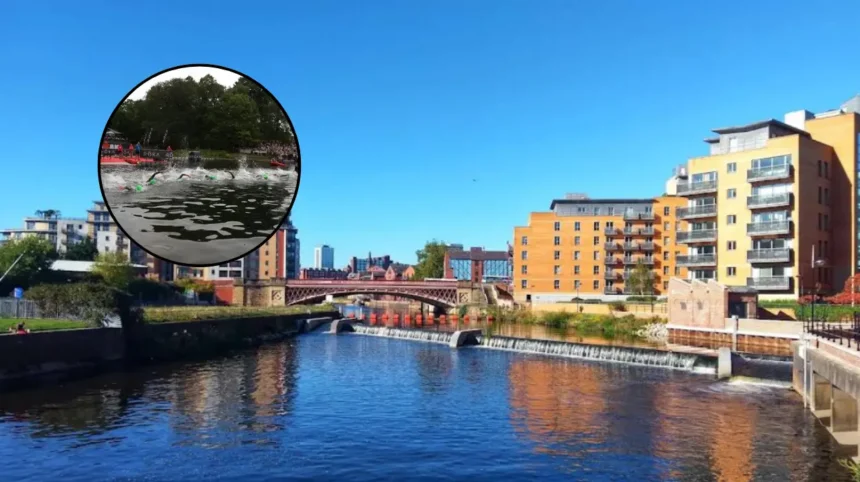
Leeds (The Leeds Times) August 22, 2026 –Athletes preparing for one of the most demanding physical challenges in global athletics faced last-minute disappointment when organisers announced that the 2.4-mile swim segment of Ironman Leeds had to be called off.
- Key Points
- How did athletes react to the last-minute cancellation at Waterloo Lake?
- What official statements were issued by British Triathlon and the Ironman Group?
- What environmental factors are driving toxic algae blooms across UK waters?
- Background of the particular development after the news
- Prediction: How this development can affect endurance athletes and race organisers
The decision came after water testing confirmed a proliferation of dangerous blue-green algae blooms, rendering the body of water unsafe for human contact. The annual endurance event, which took place on 16 August, forced around 2,000 competitors to forgo the open-water swim and adapt to a altered course structure.
Blue-green algae, or cyanobacteria, naturally occur in freshwater environments but can rapidly multiply during extended periods of warm weather and intense sunlight, combined with low rainfall and elevated nutrient levels.
While completing an Ironman triathlon—consisting of a 2.4-mile swim, 112-mile bike ride, and a 26.2-mile marathon run—is regarded as a peak athletic accomplishment, the alteration converted the physical test into a duathlon, leaving several participants feeling that their achievement carried an unintended caveat.
How did athletes react to the last-minute cancellation at Waterloo Lake?
For many participants, months of rigorous preparation were upended just hours before the starting horn sounded. Competitor Jack Chamberlain, who had dedicated roughly 15 hours per week over four to five months specifically training for his first full-length Ironman, shared his reaction to the event’s sudden shift.
Chamberlain expressed that whilst crossing the finish line remains a moment of personal pride, the absence of the swimming discipline diminished the overall experience. He noted that hearing the iconic finish-line phrase “you are an Ironman” feels distinct when the event is completed as a standard triathlon rather than a modified duathlon.
Chamberlain also raised concerns regarding the timing of the announcement and the management of water quality checks. Highlighting that competitors had travelled from roughly 58 countries, making substantial financial investments in travel, accommodation, and equipment, he argued that testing should have been monitored weeks in advance to provide earlier warnings.
Determined to complete the distance regardless, Chamberlain undertook a self-organised 2.4-mile swim in a nearby lake the day prior to the official race, while other athletes attempted to secure lane time at local leisure centres before public opening hours.
In contrast, other competitors viewed the decision as a necessary and prudent health precaution. Marina Angela Andresen, an experienced marathon runner pursuing a goal of finishing 10 Ironman events within a 12-month timeframe, expressed relief over the event’s safety measures.
Andresen noted that although she had previously experienced shortened swim legs due to low water temperatures, this was her first complete swim cancellation. She commended the Ironman organisers for prioritizing participant wellbeing over the scheduled itinerary, stating that avoiding the potential health risks associated with cyanobacteria allowed her to remain positive and enjoy the atmosphere provided by spectators across Yorkshire.
What official statements were issued by British Triathlon and the Ironman Group?
Governing bodies and event officials confirmed that the issue extends beyond a single isolated venue. British Triathlon, the national governing body overseeing triathlons, aquathlons, and duathlons across the United Kingdom, reported that Ironman Leeds represents the fourth event in the country to be cancelled due to blue-green algae blooms during the current season.
A spokesperson for the Ironman Group expressed regret over the necessity of the cancellation, emphasizing their awareness of the intense training regimens undertaken by participants across all three disciplines. The spokesperson explained that prolonged hot weather and a sustained absence of rainfall directly fostered the toxic bloom in Waterloo Lake.
The official decision to withdraw the swim segment was taken in direct coordination with Leeds City Council, the local authority holding jurisdiction over the water body. The organisation added that during the preceding year’s edition in 2025—the inaugural hosting of Ironman Leeds—the swim leg was executed without water quality disruptions.
What environmental factors are driving toxic algae blooms across UK waters?
The cancellation at Waterloo Lake forms part of a broader ecological trend affecting open-water swimming spots across the UK. Public outdoor swimming venues, including newly designated official bathing sites along the River Thames in London, have issued advisories cautioning visitors to remain out of the water until algal blooms clear.
Environmental authors and open-water swimming advocates, such as Daniel Start, have emphasized that high summer temperatures are only one part of the underlying cause. Start highlighted that agricultural pollution plays an equally significant role, as intensive farming techniques lead to synthetic fertilisers leaching into surrounding waterways and lakes.
When these nitrogen- and phosphorus-rich compounds wash into standing water bodies during heatwaves, they act as fuel for rapid algal growth, creating toxic conditions that are unlikely to dissipate without structural changes to agricultural run-off management and environmental policy.
Explore More UK News
Coroflo Appoints The Brill Building for UK Coro Launch London 2026
UK Government Issues Emergency Wildfire Alert and BBQ Ban: Knowsley 2026
Background of the particular development after the news
Cyanobacteria, commonly referred to as blue-green algae, are microscopic organisms naturally present in freshwater habitats including lakes, ponds, reservoirs, and slow-moving rivers. Under standard weather conditions, their populations remain at low, harmless concentrations.
However, when high water temperatures coincide with abundant sunlight, minimal water flow, and elevated levels of nutrients—specifically phosphorus and nitrogen—the bacteria replicate rapidly to form dense surface blooms.
These blooms pose documented health risks to humans and animals. Contact with or ingestion of water contaminated with high levels of cyanotoxins can cause skin rashes, eye irritation, gastrointestinal distress, fever, and in more severe cases, liver or neurological damage. For domestic animals, particularly dogs, exposure to toxic algae blooms can prove fatal within hours.
In recent years, the frequency and duration of toxic algae outbreaks across the United Kingdom have steadily increased. Climate experts point to rising mean summer temperatures and more frequent, extended heatwaves as primary physical drivers.
Concurrently, environmental monitoring groups highlight systemic pressures on British freshwater ecosystems, where agricultural run-off containing livestock waste and crop fertilisers, alongside untreated storm sewage discharges, consistently elevate nutrient baselines. Consequently, public bodies and sports authorities are increasingly forced to implement precautionary water closures to protect public health during peak summer months.
Prediction: How this development can affect endurance athletes and race organisers
The growing frequency of toxic algae cancellations presents long-term operational and financial challenges for the endurance sports sector, impacting both event organisers and the global athletic community.
For endurance athletes, unpredictable water conditions introduce uncertainty into multi-month training programs and significant financial expenditures. Competing in a full-distance triathlon involves extensive investments in gear, travel, coaching, and entry fees that often exceed thousands of pounds.
If open-water swim cancellations become a regular feature of late-summer events in Northern Europe and the UK, participants may increasingly shift their registrations toward early-spring events, cooler regions, or ocean-based courses where tidal movements mitigate stagnant algal growth.
Furthermore, the psychological impact of training for a three-discipline race only to compete in a duathlon may drive demand for revised qualification standards or altered accreditation rules from global triathlon bodies.
For event organisers and municipal hosts, recurring water quality failures heighten legal liability and reputational risks. Organisers may be compelled to invest heavily in advanced water remediation technologies—such as ultrasonic algae control, artificial aeration, or chemical treatment applications—weeks prior to scheduled events to guarantee safety.
Alternatively, race directors may be forced to build contingency swim locations, reschedule summer races to cooler months, or restructure insurance models to cover potential disruption claims from international competitors. In the long term, persistent ecological deterioration in urban and suburban lakes could permanently alter how outdoor multisport events are planned and hosted across the UK.