

Leeds United’s 2026 summer transfer window was a busy and ambitious one, with the club’s board investing heavily in the squad as they backed Daniel Farke ahead of the 2026/2027 season.
The club spent £85.2 million on new signings, making a number of significant additions across the squad. The headline arrival was goalkeeper James Trafford, who joined from Manchester City for £40 million, making him a club record signing.
Leeds also strengthened their defence with the signing of Tarik Muharemovi■ from Sassuolo for £34 million, while Nico Elvedi arrived from Borussia Mönchengladbach for £7 million. Goalkeeper Michael Zetterer joined from Werder Bremen for £4.2 million.
Harry Wilson was another addition to Farke’s squad, arriving on a free transfer. Leeds also brought in Jean Mattéo Bahoya from Eintracht Frankfurt on a season long loan, with an obligation to buy that will be triggered next summer as part of a total package worth £24 million.
Melvin Bard also joined Leeds from OGC Nice on loan, with a non mandatory option to buy for £4.3 million.
While the club invested significantly in new players, Leeds also generated £32.3 million through departures and loan arrangements during the summer.
Pascal Struijk completed a permanent move to Brighton & Hove Albion for £18 million, while Joe Gelhardt joined Hull City for £5 million. Isaac Schmidt moved to BSC Young Boys for £2 million, while Jack Harrison completed a permanent transfer to New England Revolution for £741,000.
Joël Piroe joined West Ham United on loan for an upfront loan fee of £4 million, with a mandatory permanent transfer trigger of £15 million.
Wilfried Gnonto moved to Fiorentina on loan for an £857,000 loan fee, with a non mandatory option to buy that could result in a total package of up to €21 million.
Sebastiaan Bornauw also left on loan, joining Hamburger SV for a fee of £857,000, with a non mandatory clause worth £3.8 million.
Lucas Perri joined Torino on loan for £857,000, with a non mandatory option to buy worth £13.7 million. Largie Ramazani was also loaned out to Burnley.
Several players also departed Elland Road after their contracts expired. Illan Meslier, Max Wöber, Karl Darlow and Sam Byram all left the club during the summer.
The extensive activity in the transfer market reflects the expectations surrounding Leeds United under the ownership of 49ers Enterprises.
The Leeds United Board of Directors, comprising Paraag Marathe as Chairman, Andrew Schwartzberg as Vice
Chairman, Robbie Evans as Chief Executive Officer and Managing Director, Andreas Dracopoulos as Director, Peter Lowy as Director and Eugene Schneur as Director, oversees the strategic, financial and executive direction of the club.
The board will expect the significant investment made during the summer to translate into a successful Premier League campaign. The immediate objective is for Leeds to avoid being involved in the relegation battle, while also producing convincing performances and making strong runs in the domestic cup competitions.
For Leeds, success in the Premier League carries significance far beyond what happens on the pitch.
The club is one of the city’s greatest assets, and its performance in the top flight has the potential to generate significant economic and social benefits for Leeds as a whole.
High profile matchdays bring tens of thousands of visitors into the city, filling hotels, bars, restaurants and transport networks while providing a boost to local businesses.
The Premier League’s enormous international reach also gives Leeds global exposure. With matches broadcast to audiences around the world, the club provides a platform for the city to strengthen its international profile, potentially attracting tourism, business investment and commercial opportunities.
Success on the pitch can also contribute to community wellbeing. Positive results can improve morale, productivity and consumer confidence across the local workforce, while encouraging increased retail activity during weekends.
The commercial opportunities created by Premier League football can also extend beyond the sport itself. Premium sponsorship agreements and global corporate hospitality can bring international executives to Leeds, creating opportunities for investment in other sectors of the city’s economy, including its growing technology and finance industries.
Leeds United’s presence in the Premier League also strengthens the city’s position as a major northern media hub. The club’s profile supports local broadcasting and creative industries, including organisations such as Channel 4 and ITV Yorkshire, while helping to maintain Leeds as an important centre for media production.
The Leeds United Foundation also stands to benefit from the club’s continued presence in the top flight. The club’s official charity delivers education, health and sports programmes to underprivileged communities across the city, making its work an important part of Leeds United’s wider impact on the local community.
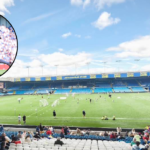
There is also the prospect of further stadium development. The commercial power associated with Premier League football provides 49ers Enterprises with greater scope to progress plans to expand Elland Road to a capacity of 53,000. Such a project could create hundreds of jobs across the local construction and hospitality sectors while further increasing the economic impact of matchdays.
So far, Leeds United have made an encouraging start to the new Premier League campaign.
Farke’s side opened their league season with a 2-0 victory over Nottingham Forest before drawing 1-1 with Brentford.
Leeds have also made progress in the Carabao Cup, beating fellow Premier League side Nottingham Forest to reach the next round. They will now face London giants Chelsea on September 9.
Attention will return to the Premier League on September 5, when Leeds welcome Brighton & Hove Albion in their next league fixture.
Farke will hope his side can build on their positive start and collect maximum points against Brighton as Leeds look to establish themselves in the Premier League and turn the significant investment made during the summer into a successful campaign.
With a strengthened squad, ambitious ownership and expectations rising around Elland Road, the coming months will provide an important test of whether Leeds United can take another significant step forward both on and off the pitch.