Key Points
- The Premier League’s Independent Key Match Incidents (KMI) Panel has officially ruled that Brentford should have been awarded a penalty kick during their 1-1 draw against Leeds United.
- The controversial incident took place in the 66th minute at Elland Road when Leeds defender Jayden Bogle made foot-on-foot contact with Brentford forward Kevin Schade inside the penalty area.
- Panel members voted 4-1 that the challenge constituted a clear foul on the pitch and referee Tony Harrington erred by waving play on.
- Despite identifying the missed foul, the panel unanimously supported the Video Assistant Referee (VAR) for choosing not to intervene, stating the incident did not reach the high standard of a “clear and obvious error.”
- Former Professional Game Match Officials Limited (PGMOL) boss Keith Hackett separately labeled the incident a “deliberate trip,” questioning why the challenge was missed at ground level.
- The match concluded in a 1-1 tie after Leeds forward Dominic Calvert-Lewin canceled out Kevin Schade’s first-half opening goal.
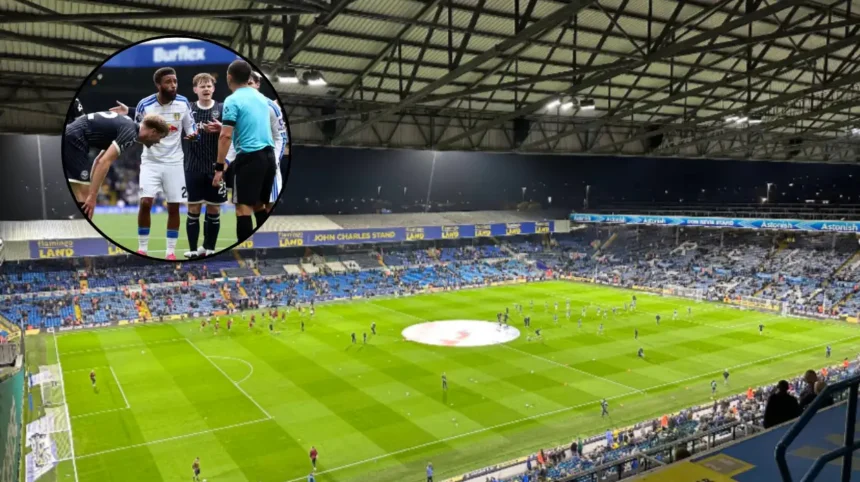
LEEDS (The Leeds Times) September 9, 2026 — An independent officiating review panel convened by the Premier League has formally concluded that Brentford were wrongly denied a second-half penalty kick during their 1-1 top-flight encounter against Leeds United at Elland Road on August 30.The ruling centers around a 66th-minute challenge involving Leeds United defender Jayden Bogle and Brentford attacker Kevin Schade. With Brentford holding a 1-0 lead, Schade received a pass inside the Leeds penalty box before falling under a challenge from Bogle. On-field referee Tony Harrington allowed play to continue, and the Video Assistant Referee team reviewed the incident before deciding not to overturn the live decision.
- Key Points
- Why did the Key Match Incidents Panel rule against the on-field decision?
- Why did VAR refrain from overturning the referee’s call?
- What did former refereeing officials say about the incident?
- Background of the Development
- Prediction: How This Development Affects Premier League Teams and Supporters
Why did the Key Match Incidents Panel rule against the on-field decision?
According to official review findings published by regional media outlets, the five-member Key Match Incidents Panel determined that the initial ruling made on the pitch was inaccurate. As reported by Joe Donnohue of the Yorkshire Post, the official panel statement confirmed:
“The panel felt that a penalty should have been awarded for a foul by Bogle on Schade, 4:1. There was foot-on-foot contact instigated by Bogle with enough contact for a penalty kick.”
The review panel, which comprises former players, coaching representatives, and officiating experts, evaluates every critical refereeing event across all Premier League matches to maintain transparency and collect structural performance data.
Why did VAR refrain from overturning the referee’s call?
Despite reaching a 4-1 consensus that a penalty foul occurred, the panel separately examined the threshold required for video technology involvement. Under current Premier League protocol, VAR technology is instructed to intercede only when an on-field decision represents a “clear and obvious error” rather than a subjective interpretation.
As documented by football reporter Beren Cross of Leeds Live, the panel backed the video officials for remaining silent during the match.
The panel noted that because the contact involved dynamic movement during a live counter-attack, the situation did not present an indisputable visual mistake that warranted forcing the referee to conduct an on-field monitor review.
What did former refereeing officials say about the incident?
The panel’s finding aligns closely with expert analysis offered immediately following the match. As reported by Charlie Parker-Turner of MOT Leeds News, former PGMOL chief executive Keith Hackett analyzed the incident and stated:
“This is a foul. It’s a deliberate trip on an opponent and I am surprised that a penalty kick was not awarded by the referee. I do not think you need to do a forensic check on this to see it’s a foul.”
The match itself saw Brentford take a first-half lead through Kevin Schade, who redirected a clever flick past Leeds goalkeeper James Trafford. Leeds United responded in the second half through manager Daniel Farke’s tactical adjustments and substitutions, culminating in striker Dominic Calvert-Lewin converting an assist from Lukas Nmecha in the 78th minute to secure a share of the points.
Explore More Leeds United News
LIV Golf Restructuring Cites Leeds United Financial Precedent London 2026
Leeds United Face Chelsea Test With Carabao Cup Upset And Trophy Dream In Sight
Background of the Development
The Premier League’s Independent Key Match Incidents Panel was established as part of a broader initiative to improve refereeing transparency and provide objective feedback to the PGMOL and top-flight clubs. Operating independently of weekly refereeing appointments, the panel meets weekly during the season to analyze major decisions, including awarded penalties, missed spot-kicks, red cards, and incorrect dismissals.
Throughout recent seasons, the boundary between an incorrect on-field decision and the high bar set for a VAR intervention has generated recurring debate among Premier League managers, players, and supporters. The protocol dictates that VAR must refrain from re-refereeing matches, intervening solely when clear graphical evidence refutes the match official’s primary interpretation.
Consequently, findings where the KMI Panel deems an on-field call incorrect while simultaneously endorsing VAR non-intervention highlight the precise administrative boundary surrounding current officiating frameworks.
Prediction: How This Development Affects Premier League Teams and Supporters
This panel ruling is expected to influence match officiation dynamics, club strategies, and supporter expectations across several distinct areas:
- Impact on Brentford F.C.: The formal admission confirms that Brentford missed out on a potential two-goal cushion at Elland Road. For manager Thomas Frank and his squad, the validation offers institutional agreement but no physical points restoration. It may heighten internal frustrations regarding fine profit margins in tight top-flight fixtures where key decisions alter league positioning.
- Impact on Leeds United: Daniel Farke’s team effectively benefits from the high threshold placed on VAR interventions. However, the official review highlights defensive vulnerabilities during opposition transitions, which defensive personnel like Jayden Bogle will need to address to avoid giving match officials opportunities to award penalties in upcoming league fixtures.
- Impact on Match Officials and PGMOL: On-field referees like Tony Harrington are likely to face renewed pressure to spot dynamic foot-on-foot fouls in real-time, given that VAR will not cover subjective gray areas. For PGMOL leadership, cases where a decision is deemed wrong yet uncorrectable by technology may prompt further discussions around tweaking VAR intervention thresholds ahead of future Premier League standard reviews.