Key Points
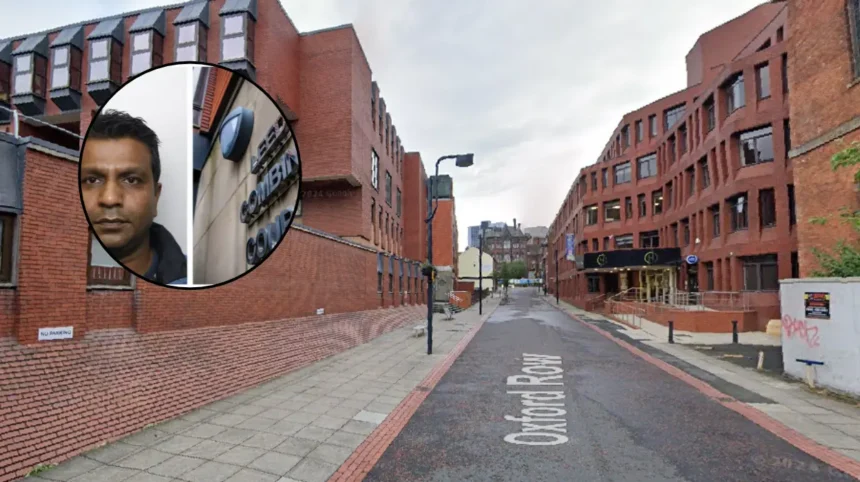
- Yakub Miah, a 53-year-old drug trafficker, was sentenced at Leeds Crown Court following a trial.
- Miah was found guilty of multiple offences, including conspiracy to supply Class A drugs (predominantly heroin) and possession with intent to supply cocaine and crack cocaine.
- The court heard that Miah was part of a wider organised crime network responsible for smuggling 20 kilograms of heroin, carrying an estimated street value of £1 million, from Dudley near Birmingham into Leeds.
- The investigation into the cross-regional drug trafficking ring was led by specialist law enforcement teams targeting serious organised crime across West Yorkshire and the Midlands.
Leeds (The Leeds Times) Sepermber 18, 2026 –Yakub Miah has been handed a custodial sentence at Leeds Crown Court after being found guilty by a jury of orchestrating high-level supply chains moving illicit substances across regional boundaries. The 53-year-old defendant stood trial facing severe charges, ultimately being convicted of conspiracy to supply Class A drugs—specifically heroin—alongside separate counts of possession with intent to supply cocaine and crack cocaine.
According to evidence presented during the judicial proceedings, Miah operated as a key player within a sophisticated drug trafficking network.
This criminal enterprise was responsible for transporting substantial quantities of narcotics—most notably 20 kilograms of heroin with an estimated street value reaching £1 million—straight from Dudley, near Birmingham, up to urban hubs in Leeds.
Law enforcement officials detailed how the operation formed part of a lucrative supply line bridging West Yorkshire and the West Midlands.
The distribution network relied on coordinated travel between the regions to flood local streets with high-purity Class A substances, exploiting transport corridors to move bulk product away from primary production bases.
How Did the Inter-Regional Drug Network Operate Between Birmingham and Leeds?
The illicit operation capitalised on established transit links connecting the West Midlands to West Yorkshire, allowing criminal actors to shift wholesale quantities of contraband away from police scrutiny. Investigators revealed that the trafficking ring systematically moved large consignments, using intermediate locations like Dudley to stage and package drugs prior to distribution runs into Leeds.
During the trial, prosecutors outlined the mechanics of the conspiracy, establishing that Miah played a direct role in facilitating the movement and subsequent distribution of multi-kilogram packages.
The sheer scale of the operation—moving 20kg of heroin alone—underscored the industrial nature of the enterprise, which required structured logistical planning, secure communication channels, and trusted operatives to manage the transit routes between Birmingham and northern markets.
What Role Did Programme Precision Play in Uncovering the Conspiracy?
The prosecution and subsequent conviction of Miah followed exhaustive inquiries conducted by specialist regional crime units. Law enforcement agencies have increasingly targeted cross-border county lines and inter-city supply networks that feed regional drug markets.
Detectives gathered forensic evidence, telecommunications data, and surveillance intelligence to map out the network’s hierarchy and movements.
This meticulous police work enabled crown prosecutors to build a robust circumstantial and physical case that dismantled the defence’s arguments at trial, culminating in the jury returning unanimous guilty verdicts across the multiple indictments.
Explore More Leeds Crime News
Paul Benstock Jailed in Leeds 2026
Background of the Particular Development
The conviction and sentencing of Yakub Miah arrives amid intensified multi-agency crackdowns on organized crime syndicates operating linear supply routes between the West Midlands and West Yorkshire. Over recent years, law enforcement bodies—including West Yorkshire Police’s specialist serious organised crime teams—have prioritized dismantling networks that leverage the motorway infrastructure connecting major urban centres like Birmingham, Bradford, and Leeds for wholesale drug distribution.
These trafficking rings have historically adapted their methods to evade detection, utilizing commercial and private vehicles to shuttle multi-million-pound drug loads across county boundaries. The case against Miah reflects ongoing judicial efforts to dismantle regional command structures rather than merely arresting street-level dealers, aiming to sever the supply chain at its source.
Impact on the Local Community and Public Safety
For residents and community stakeholders in Leeds and the surrounding Yorkshire region, the dismantling of this trafficking network represents a vital step in mitigating the corrosive social impacts associated with high-volume Class A drug distribution. The influx of mass quantities of heroin and crack cocaine frequently drives localized acquisitive crime, anti-social behaviour, and severe public health crises, including rising rates of addiction and drug-related harm.
By removing a significant trafficker like Miah from circulation, law enforcement aims to disrupt the local availability of these harmful substances, thereby easing the burden on emergency services, local health infrastructure, and community support networks. Ultimately, prolonged custodial sentences serve as a deterrent while weakening the operational capacity of regional syndicates seeking to exploit vulnerable neighborhoods for financial gain.