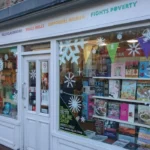

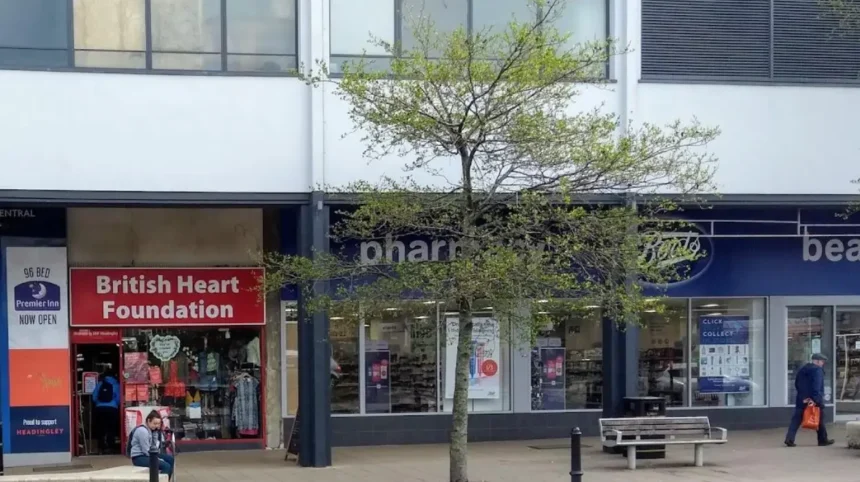
Headingley is one of Leeds’ best-known neighbourhoods for independent shopping, food, culture and student life. It also has a well-established charity-shop scene centred largely on Otley Road and nearby streets. The area provides access to pre-loved clothing, books, homeware, music, electrical goods and other donated items while supporting charitable organisations.
- What charity shops can you find in Headingley?
- Where should you start a charity-shop trip in Headingley?
- What can you buy in Headingley charity shops?
- Why is charity shopping important for sustainable consumption?
- How does charity shopping support local charities?
- How does second-hand shopping reduce textile waste?
- How should you shop sustainably in Headingley?
- What is the best way to donate to Headingley charity shops?
- How can visitors combine charity shopping with a Headingley day out?
- How can you make a Headingley charity-shop visit more effective?
- What does the future of sustainable shopping in Headingley look like?
Charity shopping combines retail with reuse. Instead of buying every item new, shoppers can extend the useful life of existing products. This reduces demand for new production and keeps usable goods circulating for longer.
Headingley is particularly suitable for this type of shopping because several charity shops sit within a walkable area. A dedicated charity-shop trail created by Leeds City Council Sustainability Services previously connected British Heart Foundation, Oxfam, Cats Protection, Mind and Samaritans outlets in the neighbourhood. The trail promoted sustainable consumption and encouraged shoppers to visit several shops during one trip.
What charity shops can you find in Headingley?
Headingley has several established charity shops, with the main cluster around Otley Road including Oxfam, British Heart Foundation and other charitable retailers offering clothing, books, homeware and donated goods. Nearby streets add further options.
The strongest starting point is Otley Road. This is the main commercial corridor through Headingley and provides access to several charity retailers within a relatively compact area.
The current Headingley directory lists Oxfam at 45–47 Otley Road, Oxfam Bookshop at 13–15 Otley Road, Cats Protection at 33 Otley Road and British Heart Foundation at 28 Arndale Centre, Otley Road. It also lists charity outlets associated with Samaritans and Mind on North Lane and St Michael’s Road.
A short trip beyond central Headingley provides further charity-shopping options. St Gemma’s Hospice operates charity shops across Leeds, including locations serving surrounding neighbourhoods. Its wider network gives shoppers another option when they want to combine a Headingley visit with second-hand shopping elsewhere in Leeds.
Opening hours and stock change. Check the individual charity’s official shop information before travelling, particularly on Sundays and Bank Holidays.
The Headingley cluster is useful because shoppers do not need to travel between distant parts of Leeds to compare different charity retailers. Walking between shops also makes the activity suitable for a short leisure visit.
Where should you start a charity-shop trip in Headingley?
Start on Otley Road because it contains several prominent charity shops within the central Headingley shopping area. From there, walk towards North Lane and nearby streets to include additional charitable retailers.
Otley Road provides the clearest starting point for visitors unfamiliar with Headingley. It connects the central commercial area with other neighbourhood destinations and has regular pedestrian activity.
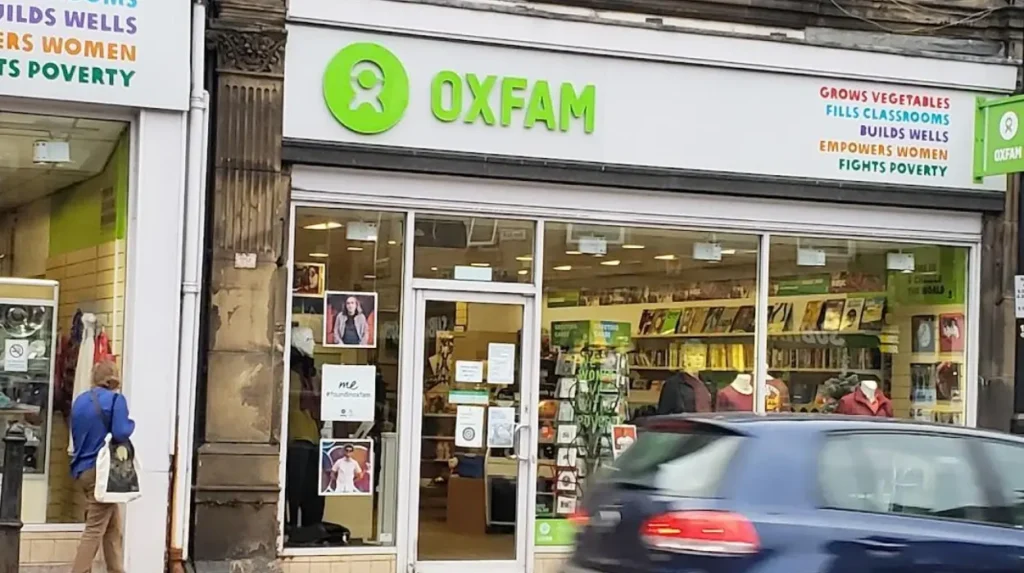
Oxfam Headingley is one of the largest charity shops in the area. The shop at 45–47 Otley Road stocks donated clothing, electrical items, homewares and music alongside Fairtrade food, gifts, jewellery, greetings cards and gardening products. Oxfam also provides an online shop for selected pre-loved goods.
Nearby, Oxfam Bookshop at 13–15 Otley Road focuses on books and cards. It provides a more specialist stop for readers and collectors.
British Heart Foundation operates a Headingley shop at 28 Arndale Centre, Otley Road. Its current range includes pre-loved clothing, shoes, accessories, books, toys and homeware. The shop also sells selected new items and accepts donations.
The wider Headingley directory lists Cats Protection on Otley Road and charity outlets connected with Mind and Samaritans around North Lane and St Michael’s Road.
This creates a practical route based on different shopping interests. A visitor looking for clothing can start with general charity shops. A reader can add the Oxfam Bookshop. A shopper looking for homeware can compare several retailers rather than relying on one shop.
What can you buy in Headingley charity shops?
Headingley charity shops sell changing selections of pre-loved clothing, books, accessories, homeware, music, toys, electrical goods and other donated products. Stock changes frequently because it depends on donations and local demand.
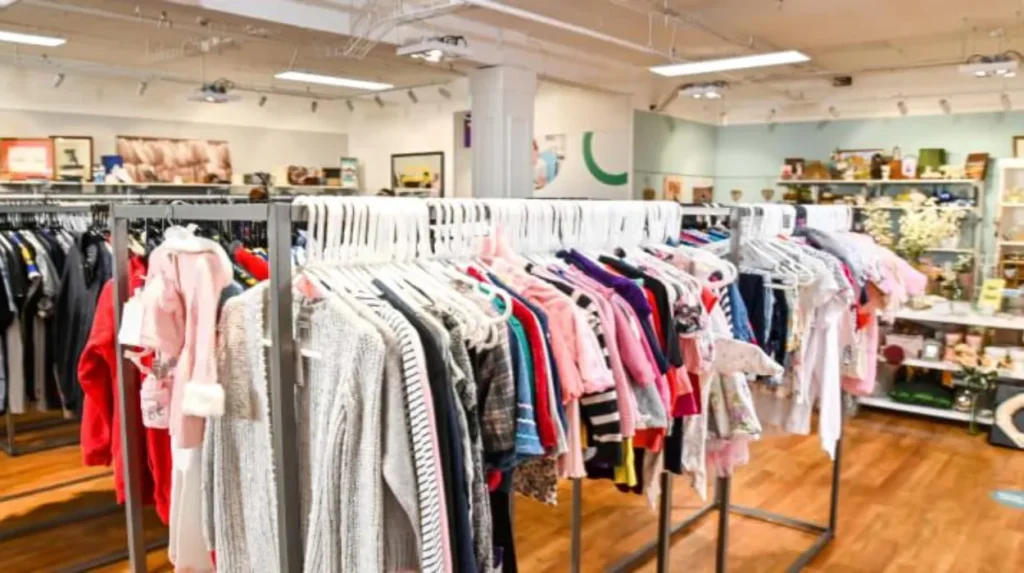
Clothing is one of the most common categories. Shoppers can find coats, jackets, jumpers, shirts, dresses, trousers, shoes and accessories. Availability depends on donations received by each shop.
Books form another important part of the local charity-shopping offer. The dedicated Oxfam Bookshop provides a useful destination for novels, non-fiction and other reading material.
Homeware can include kitchen items, ornaments, decorative objects, household accessories and small furnishings. These products are useful for residents, students and visitors searching for practical items without buying new products.
Music and media also feature in some charity shops. Oxfam Headingley specifically lists music among its available categories.
Electrical goods are another category available through selected retailers. Oxfam and British Heart Foundation both identify electrical products among the goods available through their Headingley shops.
The most important point is that charity-shop stock is not fixed. A shop that has no suitable item during one visit can have a completely different selection later.
For this reason, sustainable shopping works best as a repeat activity rather than a single product search. Regular visits increase the chance of finding a suitable item while continuing to support charitable retail.
Why is charity shopping important for sustainable consumption?
Charity shopping supports reuse by keeping usable products in circulation instead of sending them directly to waste treatment. It also generates income for charitable organisations while giving consumers an alternative to buying new goods.
Reuse sits high in the waste hierarchy because an existing product retains its useful function. Selling that product to another consumer extends its life without requiring the manufacture of an immediate replacement.
The Charity Retail Association states that charity shops reuse or recycle more than 90% of donated clothing and books and 85% of donated electrical goods. Charity retailers therefore play an established role in the UK reuse economy.
Textile waste remains a significant issue. WRAP reported that around 711,000 tonnes of used textiles were discarded through household bins and general waste routes in 2021. This represented almost half of used textiles in the UK by weight.
These figures explain why second-hand clothing matters beyond the individual purchase. Every suitable garment bought second-hand represents continued use of an existing product.
Sustainable shopping also involves buying less unnecessary stock. A charity shop does not automatically make every purchase sustainable. The environmental benefit is strongest when shoppers buy useful items, use them for a long time and avoid unnecessary consumption.
Headingley’s charity shops therefore form part of a wider circular economy. A circular economy keeps products and materials in use for as long as possible rather than following a simple buy-use-discard pattern.
How does charity shopping support local charities?
Charity shops convert donated goods into retail income that supports charitable organisations and their services. Shoppers therefore support a cause while purchasing a useful second-hand product for continued use.
The connection between retail and charitable activity is central to the charity-shop model.
People donate goods they no longer need. Charity shops sort those goods and place suitable products on sale. Revenue from sales contributes to the organisation’s charitable work.
The beneficiaries differ between charities. British Heart Foundation directs funds towards heart and circulatory disease research and related work. Oxfam uses income to support its wider work addressing poverty and inequality. St Gemma’s Hospice uses its charitable income to support hospice care in Leeds.
This makes the choice of charity shop relevant to shoppers who want their spending to support a particular cause.
Gift Aid provides another mechanism for increasing the value of qualifying charitable donations. HM Revenue & Customs states that charities can claim an additional 25p for every £1 of qualifying Gift Aid donation when the relevant conditions are met.
Retail Gift Aid has specific rules. A donor can agree for a charity shop to sell donated goods on their behalf and donate the proceeds to the charity. The shop must follow HMRC requirements for the scheme.
Shoppers therefore support the charity through the purchase itself, while donors can increase the potential value of qualifying donations by using the appropriate Gift Aid process.
How does second-hand shopping reduce textile waste?
Second-hand shopping extends the useful life of clothing and other textiles by transferring products from one owner to another. This reduces the need for immediate replacement purchases and keeps usable materials in circulation.
Textile production requires raw materials, energy, water, manufacturing processes, transport and retail distribution. Extending the useful life of an existing garment avoids some of the demand associated with producing a replacement item.
WRAP’s textiles research highlights the scale of the problem. In 2021, 711,000 tonnes of used textiles entered household general waste routes. WRAP also reported that 84% of these discarded textiles were incinerated with energy recovery and 11% went to landfill.
Reuse provides an alternative route for suitable items.
The UK Textiles Pact has also reported increasing activity in reuse and recycling. Its 2024 progress update states that reuse and recycling organisations handled 210,000 tonnes of used textiles during 2024, a 27% increase compared with 2019.
These figures show why second-hand retail forms part of a larger waste-prevention strategy.
However, shoppers should distinguish reuse from recycling. Reuse keeps the original product in service. Recycling breaks materials down or processes them into other applications. Buying a pre-loved jumper that remains wearable is therefore a direct reuse action.
How should you shop sustainably in Headingley?
Shop with a defined need, inspect products before buying, choose durable items and use charity shops as part of a longer product life cycle rather than treating second-hand shopping as another form of unnecessary consumption.
Start by identifying what you actually need. A clear shopping purpose reduces impulse purchases.
Check clothing for stains, tears, missing buttons, broken zips and excessive wear. Examine shoes for sole damage and structural problems. Inspect electrical goods for visible damage and ask staff about testing arrangements where relevant.
For books, check the binding and pages. For homeware, inspect handles, hinges, surfaces and other functional components.
Quality matters because the environmental benefit of reuse depends on continued use. A poor-quality item that is discarded shortly after purchase provides less value than a durable product used for several years.
Consider versatility. A jacket that works across several seasons provides more long-term use than an item suitable for one occasion.
Second-hand shopping also works well for temporary needs. Students, renters and visitors can find household products that meet immediate requirements without buying everything new.
Visitors should also consider luggage space. Small books, accessories and clothing are easier to carry than bulky purchases.
The most sustainable purchase is still a useful purchase. Charity shops provide the opportunity to reuse products, but responsible consumption begins with buying only what has a genuine purpose.
What is the best way to donate to Headingley charity shops?
Donate clean, usable and suitable goods directly to the charity shop during its stated donation hours. Check each organisation’s accepted-item rules first and never leave bags outside a closed shop.
Donation standards differ between organisations. A charity shop needs products that can be safely handled, stored and sold.
Oxfam Headingley accepts books, clothing, electrical goods, homewares and music. British Heart Foundation also accepts a range of clothing, shoes, accessories, books, toys and homeware and provides donation options for selected furniture and electrical items.
St Gemma’s Hospice states that its charity shops accept unwanted men’s, women’s and children’s clothing, shoes, handbags, toys, games, books, music, bric-a-brac and electrical items, excluding large white goods. Furniture acceptance is restricted to specific St Gemma’s locations.
Cleanliness is important. Wash clothing before donating it. Pair shoes where possible. Keep sets together. Remove personal paperwork from donated books, bags and household items.
Do not assume every damaged product belongs in a charity shop. Items that cannot safely be sold require another disposal or recycling route.
St Gemma’s specifically warns donors not to leave donations outside closed shops. Unauthorised dumping outside a shop can be treated as fly-tipping.
The best practice is simple: check the charity’s donation guidance, prepare the goods properly and hand them to staff during opening hours.
How can visitors combine charity shopping with a Headingley day out?
Charity shopping fits naturally into a wider Headingley visit because Otley Road connects retail, food, cafés, cultural venues and other neighbourhood destinations. A short shopping route can therefore become part of a longer local itinerary.
Headingley is more than a shopping destination. Otley Road and surrounding streets provide access to food businesses, cafés, pubs, community facilities and cultural attractions.
A visitor can begin with the charity shops, stop at Oxfam Bookshop, continue along Otley Road and then use nearby cafés or other local businesses for a break.
This format works particularly well for leisure travellers because charity shopping does not require a full day. A focused visit can take less than an hour. A broader neighbourhood visit can combine shopping with food, architecture and local attractions.
Digital nomads and business travellers can also fit second-hand shopping into downtime between meetings or work sessions. Headingley’s café culture provides additional options for visitors who want to combine a local shopping stop with remote work.
Residents have another advantage. Repeat visits provide opportunities to monitor changing stock rather than relying on one shopping trip.
The area’s walkable charity-shop cluster also supports lower-impact local travel. Walking between several nearby stores avoids additional car journeys between individual shops.
As you explore the modern shopping area, you are crossing land with a deep local heritage. Read about the full [Insert Anchor Text for History Article Here] to understand its origins.
Explore More Area Guide
Headingley Guide to Second-Hand Shops & Pre-Loved Finds
Headingley Repair Shops and Everyday Local Services Guide
How can you make a Headingley charity-shop visit more effective?
Plan around the products you need, start with the central Otley Road shops, allow time for browsing and check official shop information before travelling. Repeat visits are useful because donated stock changes continuously.
A practical route starts with the largest or most relevant shop for the item you want.
Clothing shoppers can begin with Oxfam or British Heart Foundation. Readers can include Oxfam Bookshop. Shoppers interested in household products can compare homeware sections across the available retailers.
Avoid rushing. Charity shops do not operate like conventional stores with identical stock arranged around a fixed catalogue. Their selection changes according to donations.
Check garment labels for fabric composition and washing instructions. Examine condition carefully. Compare prices with the cost of equivalent new goods before buying.
For higher-value purchases, check whether the product is complete and functional. This is particularly important for electrical equipment, games, kitchen appliances and specialist items.
Carry a reusable shopping bag. It reduces the need for additional carrier bags during a multi-shop visit.
If you are donating as well as shopping, separate your donations before leaving home. Keep fragile goods protected and avoid mixing unsuitable waste with saleable items.
Finally, verify opening hours. Oxfam and other charities advise customers to check individual shop information, while St Gemma’s provides a shop finder for its wider Leeds network.
What does the future of sustainable shopping in Headingley look like?
Headingley’s charity shops are part of a wider shift towards reuse, circular retail and responsible consumption. Their long-term relevance comes from extending product life, supporting charities and providing accessible alternatives to new retail.
The UK reuse economy is developing alongside increasing attention on textile waste.
WRAP’s recent textiles research shows that reuse and recycling organisations handled 210,000 tonnes of used textiles in 2024. The same research reported growth in collection and reuse activity compared with 2019.
Charity retail also has a significant economic and social footprint. The Charity Retail Association reports more than 9,900 charity shops in the UK and more than 223,500 volunteers. Its 2024/25 data also records more than £300 million in profit contribution from charity retail to parent charities.
Headingley contributes to this national system through its local concentration of charity retailers.
The future of sustainable shopping is not limited to clothing. Books, furniture, electrical products, toys, accessories and household goods all have reuse potential.
The strongest model combines responsible purchasing, longer product use, repair, donation, reuse and recycling. Each stage keeps products and materials in circulation for longer.
For visitors, this makes Headingley charity shopping more than a way to find a low-cost purchase. It provides a practical opportunity to participate in Leeds’ reuse economy while supporting established charitable organisations.
For residents, the benefit is ongoing. Regularly donating suitable goods prevents usable products from becoming household waste. Regularly buying useful pre-loved products provides an alternative to new purchases.
For tourists and business travellers, the Otley Road cluster offers a compact way to explore a distinctive part of Headingley while engaging with sustainable retail.
Headingley’s charity shops therefore remain relevant because they connect three activities in one local system: shopping, reuse and charitable giving. That combination gives second-hand retail a continuing role in the neighbourhood and in the wider move towards a more circular economy.
What charity shops are in Headingley?
Headingley has several charity shops around Otley Road and nearby streets. These include Oxfam, Oxfam Bookshop, British Heart Foundation, Cats Protection and charity retailers associated with organisations such as Mind and Samaritans.