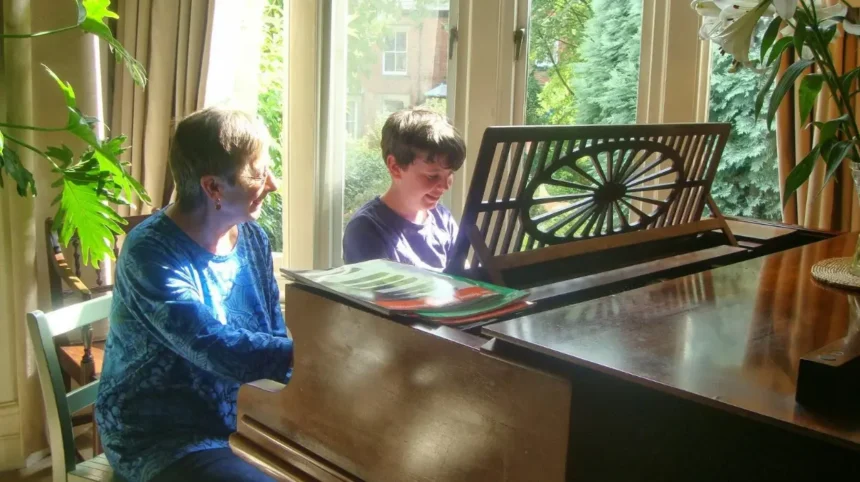
Headingley in Leeds offers access to private music tuition, instrument lessons and wider music education opportunities across North Leeds. Learners can explore piano and guitar tuition locally, while specialist providers across Leeds offer teaching in instruments such as violin, drums, flute, saxophone and trumpet.
- What music lessons and instrument tuition are available in Headingley?
- Where can you find music teachers in Headingley and North Leeds?
- How should beginners choose their first musical instrument?
- How much do music lessons in Headingley cost?
- Comparing lesson prices
- What additional expenses should learners consider?
- Are block bookings worth considering?
- Should you choose private music lessons, group classes or online tuition?
- Private one-to-one lessons
- Group tuition and ensembles
- Online music lessons
- Which format suits visitors and busy professionals?
- How do music examinations and graded lessons work?
- What is the ABRSM syllabus?
- How should learners prepare for a graded examination?
- Are graded examinations necessary for beginners?
- How can children and adults get the most from music tuition?
- Music lessons for children
- Music lessons for teenagers
- Music lessons for adults
- How much should learners practise?
- What should you check before booking a music teacher in Headingley?
- Teaching experience and musical specialism
- Lesson location and accessibility
- Fees, cancellations and missed lessons
- Safeguarding and communication
- How does Headingley’s musical history connect with its modern learning opportunities?
- What music activities can learners explore beyond individual lessons?
- Attend concerts and public performances
- Join ensembles and music groups
- Use performances to set learning goals
- How can visitors fit music lessons into a stay in Headingley?
- Plan a lesson around your itinerary
- Consider online lessons during business travel
- Continue learning after leaving Leeds
- How can you start learning an instrument in Headingley?
What music lessons and instrument tuition are available in Headingley?
Music lessons in Headingley include private piano and guitar tuition, with additional instrumental and vocal teaching available through providers across Leeds. Beginners, returning musicians and experienced players can choose lessons based on their instrument, preferred musical style, experience and learning objectives.
Instrument tuition is structured teaching that helps learners develop practical playing skills, musical understanding and performance confidence. Lessons typically cover technique, rhythm, reading music, listening skills and repertoire. The precise content depends on the instrument and the student’s goals.
Headingley is a residential and commercial area in north-west Leeds. Its location near the University of Leeds and other educational institutions gives residents and visitors access to the wider city’s cultural and educational resources.
Which instruments can learners study locally?
Piano and guitar are two clearly documented options through Headingley Music Lessons. The provider offers classical piano lessons and guitar tuition covering classical, acoustic and electric styles. Its published information welcomes learners from beginner to advanced level.
Learners seeking other instruments can investigate tuition across Leeds through Roundhay Music. Its published instrument list includes violin, cello, drums, flute, clarinet, saxophone, trumpet, ukulele and singing, alongside music theory and ensemble tuition. Availability depends on the instrument and tutor.
Who can benefit from instrument tuition?
Children can use lessons to establish foundational musical skills, while teenagers can develop performance techniques and prepare for graded examinations. Adults can start learning an instrument for personal enjoyment, return to music after a break or develop a particular style.
Visitors staying in Headingley for an extended period can also investigate individual lessons or online tuition. Short-term travellers should confirm the teacher’s availability and lesson format before making plans.
Where can you find music teachers in Headingley and North Leeds?
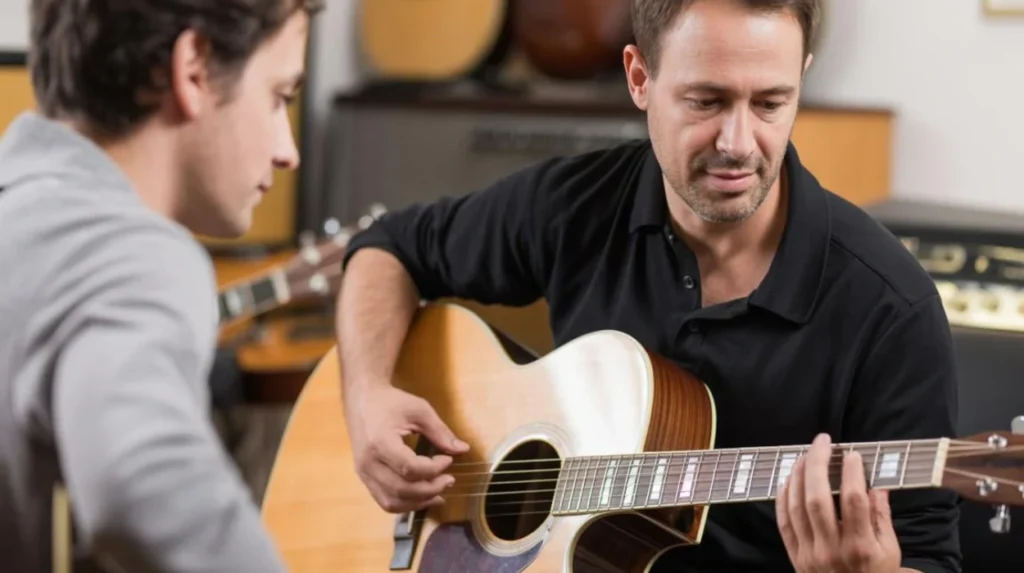
Learners can start with Headingley-based piano and guitar teachers, then widen their search to established Leeds tuition organisations and the University of Leeds. Compare instrument specialisms, teaching experience, lesson locations, current prices and availability before arranging an initial session.
Finding a suitable teacher starts with identifying the required instrument and lesson format. A local specialist provides a direct route for learners who want individual instruction without enrolling in a full-time music course.
Headingley Music Lessons
Headingley Music Lessons is a local option for people seeking piano or guitar instruction. Its website identifies Richard Vickers as a professional musician and music educator based in North Leeds. His background includes performance, composition and music education.
The provider offers classical piano tuition following the Associated Board of the Royal Schools of Music (ABRSM) syllabus. Guitar students can explore classical guitar and popular styles using acoustic and electric instruments.
Published prices list £20 for a 30-minute lesson and £30 for a one-hour lesson for both piano and guitar. Discounts are available for block bookings. These are published rates rather than a guarantee of future prices, so confirm the current fee before booking.
Roundhay Music
Roundhay Music is another option for learners prepared to travel beyond Headingley. The organisation describes itself as a not-for-profit tuition service established in 1987. It connects students with tutors and offers face-to-face and online lessons.
Its teaching directory covers a broad range of instruments and musical activities. Students can enquire about strings, woodwind, brass, keyboard, percussion, singing and music theory. Group tuition, ensemble sessions and audition preparation are also listed.
Roundhay Music is based at 8 Talbot Grove, Roundhay, Leeds, LS8 1AB. Its location is outside central Headingley, so check the journey and the actual teaching venue before committing to regular sessions.
University of Leeds School of Music
The University of Leeds School of Music provides another useful reference point for the city’s instrumental teaching network. Its published teacher directory lists specialists in instruments such as cello, flute, clarinet, piano, guitar, drums, saxophone and violin, alongside classical and jazz voice tuition.
The university’s individual instrumental lessons are connected to its study arrangements, including paid tuition for students taking solo performance modules for credit. The directory is therefore a useful way to understand the breadth of specialist teaching in Leeds, but it does not establish that every teacher accepts members of the general public for private lessons.
How should beginners choose their first musical instrument?
Beginners should choose an instrument that fits their musical interests, available practice space, budget and physical comfort. Piano, guitar, ukulele and digital keyboard are common starting points, while violin, flute and drums suit different musical preferences and practice requirements.
Choosing an instrument is the first practical decision in a music-learning plan. Learners should consider the sound they enjoy, the music they want to play and the time they can dedicate to regular practice.
Piano and keyboard
Piano lessons develop note recognition, rhythm, coordination and an understanding of harmony. The keyboard layout makes musical notes visible in a clear sequence, helping beginners connect written notation with sound.
A full acoustic piano requires sufficient space and regular maintenance. A digital keyboard offers adjustable volume and headphone connectivity, which is useful in flats, shared homes and accommodation with noise restrictions.
Headingley Music Lessons offers piano tuition for beginners through to advanced players. Learners can discuss classical repertoire, ABRSM examinations or playing for personal enjoyment with the teacher.
Acoustic and electric guitar
Guitar suits learners interested in pop, rock, folk, classical music and songwriting. Acoustic guitar does not require an amplifier, while electric guitar normally needs amplification or a suitable headphone-based setup.
Beginners should select a guitar that fits comfortably in their hands. Instrument size, string tension and setup influence playing comfort. A teacher can explain basic tuning, posture, chord shapes and safe practice technique.
The local Headingley tuition provider specifically lists classical guitar and popular electric and steel-string acoustic styles. This gives learners a direct starting point for choosing between classical technique and contemporary repertoire.
Violin, flute and drums
Violin lessons focus on posture, bow control, intonation and listening. Flute tuition develops breath control, finger coordination and tone production. Drum lessons focus on timing, coordination, rhythmic patterns and control of dynamics.
These instruments require different equipment and practice arrangements. A violin needs a suitable bow and rosin, a flute needs appropriate cleaning equipment, and a drum kit requires sufficient space and consideration of sound levels.
Learners should check whether their chosen teacher provides instrument guidance or recommends a suitable rental service. Hiring an instrument before purchasing one helps beginners assess their interest and playing comfort without making a large initial commitment.
Ukulele and other alternatives
The ukulele is a small, portable string instrument with four strings. Its compact size and relatively simple introductory chord patterns make it an accessible option for many beginners.
Other instruments suit learners with specific musical interests. Saxophone supports jazz and popular music, clarinet appears in classical and ensemble settings, and bass guitar provides the low-frequency foundation in many bands.
Roundhay Music lists these and other instruments within its tuition offering. Students should ask whether a suitable teacher is currently available for their preferred instrument and style.

How much do music lessons in Headingley cost?
Music lesson costs depend on duration, instrument, tutor experience, lesson format and booking arrangements. Headingley Music Lessons publishes £20 for 30 minutes and £30 for one hour of piano or guitar tuition, with discounts available for block bookings.
The published local rates provide a starting point for budgeting. However, the total cost of learning an instrument includes more than the teacher’s fee. Students should account for equipment, music books, examination charges, travel and any venue-related expenses.
Comparing lesson prices
The following examples use the published prices from Headingley Music Lessons. They are arithmetic illustrations based on the listed rates, not a quote for a new booking.
- One 30-minute lesson costs £20 at the published rate.
- One 60-minute lesson costs £30 at the published rate.
- Four 30-minute lessons cost £80 before any applicable discount.
- Four 60-minute lessons cost £120 before any applicable discount.
The one-hour lesson offers more teaching time for an additional £10 compared with the half-hour session. However, beginners often benefit from shorter lessons while they establish concentration, coordination and a regular practice routine.
What additional expenses should learners consider?
An instrument purchase is often the largest additional expense. Acoustic pianos and full drum kits require more space and investment than entry-level keyboards or practice pads. Guitar learners also need accessories such as a tuner, picks or a suitable strap, depending on the instrument.
Other potential costs include:
- Sheet music and method books, for example beginner piano exercises or guitar chord books.
- Examination fees, for example an ABRSM practical or theory examination.
- Instrument maintenance, for example guitar restringing or piano tuning.
- Travel expenses, for example bus fares to a teacher’s studio.
- Online lesson equipment, for example a reliable internet connection and a device with a camera.
These costs vary, so request a clear breakdown before starting a course of lessons.
Are block bookings worth considering?
Block bookings involve purchasing several lessons together rather than paying individually. They can provide predictable scheduling and, where a provider offers a discount, reduce the average lesson cost.
Headingley Music Lessons advertises discounts for block bookings. Ask about the exact package price, payment arrangements, cancellation policy and expiry conditions before paying in advance.
Learners with uncertain schedules should compare the savings against the flexibility of paying per lesson. This is particularly important for visitors, business travellers and people working irregular hours.
Should you choose private music lessons, group classes or online tuition?
Private lessons provide individual attention, group classes develop ensemble skills, and online tuition offers flexibility for learners with limited travel time. The right format depends on the instrument, learning objectives, budget, available equipment and preference for individual or collaborative instruction.
Music tuition is delivered through different teaching formats. Each format supports a different learning environment, and some students benefit from combining individual lessons with group performance activities.
Private one-to-one lessons
Private lessons allow a teacher to adapt instruction to one learner’s needs. A beginner can spend time correcting posture, understanding notation or practising a difficult chord without following a group’s pace.
This format is useful for students preparing for graded examinations, auditions or specific performances. It also supports adults returning to an instrument after several years away from regular practice.
Before booking, ask how the tutor assesses progress and whether the lesson includes practical exercises, music-reading work and recommendations for home practice.
Group tuition and ensembles
Group tuition brings learners together for shared instruction. Examples include beginner guitar groups, school music ensembles and small instrumental groups practising chamber music.
Playing with others develops listening, timing, coordination and awareness of musical balance. It also introduces learners to the practical requirements of rehearsals, including following a conductor, keeping tempo and responding to other performers.
Roundhay Music lists ensemble and group tuition among its services. Enquire about current groups, entry requirements, rehearsal frequency and whether learners need previous playing experience.
Online music lessons
Online tuition connects a learner and teacher through a video call. It removes the need to travel to a teaching venue and offers a practical alternative for people staying temporarily in Headingley.
Online lessons work well for many piano and guitar activities, including technique demonstrations, music theory and repertoire review. Instruments requiring precise sound assessment need suitable microphones and careful audio settings.
A stable internet connection, an adjustable camera angle and a quiet practice area improve lesson quality. Students should test their equipment before the first session and confirm how the tutor shares written exercises or practice materials.
Which format suits visitors and busy professionals?
Visitors with a short stay should ask about individual sessions, online tuition and the possibility of booking lessons without a long-term commitment. Residents with predictable weekly schedules can compare recurring private lessons with group activities.
Digital nomads and business travellers should also consider the location and timing of in-person lessons. A teacher near their accommodation or a remote session can reduce disruption to work and travel plans.
How do music examinations and graded lessons work?
Graded music lessons follow a structured progression through practical skills, repertoire, technical exercises and musical understanding. The ABRSM is one established examination provider in the UK, and learners can study its syllabus with a suitably experienced teacher.
Graded examinations provide an optional framework for setting goals and measuring musical development. They are not essential for every learner, but they offer a defined route for people who value formal assessment.
What is the ABRSM syllabus?
The Associated Board of the Royal Schools of Music, commonly known as ABRSM, is a music education and examination organisation. It provides syllabuses, assessment resources and graded examinations for a range of instruments and musical disciplines.
A typical graded learning programme includes repertoire preparation, technical development, aural skills and sight-reading or other assessment components, depending on the instrument and current examination specification.
Headingley Music Lessons states that its classical piano tuition follows the ABRSM syllabus. Learners should discuss their target grade and the current requirements with the teacher before selecting examination pieces.
How should learners prepare for a graded examination?
Preparation begins with an assessment of the learner’s current ability. The teacher then selects suitable repertoire, identifies technical weaknesses and establishes a practice plan.
A learner preparing for an examination should practise in manageable sections, maintain consistent tempo and review difficult passages regularly. Recording practice sessions helps identify errors in rhythm, pitch and expression.
Mock performances also help students become comfortable playing under observation. The teacher should confirm the relevant syllabus, examination format, registration deadlines and fees because requirements vary by instrument and grade.
Are graded examinations necessary for beginners?
No. Beginners can learn without taking formal examinations. A learner whose goal is to play favourite songs, accompany friends or enjoy music at home can follow a repertoire-based programme without sitting a graded test.
Formal assessment is most useful when it matches the student’s goals. Some learners value certificates and measurable milestones, while others prefer informal progress based on technique, repertoire and performance confidence.
The choice should be agreed with the teacher rather than treated as a compulsory part of every music-learning journey.
How can children and adults get the most from music tuition?
Children and adults benefit from lessons that match their experience, interests and available practice time. Clear goals, regular feedback and manageable exercises support steady development, while age-appropriate teaching and a consistent routine help sustain engagement.
Music learning is a process of developing physical coordination, listening, memory and musical understanding. Progress depends on the learner’s starting point, practice habits, teaching approach and chosen instrument.
Music lessons for children
Children often benefit from short, clearly structured tasks and regular encouragement. Early lessons typically introduce basic rhythm, listening, posture and simple pieces before progressing to more demanding techniques.
Parents should ask how the teacher communicates progress, what practice is expected between sessions and whether a parent needs to attend lessons. They should also confirm arrangements for safeguarding, lesson supervision and collection when tuition takes place away from home.
Instrument size is important for younger learners. A correctly sized violin or guitar supports comfortable technique, while a keyboard should allow the child to sit with appropriate posture.
Music lessons for teenagers
Teenagers often have specific musical preferences, such as rock guitar, classical piano, drums, jazz or songwriting. Connecting technical exercises to that interest helps maintain a clear purpose for practice.
Students working towards school performances or graded examinations should coordinate lesson objectives with their deadlines. A teacher can divide larger tasks into smaller goals, such as learning a section of a piece, improving timing or memorising a passage.
Music lessons can also support preparation for auditions and ensemble participation. Roundhay Music lists audition and competition preparation among its tuition services.
Music lessons for adults
Adults can begin an instrument without previous formal training. Their starting point should reflect their current skills, available time and desired outcomes rather than assumptions about age.
A working adult with limited free time can schedule one weekly lesson and several short practice sessions. Someone preparing for a performance can agree a more intensive schedule with the tutor.
Adults returning to music should tell the teacher about previous experience. Familiarity with notation or technique can speed up the initial assessment, while a long break often requires rebuilding coordination and confidence.
How much should learners practise?
Practice frequency is more useful than occasional long sessions for many beginners. A manageable routine could involve 10–20 minutes of focused practice on most days, adjusted for age, instrument and the teacher’s advice.
A simple practice session can include a warm-up, a technical exercise, a short section of repertoire and a review of difficult passages. Students should stop and correct repeated mistakes rather than practising them continuously.
Progress should be assessed over several weeks. Improvements in rhythm, accuracy, sound quality and the ability to play complete pieces provide useful evidence that the routine is working.
What should you check before booking a music teacher in Headingley?
Before booking, confirm the teacher’s instrument specialism, relevant experience, lesson location, current fees and cancellation policy. Ask about the first lesson, practice expectations and progress reviews. Parents should also check safeguarding arrangements and suitability for the learner’s age.
A teacher’s qualifications and experience should match the student’s objectives. A classical piano learner preparing for an examination needs different support from an adult learning electric guitar for a band.
Teaching experience and musical specialism
Ask whether the teacher regularly teaches beginners, returning players or advanced students. Check that their expertise matches the required instrument and style.
Performance experience can be useful, but teaching ability also matters. A strong teacher explains techniques clearly, identifies problems and sets achievable exercises. Request details of the teaching approach and how progress is assessed.
Lesson location and accessibility
Confirm the full teaching address before travelling. A provider operating across North Leeds does not necessarily teach every student at a single permanent studio.
Ask about public transport, parking, access arrangements and whether the teacher offers home visits or online sessions. Families should confirm that the lesson venue suits the child’s needs and the accompanying adult’s schedule.
Fees, cancellations and missed lessons
Ask whether payment is due per lesson or in advance. For packages, check whether unused lessons expire and whether refunds are available.
Clarify how much notice is required to cancel or rearrange a session. This is especially important for visitors, shift workers and people whose business commitments change at short notice.
Safeguarding and communication
For children, establish who will be present during lessons, how the tutor communicates with parents and what safeguarding procedures apply. Check references and relevant credentials where appropriate.
Adults should also agree how lesson materials, practice notes and progress updates will be shared. Clear communication reduces confusion and helps students maintain a consistent learning plan.
How does Headingley’s musical history connect with its modern learning opportunities?
Headingley’s musical learning opportunities sit within Leeds’s wider cultural and educational history. The city’s established music institutions, performance venues and teaching networks connect practical instrument tuition with a broader tradition of musical study, public performance and community participation.
Leeds has a substantial music education infrastructure, including the University of Leeds School of Music and specialist tuition organisations serving different parts of the city. The university’s documented instrumental teaching network illustrates the range of disciplines taught in the local area.
Headingley itself forms part of a wider urban district shaped by residential growth, educational activity and local cultural life. People exploring lessons today can connect their experience of the area with its historical development and the growth of cultural institutions in Leeds.
For additional historical context, read the [Insert Anchor Text for Headingley History Article Here] to understand the area’s origins and development.
Why does the wider musical tradition matter to learners?
A local music culture offers opportunities to move beyond individual practice. Students can attend concerts, listen to different musical traditions and observe how performers use technique, interpretation and ensemble skills.
Leeds hosts established performance institutions, including the School of Music at the University of Leeds, which supports teaching and public musical activity. Its published information also identifies the university’s connection with the Leeds International Piano Competition.
These connections provide useful context for learners interested in classical music, contemporary performance and further study. They do not replace regular lessons, but they help students understand how individual skills fit into a wider musical environment.
Explore More Area Guide
Headingley Art Classes and Creative Workshops in Leeds
Headingley Language Classes and Adult Learning Guide
What music activities can learners explore beyond individual lessons?
Learners can complement instrument tuition with concerts, student music societies, ensembles and public performances across Leeds. These activities provide opportunities to hear different styles, practise collaborative skills and understand the practical work involved in rehearsals and live performance.
Individual lessons focus on personal development, while musical activities outside the lesson introduce learners to a wider range of repertoire and performance settings.
Attend concerts and public performances
Concerts allow learners to observe technique, phrasing, timing and interpretation in live settings. Piano students can listen for articulation and dynamics, while guitar students can study rhythm, tone and interaction between performers.
The University of Leeds School of Music supports musical events and identifies its links with the Leeds International Piano Competition. Check official event listings for current dates, venue details, ticket arrangements and any public-access restrictions.
Join ensembles and music groups
Ensemble participation helps students learn to follow a shared tempo, listen to other performers and coordinate entrances and endings. Examples include a guitar group, a chamber music ensemble or a community choir.
Roundhay Music lists group tuition and ensemble sessions among its services. Ask about current availability and whether participants need to audition or meet a minimum standard.
Beginners should select groups that match their current ability. Joining a group that requires advanced repertoire before the student is ready can make participation unnecessarily difficult.
Use performances to set learning goals
A concert or informal performance can give a student a clear objective. Preparing one complete piece encourages consistent practice and helps the learner develop musical continuity.
The target does not need to be a formal concert. Playing for family, recording a short performance or joining a beginner ensemble provides a practical way to review progress.
Students should agree suitable goals with their teacher. A realistic target supports motivation without turning every practice session into examination preparation.
How can visitors fit music lessons into a stay in Headingley?
Visitors can arrange music tuition around accommodation, transport and work commitments by contacting local teachers in advance. Short-term learners should confirm availability, lesson duration, instrument access and payment terms before travelling, particularly when their stay in Headingley lasts only a few days.
Headingley attracts people for residential visits, university-related activities and leisure travel. Music tuition offers a structured activity for visitors who want to develop a skill during a longer stay in Leeds.
Plan a lesson around your itinerary
Contact the teacher before arrival and explain the dates you are available. Ask whether the provider accepts one-off bookings or requires a recurring weekly commitment.
A practical arrangement includes a confirmed time, teaching location, lesson length and agreed fee. Visitors should leave sufficient time for travel and preparation, especially when unfamiliar with the area.
Consider online lessons during business travel
Online tuition is useful when meetings or travel plans make in-person attendance difficult. Learners can continue working on an instrument from suitable accommodation, provided the space permits practice.
Before booking, check that the accommodation allows instrument use and that the internet connection supports a video call. Acoustic instruments and amplified equipment require particular attention to noise restrictions.
Continue learning after leaving Leeds
Visitors who enjoy their initial lessons can ask the teacher for a practice plan to follow at home. This can include technical exercises, selected repertoire and recommendations for future lessons.
A written practice plan helps maintain continuity when the learner returns to their usual location. Students can also ask whether the teacher offers online follow-up sessions.
How can you start learning an instrument in Headingley?
Starting music lessons in Headingley involves selecting an instrument, identifying a suitable teacher, confirming costs and arranging a realistic practice routine. Local piano and guitar tuition provides a direct starting point, while wider Leeds providers cover additional instruments and vocal training.
The simplest approach is to identify a specific learning goal and contact a provider whose teaching matches that objective.
First, choose an instrument and decide whether you want informal lessons, graded examination preparation or performance training. Next, compare the teacher’s experience, lesson format and published fees.
Then, arrange an initial lesson and confirm what to bring. Beginners should ask whether they need their own instrument immediately or whether the teacher provides guidance on suitable equipment.
After starting, follow the agreed practice plan and review progress regularly. Adjust lesson length, repertoire and practice frequency when the original approach does not suit your schedule or ability.
Headingley offers a useful starting point for music learning within the wider Leeds area. With suitable tuition, realistic goals and consistent practice, learners can develop their skills whether they are local residents, students, returning musicians or visitors spending time in North Leeds.
Where can I find music lessons in Headingley, Leeds?
Headingley Music Lessons offers piano and guitar tuition in North Leeds. Learners seeking other instruments can explore providers such as Roundhay Music, which lists tuition in instruments including violin, drums, flute, clarinet and saxophone.