Key Points
- Investment Boost: Leeds railway station has secured a new £200 million funding commitment from the UK Government, announced in Chancellor John Healey’s Budget on October 28.
- Total Milestone: This additional allocation raises total planned infrastructure investment in Leeds station past £300 million.
- Target Completion: All major overhaul works at the terminal are scheduled for completion by 2030.
- Infrastructure Upgrades: Key developments include a new central overbridge, three additional station entrances, the lengthening of Platform 14 to host longer train formations, an enlarged concourse, and additional ticket barriers to ease peak-time congestion.
- Network Integration: Upgrades are aligned with the TransPennine Route Upgrade (TRU), which expects a 30% capacity surge on the line upon completion.
- Broader Regional Impacts: The announcement follows plans to rebuild Bradford Interchange station by the 2030s using funds from the £45 billion Northern Powerhouse Rail budget.
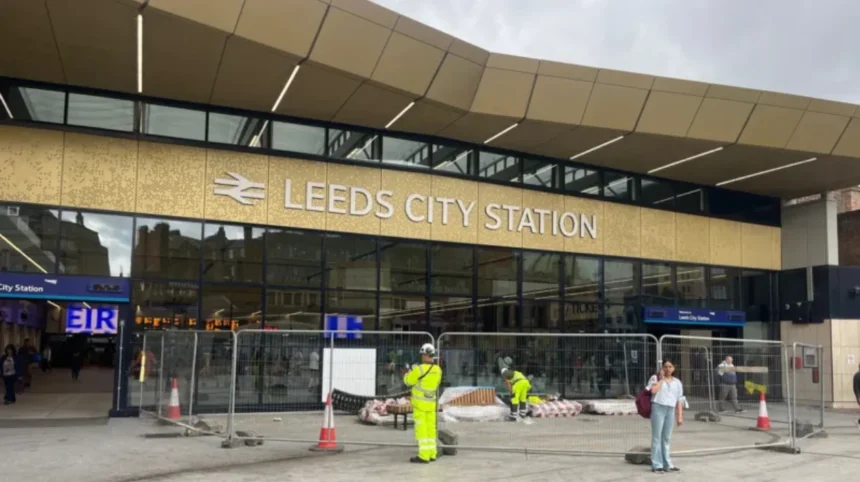
Leeds (The Leeds Times) October 29, 2026 – Leeds railway station is set for a comprehensive capacity overhaul following the official confirmation of an additional £200 million in UK Government investment. As announced by Chancellor John Healey during the Budget presentation on October 28, the newly allocated capital injection pushes total planned investment for the hub past the £300 million threshold. All primary engineering works are targeted for delivery by 2030, transforming Yorkshire’s busiest transport hub into a modernized gateway capable of handling substantial regional passenger growth.
- Key Points
- What Infrastructure Changes Are Planned for Leeds Station?
- What Did Government and Regional Leaders Say About the Funding?
- How Does the Upgrade Connect to the TransPennine Route Upgrade and Regional Transit?
- Background of the Leeds Station Expansion
- Prediction: How Will This Development Affect Passengers, Local Businesses, and the Regional Economy?
What Infrastructure Changes Are Planned for Leeds Station?
The central focus of the overhaul centres on easing persistent peak-time congestion and scaling infrastructure for future passenger demand. The project includes the construction of a brand-new central overbridge alongside three new station entrances to improve overall circulation.
To accommodate increased train lengths, Platform 14 is set to be lengthened. Furthermore, the main concourse will undergo significant expansion to allow for the installation of additional ticket barriers, directly addressing passenger bottlenecking during morning and evening rush hours.
These station enhancements build upon preliminary site modifications undertaken in recent years. In preparation for expanded operations, the TransPennine Route Upgrade (TRU) previously remodelled track layouts between platforms 4 and 6, reopened platform 0 in 2020, and extended platform 7 to accommodate larger rolling stock formations.
What Did Government and Regional Leaders Say About the Funding?
Regional and national officials have highlighted the economic and structural significance of the investment for West Yorkshire’s transport infrastructure.
West Yorkshire Mayor Tracey Brabin welcomed the funding allocation, emphasizing its transformative potential for regional connectivity:
“Leeds Station is the beating heart of our region’s transport network, connecting millions of people to jobs, education and opportunity every year – and it’s only going to get busier. This investment will benefit passengers and businesses, help to unlock the capacity we need for future growth and create a gateway to West Yorkshire that reflects our ambition. Together with our wider plans for West Yorkshire’s Weaver Network, we’re building a better-connected region which works for all.”
Echoing these comments, Transport Secretary Heidi Alexander pointed to the broader public benefits of updating the facility:
“Leeds station is the gateway to West Yorkshire, and this extra £200 million investment will turn it into a station this city can be proud of: modern, welcoming and built for the people who rely on it every single day.”
How Does the Upgrade Connect to the TransPennine Route Upgrade and Regional Transit?
The scheduled 2030 completion date for the station works directly aligns with the phased delivery of the wider TransPennine Route Upgrade (TRU) corridor. Once fully operational, the TRU program is anticipated to deliver a 30% increase in capacity across the regional rail line.
The Leeds upgrade operates alongside adjacent transport infrastructure commitments across West Yorkshire. Notably, this funding announcement follows last week’s confirmation that Bradford Interchange station is slated for a complete rebuild targeted for the 2030s. Funding for the Bradford project is expected to be drawn from the £45 billion Northern Powerhouse Rail budget, though an exact overall project cost has not yet been finalized.
While key design work for Bradford Interchange remains ongoing—including unresolved decisions on whether the new facility will function as a through-station or remain a terminus—local leaders, including Mayor Brabin, continue to advocate for a through-station configuration to optimize regional cross-connectivity.
Background of the Leeds Station Expansion
Leeds railway station stands as the principal hub of the West Yorkshire rail network and holds the distinction of being the busiest railway station in Northern England and Yorkshire. Over the past two decades, rapid commercial expansion and population growth across the Leeds City Region have placed increasing strain on the station’s existing layout, leading to severe congestion during peak commuter hours.
Prior to the latest £200 million budget allocation, initial phased investments sought to address localized operational bottlenecks. Key milestones included the opening of a new southern entrance in 2016, the commissioning of Platform 0 in 2020 to add essential track capacity, and early track remodelling works delivered under the early stages of the TransPennine Route Upgrade (TRU).
However, full integration with long-term regional transportation strategies—most notably the Weaver Network transit plan for West Yorkshire and Northern Powerhouse Rail—necessitated a larger-scale architectural and civil engineering overhaul. The multi-phase redevelopment program aims to modernise concourse space, expand platform lengths, and build redundant entry and exit capacity to ensure the hub can absorb forecasted passenger volume increases through 2030 and beyond.
Prediction: How Will This Development Affect Passengers, Local Businesses, and the Regional Economy?
The confirmation of over £300 million in cumulative investment for Leeds station is expected to produce tangible short-term and long-term impacts across several key stakeholder groups:
1. Rail Passengers and Daily Commuters
In the immediate term, passengers may experience localized disruption and altered footpaths around the station concourse and platforms as civil engineering works commence. However, upon completion by 2030, commuters will experience significantly reduced crowding, faster ticket gate throughput, and improved platform access via the new central overbridge and three additional entrances. The lengthening of Platform 14 will also enable train operators to run longer, higher-capacity service formations, directly relieving onboard overcrowding during peak hours.
2. Local Businesses and the Leeds City Economy
Improved transit throughput strengthens Leeds’ position as a major economic center in Northern England. Enhanced connectivity and elevated line capacity (including the 30% boost driven by TRU) will expand the active labor catchment area for Leeds-based employers. Reduced commute friction makes central Leeds more attractive for corporate investment, commercial real estate development, and retail businesses located in and around the station concourse.
3. Regional Connectivity Across West Yorkshire
The simultaneous planning of Leeds station upgrades and the proposed rebuild of Bradford Interchange establishes a foundation for higher-frequency intercity travel. Once both facilities complete their respective mid-2030s modernization milestones, inter-city workforce mobility between Leeds, Bradford, Manchester, and the wider Northern Powerhouse Rail corridor is expected to improve substantially, fostering greater economic integration across West Yorkshire.