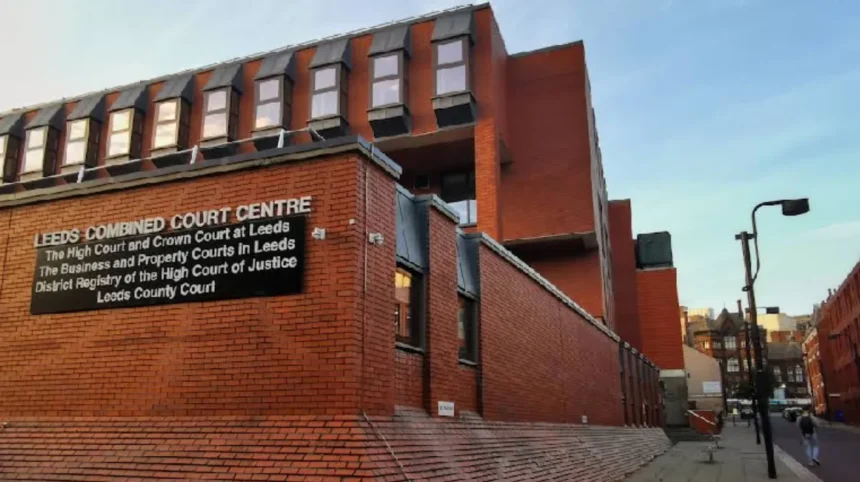
Key Points
- Uvesh Vahora, 36, has been convicted of raping a university student at his property in the Hyde Park area of Leeds following a trial at Leeds Crown Court.
- The attack took place on 9 April, after the defendant brought the victim to his residence under the premise of offering access to a lavatory.
- The victim testified that she was severely intoxicated and disoriented due to taking ketamine, leaving her with no memory of how she initially encountered Vahora.
- Audio recordings of police interviews played in court detailed the victim’s recollection of being led to a basement, having her mobile phone taken, and fearing for her life during the assault.
- Vahora denied the charges, claiming the sexual interaction was consensual and initiated by the woman after he helped her in the street.
- Following the guilty verdict, Judge Guy Kearl KC remanded Vahora in custody and warned him to expect a custodial sentence when he is sentenced on 11 November.
Leeds (The Leeds Times) November 3, 2026 – A 36-year-old man has been convicted of raping a student after luring her to his residence in the Hyde Park area of Leeds. Uvesh Vahora was found guilty by a jury at Leeds Crown Court following a trial in which he denied the single count of rape relating to an incident on 9 April. The court heard evidence detailing how the victim, who cannot be identified for legal reasons, was taken to Vahora’s address while in a highly vulnerable state caused by drug intoxication. Following the delivery of the guilty verdict, Judge Guy Kearl KC remanded Vahora in custody and informed him that he must prepare for a significant period of imprisonment when sentence is formally passed on 11 November.
What Evidence Was Presented During the Leeds Crown Court Trial?
During the court proceedings, jurors were presented with detailed testimony regarding the events of 9 April and the subsequent police investigation. The prosecution outlined how the victim had consumed ketamine on the night of the incident, which left her disoriented, vulnerable, and unable to recall the initial encounter with the defendant.
The jury listened to audio recordings of the victim’s initial police interview, which was conducted the day following the assault. In the recording, the student described being guided to a property she characterized as “messy.”
She stated that Vahora took her down into the basement area of the house, confiscated her mobile telephone, and carried out the attack. Describing her state of mind as she was taken into the lower level of the property, the woman told officers that she believed her life was in danger, recalling:
“I just remember I thought I’d be killed. I didn’t know what was going on.”
The recorded interview further documented the victim’s attempts to protect herself during the attack. She recalled pleading with the defendant, saying, “please, don’t hurt me,” while repeatedly requesting the return of her mobile device.
In her testimony to the court, the victim explained that she was in a “vegetative state” as a result of the substances she had taken and maintained throughout the trial that she did not, and could not, provide consent to any sexual activity.
How Did Defendant Uvesh Vahora Respond to the Allegations?
In his statements to West Yorkshire Police officers during questioning, Uvesh Vahora denied any wrongdoing and offered a contrasting account of the interaction. Vahora claimed that he came across the woman in the street while she was struggling to unlock the front door of a property. He told investigators that the woman informed him she urgently required the use of a lavatory.
According to the account provided by Vahora in his police interview, he offered to let her use the facilities at his nearby home in Hyde Park. He claimed that after entering the property and using the toilet, the woman initiated physical contact by kissing him, leading to what he insisted was fully consensual sexual activity.
The defendant further stated to officers that following the encounter, he walked the woman back to her accommodation, at which point the two exchanged telephone numbers.
However, after weighing the defense statements against the prosecution’s forensic and testimonial evidence, the jury rejected Vahora’s assertions of consent and returned a verdict of guilty.
Following the announcement of the verdict, the presiding magistrate, Judge Guy Kearl KC, addressed Vahora directly, remanding him in custody until his formal sentencing date on 11 November and instructing him to expect a custodial sentence.
Explore More Leeds Crime News
Four Sentenced Following Leeds Drug Investigation in Seacroft 2026
Michael Gyedu Charged With Rahiem Jackson Murder in Leeds 2026
Background of Sexual Offence Prosecutions and Student Safety in Hyde Park
The conviction of Uvesh Vahora highlights ongoing concerns regarding personal safety, consent, and substance-facilitated vulnerability in high-density student areas such as Hyde Park in Leeds. Hyde Park, situated adjacent to the University of Leeds and Leeds Beckett University campuses, is one of the largest student residential hubs in the United Kingdom. Due to its vibrant nightlife and transient population, local authorities and police forces regularly monitor the area for safety risks associated with nighttime vulnerability.
Under English law—specifically under the Sexual Offences Act 2003—consent is defined as an agreement by choice where an individual has the freedom and capacity to make that choice. The law explicitly addresses cases involving intoxication, establishing that if a person lacks the capacity to consent due to the influence of alcohol or drugs, any sexual activity undertaken constitutes a criminal offence.
The prosecution of Vahora hinged significantly on establishing that the victim lacked both the capacity to consent and the ability to exercise freedom of choice due to her intoxicated condition, alongside the physical restraint of removing her communication device.
Over recent years, West Yorkshire Police and university student unions across Leeds have introduced safety measures targeting nighttime vulnerability. Initiatives such as designated safe spaces, street marshal patrols, and campaigns emphasizing active bystander intervention have been implemented to protect individuals affected by alcohol or substances.
The trial serves as a legal reference point regarding the strict standard of legal consent required under United Kingdom criminal law when individuals are in incapacitated states.
Prediction: How This Development May Affect the Local Community and Legal Precedents
The conviction of Uvesh Vahora and the impending custodial sentence are expected to have several distinct impacts on key stakeholder groups within Leeds and the wider legal and academic communities:
- For the Local Student Population: The public resolution of this case is likely to heighten awareness surrounding personal safety and nighttime precautions within the Hyde Park and Headingley areas. Student unions and safety campaigners may use the case details to reinforce advice regarding group travel during social outings and the importance of monitoring vulnerable peers. The outcome may also encourage other victims of sexual violence—particularly those who experienced confusion or memory loss due to substance exposure—to report incidents to law enforcement, knowing that lack of memory does not preclude successful prosecution.
- For Local Law Enforcement and University Authorities: West Yorkshire Police and local university administration bodies are anticipated to review safety protocols around student residential corridors. This may lead to an increased presence of community officers, improved street lighting in high-density rental zones, and expanded funding for nighttime safety schemes aimed at safeguarding individuals displaying signs of disorientation or distress.
- For Legal Practitioners and the Criminal Justice System: The case underscores the prosecution strategies utilized when handling allegations involving substance-induced memory loss and vulnerability. Legal experts note that the successful conviction reinforces judicial precedents regarding capacity to consent under the Sexual Offences Act 2003. The trial outcome demonstrates to defense teams that claims of post-event voluntary contact or initial friendly encounters are scrutinized heavily against the physical and cognitive state of the victim at the time of the alleged offence.