Key Points
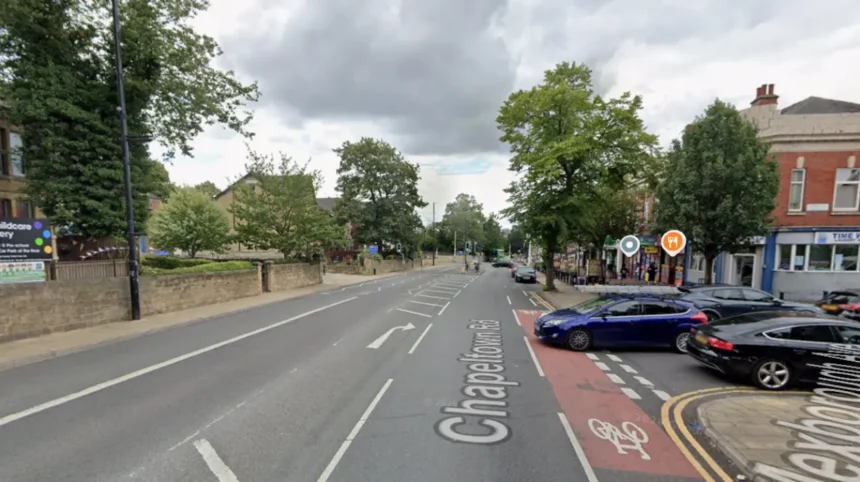
- Location of Failure: The multi-leg junction connecting Chapeltown Road, Harehills Avenue, and Reginald Terrace in Chapeltown, Leeds.
- Core Issue: All traffic signals at the intersection are entirely out of service, leaving the junction unmanaged during morning traffic hours.
- Official Advisory: Motorists traveling through the Chapeltown area on Friday, 6 November 2026, are urged to exercise extreme caution and approach the junction with reduced speed.
- Impacted Area: A major arterial route in North Leeds serving commuter traffic, local transport links, and nearby residential zones.
Leeds (The Leeds Times) November 6, 2026 – Motorists travelling through the Chapeltown area of Leeds face significant delays and hazardous driving conditions this morning following a complete outage of the traffic light signals at a major city intersection. All signal heads at the junction connecting Chapeltown Road, Harehills Avenue, and Reginald Terrace failed early on Friday, 6 November 2026, leaving vehicular traffic and pedestrians to navigate the multi-leg route without automated traffic management. Local travel notifications and road advisories have warned drivers to approach the area with heightened awareness and yield appropriately to prevent collisions during the morning rush.
Why Are Traffic Signals Down at the Chapeltown Road Junction?
As reported by the local news desk at Leeds Live, traffic monitoring sources confirmed on Friday morning that every signal head at the intersection connecting Chapeltown Road, Harehills Avenue, and Reginald Terrace had stopped functioning.
The disruption affects one of the main thoroughfares in North Leeds, which carries heavy volumes of commuter traffic heading toward Leeds city centre as well as vehicles transitioning east toward Harehills.
According to regional travel alerts, no dedicated traffic control officers or temporary four-way stop infrastructure were immediately present at the onset of the signal failure. As a consequence, right-hand turns out of Reginald Terrace and Harehills Avenue onto Chapeltown Road present heightened collision risks, requiring drivers to negotiate priority independently under standard unmarked junction rules.
Pedestrians seeking to cross Chapeltown Road near the Harehills Avenue junction are also affected, as signalised pedestrian crossings linked to the main traffic assembly are currently non-operational.
What Safety Measures Should Leeds Motorists Take at Uncontrolled Intersections?
Road safety guidance from traffic authorities stresses that when signal systems fail completely, an intersection must be treated as an unmarked, uncontrolled junction or a multi-way yield point. Drivers approaching the Chapeltown Road, Harehills Avenue, and Reginald Terrace junction are advised to observe the following precautions:
- Reduce Speed Early: Drivers should decelerate well before reaching the stop lines to assess oncoming and turning traffic from all directions.
- Establish Priority: Vehicles should give way to traffic already established within the intersection and yield to the right where priority is unclear.
- Watch for Pedestrians: Because integrated pedestrian signals are out of service, drivers must maintain vigilance for foot traffic attempting to cross Chapeltown Road.
- Use Clear Signaling: Motorists are urged to signal their direction of travel early to communicate intent to other drivers navigating the unlit junction.
Background of Traffic Infrastructure in North Leeds
Chapeltown Road serves as a key arterial link connecting northern Leeds suburbs such as Moortown and Roundhay directly to the city centre. The specific junction at Harehills Avenue and Reginald Terrace carries substantial daily traffic volumes, acting as a feeder route between the residential and commercial quarters of Chapeltown and Harehills.
Traffic management systems along primary Leeds corridors rely on interconnected electronic signal control to modulate traffic flow during peak morning and evening commute periods. Signal failures of this nature across the West Yorkshire road network are typically managed by Leeds City Council’s highway operations team, which deploys maintenance engineers to resolve electrical controller faults, supply disruptions, or software synchronization errors.
Past signal outages at major Leeds junctions have highlighted the vulnerability of key corridors to sudden congestion spikes when automated sequencing fails, particularly during rain or poor morning visibility.
Prediction: How Will This Signal Failure Affect Local Drivers and Residents?
The ongoing signal failure at the Chapeltown Road, Harehills Avenue, and Reginald Terrace junction is expected to impact several local stakeholder groups throughout the day until repairs are completed.
Impact on Morning Commuters and Commercial Drivers
Motorists utilizing Chapeltown Road into Leeds city centre can anticipate noticeable travel delays and localized queueing back toward Scott Hall Road and Spencer Place. The lack of structured signal phases will reduce the overall capacity of the junction, causing tailbacks during peak hours. Commercial deliveries and local bus services operating along Chapeltown Road routes may also experience schedule disruptions.
Impact on Local Residents and Pedestrians
For residents living adjacent to Reginald Terrace and Harehills Avenue, joining traffic on Chapeltown Road will remain challenging, particularly during high-density traffic windows. Pedestrians—including schoolchildren and local commuters relying on public transport stops along Chapeltown Road—face increased risk when crossing multi-lane roadways without designated signal phases, requiring greater caution from both foot traffic and drivers passing through the area.