Key Points
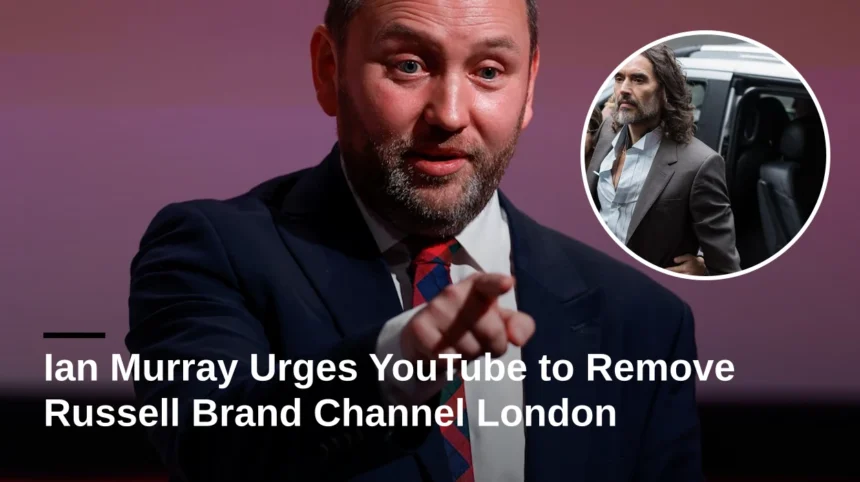
- UK Culture Minister Ian Murray urged YouTube to remove Russell Brand’s channel and “set an example”.
- The Ministry of Justice asked Google to remove a video featuring a message Brand sent from prison.
- Google said it was investigating the content and confirmed Brand’s channel had been suspended from monetisation since September 2023.
- Officials are investigating whether Brand breached prison rules by arranging for the message to be published.
- The debate could affect how Brand’s audience receives future content while raising wider questions about platform responsibility.
London (The Leeds Times) November 19, 2026 – UK Culture Minister Ian Murray has urged YouTube to remove Russell Brand’s channel after Brand’s wife, Laura Gallacher, published a video containing a message he sent from prison claiming he was not guilty of the offences for which he was jailed. Murray made the appeal while speaking at the British Screen Forum in London, saying YouTube should “set an example”. The Ministry of Justice has separately asked Google, YouTube’s owner, to remove the video because it is distressing to victims. Google said its teams were investigating the new content.
Why has Ian Murray asked YouTube to remove Russell Brand’s channel?
As reported by Deadline in its November 19 report, Murray said YouTube should remove the channel and argued that the platform would have taken similar action if the content had involved a mass murderer. He said the case highlighted longstanding concerns about how the industry responds to allegations and convictions involving prominent figures.
Deadline reported that Murray called for action beyond legislation, saying the wider screen and technology industries needed to address the issue. His comments followed a government meeting with industry leaders after Brand was sentenced and amid separate allegations involving David Walliams, which Walliams denies.
What has YouTube said about the prison message?
Google told the BBC and other media outlets that it was aware of the new content and that its teams were investigating. The company said Russell Brand’s channel had been suspended from the YouTube Partner Program in September 2023 and had not been able to monetise on the platform since then.
The BBC, Independent, ITV and Variety reported that the Ministry of Justice had formally requested removal. Government officials said prisoners are prohibited from making statements that distress victims and cannot avoid those rules by having another person publish their comments. The Brands’ account remained active in the latest reports, while the video’s removal depended on YouTube’s own terms.
What investigation involves Russell Brand?
Laura Gallacher read Brand’s message during a video posted on the couple’s YouTube channel. The message disputed his conviction, while Gallacher said Brand was safe and praying in prison. Authorities opened an investigation into whether arranging publication of the statement breached prison rules.
Reports said the government described the video as “appalling” or “clearly appalling”. The official request focused on the potential distress caused to victims, but Google’s public position was that its review was continuing and that the channel had already lost monetisation rights.
Background: how did the dispute develop?
Russell Brand was sentenced to 10 years and six months in prison after being convicted of rape and sexual assault, according to reports cited by Variety and the BBC. His wife subsequently published his prison message on their YouTube channel. The publication prompted criticism from the UK government and an investigation into possible prison-rule breaches. The dispute has renewed scrutiny of how online platforms handle content connected to convicted public figures and their audiences.
How could the decision affect Russell Brand’s audience?
If YouTube removes the channel, Brand’s audience would lose access to the account and any remaining videos hosted there. If the channel stays available, viewers may continue receiving content through messages published by others, although the account’s lack of monetisation would limit its direct commercial benefit.
The outcome could also influence expectations about platform responsibility when prisoners communicate through third parties. Murray’s appeal places additional public pressure on YouTube, while Google’s investigation means the final decision remains subject to the platform’s rules and any findings about the prison message.