Key Points
- Lucy Letby’s lawyer Mark McDonald has asked the Criminal Cases Review Commission to refer her convictions back to the Court of Appeal.
- Professor Peter Hindmarsh, a prosecution expert on insulin, was barred by University College London Hospitals from clinical practice in March 2023 over child-safety concerns.
- The jury and Letby’s defence were not told about the restriction or an April 2023 tribunal ruling requiring direct supervision.
- The Crown Prosecution Service said it was not informed of the March and April developments.
- Letby remains convicted of murdering seven babies and attempting to murder seven others, with 15 whole-life sentences.
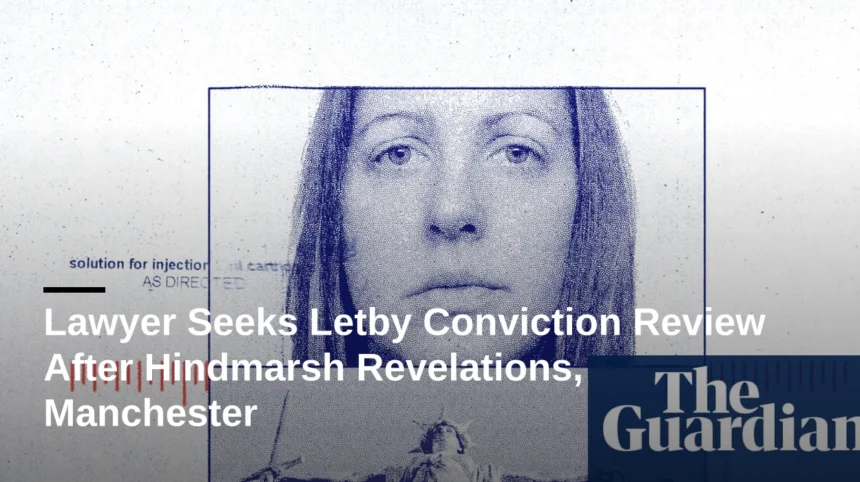
Manchester (The Leeds Times) November 19, 2026 – Lawyers for Lucy Letby have called for an urgent review of her convictions after revelations that Professor Peter Hindmarsh, a key prosecution witness, was barred from treating patients during her trial. Hindmarsh gave evidence supporting the prosecution’s claim that two babies had been poisoned with insulin. His clinical restriction was not disclosed to the jury or Letby’s defence, prompting questions about expert-witness disclosure and the safety of the convictions.
Why has Lucy Letby’s legal team requested a review?
As reported by The Guardian, Letby’s lawyer Mark McDonald said the failure to disclose information about Hindmarsh raised “fundamental questions” about the convictions. McDonald has applied to the Criminal Cases Review Commission, which can refer cases to the Court of Appeal where it identifies a possible miscarriage of justice.
Letby was convicted of murdering seven babies and attempting to murder seven others at the Countess of Chester Hospital. She was sentenced in August 2023 to 15 whole-life terms. The Court of Appeal has previously rejected her applications for permission to appeal, and Letby continues to deny the offences.
What happened to Professor Peter Hindmarsh?
University College London Hospitals barred Hindmarsh from clinical practice in March 2023. Medical director Dr Tim Hodgson told the General Medical Council that the trust did not consider it safe for Hindmarsh to treat children, even under close supervision.
The concerns included cases in which Hindmarsh had advised child patients to stop taking insulin. The General Medical Council sought to suspend his registration, but a medical practitioners tribunal ruled in April 2023 that suspension would be disproportionate and required direct supervision for any clinical work. University College London Hospitals had already stopped him from treating patients.
Hindmarsh’s contract with Great Ormond Street Hospital had ended in July 2022, and the General Medical Council had been investigating his fitness to practise. The investigation ended in November 2024 without a final decision after Hindmarsh voluntarily removed himself from the medical register.
What information was disclosed to the defence?
Cheshire Constabulary knew about the General Medical Council investigation in December 2022, while the Crown Prosecution Service told Letby’s defence about that investigation in February 2023. However, reporting by The Guardian and subsequent coverage by other outlets said the defence was not informed of Hindmarsh’s March clinical ban or the April tribunal decision.
The jury was also not told about those developments. Prosecutor Nick Johnson King’s Counsel described Hindmarsh as “the pre-eminent expert” in the narrow field of insulin. Hindmarsh declined to answer questions about the restrictions and disclosure. Cheshire Constabulary also declined to comment, while the Crown Prosecution Service said it had not received the later information.
Could the disclosure issue affect the convictions?
Criminal procedure rules require expert witnesses to disclose information that could undermine their opinion or affect their credibility and impartiality. Tim Green King’s Counsel said a failure to disclose material capable of undermining central expert evidence could form part of an appeal, depending on the facts and its possible effect on the jury.
Pete Weatherby King’s Counsel said expert evidence was pivotal to the prosecution because there was no direct or forensic evidence proving that Letby committed the alleged acts. He said serious concerns about an expert’s conduct or judgement could be relevant to the assessment of the expert’s reliability if those concerns were not placed before the jury.
The CCRC is assessing the new information alongside expert reports submitted by Letby’s legal team. The application does not overturn the convictions, establish a miscarriage of justice or guarantee a new appeal.
What is the background to the Letby case?
Lucy Letby was a neonatal nurse at the Countess of Chester Hospital. Her trial resulted in convictions for seven murders and seven attempted murders, followed by 15 whole-life sentences. Since the convictions, medical and scientific experts have submitted reports challenging the prosecution’s medical evidence, including the insulin-poisoning allegations. The case has previously raised wider questions about expert evidence and disclosure, including comparisons with the wrongful conviction of solicitor Sally Clark.
How could the review affect people following the case?
For Letby’s supporters and legal observers, the CCRC review may clarify whether the undisclosed information could have affected the jury’s assessment of Professor Peter Hindmarsh’s evidence. For families of the babies involved, the review may prolong scrutiny of convictions that have already been upheld by juries and the Court of Appeal. The Crown Prosecution Service’s position and any response from Cheshire Constabulary may become significant if the commission seeks further information. Until the CCRC refers the case and the Court of Appeal makes a decision, Lucy Letby’s convictions and sentences remain in force.