

Key Points
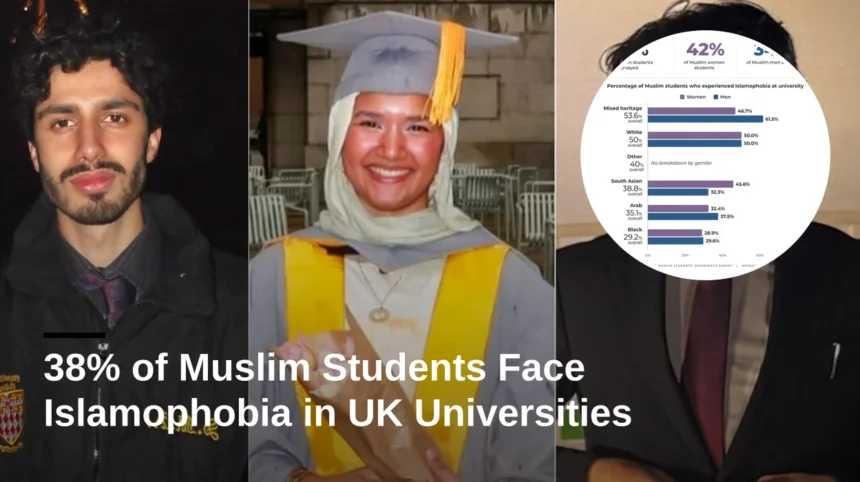
- A Federation of Student Islamic Societies survey found that 38.3 per cent of Muslim students experienced Islamophobia at university.
- The survey gathered responses from 715 students at 63 higher-education institutions.
- Women reported higher rates than men, while the figure was highest among Muslim women at Russell Group universities.
- Many affected students did not report incidents or felt their complaints were handled poorly.
- The Federation of Student Islamic Societies called for stronger reporting systems, staff training and protection for religious observance.
London (The Leeds Times) November 25, 2026 – More than one in three Muslim students in the United Kingdom said they had experienced Islamophobia at university, according to a Federation of Student Islamic Societies survey reported by Al Jazeera. The study collected responses from 715 students at 63 universities and found that Muslim women were more likely than Muslim men to report abuse. The findings have prompted calls for universities and students’ unions to improve reporting, accountability and support for Muslim students.
- Key Points
- What did the survey find about Islamophobia at UK universities?
- Why are many students reluctant to report incidents?
- What changes has the Federation of Student Islamic Societies requested?
- How have students described their experiences on campus?
- What is the background to the development?
- How could the findings affect the audience of ‘We need to be seen’?
What did the survey find about Islamophobia at UK universities?
Al Jazeera reported that 38 per cent of respondents had experienced Islamophobia at university. The survey found that 42 per cent of Muslim women reported such experiences, compared with 34 per cent of Muslim men. At Russell Group universities, 53 per cent of Muslim women said they had encountered Islamophobia.
According to Al Jazeera’s report, examples included verbal abuse, racial slurs, urine being thrown at students wearing hijabs and a student being locked out of a laboratory session after requesting attendance at Friday prayers. One reported incident was not classified by the relevant university as a hate crime.
Why are many students reluctant to report incidents?
Al Jazeera reported that 68 per cent of affected students did not feel able to report what happened, while nearly half of all respondents did not know how to make a complaint. Among students who did report incidents, 45 per cent said their concerns were not handled properly.
The survey also found that Islamophobia had a moderate to high effect on mental health for 45 per cent of respondents. Three in five students said they felt afraid or intimidated to express views on Palestine.
What changes has the Federation of Student Islamic Societies requested?
Rahma Hegy, vice-president for student affairs at the Federation of Student Islamic Societies, said students often remained silent because they did not expect anyone to be held accountable, according to Al Jazeera.
The organisation called for universities and students’ unions to adopt a definition of Islamophobia, train staff and student leaders, and create dedicated reporting categories. It also called for complaints against staff to be investigated outside the staff member’s department.
Other recommendations included protecting Friday prayers in timetables, avoiding examinations on Eid and reviewing the government’s Prevent programme.
How have students described their experiences on campus?
Aayan Hashmi, a second-year law student and Islamic Society president at the University of York, told Al Jazeera that his faculty and students’ union had been supportive, but he had still felt alienated. He said Muslim students could struggle to participate fully in social and sporting activities centred on pubs and bars.
Hashmi also described receiving an offensive gesture from a driver after Friday prayers and said students felt forced to choose between their faith and studies when prayer times conflicted with lectures. The survey found that 21 per cent considered their timetables completely incompatible with daily and Friday prayers.
Syed Ali, a final-year politics and international relations student at the University of Cambridge, said prejudice could be expressed through academic or sophisticated language. He said it was sometimes difficult to distinguish racism from Islamophobia.
What is the background to the development?
The Federation of Student Islamic Societies survey was published on November 25, 2026, and examined Muslim students’ experiences across 63 higher-education institutions. Wonkhe separately reported that 38.3 per cent of respondents had personally experienced Islamophobia. The findings follow longstanding concerns about how Muslim students experience campus life, religious observance and discussions of Palestine. Al Jazeera said it contacted the School of Oriental and African Studies, the University of York and the University of Cambridge for responses but had not received replies before publication.
How could the findings affect the audience of ‘We need to be seen’?
The findings could increase pressure on universities and students’ unions to make Islamophobia easier to report and to demonstrate that complaints lead to action. They may also strengthen calls for timetables that accommodate Friday prayers and Eid, alongside clearer safeguards for students discussing Palestine. For Muslim students, the report may provide evidence to support requests for better prayer facilities, staff training and independent investigations. The impact will depend on whether institutions adopt the Federation of Student Islamic Societies’ recommendations and publish clear outcomes from complaints.