
Key Points
- The Jewish Network for Palestine has applied to remove Hamas from the United Kingdom’s list of proscribed organisations.
- The group says the ban restricts political speech and has affected Jewish activists campaigning for Palestinian rights.
- Home Secretary Shabana Mahmoud has 90 days to consider the application.
- The application cites the prosecution of writer Tony Greenstein and the arrest of academic Haim Bresheeth-Zabner.
- Hamas’s full proscription was introduced by Home Secretary Priti Patel in November 2021.
Inverted pyramid: the most significant development appears first, followed by supporting details and background.
- Key Points
- Why is the Jewish Network for Palestine challenging the Hamas ban?
- What has the group said about arrests and prosecution?
- How did the United Kingdom proscribe Hamas?
- What happens next for the application?
- What is the background to the development?
- How could the challenge affect debate about proscribing free speech?
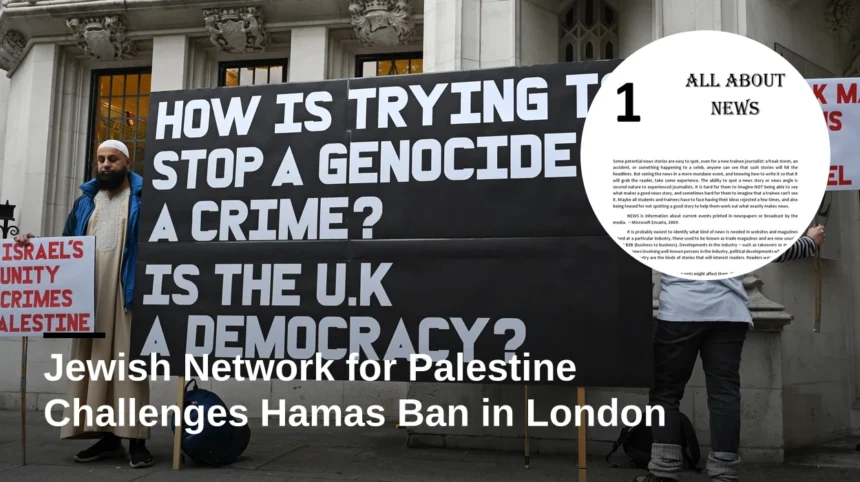
London (The Leeds Times) November 26, 2026 – The Jewish Network for Palestine has submitted a formal application under Section 4 of the Terrorism Act 2000 asking Home Secretary Shabana Mahmoud to remove Hamas from the United Kingdom’s list of proscribed organisations. The group says the ban has restricted discussion of Hamas, the October 7, 2023 attacks and Israel’s military operations in Gaza, while exposing members to possible criminal action. The application was filed five years after the United Kingdom extended its prohibition from Hamas’s armed wing to the entire organisation.
Why is the Jewish Network for Palestine challenging the Hamas ban?
As reported by Al Jazeera in its report, ‘Proscribing free speech’: Why a Jewish group is challenging UK’s Hamas ban, the Jewish Network for Palestine argues that continued proscription is a disproportionate interference with the rights of its approximately 600 members and supporters under Articles 9, 10 and 11 of the European Convention on Human Rights.
The organisation says the designation makes it difficult to discuss claims surrounding the October 7 attacks without being accused of supporting Hamas. It also argues that Hamas has no presence in the United Kingdom and has not been shown to pose a specific threat to the country.
“The less intrusive position that applied before November 2021 shows that proscription of the whole organisation is not necessary,” the application states.
What has the group said about arrests and prosecution?
The application refers to Tony Greenstein, a 72-year-old anti-Zionist writer and blogger who was prosecuted under Section 12 of the Terrorism Act 2000. The case concerned a blog post published after October 7, 2023, and a social-media request to share it. Greenstein was acquitted in August after nearly three years of legal proceedings.
Greenstein told Al Jazeera that the case had created a chilling effect on free speech. He also said five banks and building societies closed his accounts during the proceedings.
The Jewish Network for Palestine also cites Haim Bresheeth-Zabner, an 80-year-old Jewish-Israeli filmmaker and academic. Police detained Bresheeth-Zabner for 13 hours after a speech at a north London protest in November 2024. He was not charged, but told Al Jazeera that the incident made it harder to criticise Israel’s military actions and discuss Palestinian resistance.
How did the United Kingdom proscribe Hamas?
Hamas’s armed wing was proscribed in the United Kingdom in 2001. In November 2021, then-Home Secretary Priti Patel extended the ban to the organisation as a whole, describing Hamas as “fundamentally and rabidly anti-Semitic” and saying the measure was needed to protect the Jewish community.
The Jewish Network for Palestine, founded in 2018 by British members of Jewish Voice for Peace, says the policy has instead been used against Jewish people who express pro-Palestinian and anti-Zionist views. The organisation is part of a wider network of Jewish and Jewish-led groups supporting Palestinian rights.
What happens next for the application?
Home Secretary Shabana Mahmoud has 90 days from the day after receiving the application to consider it. If the application is rejected, the Jewish Network for Palestine can appeal the decision.
What is the background to the development?
The Terrorism Act 2000 allows the United Kingdom to proscribe organisations considered involved in terrorism. Proscription makes membership, support and certain forms of public expression criminal offences. Hamas’s armed wing was banned in 2001 before the prohibition was expanded to cover the political organisation in 2021. The Jewish Network for Palestine says the earlier, narrower approach was less restrictive and argues that the full ban is no longer justified.
How could the challenge affect debate about proscribing free speech?
If the application leads to a review or legal appeal, it could intensify scrutiny of how the Terrorism Act is applied to political speech about Hamas, Israel and Gaza. A successful challenge could narrow the circumstances in which discussion of a proscribed organisation is treated as support for that organisation. A refusal could leave the existing ban in place while testing whether the group can establish that it disproportionately interferes with freedom of expression and assembly. The outcome may also influence how Jewish and Palestinian advocacy groups assess the legal risks of public campaigning in the United Kingdom.
