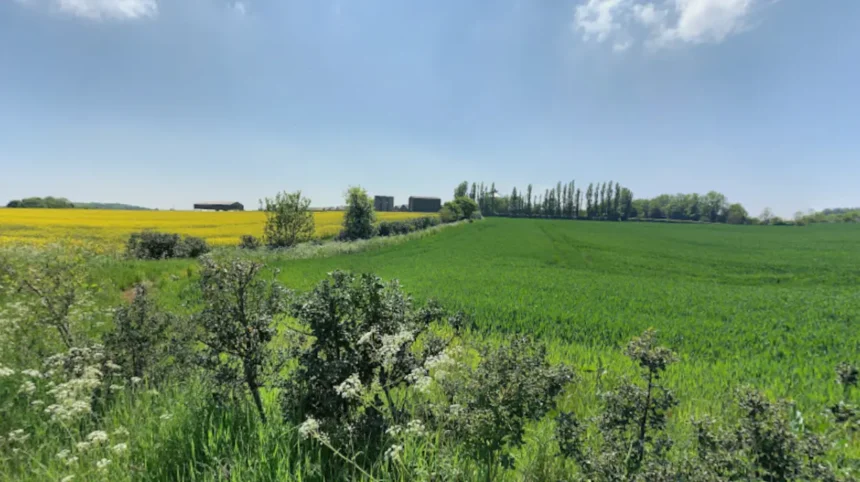
Garforth, a town located at the eastern boundary of the City of Leeds metropolitan borough, represents a significant destination for leisure travellers who seek attractions outside the traditional urban core (Defra, 2007). Established historically as a prominent hub for agricultural production and carboniferous extraction, the modern settlement has evolved into a well-connected suburban engine with hidden green infrastructure, independent cultural facilities, and diverse hospitality venues. For weekend travellers, digital nomads, and corporate visitors maximizing recreational downtime, the town provides a dense network of accessible sites that escape mainstream tourism itineraries while offering deep historical, ecological, and culinary engagement.
- What is the historical background of Garforth as a visitor destination?
- Which natural spaces offer quiet exploration in Garforth?
- Where can digital nomads find work-friendly local hubs in Garforth?
- What unique culinary experiences exist off the beaten track?
- How can visitors access Garforth and its hidden gems efficiently?
What is the historical background of Garforth as a visitor destination?
Garforth developed primarily as a industrial coal mining center from the seventeenth century onward before transitioning into a major residential and leisure hub within West Yorkshire. Its early infrastructure laid the foundation for modern transport links that facilitate weekend tourism.
The long-term development of the local landscape shows how human activity over millennia influences the natural world, transitioning from ancient agrarian spaces to intensive industrial infrastructure (Fluck & Dawson, 2021). Archaeological surveys across the West Yorkshire region confirm that the areas surrounding Garforth contain distinct postholes, pits, and fragmented Romano-British pottery deposits that indicate deep prehistoric and classical occupation (West Yorkshire Archaeological Advisory Service, 2011). The structural transition of the settlement accelerated during the seventeenth and eighteenth centuries, driven by the expansion of the local coal mining industry, which extracted resources from the extensive West Yorkshire coalfield (Defra, 2007).
As coal mining operations contracted during the twentieth century, the town underwent a rapid demographic and physical re-engineering process during the 1960s, shifting its primary economic function from industrial production to residential commuting for the city of Leeds (Defra, 2007). This unique structural evolution created a self-contained town bounded tightly by the M1 motorway, the A1(M) motorway, and preserved agricultural green belts (Defra, 2007).
As you explore the modern site, you are crossing land with a deep heritage. Read about the full [Historical Industrial Development of the West Yorkshire Coalfields] to understand its origins. This industrial heritage left behind repurposed rail corridors, naturalised quarry sites, and civic architectures that now form the basis of Garforth’s hidden attraction network.
Which natural spaces offer quiet exploration in Garforth?
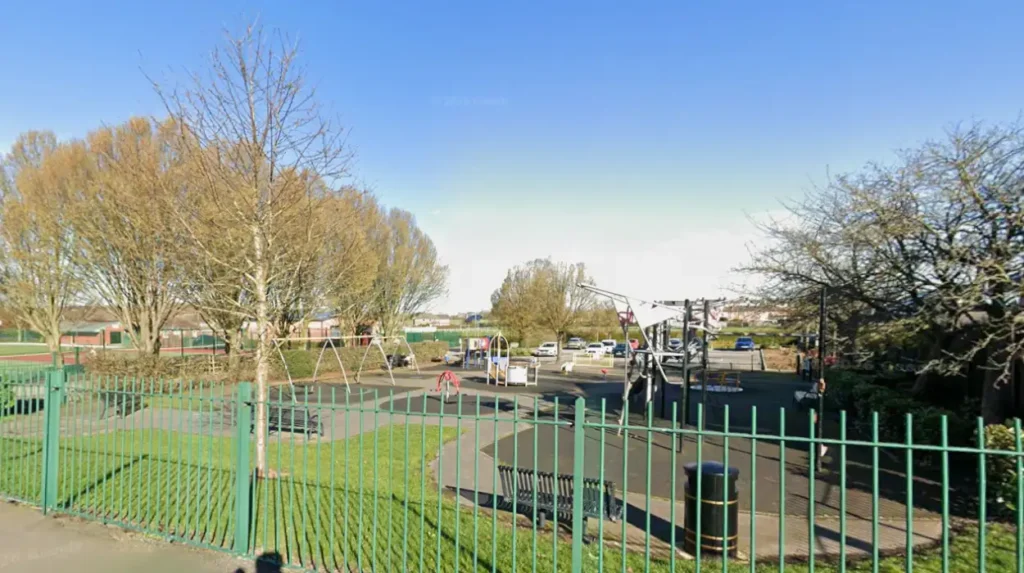
The Lines Way and Townville Nature Reserve offer peaceful trail networks for weekend walkers, birdwatchers, and cyclists. These spaces utilise repurposed rail corridors and reclaimed industrial lands to provide high-quality biodiversity habitats within East Leeds.
The Lines Way represents an elite example of linear ecological preservation, occupying a dynamic 4-mile (6.4-kilometre) stretch of the former Garforth-to-Castleford railway line. This redundant transport corridor was closed to passenger traffic in 1951 and fully decommissioned in the late twentieth century, after which it was transferred to the management of the Yorkshire Wildlife Trust. The underlying geological substrate consists of Magnesian limestone, which supports a distinct calcicole flora, including three specific orchid species:
- Bee orchid (Ophrys apifera)
- Common spotted orchid (Dactylorhiza fuchsii)
- Pyramidal orchid (Anacamptis pyramidalis)
The linear trail directly interconnects several key stepping-stone nature reserves, including the adjacent Townville Nature Reserve, Hollinhurst Wood, and Owls Wood. These contiguous blocks of deciduous woodland and wet grassland create crucial migratory corridors for wildlife.
Leisure travellers visiting these sites can observe various bird species, such as the willow tit (Poecile montanus), the yellowhammer (Emberiza citrinella), and the common buzzard (Buteo buteo). The flat, well-drained topography of the pathway makes it exceptionally suited for multi-modal recreation, accommodating long-distance walking, trail running, and cross-country cycling without the interference of vehicular traffic.
Where can digital nomads find work-friendly local hubs in Garforth?
Main Street features dedicated independent spaces like The Station House and local artisan establishments that offer reliable wireless networks and quiet environments. These hubs combine high-speed connectivity with premium local food and beverage services.
The changing patterns of remote employment have increased the demand for neighborhood spaces that improve personal wellbeing and reduce social isolation outside major city centers (Whitehead, 2021). In Garforth, the primary commercial axis of Main Street has responded to this shift by developing independent hospitality venues configured specifically for laptop-based professional operations. The Station House, positioned strategically near the architectural gateway of the town’s primary railway station, provides an optimal environment characterized by multiple power-outlet clusters, stable high-frequency Wi-Fi, and ergonomically sound seating arrangements.
In addition to dedicated workspaces, several independent roasteries and cafes along Main Street maintain strict quiet-zone policies during standard business hours. These venues serve single-origin espresso drinks, artisan sourdough pastries, and light lunch options sourced directly from farms within the Yorkshire region.
The low-frequency ambient acoustic profile of these spaces allows digital nomads and domestic business travellers to execute video conferences, manage complex databases, or conduct extensive research projects. The presence of these hubs helps integrate short-term visitors into the local community, promoting sustainable micro-economic transactions that directly benefit independent traders.
What unique culinary experiences exist off the beaten track?
Garforth boasts a highly competitive independent food scene featuring establishments like Pride & Condiment, Cielo, and various craft beer operators. These venues focus heavily on hyper-local ingredient sourcing and small-batch processing.
The culinary infrastructure of Garforth has evolved independently of the chain-dominated food markets found in central Leeds, focusing instead on specialised, high-quality production models. Pride & Condiment operates as a combined delicatessen and bistro, specialising in cold-smoking techniques, house-cured meats, and mature cheeses sourced from the surrounding agricultural valleys. The venue runs rotating weekend tasting menus that highlight seasonal West Yorkshire produce, presenting traditional recipes through contemporary culinary frameworks.
Cielo, operating as a socially driven specialty coffee roaster, imports ethically traded green beans from three major global coffee-producing zones:
- East Africa (including Ethiopian Yirgacheffe estates)
- Central America (including Guatemalan Antigua cooperatives)
- South America (including Brazilian Cerrado farms)
The beans are roasted on-site in small batches to ensure precise flavor profile control.
Complementing these establishments is a growing craft beer network, including independent bottle shops and taprooms like the Beerhouse. These venues feature micro-breweries from across Yorkshire, providing rotating cask and keg selections that showcase modern brewing techniques, such as double dry-hopping and wild fermentation. This concentrated culinary diversity provides weekend travellers with authentic gastronomic options within walking distance of the central transport corridor.

How can visitors access Garforth and its hidden gems efficiently?
Garforth features exceptional multimodal transport links, including two separate railway stations and immediate access to the national motorway network. The internal layout of the town allows easy pedestrian access to all major hidden attractions.
The transport architecture of Garforth is highly efficient, defined by a self-contained layout bounded by major arterial highways and bisected by functional rail lines (Defra, 2007). The town contains two operational railway installations: Garforth Station, located at the northern terminus of Main Street, and East Garforth Station, which services the eastern residential sectors. Both stations sit directly on the trans-Pennine rail corridor, providing reliable, high-frequency rail services that connect visitors to Leeds City Station in under 12 minutes and York Minster within 25 minutes.
For motorists, the geographical positioning of the settlement permits rapid access via Junction 46 of the M1 motorway and the nearby intersections of the A1(M) highway (Defra, 2007). This dual-motorway connectivity allows regional travellers from London, Manchester, or Newcastle to reach the town efficiently.
Upon arrival, the spatial distribution of the hidden attractions encourages pedestrian navigation. The walking distance from the primary commercial zone on Main Street to the western trailheads of The Lines Way is less than 1.2 kilometers, allowing weekend visitors to transition smoothly from urban workspaces to natural conservation areas without using private vehicles.