

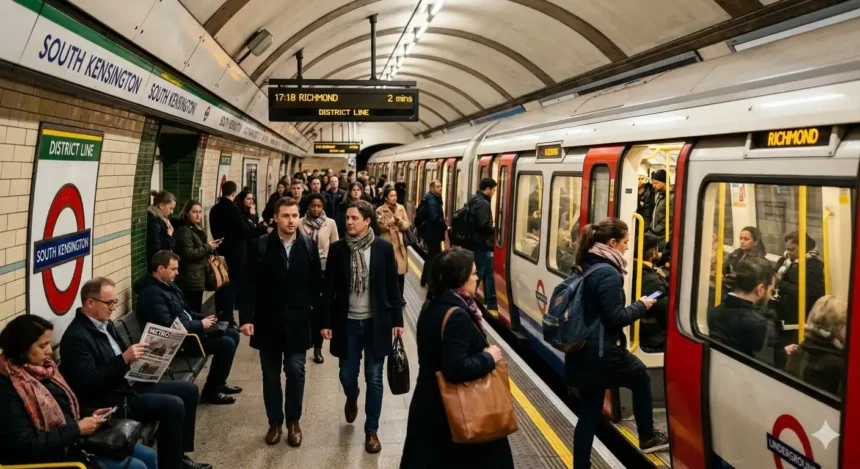
The District line is one of London’s oldest and most important Underground routes, and it remains a major part of the city’s daily transport system. For a Leeds audience, it also serves as a strong example of how a long-running urban rail line supports commuting, city connectivity, and wider economic movement across a metropolitan region.
- What is the District line?
- When did the District line begin?
- Why is the District line important?
- How does the District line route work?
- What areas does the District line serve?
- What is the history of the District line?
- How did the District line expand?
- What makes the District line different from other Tube lines?
- How does the District line operate today?
- Why does reliability matter on the District line?
- What are the main stations on the District line?
- How does the District line affect London travel today?
- What is the future of the District line?
- Why does the District line still matter?
What is the District line?
The District line is a London Underground line that connects central London with west, east, and southwest London through a large, branched rail network. It carries passengers between major business areas, tourist districts, and suburban centres on a route that remains essential to daily travel.
The line is part of Transport for London’s Underground system and is shown in green on the Tube map. It serves 60 stations and runs across a long corridor that includes both central London and outer districts such as Ealing Broadway, Richmond, Wimbledon, Barking, and Upminster. That mix of inner-city and suburban stops makes it one of the most geographically diverse lines in the network.
The District line matters because it does more than move passengers through the centre. It links residential areas with employment zones, rail interchanges, and leisure destinations. In transport terms, it functions as a multi-purpose corridor rather than a simple point-to-point route.
When did the District line begin?
The District line began in 1868, making it one of the oldest parts of the London Underground. It opened during the Victorian period, when London was expanding rapidly and needed new railway links to connect growing districts and major rail termini.
The first section opened on 24 December 1868 between South Kensington and Westminster. This early route formed part of a wider effort to build an underground railway network in central London. The line later expanded outward in stages, reaching more communities and creating the foundation of the modern District line.
Its early history reflects the growth of London itself. The railway began as a steam-operated service and gradually expanded into a much larger urban transport system. By the late 19th and early 20th centuries, it had become a key part of everyday movement for people living and working across the capital.
Why is the District line important?
The District line is important because it serves more stations than any other Underground line and connects a wide range of London districts through a single network. Its scale, reach, and interchange value make it one of the most useful lines on the Tube map.
The line serves 60 stations, which gives it the largest station count on the Underground. It crosses 13 London boroughs and spans six fare zones, making it a major cross-city route rather than a narrow local service. That broad coverage gives it a strong role in commuting, shopping, tourism, and business travel.
It is also important because many of its stations connect with other rail services. This includes links with National Rail and other Underground lines, which makes it valuable for journey changes across London. For many travellers, the District line is a practical way to move between outer and central London without using the most crowded interchange points.
How does the District line route work?
The District line works through a main route with several branches, allowing trains to serve multiple destinations from one core line. This branching structure increases flexibility for passengers while making the service pattern more complex than most Tube lines.
The line runs through a central section and then splits toward several destinations. Its main branches include services to Upminster in the east, Ealing Broadway in the west, Richmond in the southwest, and Wimbledon in the southwest. Some trains also serve Edgware Road and Kensington Olympia.
This structure reflects the line’s history of expansion. Instead of being built as one straight corridor, the District line grew in pieces as London developed. That has left it with a route pattern that supports a wide range of travel needs, but also requires passengers to check destination boards carefully before boarding.
The branch pattern also affects frequency and service planning. Different parts of the route do not always receive the same number of trains, because demand varies by area and time of day. Central sections usually have more frequent service, while branch sections often run less often.
What areas does the District line serve?
The District line serves central London, west London, southwest London, and east London, covering a broad mix of business, residential, and transport hubs. Its route reaches some of the capital’s most important interchange and destination stations.
In central London, the line serves stations such as Westminster, Embankment, Temple, Blackfriars, Monument, and Tower Hill. These stations give access to government buildings, office districts, and tourist locations. They also connect with other major Underground and rail services.
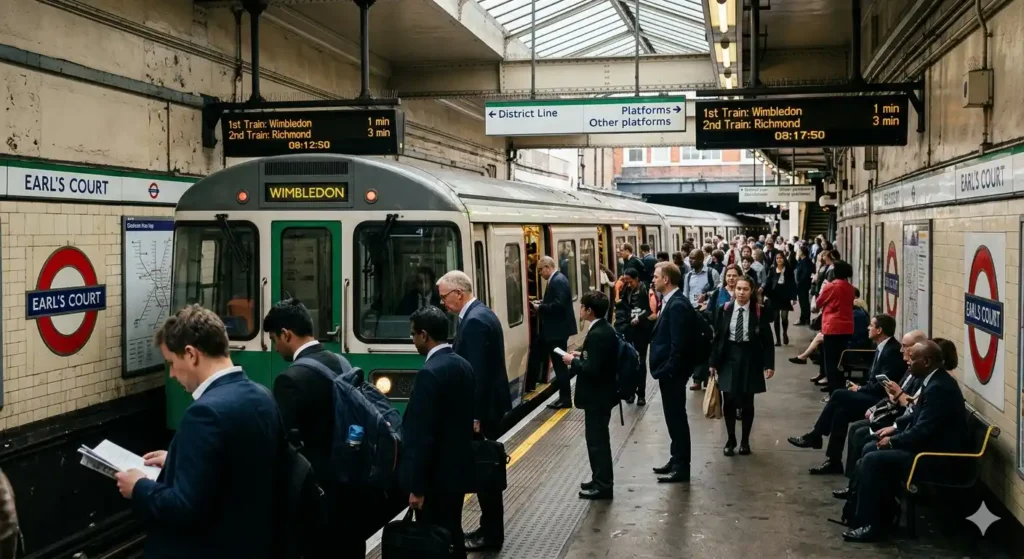
In west and southwest London, the line serves places such as Earl’s Court, West Kensington, Hammersmith, Richmond, Wimbledon, and Ealing Broadway. These areas combine suburban housing, town centres, and major commuter connections. In the east, the line reaches Barking and Upminster, linking inner and outer east London to the rest of the network.
This wide spread of stations makes the line useful for many different kinds of journeys. It serves commuters going to work, students travelling across London, visitors heading to central attractions, and residents making short local trips.
What is the history of the District line?
The District line grew from a Victorian-era railway into a modern underground service through electrification, route changes, and transport integration. Its history shows how London’s railway system adapted to population growth and changing travel patterns.
The line began as the Metropolitan District Railway, a separate company created to support underground railway development in London. At first, it used steam locomotives, which were common in the early decades of the Underground. Over time, the railway expanded into more districts and became increasingly important for suburban travel.
Electrification was one of the most significant changes in its history. Steam services were replaced by electric traction in the early 1900s, which improved reliability and made the line better suited to urban use. This was part of a wider transformation across the Underground, as London moved toward cleaner and more efficient train operation.
Another major moment came in 1933, when London’s transport system was reorganised under a single public authority. At that point, the Metropolitan District Railway became the District line. This change marked the shift from private railway ownership to integrated public transport planning.
The line has continued to evolve since then. Some sections were reassigned to other lines, and the route has been adjusted to match changing travel demand. Even so, its historical core remains visible in the way it still connects many of the same districts it served more than a century ago.
How did the District line expand?
The District line expanded in stages as London grew westward, eastward, and southward. Each extension reflected new housing growth, commuter demand, and the need to connect more suburban communities with central London.
Early expansions took the line beyond central London and into growing residential districts. It reached areas such as Hammersmith, Richmond, and Ealing Broadway, then later continued into west and east London suburbs. These extensions were critical in turning the line into a commuter route as well as a central urban railway.
The line also formed part of the Circle line arrangement in central London. This made it even more important as a linking route, because it supported movement around the inner core of the city. Over time, the branch structure became more complex, but it also gave the line more practical value.
The pattern of expansion shows how transport and urban development influence one another. As London built new homes, commercial areas, and public infrastructure, the District line followed demand. That same principle applies today in cities such as Leeds, where transport connectivity often shapes how neighbourhoods grow and how people travel to work.
What makes the District line different from other Tube lines?
The District line stands out because it has more stations than any other Tube line, covers a very large area, and includes several branches. It is also the only Tube line that crosses the River Thames by bridge rather than tunnel.
Its long route gives it a very different character from deep-level lines that run mainly through the city centre. The District line combines surface, sub-surface, and bridge sections, which gives it a more varied operating profile. This is one reason the line has a strong historical identity inside the Underground network.
Its branching structure is another major difference. Many Tube lines follow a single route with limited variation, but the District line serves several different end points. That makes it more flexible for passengers but more complicated for service control and timetable management.
The line also has a strong intermodal role. It links with National Rail, the Elizabeth line, the London Overground, and other Underground services at a large number of stations. That makes it a key part of the wider London transport ecosystem rather than just a stand-alone Tube route.
How does the District line operate today?
The District line operates as a frequent urban rail service with different train patterns on different branches. It is designed to carry high passenger volumes while connecting a large number of stations and interchange points.
Daily service patterns include trains running between Upminster, Ealing Broadway, Richmond, Wimbledon, and Edgware Road. Kensington Olympia is also served on selected days and during special events. This gives the line broad coverage while still allowing TfL to adjust operations according to demand.
The line’s service pattern depends heavily on location. Central parts of the route generally have higher frequencies because demand is stronger there. Branch sections can be less frequent, especially during quieter periods. This means passengers often need to check train destinations carefully before travelling.
The District line also continues to play a major role in long-distance travel within London. A passenger can use it to move across large parts of the city without changing onto a different mode of transport. That makes it especially valuable for people who travel regularly across borough boundaries.
Why does reliability matter on the District line?
Reliability matters on the District line because the route is long, branched, and heavily used. Any disruption can affect multiple parts of the network, especially at interchange stations and central London sections.
Because the line serves so many destinations, delays can spread across the route quickly. A problem in one section can affect trains on several branches, especially where services meet or cross the central core. This is a common challenge for complex metro systems with multiple junctions.
Reliability also matters because the line supports everyday commuting. Many passengers use it for regular work trips, school travel, and cross-city journeys. If trains run late or skip branches, the impact reaches a wide number of people across different parts of London.
Transport authorities have focused on modernisation and signalling improvements across the District line and its sister sub-surface routes. These upgrades are intended to improve punctuality, reduce disruption, and support more efficient operations. The long-term goal is a more dependable service for a growing city.
What are the main stations on the District line?
The District line includes major stations in central London, west London, southwest London, and east London. Its most important stops include key interchanges, historic destinations, and suburban termini.
In central London, important stations include Westminster, Embankment, Temple, Blackfriars, Monument, Tower Hill, and Victoria. These stations connect passengers to government, finance, tourism, and rail interchange functions. They are among the busiest and most strategically important points on the line.
In west and southwest London, major stations include Earl’s Court, Hammersmith, Richmond, Wimbledon, and Ealing Broadway. These stations link suburban communities with central London and also connect to other rail networks. They are vital for commuter travel and local accessibility.
In east London, major stations include Barking and Upminster. These termini support passengers from outer London and connect the line to the wider east London network. Together, these stations show how the District line functions as a citywide service rather than a central-only route.
How does the District line affect London travel today?
The District line affects London travel by linking major districts, supporting commuter movement, and reducing pressure on other parts of the network. It remains a core route for both everyday journeys and long cross-city trips.
Its importance lies in connectivity. The line connects suburban districts with central London in a direct way that saves time and reduces the need for multiple changes. That makes it especially useful for passengers travelling from outer boroughs into the centre.
It also helps distribute passenger flows across the Underground. Because it serves so many stations and branches, it gives travellers more route options. That can reduce reliance on a small number of heavily crowded central lines. In a large city, that kind of network balance matters for daily efficiency.
The line also supports the economic life of London. It carries workers into central business areas, visitors to major attractions, and residents between local centres. In that sense, the District line is not only a transport route but also part of the city’s wider economic infrastructure.
What is the future of the District line?
The future of the District line depends on modernisation, accessibility, and service reliability. Its long-term role remains strong because it connects so many parts of London and continues to support high levels of demand.
Upgrades to signalling, trains, and station infrastructure remain important for the line’s future. These improvements are intended to make services more reliable and better able to meet passenger demand. They also support more efficient train movement on a complicated route with many branches.
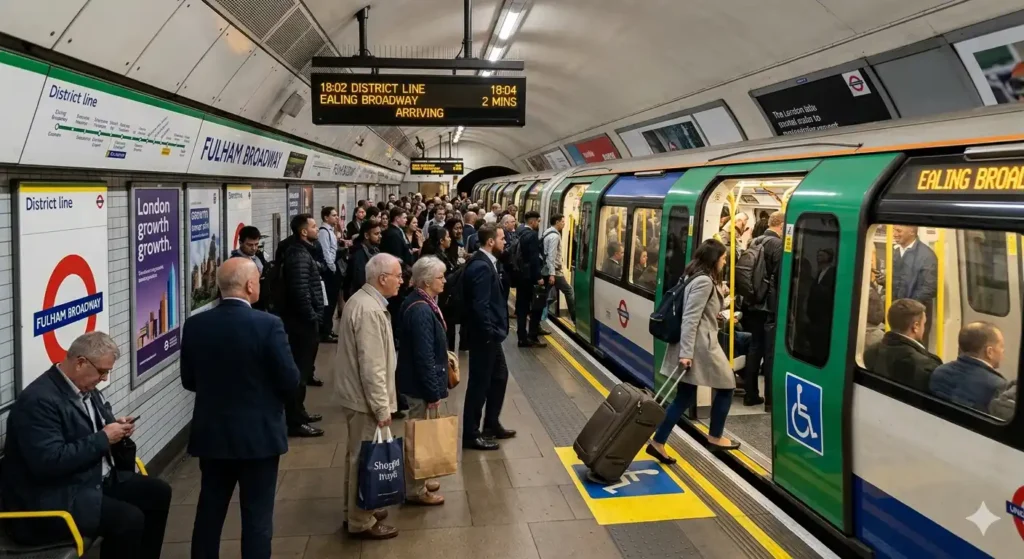
Accessibility is another major issue. As London continues to improve step-free travel, the District line benefits from station upgrades that help more passengers use the network independently. Better access also improves the line’s usefulness for older travellers, disabled passengers, parents with children, and people with luggage.
The line’s future is also tied to London’s growth. As housing, employment, and transport needs change, the District line will continue to serve as a major connector between districts. Its long history suggests that it will remain relevant because it adapts to the city’s changing geography.
Why does the District line still matter?
The District line still matters because it combines history, reach, and practical value in one route. It remains one of London’s most useful transport lines and a clear example of how urban rail supports daily life across a large city.
It links old and new London in a single network. The line passes historic central areas, busy commuter suburbs, and key interchange stations. That mix gives it a role that is both symbolic and functional.
It also remains one of the most structurally important lines on the Underground. Its 60 stations, multiple branches, and broad borough coverage make it unique. For passengers, that means more travel options. For the city, it means stronger internal connectivity.
For readers in Leeds, the District line offers a useful model of how a transport system can shape city movement over many decades. It shows how rail lines become part of a city’s identity, how they support economic activity, and why service reliability matters in any large urban region.
What is the history of the District line?
The District line opened in 1868 as part of London’s early underground railway network. It was originally run by the Metropolitan District Railway and used steam trains before being electrified in the early 1900s. Over time, it expanded across West and Central London and became part of the modern London Underground network.