
Garforth in east Leeds has a small but distinctive creative scene shaped by community art, public murals, heritage buildings, photography, music and local cultural projects. The area is not a conventional street-art destination with a concentrated mural district, but its creative activity is closely connected to community spaces and local identity.
- What is Garforth’s local street-art scene like?
- Where can you see murals and public art in Garforth?
- How does Garforth’s mining history influence its creative identity?
- What creative activities can visitors experience at Garforth Miners’ Welfare Hall?
- Where can visitors find art workshops and community creativity in Garforth?
- How can photographers and digital creatives use Garforth’s creative spaces?
- How can you combine Garforth street art with local heritage and walking?
- Why is community participation important to Garforth’s creative spaces?
- What should visitors know before exploring Garforth’s creative scene?
- What is the future of public art and creative activity in Garforth?
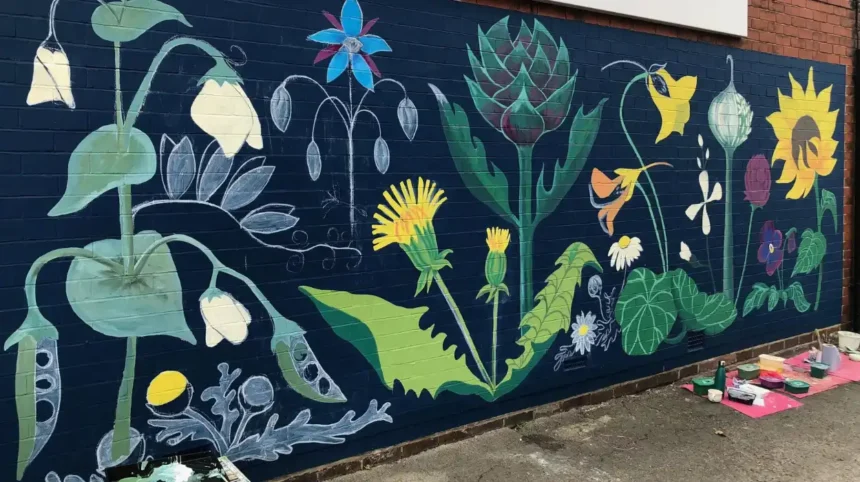
The strongest example is the community mural developed on Main Street in 2020. Leeds City Council reported that Incredible Edible Garforth worked with local artists Penny Rowe and Angela Hennessy to create a mural inspired by plants and flowers found around Garforth. The project was supported through Leeds Inspired and used sustainable materials supplied by Leeds social enterprise Seagulls Paint.
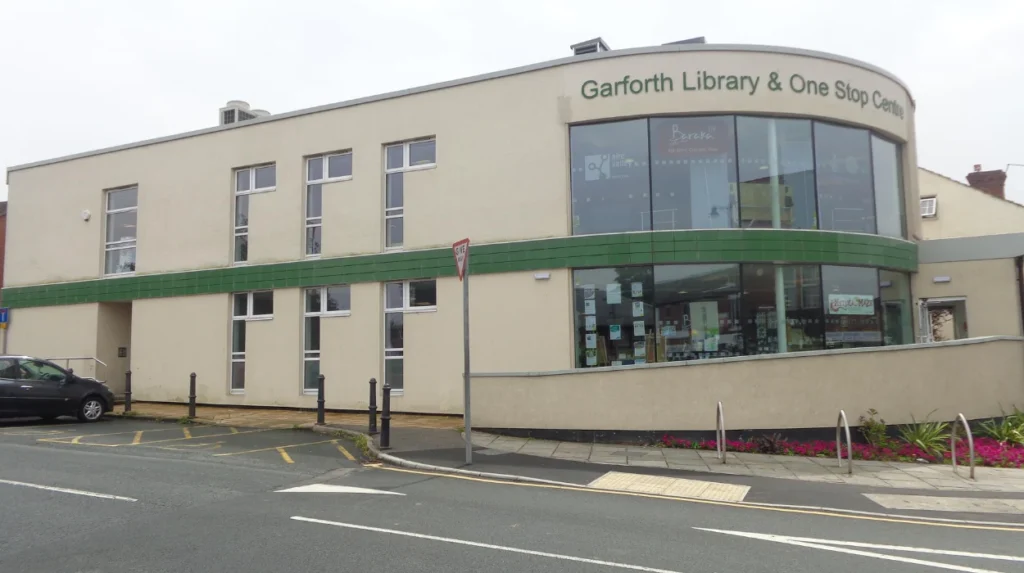
Garforth also has established indoor creative venues. The Miners’ Welfare Hall on Main Street provides space for art, photography, quilting, music, dance and other community activities. Garforth Library and One Stop Centre adds another cultural venue, with free Wi-Fi, computers, room facilities and regular learning and creative events.
For visitors, this makes Garforth better suited to community-focused creative exploration than a conventional graffiti tour. Art here is closely connected to the town’s history, public realm and community organisations.
What is Garforth’s local street-art scene like?
Garforth’s street-art scene is community-led rather than concentrated in a formal mural quarter, with its clearest documented example being the Main Street mural created through Incredible Edible Garforth, local artists and Leeds Inspired support in 2020.
The distinction between street art and graffiti is important when exploring Garforth.
Street art generally refers to intentionally created visual work displayed in public spaces. Murals, painted walls, installations and community artworks fall within this broad category. Graffiti generally refers to lettering, tagging or other unauthorised markings. The two forms can appear in the same urban environment but have different purposes and legal contexts.
Garforth’s documented public-art activity has focused on commissioned or community-supported work rather than an extensive collection of unauthorised graffiti.
The Main Street mural is particularly relevant because it was designed around local flora and community identity. The project brought together Incredible Edible Garforth, artists Penny Rowe and Angela Hennessy, and Leeds Inspired. The mural was intended to contribute to the appearance of the local high street and encourage further community art activity.
This approach reflects a wider characteristic of Garforth’s creative scene. Artistic activity is frequently connected with community organisations rather than being separated into dedicated galleries.
Visitors should therefore explore the high street, community venues and public spaces with an understanding that creative work forms part of the wider social environment.
Leeds City Council’s Garforth Neighbourhood Plan also recognises the role of public art in the town’s future public realm. Its policy for Town End supports opportunities for community involvement and public art as part of creating a distinctive gateway into Garforth.
That policy provides an important indication of how public art fits into the area’s longer-term planning ambitions.
Where can you see murals and public art in Garforth?
The best-documented location for Garforth public mural art is Main Street, where a community mural project brought local plants and flowers into the public realm; Town End is also identified in local planning policy as an area where community public art can strengthen local distinctiveness.
Main Street is the natural starting point for anyone interested in Garforth’s public creative work.
The 2020 mural project was developed on the wall of a local business. Its subject was local plant life, linking the artwork directly with the area’s natural surroundings. The project used sustainable materials from Seagulls Paint and was supported by Leeds Inspired.
The mural is significant because it demonstrates how a local wall can become a community cultural asset without requiring a large-scale arts institution.
Visitors interested in public art should also pay attention to the relationship between artwork and the surrounding buildings. Garforth’s centre contains historic structures and traditional shopfronts, while its modern community facilities provide a different architectural setting.
The Garforth Neighbourhood Plan places emphasis on retaining and enhancing traditional shopfronts, respecting Victorian buildings and improving the appearance of the town centre and Town End. It specifically identifies public art as an opportunity at Town End.
This makes public art part of a wider public-realm strategy rather than an isolated decorative feature.
Visitors should check current local listings before travelling specifically to see a particular mural. Public artworks can be altered, covered, repaired or removed as buildings and businesses change.
For photography, daylight is generally the most useful period because Main Street contains a mixture of buildings, shopfronts, signs and pedestrian areas. Photographers should remain on public routes and avoid obstructing businesses or residents.
How does Garforth’s mining history influence its creative identity?
Garforth’s creative identity is strongly connected to its transformation from an agricultural settlement into a mining community, with heritage buildings, the Miners’ Welfare Hall and the Peace Flame providing visible links between historic industry, community life and contemporary cultural activity.
Garforth’s cultural landscape cannot be separated from its industrial history.
Leeds City Council’s archaeological settlement assessment identifies Garforth as a settlement that developed from several separate communities. West Garforth, Moor Garforth and Church Garforth had different historical roles, while Moor Garforth became the principal settlement during the Industrial Period as a small mining town.
Coal extraction has a long history in the area. Local historical research records coal extraction in Garforth as early as 1262, while the nineteenth and early twentieth centuries brought substantial industrial expansion.
The transformation from farming to mining changed the physical and social structure of Garforth.
That history remains relevant to contemporary creative work because community venues developed alongside the industrial population. The Miners’ Welfare Hall is an especially important example.
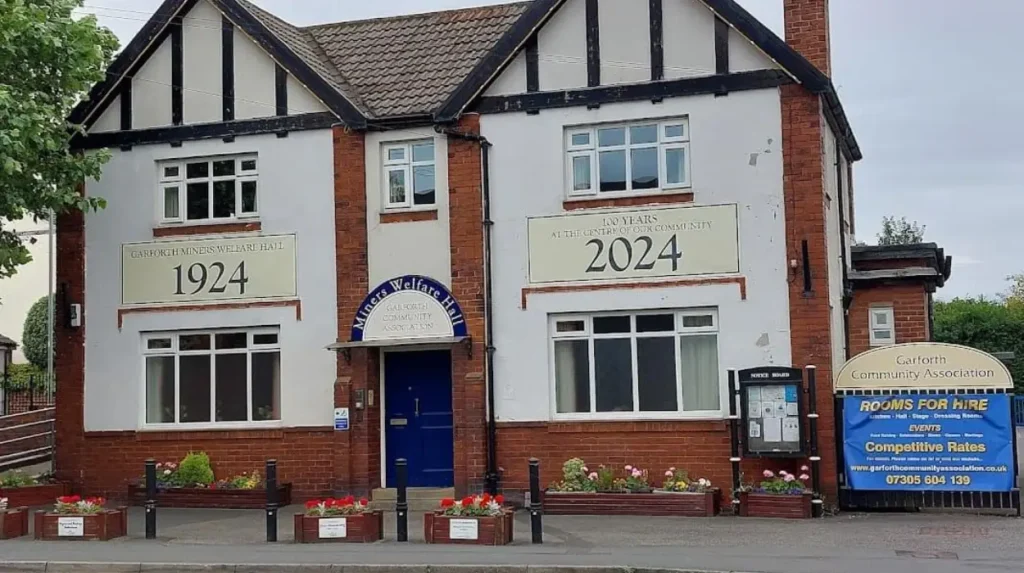
The hall was built in 1924 on land donated by Colonel F.R.T.T. Gascoigne. It was established through the Garforth Miners Welfare Fund under the Central Miners Welfare Committee created under the Mining Industry Act 1920.
The building therefore represents more than a venue for modern activities. It is a surviving community institution associated with the mining era.
The relationship between heritage and modern creativity is also visible at Diamond Jubilee Garden. Garforth’s Peace Flame was inaugurated there in 2017 and incorporated into a replica miner’s lamp, deliberately linking the modern peace initiative with the area’s mining past.
As you explore the modern creative environment, you are therefore moving through a place shaped by industrial heritage. Read about the full [Insert Anchor Text for History Article Here] to understand its origins.
This connection helps explain why community art in Garforth often has a strong local character. Public art does not exist independently from the town’s history. It operates within a landscape shaped by mining, agriculture, transport, community institutions and residential development.
What creative activities can visitors experience at Garforth Miners’ Welfare Hall?
Garforth Miners’ Welfare Hall is one of the area’s most important creative community venues, hosting art, photography, quilting, music, dance, performances and other activities that give visitors direct access to local cultural life beyond conventional galleries.
The Miners’ Welfare Hall stands at 56 Main Street, Garforth, Leeds, LS25 1AA. It is operated by Garforth Community Association.
Its programme demonstrates the breadth of Garforth’s creative infrastructure.
The Garforth Community Association lists the GCA Art Group, Garforth Camera Club, Patchwork People, a ukulele group and Garforth Musical Society among organisations using the building. Dance and other community activities also take place there.
The hall has several rooms that support different forms of activity. The main Sisters Hall has a stated maximum capacity of 150 people and includes a stage, projector and screen. The upstairs Trench room has a capacity of 50, while the downstairs Isabella room accommodates up to 25 people.
This physical arrangement makes the venue suitable for both large community events and smaller creative groups.
The building also has Wi-Fi, wheelchair and pushchair access through a ramp, toilets and other practical facilities.
For visitors, the hall is most useful when an event or activity is scheduled. It is not a permanent public art gallery with fixed exhibition hours.
That distinction matters when planning a creative visit to Garforth. A visitor looking for a conventional gallery should not assume the hall operates as one. Its role is primarily community-based.
The hall’s cultural significance comes from repeated local use. Art groups, photography groups, musical organisations and craft groups create an ongoing programme rather than a single annual attraction.
This makes it particularly relevant to residents, returning visitors and travellers who want to experience local community culture rather than only established tourist attractions.
Where can visitors find art workshops and community creativity in Garforth?
Garforth offers accessible community art through venues including the Miners’ Welfare Hall and Garforth Community Hub and Library, with programmes covering painting, drawing, printing, sculpture, creative workshops, heritage activities and family-oriented arts sessions.
Penny’s Community Arts provides one of the clearest examples of organised participatory art in Garforth.
Its community art clubs bring individuals and families together to experiment with different materials and techniques. Activities include painting, printing, drawing and sculpture. The organisation describes the sessions as open to the wider community.
The Garforth Community Art Club operates at the Miners’ Welfare Hall.
The scale of the programme demonstrates that creative activity in Garforth is not restricted to occasional exhibitions. Penny’s Community Arts reported that its 2025 programme delivered 10 monthly community art club sessions at the hall between January and October. The sessions averaged 40 participants, with 125 different individuals taking part and a maximum attendance of 62 at one session.
These figures provide useful evidence of local demand for participatory art.
Garforth Library provides another creative setting. Leeds Libraries lists events and cultural activities through the Garforth Community Hub and Library, including workshops and learning opportunities. The building also provides free Wi-Fi and public computer access.
In August 2026, Garforth Library hosted a family-friendly “Read to the Beat” draw-along workshop led by artist Boris Cruse. The event combined music and drawing and was aimed at children aged seven and over with adult accompaniment.
The library is therefore useful for visitors interested in creative activity that combines art with learning.
The venue also forms part of Garforth’s heritage programme. Leeds Libraries scheduled a local history workshop at Garforth Community Hub and Library for 29 September 2026 as part of Leeds400. The session focuses on local historical collections and the potential contribution of personal archives to the Leodis image archive.
For travellers, checking the Leeds Libraries and Leeds Inspired listings before visiting is the most reliable way to identify temporary workshops.
How can photographers and digital creatives use Garforth’s creative spaces?
Garforth provides practical creative environments through its library, community hall, photography club and public spaces, while free Wi-Fi and computer facilities at the community hub provide useful infrastructure for visitors combining cultural exploration with short periods of digital work.
Garforth Camera Club provides a direct connection between the local community and photography.
The club is listed among the regular users of the Miners’ Welfare Hall, meeting on Monday evenings.
This is relevant to photographers because Garforth offers a mixture of subjects within a compact area. Historic buildings, railway infrastructure, community architecture, public spaces, green areas and local artwork create different photographic contexts.
The old railway environment is particularly relevant to the wider landscape. Leeds City Council’s Leeds Country Way route passes through Garforth and follows the old railway line, now known as the Linesway, towards the River Aire.
For digital nomads and business travellers, Garforth Community Hub and Library provides more practical facilities than most outdoor creative locations. Leeds City Council lists free Wi-Fi and free computer access with Microsoft Office and internet facilities at the hub.
The building also has room-booking facilities and accessible entrances.
The café at Garforth Library and One Stop Centre is listed as operating from 10am to 2pm on Wednesday, Thursday and Friday by Leeds City Council. Leeds Libraries separately lists the library’s opening hours and confirms public computer access and free Wi-Fi.
These facilities make the library a practical stopping point for travellers who need to combine sightseeing with digital tasks.
Visitors should distinguish between a public library workspace and a commercial co-working office. The Garforth hub provides public facilities rather than a dedicated private co-working service.
For photography, visitors should also respect private property, residential privacy and local businesses. Public art should be photographed from lawful public positions without blocking entrances or interfering with pedestrians.
How can you combine Garforth street art with local heritage and walking?
A creative Garforth visit works best as a compact heritage and public-art walk combining Main Street, the Miners’ Welfare Hall, the library, Diamond Jubilee Garden and nearby public routes, allowing visitors to connect contemporary creativity with industrial and community history.
Garforth’s creative sites are most meaningful when considered within the wider townscape.
Main Street provides the strongest connection between public art, shops, historic buildings and community activity. The Miners’ Welfare Hall is also located on Main Street, making the area a logical starting point for visitors interested in community creativity.
From there, visitors can consider the town’s historical development.
Garforth’s historical structure extends beyond its modern centre. Archaeological research identifies West Garforth, Moor Garforth and Church Garforth as separate historic settlements that later developed into the modern town.
The town also appears in the Domesday Survey of 1086. Leeds City Council’s Garforth Neighbourhood Plan records a church, priest, four villagers and one smallholder in the Domesday description, while noting that the figures underestimate the total population because only heads of households were counted.
This long history provides useful context for contemporary creative work.
Diamond Jubilee Garden adds another layer. It contains Garforth’s Peace Flame, inaugurated in 2017. The monument uses a replica miner’s lamp, connecting a contemporary international peace symbol with local industrial heritage.
The Leeds Country Way provides a wider walking connection. The official route includes a 5.5-mile section from Barwick-in-Elmet to Garforth and another 5.5-mile section from Garforth towards the River Aire.
This gives visitors the option of extending a short creative exploration into a longer landscape walk.
The resulting experience is not a conventional street-art trail with numbered murals. It is a broader cultural route through a town where public art, community buildings, heritage and landscape overlap.
Why is community participation important to Garforth’s creative spaces?
Community participation is central to Garforth’s creative culture because local organisations, artists, residents and volunteers have repeatedly used art to improve shared spaces, preserve local identity, support social interaction and connect contemporary projects with the town’s heritage.
The Main Street mural illustrates this model clearly.
Incredible Edible Garforth worked with local artists to create a public artwork based on plants and flowers associated with the area. The project was supported by Leeds Inspired and intended to encourage further community art activity.
Community participation also shapes indoor creative activity.
Penny’s Community Arts reported substantial participation in its 2025 Garforth art-club programme, while the Garforth Community Association lists multiple creative organisations using the Miners’ Welfare Hall.
This means that Garforth’s creative spaces function as active community infrastructure.
The model also supports intergenerational participation. Art clubs can provide painting, drawing, printing and sculpture, while the hall supports photography, quilting, music and performance.
The library provides another layer by combining cultural events with public information services and digital access.
Local planning policy reinforces the principle. The Garforth Neighbourhood Plan supports community involvement and public art as part of improving Town End and creating a more distinctive gateway to the town centre.
This approach has long-term implications for visitors. The creative character of Garforth is not defined by a fixed collection of commercial attractions. It develops through community projects, temporary events and the continuing use of shared spaces.
That also explains why checking current event information is important. A creative visit based solely on permanent attractions can miss much of the activity taking place in community venues.
Explore More Area Guide
Best Places for a Leisurely Brunch in Garforth, Leeds 2026
Garforth Community Centres and Activities Guide 2026
What should visitors know before exploring Garforth’s creative scene?
Visitors should treat Garforth as a community arts and public-art destination rather than a dedicated graffiti district, check event listings before travelling, respect private property, and combine documented murals with community venues, heritage sites and public walking routes.
The most important practical point is that Garforth does not have a large, officially designated street-art quarter.
Its documented creative attractions are distributed across community buildings, public spaces and local streets.
The Main Street mural remains an important reference point because it represents an organised public-art project involving local organisations and artists.
The Miners’ Welfare Hall provides the strongest indoor connection with local creative activity. Its programme changes according to the groups and events using the building.
Garforth Library and One Stop Centre provides another useful stop, particularly for visitors needing public digital facilities or looking for current cultural events.
Visitors should verify opening hours and event arrangements before making a dedicated journey. Library opening times are published by Leeds Libraries, while hall activities are organised through individual community groups.
The wider Garforth area also contains public green spaces and walking routes. Leeds City Council’s parks information lists locations including BarleyHill Park, The Chase, East Garforth Recreation Ground, Glebelands Recreation Ground, Hollinhurst Wood and Western Flatts Park.
These spaces are not all art destinations, but they help place Garforth’s creative activity within its wider landscape.
The area’s transport connections also make it suitable for a short cultural excursion from central Leeds. Archaeological research places Garforth approximately 10.5 kilometres east of Leeds city centre and identifies its strong road and rail connections.
For a visitor with limited time, a focused Main Street exploration followed by a look at the Miners’ Welfare Hall and Diamond Jubilee Garden provides a practical introduction to Garforth’s creative identity.
For visitors with more time, combining public art with local history and walking creates a broader understanding of the town.
What is the future of public art and creative activity in Garforth?
Garforth’s future creative landscape is likely to remain closely tied to community participation, public-realm improvements, heritage interpretation and temporary arts programmes, with local planning policy already identifying public art as a tool for strengthening the town’s identity.
The strongest evidence for future development comes from local planning policy and ongoing cultural programming.
The Garforth Neighbourhood Plan identifies opportunities for public art at Town End and supports community involvement in creating a more characterful gateway to Garforth. It also supports improvements to public spaces and town-centre appearance.
This establishes public art as part of the area’s planning framework.
The continuation of community art programmes provides a second indicator. Penny’s Community Arts has demonstrated sustained participation through its Garforth sessions, while the Miners’ Welfare Hall continues to host art, photography, music and craft groups.
Leeds Libraries also continues to provide creative and heritage programming. The 2026 Garforth local history workshop forms part of Leeds400, a city-wide programme marking 400 years since Leeds received its first Royal Charter.
The future significance of Garforth’s creative scene therefore rests on continuity rather than the creation of a single major arts destination.
Community murals, workshops, photography, heritage projects and public-realm improvements provide different entry points into local culture.
For tourists, this makes Garforth particularly suitable for visitors who want to understand how creativity operates within an established community.
For residents, the same infrastructure provides opportunities to participate directly rather than simply view finished artwork.
For digital nomads and business travellers, the library offers a practical base for combining local exploration with short periods of online work.
Garforth’s creative identity is ultimately defined by the relationship between place and participation. Its murals, community venues, heritage buildings, workshops and public spaces form a connected cultural environment rather than a single attraction.
A visit focused on local street art is therefore best understood as an exploration of Garforth’s public creativity, community culture and industrial heritage. The Main Street mural provides the clearest documented street-art example, while the Miners’ Welfare Hall and Garforth Community Hub and Library demonstrate how creative activity continues through community institutions.
Does Garforth have street art and murals?
Yes. Garforth has community-led public art, including a documented mural on Main Street created in 2020 by local artists Penny Rowe and Angela Hennessy with Incredible Edible Garforth.