
Buying a property in Headingley involves understanding the legal arrangement that determines what the buyer owns. The two main forms of property ownership in England and Wales are freehold and leasehold. These arrangements affect ownership rights, ongoing costs, maintenance responsibilities and the length of time a property remains under the buyer’s control.
- What is the difference between leasehold and freehold property?
- Why are both leasehold and freehold properties found in Headingley?
- What does a freeholder own and what are their responsibilities?
- What does a leaseholder own and what are their responsibilities?
- Why is the length of a lease important when buying a property?
- What costs should buyers check before purchasing a leasehold property?
- Who is responsible for repairs in leasehold buildings?
- What are service charges and how should buyers assess them?
- Can a leaseholder extend their lease?
- Can leaseholders buy or manage their freehold interests?
- How do leasehold and freehold arrangements affect property value?
- What should buyers ask before purchasing a leasehold property in Headingley?
- Is freehold always simpler than leasehold?
- How should prospective buyers compare leasehold and freehold properties?
- What is the future of leasehold and freehold property ownership?
- What is the most important thing to understand before choosing between leasehold and freehold?
Headingley is a well-established area of Leeds with a mixed property market. It includes Victorian and Edwardian houses, converted flats, purpose-built apartments and properties used by owner-occupiers, families, students and landlords. This variety means prospective buyers regularly encounter both freehold and leasehold properties.
Understanding the difference before making an offer helps buyers assess the full legal and financial position of a property. The purchase price alone does not explain every future responsibility. A leasehold property has a separate legal structure that sets out the rights and obligations of the leaseholder and the freeholder. A freehold property gives a different and generally more direct form of ownership.
This guide explains how leasehold and freehold ownership work, the costs and responsibilities attached to each arrangement, the importance of lease length and the checks prospective buyers should complete before purchasing property in Headingley.
What is the difference between leasehold and freehold property?
Freehold ownership generally gives the buyer ownership of the property and land indefinitely, while leasehold ownership gives the buyer rights to occupy and use a property for a fixed period under a lease, subject to contractual obligations.
The central difference is the legal interest being purchased.
A freeholder owns the property and the land on which it stands. The ownership does not expire after a fixed number of years. The freeholder is normally responsible for maintaining the building and land, subject to planning law, building regulations and other legal restrictions.
A leaseholder owns a leasehold interest in a property for a specified period. The lease is a legal contract between the leaseholder and the landlord or freeholder. It sets out the rights attached to the property and the obligations that the leaseholder must follow.
For example, a buyer purchasing a freehold house in Headingley normally owns the building and the land within the registered title. A buyer purchasing a leasehold flat normally owns the right to occupy that flat for the remaining term of the lease, while the freeholder retains ownership of the building and land.
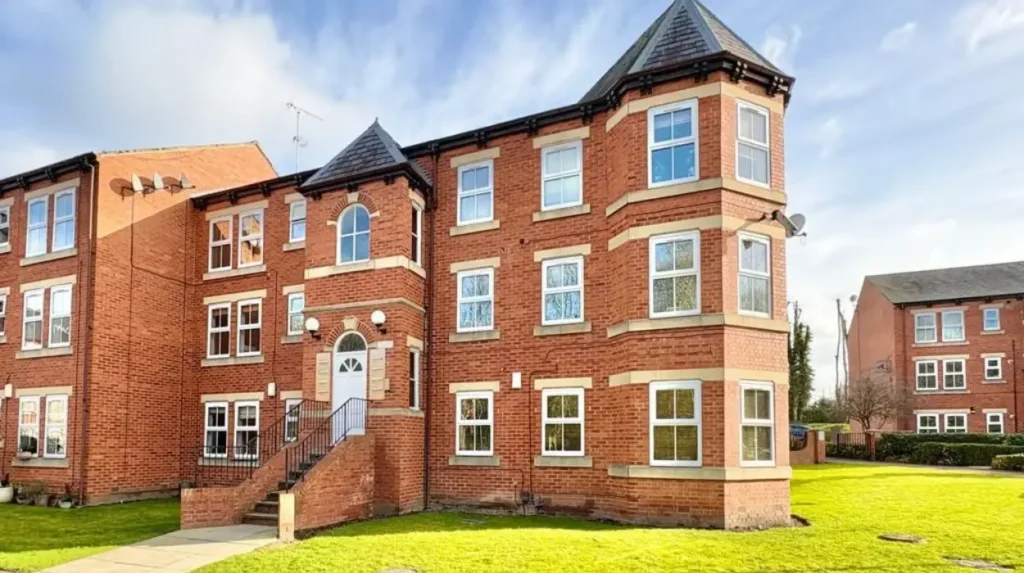
Most flats in England and Wales are leasehold because several homes occupy one building and share structural and common areas. Examples include converted Victorian houses containing several flats and purpose-built apartment blocks.
The legal title should always be checked through the conveyancing process. Estate agent descriptions provide useful initial information, but the official title and lease documents establish the legal position.
Why are both leasehold and freehold properties found in Headingley?
Headingley’s varied housing stock includes houses, converted properties and apartment buildings, creating different ownership structures. Freehold arrangements are common for individual houses, while leasehold arrangements are widely used where residents share buildings, entrances, roofs or communal land.
Headingley’s property market developed over different periods and contains several forms of residential accommodation. Older houses sit alongside converted flats and newer apartment developments.
A single house usually has a clear physical boundary and one principal owner. Freehold ownership therefore provides a straightforward legal structure. The owner controls the building and land, while remaining subject to general property law and any title restrictions.
A building divided into several homes requires a system for managing shared structures. The roof, external walls, foundations, hallways, staircases and shared grounds serve more than one household. Leasehold arrangements provide a legal framework for allocating responsibilities and costs.
For example, residents in a block of six flats can each hold a separate lease for their home. The freeholder or managing organisation can arrange maintenance for the shared roof and communal staircase. The costs are then allocated according to the terms of the individual leases.
As buyers explore Headingley’s housing market, local development patterns also provide useful context. As you explore the modern neighbourhood, you are encountering an area shaped by changing housing and community patterns. Read about the full [Insert Anchor Text for Headingley History Article Here] to understand its historical development.
The age of a property does not automatically determine whether it is freehold or leasehold. A Victorian house can be leasehold, and a modern house can be freehold. Buyers should check the tenure of every individual property.
What does a freeholder own and what are their responsibilities?
A freeholder normally owns the building and land indefinitely and takes primary responsibility for maintenance, insurance and repairs. The exact rights and obligations remain subject to the registered title, planning law and any restrictive covenants.
Freehold ownership gives the owner the strongest form of property interest available for most residential homes in England and Wales.
The freeholder is responsible for maintaining the property. This includes major structural work and routine repairs. Examples include repairing a damaged roof, maintaining external walls and replacing defective drainage.
The freeholder also arranges buildings insurance where the property is a standalone house. Mortgage lenders generally require adequate buildings insurance as a condition of lending.
Freehold ownership does not remove every legal restriction. The registered title can contain restrictive covenants. A restrictive covenant is a legal condition limiting how land can be used. Examples include restrictions on certain commercial activities or requirements affecting alterations.
Planning permission and building regulations also apply independently of tenure. A freeholder cannot ignore planning rules simply because they own the land.
Some freehold properties also involve shared obligations. An estate can contain privately maintained roads, communal gardens or drainage systems. Owners can then contribute to maintenance through a management arrangement or estate charge.
Prospective buyers should therefore distinguish between freehold ownership and unrestricted ownership. The title register and associated documents identify rights, restrictions and obligations affecting the property.

What does a leaseholder own and what are their responsibilities?
A leaseholder owns a legal interest in a property for the remaining lease term and must follow the lease conditions. Responsibilities commonly include paying service charges, contributing to repairs and obtaining permission for specified alterations.
A lease is a time-limited property interest. When a buyer purchases a leasehold property, they acquire the seller’s remaining interest in the lease.
The original lease might have been granted for 99 years, 125 years, 250 years or another specified period. The number of years remaining at the time of purchase is one of the most important factors for buyers.
The lease defines the property being occupied. It also defines the rights granted to the leaseholder. These rights can include access through communal entrances, use of shared gardens or parking rights.
The lease also contains obligations. Examples include paying a service charge, contributing towards building repairs and observing rules covering noise, pets or alterations.
A service charge is a payment collected to cover the costs of managing and maintaining shared parts of a property. The amount varies according to the building, the services provided and the work required.
Leaseholders should receive clear information about existing charges and planned expenditure during the conveyancing process. Large maintenance projects can create substantial costs, particularly where major structural work is required.
The exact terms of each lease matter. Two flats in the same neighbourhood can have different lease conditions, charges and remaining lease lengths.
Why is the length of a lease important when buying a property?
Lease length directly affects a property’s legal value, mortgageability and future sale prospects. As the remaining term becomes shorter, extending the lease generally becomes more expensive and some mortgage lenders impose additional lending requirements.
A lease is a diminishing asset because the remaining term reduces over time.
A property with 110 years remaining on its lease has a longer legal interest than a similar property with 65 years remaining. This difference affects how buyers and lenders assess the property.
The 80-year point has particular importance in the established leasehold valuation system. Once a lease falls below 80 years, the cost of extending it can increase because of an additional valuation component known as marriage value under the traditional statutory framework.
Mortgage lenders also consider lease length when deciding whether to lend. Individual lender requirements differ, and buyers should check current lending criteria before committing to a purchase.
A short lease can therefore affect three areas: the purchase price, access to mortgage finance and future resale.
For example, a buyer considering a flat with 72 years remaining should obtain specialist legal and valuation advice before proceeding. The buyer needs to understand the cost and process of extending the lease as well as the lender’s requirements.
Recent and ongoing reforms to leasehold law have focused on making the system fairer and improving rights for leaseholders. Property buyers should obtain current legal advice because the statutory framework and implementation arrangements can change.
The remaining term should be checked early. Waiting until the final stages of a purchase can create avoidable delays.
What costs should buyers check before purchasing a leasehold property?
Leasehold buyers should examine the purchase price, ground rent, service charges, reserve funds, insurance costs and planned major works. These payments can materially affect the total cost of owning and maintaining a property over time.
The purchase price is only one part of the financial commitment.
A leasehold property can involve recurring charges. The main examples are ground rent, service charges and contributions to major works.
Ground rent is a payment specified in some leases. Government reforms have restricted ground rents for many newer residential leases, but existing leases can contain different arrangements.
Service charges pay for services and maintenance connected with the building. Examples include cleaning communal hallways, maintaining lifts, insuring the building and repairing shared structures.
A reserve fund, also called a sinking fund, is money collected in advance for future expenditure. A building with a well-managed reserve fund can have money available for planned repairs, although the existence of a fund does not remove all future costs.
Major works can involve significant expenditure. Examples include replacing a roof, repairing external walls or upgrading shared heating systems.
Buyers should ask their solicitor to obtain relevant management information. This information can identify current charges, planned work and disputes affecting the building.
Service charge demands should also be considered alongside the buyer’s personal budget. A lower property purchase price does not necessarily mean lower overall housing costs.
Who is responsible for repairs in leasehold buildings?
Repair responsibilities are defined primarily by the lease. Leaseholders normally maintain their individual homes, while freeholders or management bodies arrange work to shared structures and communal areas, with eligible costs recovered through service charges.
Responsibility depends on the wording of the lease.
The freeholder or appointed management company often takes responsibility for the building’s structure and common parts. Examples include the roof, foundations, external walls, entrance halls and shared staircases.
Leaseholders normally maintain the inside of their individual flats. Examples include internal decoration, appliances owned by the leaseholder and non-structural fixtures.
The distinction is not identical in every property. A lease can define responsibilities differently.
For example, a leaseholder might be responsible for internal windows while the management company remains responsible for the external window structure. The lease documents establish the legal position.
Major repair costs are commonly recovered through service charges. Leaseholders have legal rights relating to the reasonableness of service charges and the consultation process for certain substantial works.
Prospective buyers should review the building’s maintenance history. Repeated repair problems or major planned projects can affect future costs.
What are service charges and how should buyers assess them?
Service charges fund the management, maintenance and insurance of shared property areas. Buyers should assess current charges, historical accounts, reserve funds and planned expenditure because annual costs can change when building repairs or services increase.
A service charge is not a fixed national fee. Each building has its own costs and legal arrangements.
A small converted building with four flats can have different costs from a large apartment block with lifts, landscaped grounds and professional management.
The services provided determine part of the cost. Examples include communal electricity, cleaning, gardening, building insurance and professional management fees.
Historic accounts show how money has been spent. Buyers should ask their solicitor to examine available financial information supplied during the transaction.
Planned works also matter. A low current service charge does not guarantee low future expenditure if major repairs are approaching.
For example, a building due to undergo roof replacement can require substantial contributions from leaseholders. The financial information should identify known projects where disclosure requirements apply.
Buyers should include service charges in affordability calculations. Mortgage repayments alone do not represent the complete cost of leasehold ownership.
Can a leaseholder extend their lease?
Qualifying leaseholders have statutory rights to seek lease extensions under English property law, subject to eligibility requirements and legal procedures. The process involves formal notices, valuation considerations and professional costs that buyers should investigate before purchasing.
Lease extension rights form an important part of the leasehold system.
The statutory process allows qualifying leaseholders to seek an extension of their lease. Eligibility rules and the exact procedure depend on the legislation in force at the time of the application.
The process usually requires specialist legal and valuation work. A surveyor with leasehold valuation expertise can assess the premium payable for an extension.
The premium is the payment made for the additional lease term and changes to the lease terms. The calculation depends on factors such as property value, remaining lease length and the terms of the existing lease.
A buyer considering a property with a short lease should establish whether the seller has started a statutory process or whether the buyer will need to meet the relevant ownership requirements before starting one.
Professional advice is important because leasehold legislation contains formal deadlines and procedural requirements.
The cost of a lease extension should be treated as part of the overall purchase assessment when a property has a declining lease term.
Can leaseholders buy or manage their freehold interests?
Some leaseholders have collective legal rights to acquire the freehold or take greater control of building management. These rights depend on property type, qualification rules and formal procedures established by leasehold legislation.
Leaseholders in qualifying buildings can have collective rights.
Collective enfranchisement is the legal process through which qualifying leaseholders of flats can work together to purchase the freehold of their building.
Right to manage is a separate legal right. It allows qualifying leaseholders to take over management functions without purchasing the freehold, subject to the statutory process.
These arrangements do not apply automatically to every building. Eligibility depends on factors including the structure and use of the property.
For example, residents in a qualifying block of flats can organise collectively to take greater responsibility for management. Professional legal and property management support is often required because shared buildings involve ongoing administrative and financial duties.
These rights give leaseholders mechanisms for influencing the management of their homes. They also create responsibilities that prospective participants need to understand.
How do leasehold and freehold arrangements affect property value?
Tenure affects property value because it influences ownership duration, running costs, legal restrictions and buyer demand. Lease length, service charges and management quality are particularly important when assessing the value of leasehold homes.
Property valuation considers the entire legal interest being sold.
Two similar flats can have different market values if one has a substantially longer lease. A short lease reduces the remaining period of ownership and can increase future costs.
Service charges also influence affordability. Higher recurring charges increase the total cost of occupying a property.
Management quality affects the condition of a building. Well-maintained shared areas and clear financial administration provide important information for buyers.
Freehold houses are assessed differently because the buyer normally takes direct responsibility for the entire property. The buyer needs to budget for maintenance and insurance rather than contributing through a building-wide service charge.
Location remains important in both arrangements. In Headingley, transport connections, local facilities, property condition and the surrounding housing market all influence buyer decisions.
Tenure should therefore be assessed alongside location, condition and affordability.
What should buyers ask before purchasing a leasehold property in Headingley?
Buyers should confirm the remaining lease term, current charges, ground rent arrangements, repair history, planned works, management arrangements and lease restrictions. These checks identify legal obligations and financial commitments before contracts are exchanged.
The first question should concern tenure and lease length.
Buyers should then understand every recurring cost attached to the property. Examples include service charges, insurance contributions and estate management charges.
The lease itself requires careful review. It can contain restrictions affecting pets, subletting, business use and alterations.
A buyer planning to work from home should check whether the lease contains restrictions relevant to business activity. A buyer planning to let the property should check the rules governing subletting.
The management structure also deserves attention. The building can be managed by the freeholder, a residents’ management company or a professional managing agent.
Buyers should ask about known disputes, arrears and planned major works. These issues can affect the future financial and practical experience of living in the building.
A conveyancing solicitor should explain the legal documents before the buyer exchanges contracts. Buyers should not rely solely on informal descriptions of tenure.
Is freehold always simpler than leasehold?
Freehold ownership removes the time limit of a lease and gives direct control over the property, but it also places maintenance and management responsibilities on the owner. The most suitable arrangement depends on the property’s legal structure and buyer circumstances.
Freehold ownership provides an indefinite interest, but it requires active property management.
A freeholder is responsible for organising repairs and budgeting for future maintenance. A major roof repair or structural problem falls directly within the owner’s responsibilities.
Leasehold ownership divides some responsibilities across the building. The management body arranges shared work, while leaseholders contribute according to their legal obligations.
This arrangement is particularly useful in multi-occupied buildings where shared structures require coordinated management.
Neither tenure removes the need for legal checks. A freehold property can have restrictive covenants, shared access rights or estate charges. A leasehold property can have a long lease, stable management and clearly defined costs.
The relevant question for buyers is whether they understand the legal arrangement and can meet its financial and practical obligations.
How should prospective buyers compare leasehold and freehold properties?
Prospective buyers should compare the full ownership position rather than the asking price alone. Lease length, recurring charges, maintenance duties, legal restrictions and future sale considerations provide a complete basis for comparing different property ownership arrangements.
A freehold house and a leasehold flat have different cost structures.
The freehold buyer normally budgets independently for repairs and insurance. The leasehold buyer normally contributes towards shared costs through formal charges.
Buyers should calculate the likely annual housing costs. This calculation should include mortgage payments, insurance, service charges, ground rent where applicable and expected maintenance.
The legal documents should also be compared. A freehold title can contain covenants and rights affecting the property. A lease can contain detailed rules governing the use of a flat.
Future plans matter. A buyer expecting to sell within a short period should understand how lease length and building costs affect future purchasers. A buyer planning long-term ownership should understand future maintenance and lease extension requirements.
Professional advice remains essential. Conveyancing solicitors examine the legal title and transaction documents, while surveyors assess property condition and provide specialist valuation services.
Explore More Area Guide
Headingley House Hunting Guide for Young Professionals
Headingley Estate Agents and Property Services Guide
What is the future of leasehold and freehold property ownership?
Leasehold reform remains an important area of housing policy in England and Wales. Recent legislation and continuing policy changes focus on leaseholder rights, transparency and ownership structures, making current professional advice essential for individual property transactions.
The leasehold system has been the subject of significant public and legislative attention.
Reforms have addressed areas including ground rents, lease extensions, freehold acquisition rights and the management of residential buildings. The legal framework continues to develop through legislation, implementation measures and related regulations.
Prospective buyers should therefore distinguish between general property guidance and the law applying on the date of their purchase.
Official government information and qualified legal professionals provide the most reliable route for checking current rules.
The long-term direction of housing policy places greater emphasis on transparency. Buyers increasingly need clear information about recurring costs, management arrangements and legal rights before purchasing a property.
This is particularly important in areas with diverse housing stock such as Headingley. A prospective buyer can encounter a traditional freehold house, a leasehold flat in a converted property or an apartment with extensive shared facilities.
What is the most important thing to understand before choosing between leasehold and freehold?
The most important issue is understanding exactly what legal interest is being purchased and what obligations accompany it. Buyers should investigate tenure, costs, maintenance duties, restrictions and future ownership issues before committing to a property transaction.
Freehold and leasehold are not simply labels in a property advertisement. They define the legal structure of ownership.
Freehold ownership normally gives indefinite ownership of a property and its land. The owner takes direct responsibility for maintenance and management.
Leasehold ownership gives the buyer rights for a fixed term under a detailed legal agreement. The remaining lease length, service charges, management arrangements and lease conditions all affect the practical and financial position.
For Headingley buyers, the local property market provides examples of both structures. Houses, converted flats and purpose-built apartments create different ownership and management arrangements.
The most effective approach is to investigate the specific property rather than making assumptions based on its age, appearance or asking price.
A buyer should establish the tenure at the earliest stage, review the relevant legal documents during conveyancing and obtain professional advice on complex issues. This process supports informed decisions and provides a clear understanding of the responsibilities attached to property ownership.
Understanding leasehold and freehold arrangements also helps buyers compare properties accurately. The strongest comparison considers the complete ownership position: what is owned, how long the ownership lasts, what must be paid and which responsibilities transfer with the property.
For prospective buyers in Headingley, these checks form an essential part of a well-informed property search and a legally secure purchase.
What is the main difference between leasehold and freehold property?
Freehold ownership normally means you own the property and the land indefinitely. Leasehold ownership gives you the right to occupy and use a property for a fixed period under the terms of a legal lease.